
Why Fire Water Nozzle Material Selection Matters
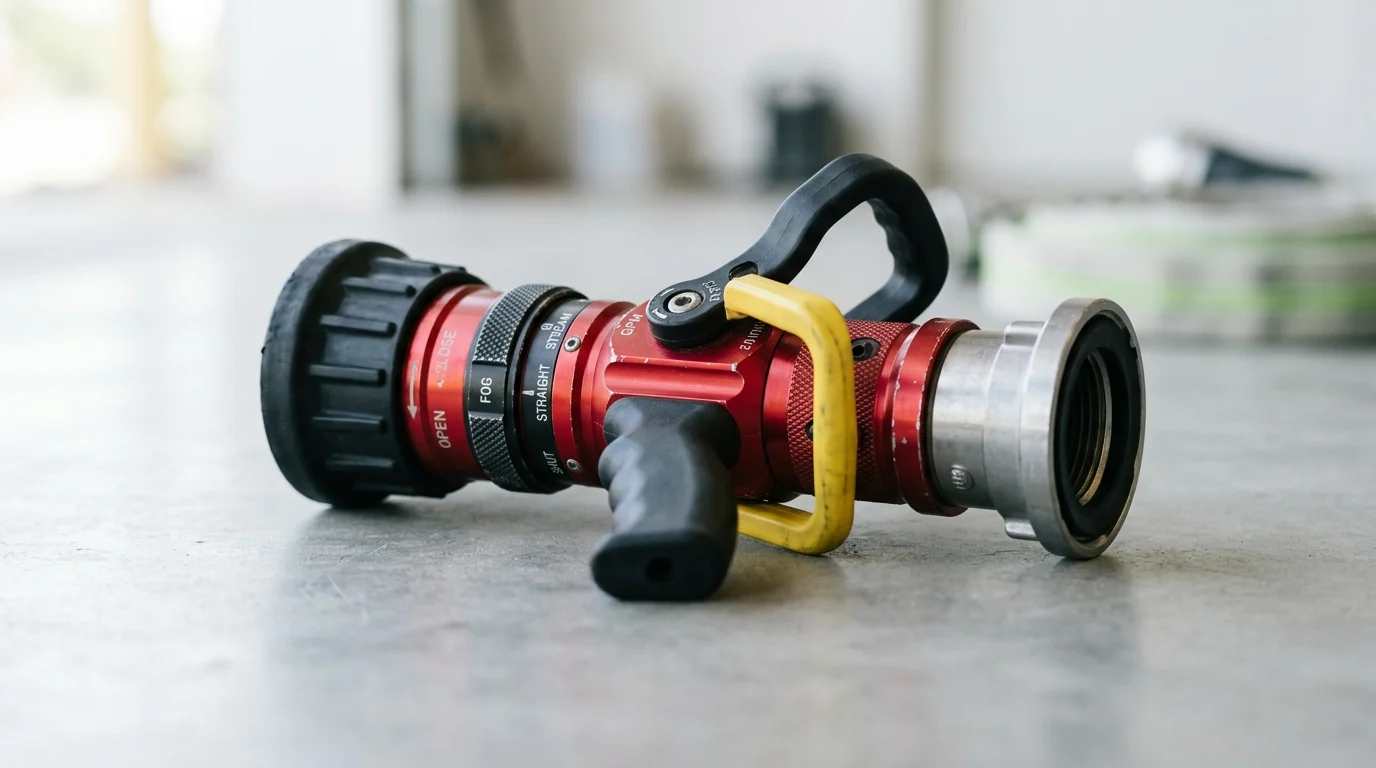
The selection of materials for fire suppression equipment is a critical engineering decision that dictates operational readiness, maintenance intervals, and emergency response efficacy. A fire water nozzle serves as the terminal point of fluid delivery in any suppression system, subjecting its construction material to severe hydraulic forces, harsh environmental exposure, and extreme physical abuse.
While modern engineering has introduced various synthetic and lightweight metallic alternatives, material selection remains the primary predictor of a nozzle’s operational lifespan. Procurement engineers must evaluate materials not merely on their initial acquisition cost, but on their metallurgical stability, mechanical resilience under pressure, and immunity to environmental degradation over decades of dormant standby.
Commercial impact of nozzle material choice
Analyzing the total cost of ownership (TCO) reveals that the initial procurement price represents only 15% to 20% of a fire water nozzle’s lifecycle expense. A standard industrial brass nozzle typically commands an initial capital expenditure of $80 to $150, approximately 30% to 40% higher than equivalent extruded aluminum models. However, the commercial impact becomes apparent in the replacement cycle and maintenance overhead.
Brass units frequently exceed 15 to 20 years of continuous service in harsh industrial environments. In contrast, lower-tier materials may require replacement every 3 to 5 years due to thread wear, galvanic corrosion, or impact deformation. Furthermore, facility managers must account for downtime costs and insurance compliance; a catastrophic failure of a degraded nozzle during a fire event can result in millions of dollars in uninsured commercial losses and severe regulatory penalties.
Key fire water nozzle definitions
To accurately specify materials, engineers must understand the baseline hydraulic definitions that govern nozzle performance. Operating pressure norms typically range from 75 PSI to 100 PSI for standard handlines, but heavy-duty master stream devices and industrial monitors can routinely exceed 250 PSI. The material must possess sufficient tensile strength to withstand these burst pressures without microscopic yielding.
Flow rates are quantified in Gallons Per Minute (GPM), with standard industrial brass nozzles delivering calibrated flows between 60 and 125 GPM. Material degradation mechanisms, such as galvanic corrosion and cavitation, are critical definitions for procurement teams. Cavitation occurs when localized fluid pressure drops below the vapor pressure, causing micro-explosions that can erode inferior nozzle materials at a rate of 0.1mm to 0.5mm annually, irreversibly distorting the intended flow pattern.
Why Brass Is a Standard Fire Water Nozzle Material
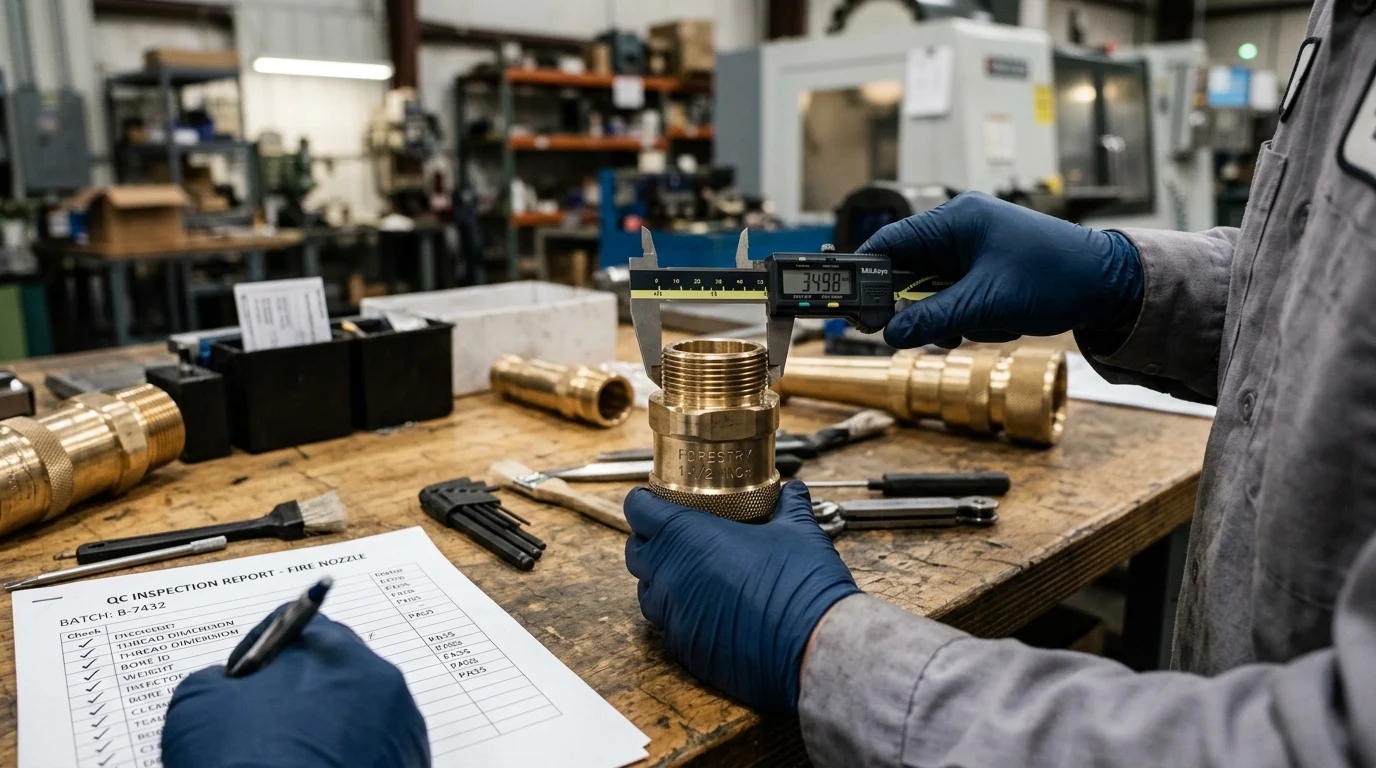
Brass has maintained its position as the undisputed industry standard for fire water nozzles due to an optimal balance of mechanical properties, thermal survivability, and manufacturing economics. The material is primarily an alloy of copper and zinc, engineered specifically to withstand the rigors of high-velocity fluid dynamics and extreme thermal shock.
Industrial fire protection systems rely heavily on standard brass alloys such as C36000 (Free-Cutting Brass) and C46400 (Naval Brass). These specific metallurgical compositions provide a unique combination of density, self-lubrication, and structural integrity that synthetic polymers and lightweight metals simply cannot replicate in life-safety applications.
Corrosion resistance and dezincification control
Standard yellow brass contains approximately 61.5% copper and 35.5% zinc. In environments with aggressive water chemistry, dezincification—a process where zinc selectively leaches from the alloy matrix, leaving a weak, porous copper structure—poses a catastrophic failure risk. This degradation is accelerated in stagnant water systems with chloride concentrations exceeding 250 mg/L.
To combat this vulnerability, premium fire water nozzles utilize Dezincification Resistant (DZR) brass alloys. These specialized grades incorporate precise trace amounts of arsenic (0.02% to 0.10%) or antimony to stabilize the zinc matrix. This metallurgical adjustment ensures the nozzle maintains its structural integrity and pressure-retaining capabilities even when exposed to harsh municipal water supplies or untreated industrial reservoirs over decades.
Pressure strength, impact resistance, and heat tolerance
The mechanical robustness of brass is critical for high-pressure suppression systems. Typical brass alloys utilized in nozzle construction exhibit a tensile strength ranging from 310 MPa to 450 MPa, providing an exceptional safety margin against sudden hydraulic shocks and water hammer effects that frequently exceed 300 PSI. This tensile strength prevents the expansion or bursting of the nozzle body during initial pressurization.
Impact resistance and thermal tolerance are equally vital parameters. NFPA standards often require nozzles to survive multiple drops onto concrete from heights of up to 6 feet (1.8 meters). While aluminum components may dent and deform—instantly compromising the internal flow baffles or thread engagement—brass absorbs kinetic energy with minimal dimensional distortion. Furthermore, brass boasts a melting point of approximately 900°C to 940°C, ensuring the nozzle will not catastrophically melt or deform during flashover conditions, unlike aluminum which liquefies at just 660°C.
Machinability, dimensional stability, and repairability
From a manufacturing perspective, C36000 free-cutting brass holds the global benchmark machinability rating of 100%. This allows CNC machining centers to achieve exceptionally tight dimensional tolerances, often within ±0.001 inches. Such precision is paramount for machining complex National Standard Thread (NST) profiles and internal flow pathways, thereby reducing fluid turbulence and maximizing stream reach.
The dimensional stability of brass directly translates to field repairability and operational reliability. Its inherent self-lubricating properties prevent thread galling—a common issue where friction causes micro-welding between mating surfaces, frequently observed when connecting stainless steel components under stress. Additionally, brass nozzles offer superior lifecycle repairability; damaged threads can often be chased and restored using standard taps, extending the service life and significantly reducing total maintenance expenditures.
Brass vs Alternative Fire Water Nozzle Materials
While brass remains the dominant standard for heavy-duty applications, modern fire protection engineering frequently evaluates alternative materials to optimize specific performance parameters. Understanding the comparative strengths and weaknesses of these materials is essential for specifying the correct equipment for specialized operational environments.
Material comparison table for nozzle selection
The following matrix outlines the critical performance metrics of brass compared to common alternative materials used in fire water nozzle manufacturing.
| Material | Tensile Strength (MPa) | Melting Point (°C) | Relative Cost Index | Galling Resistance | Marine Suitability |
|---|---|---|---|---|---|
| Brass (C36000) | 310 – 450 | 900 – 940 | 1.0x (Baseline) | Excellent | Moderate |
| Extruded Aluminum | 275 – 310 | 660 | 0.7x | Good | Poor |
| Stainless Steel (316L) | 480 – 620 | 1370 – 1400 | 2.5x | Poor | Excellent |
| Marine Bronze | 240 – 380 | 850 – 1000 | 1.8x | Excellent | Excellent |
| Glass-Filled Composite | 110 – 150 | 220 – 260 | 0.4x | N/A | Poor |
Where brass outperforms other materials
Brass consistently outperforms alternative materials in heavy industrial facilities, municipal fire departments, and commercial standpipe applications where equipment is subjected to rough handling and prolonged storage. Its self-lubricating properties drastically reduce the risk of thread galling, a significant operational advantage when firefighters must rapidly connect hoses and appliances under extreme psychological and physical stress.
The inherent density of brass (approximately 8.4 to 8.7 g/cm³) provides an often-overlooked ergonomic advantage in fixed or heavy-duty applications. This mass dampens hydraulic vibration and cavitation noise, providing operators with a more stable and predictable nozzle reaction force when discharging water at velocities exceeding 100 feet per second. This stability is difficult to achieve with ultra-lightweight polymers or thin-walled aluminum.
When to choose aluminum, stainless steel, bronze, or composite
Despite the dominance of brass, specific operational constraints dictate the use of alternative materials. Hard-anodized aluminum is the preferred choice for wildland and forestry firefighting, where personnel must carry equipment over steep terrain for long distances; an aluminum nozzle weighs approximately one-third of its brass equivalent, significantly reducing fatigue.
Stainless steel (typically 316L) becomes necessary in highly corrosive petrochemical environments or offshore platforms where exposure to harsh acids or continuous salt spray exceeds the protective capabilities of standard DZR brass. Bronze (an alloy of copper and tin) is mandated for extreme marine applications due to its near-zero zinc content, eliminating dezincification risks entirely. Finally, composite plastics (polycarbonate or glass-filled nylon) are restricted to low-pressure residential or light-duty agricultural uses where operating pressures remain below 75 PSI and strict budget constraints dictate a unit cost under $20.
Fire Water Nozzle Specifications and Compliance Checks
Procuring a fire water nozzle requires strict adherence to international safety standards and rigorous quality assurance protocols. Buyers cannot rely solely on the visual appearance of a brass component; they must verify that the selected products meet both performance benchmarks and strict metallurgical specifications.
Failure to validate these specifications during the procurement phase can result in the acquisition of substandard equipment that fails under pressure, jeopardizing life safety and voiding facility insurance policies.
Standards, pressure ratings, threads, and flow patterns
The National Fire Protection Association (NFPA) 1964 Standard for Spray Nozzles dictates rigorous performance criteria, including mandatory hydrostatic testing. Compliant nozzles must withstand a hydrostatic proof pressure of up to 900 PSI without rupture or permanent deformation, and operate flawlessly at their rated operational pressure, typically 100 PSI.
Thread specifications must strictly comply with NFPA 1963 or local equivalent standards, ensuring seamless interoperability with existing municipal hydrants and hose connections (e.g., NH, NST, or NPSH). Furthermore, the flow patterns—ranging from a concentrated straight stream to a wide protective fog of 120 degrees—must be precisely calibrated to deliver the specified GPM within a strict ±5% tolerance margin across the entire pressure range.
Brass alloy grade and manufacturing quality
The metallurgical integrity of the brass alloy is the primary determinant of manufacturing quality and longevity. Procurement specifications must explicitly state the acceptable alloy grades, such as C46400 (Naval Brass) for enhanced moisture resistance or C37700 for high-strength forged components. Substituting premium alloys with cheap, high-lead scrap brass severely compromises the mechanical strength of the finished product.
Quality control protocols at the manufacturing facility should mandate optical emission spectrometer testing to verify chemical composition, ensuring zinc levels remain within the 35% to 39% threshold to prevent embrittlement. Furthermore, buyers should specify maximum porosity rates for cast brass nozzles, typically demanding a volumetric defect rate of less than 1% to prevent microscopic leaks and fractures under high hydraulic stress.
Supplier qualification and procurement risk control
Effective procurement risk control necessitates strict supplier qualification before issuing purchase orders. Manufacturers must hold valid ISO 9001:2015 quality management certifications and be capable of providing EN 10204 Type 3.1 Material Test Reports (MTRs) for every production batch, ensuring total traceability from raw ingot to finished nozzle.
When establishing supply chains for custom or OEM brass nozzles, procurement teams should anticipate Minimum Order Quantities (MOQs) ranging from 500 to 1,000 units for custom cast assemblies, with typical production lead times spanning 8 to 12 weeks. Conducting independent third-party pre-shipment inspections (using agencies such as SGS or Bureau Veritas) mitigates the risk of receiving non-compliant products that could fail catastrophically during an emergency response.
How Buyers Should Choose a Brass Fire Water Nozzle
Selecting the optimal brass fire water nozzle requires a systematic approach that balances initial capital outlay against long-term operational reliability. Procurement teams must navigate complex engineering trade-offs to ensure maximum safety, regulatory compliance, and return on investment.
By moving away from commodity-based purchasing and adopting a lifecycle-focused procurement strategy, organizations can significantly reduce their long-term maintenance burdens while enhancing their overall fire readiness.
Decision matrix for price, lifecycle cost, and performance
The following decision matrix provides a framework for aligning brass alloy selection with specific application environments, expected lifecycles, and OPEX considerations.
| Application Environment | Recommended Brass Alloy | Target Operating Pressure | Expected Lifecycle | Total Cost of Ownership (TCO) Impact |
|---|---|---|---|---|
| Commercial Building Standpipe | C36000 (Free-Cutting) | 100 PSI | 15 – 20 Years | Baseline OPEX |
| Heavy Industrial / Manufacturing | C37700 (Forging Brass) | 150 – 200 PSI | 10 – 15 Years | 30% Savings over Aluminum |
| Coastal / Marine Facilities | C46400 (Naval Brass) | 100 – 150 PSI | 12 – 18 Years | 50% Savings over Standard Brass |
| High-Chloride Water Systems | DZR Brass (Arsenic Inhibited) | 100 PSI | 15+ Years | Prevents catastrophic failure costs |
Practical selection steps for procurement teams
Procurement teams should execute a precise, four-step selection process to ensure optimal nozzle performance. First, conduct a comprehensive audit of the facility’s water source, measuring pH levels and chloride concentrations to determine if standard C36000 brass is sufficient or if specialized DZR brass is required (highly recommended for continuous exposure to chloride levels above 200 mg/L).
Second, verify thread compatibility with the local jurisdiction’s infrastructure to prevent deployment delays. Third, calculate the required flow rate and pressure dynamics—specifying, for example, a constant flow nozzle calibrated precisely at 95 GPM at 100 PSI. Finally, request empirical testing data from the manufacturer, including 6-foot drop test certifications and 1,000-cycle valve actuation reports, to validate the mechanical durability of the internal ball valves and flow control mechanisms.
When brass is the best material choice
Brass remains the undisputed material of choice for heavy manufacturing facilities, commercial building standpipes (Class I and Class III systems), and demanding municipal fire deployments. In these environments, suppression equipment may sit idle for decades but is expected to function flawlessly at maximum capacity at a moment’s notice.
The unique combination of high tensile strength (up to 450 MPa), unparalleled thermal resistance (surviving ambient temperatures up to 900°C), and absolute immunity to thread galling ensures that a brass fire water nozzle delivers a reliable operational lifecycle frequently exceeding 15 to 20 years. For facilities prioritizing life safety, strict regulatory compliance, and minimal maintenance overhead, high-grade brass provides an unmatched and time-tested engineering solution.
Key Takeaways
- Brass fire water nozzles often deliver 15 to 20 years of service in harsh industrial environments, reducing replacement frequency compared with lower-tier materials that may last only 3 to 5 years.
- Procurement teams should evaluate total cost of ownership because the initial nozzle price may account for only 15% to 20% of lifecycle cost.
- Standard handline nozzles typically operate at 75 to 100 PSI, while industrial monitor applications can exceed 250 PSI, making material strength and thread integrity critical.
- Brass alloys such as C36000 and C46400 provide a practical balance of corrosion resistance, machinability, density, and mechanical stability for life-safety equipment.
- Cavitation and corrosion can erode inferior nozzle materials by 0.1 mm to 0.5 mm per year, potentially distorting calibrated flow and spray patterns.
Frequently Asked Questions
Why are brass fire water nozzles preferred over aluminum models?
Brass offers stronger corrosion resistance, better thread durability, and longer service life in harsh environments. Although it can cost 30% to 40% more upfront than aluminum, it often lasts 15 to 20 years versus 3 to 5 years for lower-tier alternatives.
What operating pressure should a fire water nozzle withstand?
Standard handline nozzles commonly operate around 75 to 100 PSI, while heavy-duty industrial monitors can exceed 250 PSI. The nozzle material must resist deformation, thread damage, and burst risk under these hydraulic loads.
How does brass reduce lifecycle costs for industrial fire protection buyers?
Initial purchase price may represent only 15% to 20% of lifecycle expense. Brass nozzles reduce replacement frequency, maintenance labor, downtime risk, and compliance concerns, making them cost-effective for long-term industrial and marine use.
Which brass alloys are commonly used for fire water nozzles?
Common choices include C36000 free-cutting brass and C46400 naval brass. These alloys combine machinability, corrosion resistance, density, and mechanical stability, making them suitable for demanding fire suppression equipment.
Can corrosion affect nozzle spray performance?
Yes. Corrosion, cavitation, and thread wear can distort the internal geometry of a nozzle, reducing flow accuracy and spray pattern consistency. In severe cases, cavitation erosion may remove 0.1 mm to 0.5 mm of material annually.

Post time: Jun-22-2026