
Introduction
In chemical plants, communication equipment has to perform reliably where flammable gases, corrosive atmospheres, heavy noise, and wide site layouts make ordinary devices unsafe or ineffective. This article explains why intelligent industrial voice communication and alarm systems, especially explosion proof weatherproof telephones, are becoming essential for both routine coordination and emergency response. You will see how these systems improve message delivery, support faster incident escalation, integrate with plant safety infrastructure, and reduce the weaknesses of legacy paging, radios, and standalone alarms, setting up a clearer view of what modern facilities now require.
Why Chemical Plants Need Intelligent Industrial Voice Communication
Chemical manufacturing facilities operate under continuous stress from volatile materials, extreme temperatures, and complex logistical networks. In these environments, reliable communication is not merely an operational convenience but a critical safety layer that protects personnel and assets.
Process hazards and distributed operations
Process hazards in chemical plants require immediate, unhindered communication to mitigate catastrophic failures. Facilities routinely handle solvents and hydrocarbons with flashpoints below 38 degrees Celsius, where a delayed response to a leak or pressure anomaly can result in ignition. Furthermore, modern chemical plants are highly distributed, often sprawling over hundreds of acres. Operators in centralized control rooms must maintain synchronized contact with field technicians conducting maintenance on distillation columns or reactor vessels. The sheer scale of these operations mandates a communication network capable of instantaneous, multi-node broadcasting to coordinate evacuations or emergency shutdowns effectively.
Limits of legacy paging, radios, and alarms
Traditional communication methods fall short in mitigating the risks inherent to chemical processing. Legacy analog paging systems frequently suffer from degraded audio quality over long cable runs and lack the self-diagnostic capabilities required to guarantee operability during a crisis. Similarly, two-way portable radios are susceptible to severe signal attenuation; heavy steel structures, pipe racks, and reinforced concrete can reduce RF signals by 20 to 30 dB, creating hazardous dead zones. Furthermore, standard alarms provide binary warnings but fail to deliver specific, actionable voice instructions, leaving personnel vulnerable during complex emergencies where contextual information is vital for safe evacuation.
What Defines an Intelligent Industrial Voice Communication and Alarm Sys
An intelligent industrial voice communication and alarm system transcends basic point-to-point audio exchange. It operates as a fully integrated, IP-based network designed to unify telephony, public address, and general alarm (PA/GA) functions into a single, resilient infrastructure.
Core functions beyond basic field telephony
Beyond basic field telephony, intelligent systems leverage Session Initiation Protocol (SIP) to integrate seamlessly with existing IP-PBX networks and digital control systems. A defining characteristic of these modern platforms is their automated self-monitoring capability. Intelligent systems can execute diagnostic polling on all connected endpoints at intervals as frequent as every 60 seconds. This ensures that any fault—such as a severed cable, power failure, or compromised microphone—is instantly reported to the central management server. Additionally, these systems support programmable priority protocols, allowing emergency automated public address overrides to preempt routine voice traffic, ensuring critical evacuation instructions are never blocked by busy signals.
Role of explosion-proof and weatherproof devices
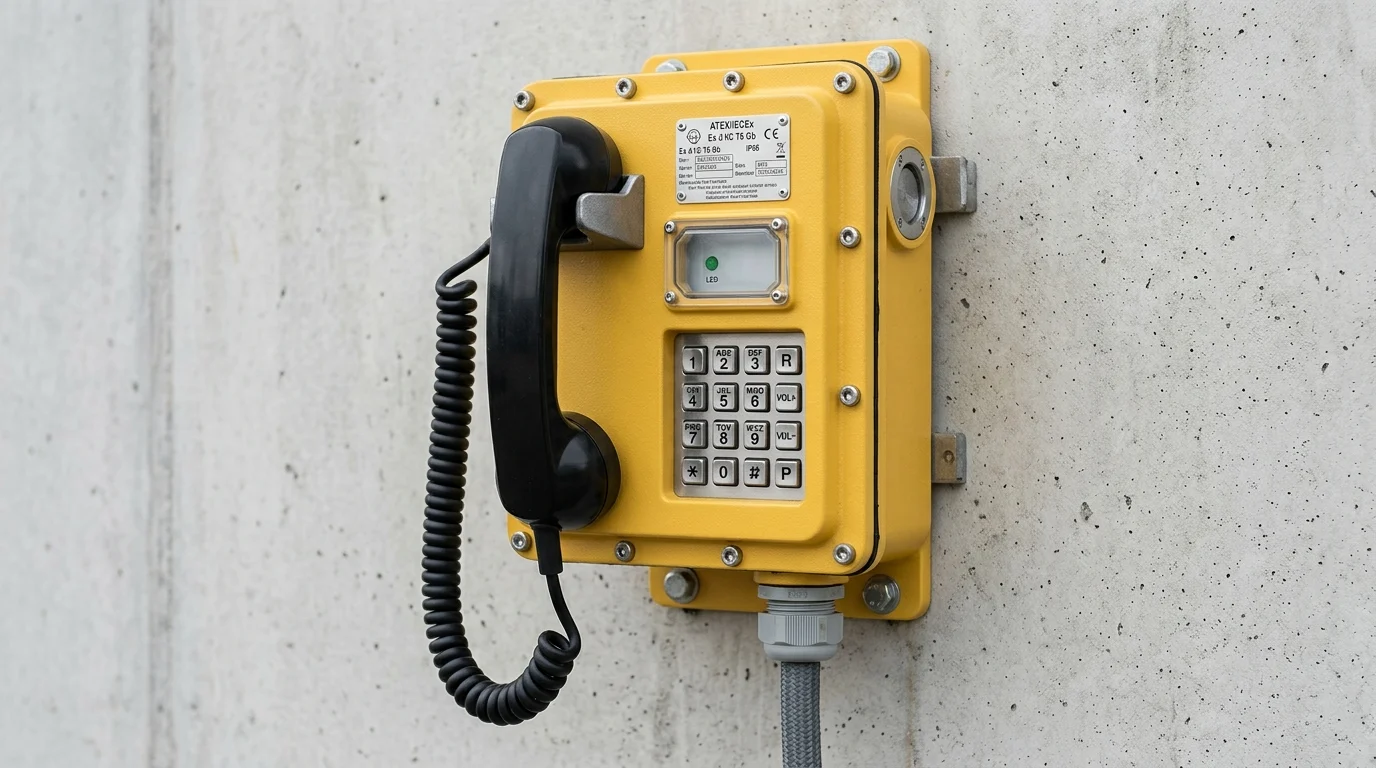
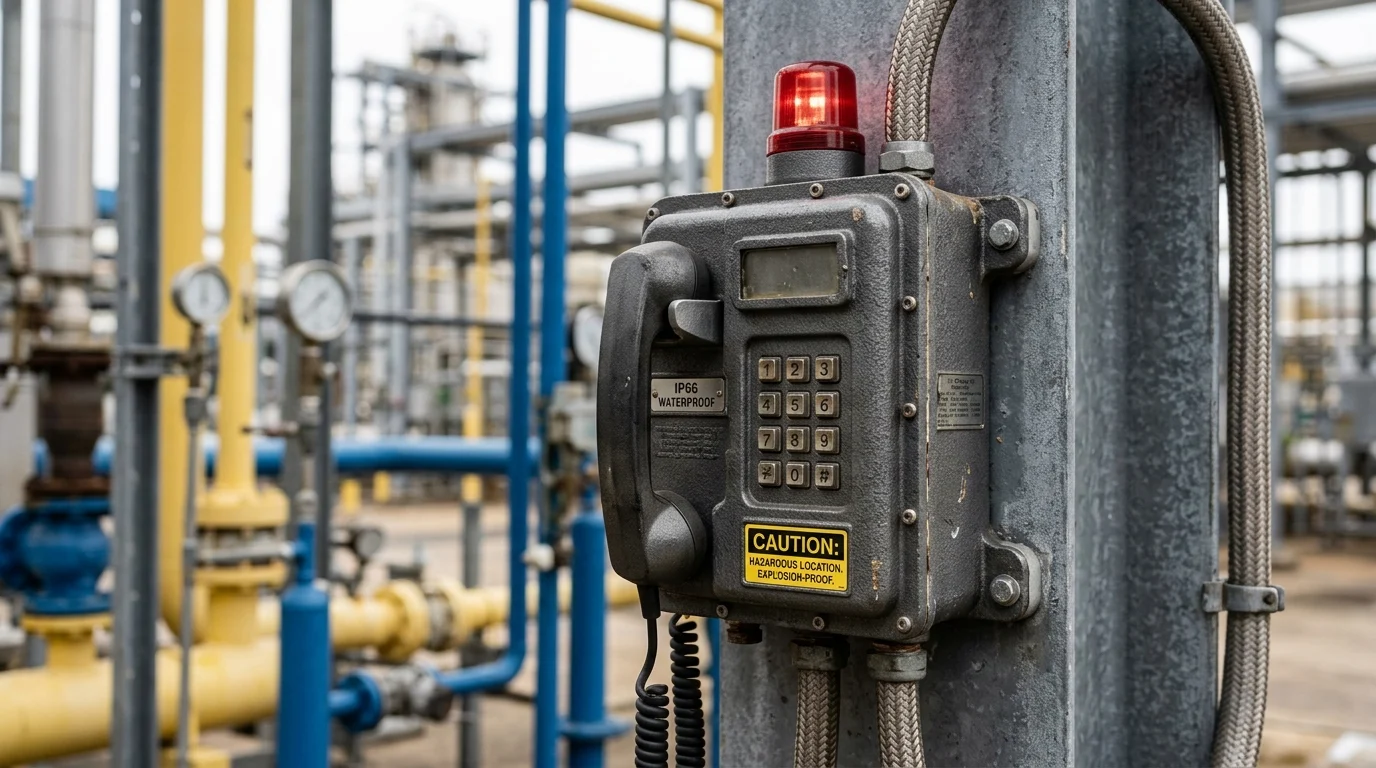
The backbone of field deployment in these networks is the explosion proof weatherproof telephone. These specialized devices are engineered to prevent their internal electronics from acting as an ignition source in atmospheres saturated with flammable gases or combustible dust. Housings are typically cast from copper-free aluminum or specialized glass-reinforced polyester (GRP), providing exceptional resistance to corrosive chemical vapors. To withstand harsh outdoor environments, these telephones maintain strict ingress protection ratings, universally achieving IP66 or IP67 certification against high-pressure water jets and total dust ingress. Furthermore, they are built to endure physical abuse, often featuring an IK10 impact resistance rating, ensuring operability even after significant mechanical shock.
How to Evaluate Technical, Environmental, and Compliance Requirements
Procurement and engineering teams must rigorously assess potential communication systems against stringent technical and regulatory benchmarks. Deploying an explosion proof weatherproof telephone network requires navigating complex safety certifications and demanding acoustic specifications.
Key specifications for hazardous industrial sites
Hazardous industrial sites present extreme acoustic challenges, necessitating specialized hardware specifications. Background noise in compressor rooms or near fluid pumps routinely exceeds 85 dB(A). Consequently, intelligent industrial telephones must feature active noise-canceling microphones and high-output signaling. Ringers and integrated loudspeakers must be capable of generating audio outputs exceeding 90 dB(A) at a distance of one meter to ensure audibility over ambient machinery noise. Reliability metrics are equally critical; enterprise-grade systems should guarantee a Mean Time Between Failures (MTBF) of at least 50,000 hours, minimizing maintenance interventions in restricted, high-risk operational zones.
Relevant standards, approvals, and documentation
Compliance with global explosion protection standards is non-negotiable. Depending on the geographic location of the plant, devices must carry specific certifications validating their intrinsic safety or flameproof enclosures. In Europe and globally, ATEX and IECEx directives dictate requirements for Zone 1 (high risk) and Zone 2 (moderate risk) hazardous areas. In North America, the National Electrical Code (NEC) and Canadian Electrical Code (CEC) mandate Class I, Division 1 or Division 2 approvals. Vendors must provide comprehensive documentation, including certificates of conformity and detailed test reports, to satisfy site safety audits and insurance underwriting requirements.
Buyer comparison criteria for explosion-proof systems
When comparing explosion-proof communication systems, buyers must evaluate the intersection of safety compliance, audio performance, and network compatibility. The following table illustrates key differentiators between standard industrial devices and purpose-built explosion-proof units.
| Specification Category | Standard Industrial SIP Phone | Explosion Proof Weatherproof Telephone |
|---|---|---|
| Enclosure Material | Polycarbonate or standard steel | Copper-free aluminum or GRP |
| Hazardous Certification | None (Safe Area Only) | ATEX/IECEx Zone 1/2, Class I Div 1/2 |
| Ingress Protection | IP54 to IP65 | IP66 or IP67 minimum |
| Acoustic Output (Ringer) | 75 – 80 dB(A) | 90 – 110+ dB(A) with external beacons |
| Operating Temperature | 0°C to +40°C | -40°C to +70°C |
How to Deploy Intelligent Voice Communication in Chemical Plants
Implementing an intelligent voice communication network requires meticulous planning to ensure seamless coverage, network resilience, and minimal disruption to ongoing chemical processes during installation.
Hazard mapping and deployment planning
Deployment begins with comprehensive hazard and acoustic mapping. Engineers must conduct site surveys to identify high-noise zones, physical obstructions, and specific hazardous area classifications. This mapping dictates device placement density; in high-noise areas exceeding 85 dB(A), explosion proof weatherproof telephones and supplementary PA speakers are typically spaced every 30 to 50 meters to guarantee clear audio reception. Deployment planning must also account for visual signaling, integrating high-intensity strobe beacons in areas where mandatory hearing protection renders auditory alarms insufficient.
Wired, SIP, analog, and hybrid architecture choices
The architecture of the communication system must balance modern IP capabilities with physical infrastructure limitations. While native SIP architecture offers the highest level of integration and self-diagnostics, wired Power over Ethernet (PoE) connections are strictly limited to a maximum cable run of 100 meters using standard Cat6 cabling. For vast chemical plants, fiber optic backbones are essential to connect remote substations, utilizing managed industrial switches to convert fiber to local copper runs. In some retrofit scenarios, hybrid architectures are deployed, utilizing existing analog twisted-pair wiring via IP-to-analog gateways, thereby reducing installation costs while upgrading central control to a modern software-based platform.
Vendor selection and project risk reduction
Selecting the right vendor is critical for mitigating project risks. Operators should prioritize manufacturers who offer extensive pre-deployment support, including rigorous Factory Acceptance Testing (FAT) to validate system configurations before equipment arrives on site. Additionally, given the harsh operating conditions, buyers must secure robust warranty terms; a minimum 24-month warranty on explosion-proof hardware is an industry standard that reflects vendor confidence. Engaging vendors who provide long-term software support and spare parts availability ensures the system remains viable throughout its expected lifecycle.
What ROI and Decision Factors Matter Most
Securing capital expenditure for an intelligent voice communication system requires demonstrating clear operational value and long-term financial benefits to plant stakeholders and executive leadership.
Measuring value through risk reduction and response improvement
The primary return on investment (ROI) is realized through quantifiable risk reduction and optimized emergency response. In chemical manufacturing, minor incidents can escalate rapidly; intelligent communication systems have been shown to reduce emergency response and evacuation coordination times by 40 to 60 percent. Furthermore, reliable communication streamlines routine maintenance and troubleshooting, directly reducing unplanned downtime. Given that downtime in a mid-sized chemical plant can incur costs ranging from $10,000 to over $50,000 per hour, the prevention of even a single extended outage can entirely offset the initial capital investment of the communication network.
Final decision framework for plant operators
Plant operators must utilize a Total Cost of Ownership (TCO) framework that spans a 10-to-15-year lifecycle to make final procurement decisions. While explosion proof weatherproof telephones demand a higher upfront premium compared to standard devices, their durability drastically reduces replacement cycles and maintenance labor.
| Cost Factor | Year 1 (CapEx & Implementation) | Years 2-15 (OpEx & Maintenance) |
|---|---|---|
| Hardware Procurement | High (Explosion-proof premium) | Low (Extended lifecycle replacements) |
| Installation & Commissioning | High (Specialized hazardous area labor) | Minimal (Software updates only) |
| System Monitoring | Built into system cost | Automated polling reduces manual labor |
| Downtime Mitigation | N/A | High savings via rapid incident resolution |
By evaluating these factors, decision-makers can confidently select a system that not only ensures strict regulatory compliance but also delivers sustained operational efficiency and unparalleled safety for plant personnel.
Key Takeaways
- The most important conclusions and rationale for Explosion proof weatherproof telephone
- Specs, compliance, and risk checks worth validating before you commit
- Practical next steps and caveats readers can apply immediately
Frequently Asked Questions
Why does a chemical plant need an explosion-proof weatherproof telephone?
It provides safe voice communication in hazardous and outdoor areas, helping teams report leaks, coordinate shutdowns, and receive clear instructions without risking ignition from the device itself.
What certifications should I check before buying for hazardous areas?
Verify the unit matches your zone classification and request ATEX plus relevant CE, FCC, ROHS, and ISO9001 documentation. On Siniwo, certified industrial communication products are built for hazardous environments.
How weatherproof should an industrial telephone be for outdoor chemical sites?
Choose at least IP66 or IP67 for dust and water protection, plus corrosion-resistant housing such as copper-free aluminum or GRP. IK10 impact resistance is also useful for rough plant conditions.
Can these telephones work with existing IP-PBX or VoIP systems?
Yes. Many intelligent industrial phones support SIP, so they can connect to existing IP-PBX or VoIP networks, making it easier to combine field telephony, paging, and emergency communication.
How can Siniwo support a full plant communication project?
Siniwo offers one-stop service from design and integration to installation and maintenance, with in-house manufacturing of most core components for stable quality and dependable delivery.
Post time: Jun-03-2026