
Introduction
In places where a delayed call can put lives at risk, emergency telephone systems provide a dedicated path to help that standard phone networks may not guarantee. This article explains what these systems are, why they are built differently from ordinary telephony, and how their core components work together to keep communication available during critical events. You’ll learn how call stations, auto-dialing, monitoring links, and backup power support fast, reliable contact with responders, and why these systems are commonly used in campuses, parking facilities, transit areas, and other safety-sensitive environments.
What Is an Emergency Telephone System
An emergency telephone system is a dedicated, fail-safe communication infrastructure engineered to provide immediate, reliable contact with emergency dispatchers or central monitoring stations. Unlike standard telecommunication networks, which prioritize high-volume traffic and feature-rich routing, emergency systems are purpose-built for maximum uptime, bypassing local PBX bottlenecks and cellular network congestion.
These systems are deployed in environments where public safety is a primary concern, serving as a direct lifeline during critical incidents. They operate independently of consumer-grade infrastructure, utilizing hardened hardware and redundant network pathways to ensure that distress calls connect without delay or interruption.
Core components and functions
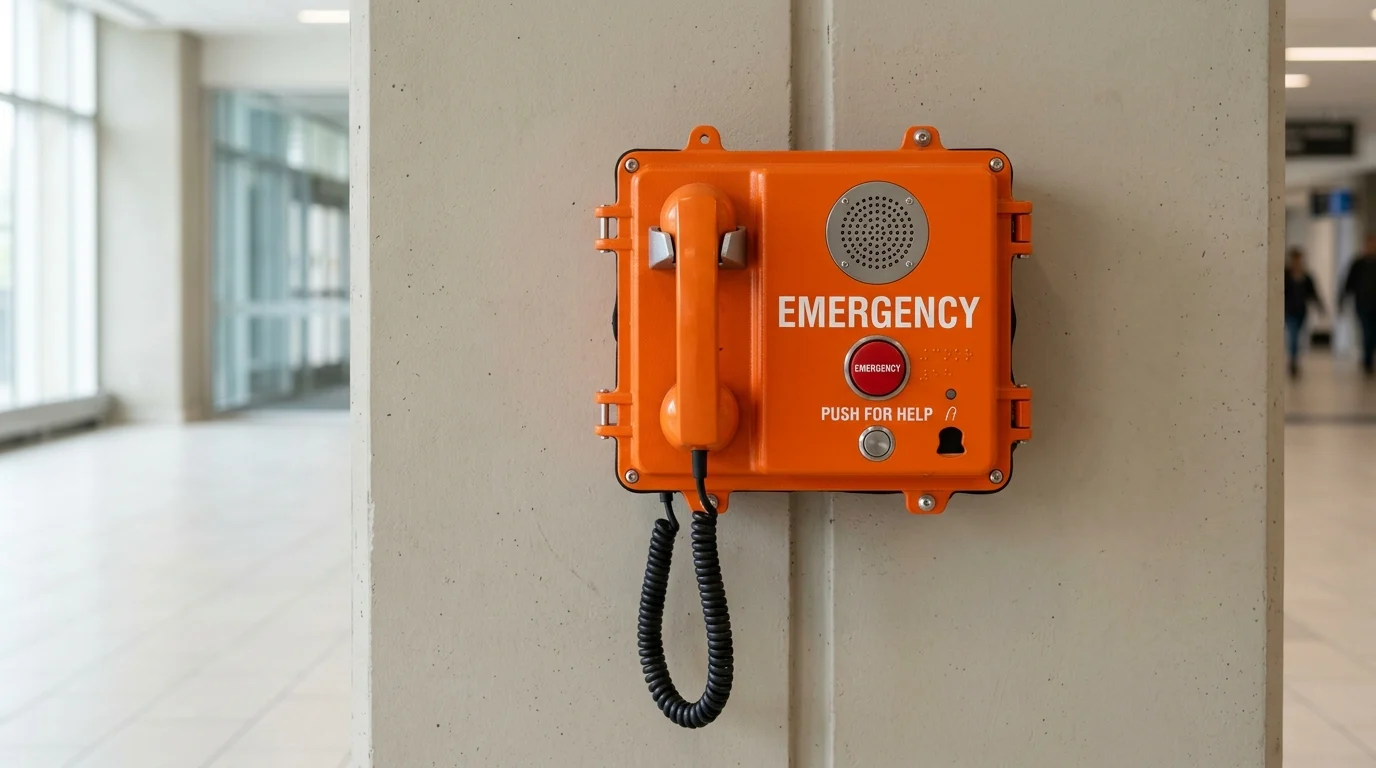
The architecture of an emergency telephone system relies on ruggedized hardware designed to withstand environmental stress and vandalism. At the endpoint level, systems utilize hands-free panels, weatherproof emergency call boxes, or specialized handset stations. These endpoints are equipped with programmable auto-dialers that initiate a call the moment a button is pressed or a handset is lifted.
Power redundancy is a critical component. Industry-standard emergency systems must incorporate uninterruptible power supplies (UPS) or localized battery backups capable of delivering a minimum of 24 hours of standby power and 4 hours of continuous talk time during a primary grid failure. Tamper-resistant enclosures, often constructed from 14-gauge or 16-gauge stainless steel, protect internal circuit boards from physical damage and moisture ingress.
How calls are routed and prioritized
When an endpoint is activated, the system bypasses standard local switching to prioritize the outbound connection. Calls are routed directly to a Public Safety Answering Point (PSAP), a campus security desk, or a third-party central monitoring station. This routing is hardcoded into the endpoint or the central emergency gateway, ensuring zero user error during a panic situation.
Advanced emergency telephone systems transmit Automatic Number Identification (ANI) and Automatic Location Identification (ALI) data alongside the voice payload. These data packets instantly populate the dispatcher’s screen with the exact physical coordinates or building sector of the caller. In networked environments, Quality of Service (QoS) protocols assign the highest network priority to these Voice over IP (VoIP) packets, preventing call drops even during peak bandwidth saturation.
Key design options for buyers
Buyers evaluating emergency communication infrastructure must navigate three primary network topologies: analog (POTS), cellular, and VoIP/SIP. Historically, Plain Old Telephone Service (POTS) lines were the standard due to their self-powered nature. However, with telecommunication carriers actively decommissioning copper infrastructure, buyers are increasingly migrating to modern alternatives.
Cellular gateways utilize LTE or 5G networks, often equipped with dual-SIM routers for carrier redundancy. These are highly effective for remote locations where pulling physical cable is cost-prohibitive. Conversely, Session Initiation Protocol (SIP) based VoIP systems leverage existing enterprise LAN/WAN infrastructure. SIP endpoints allow for centralized management, remote firmware updates, and continuous polling to verify device health, making them the preferred design option for expansive corporate or university campuses.
Why Emergency Telephone Systems Still Matter
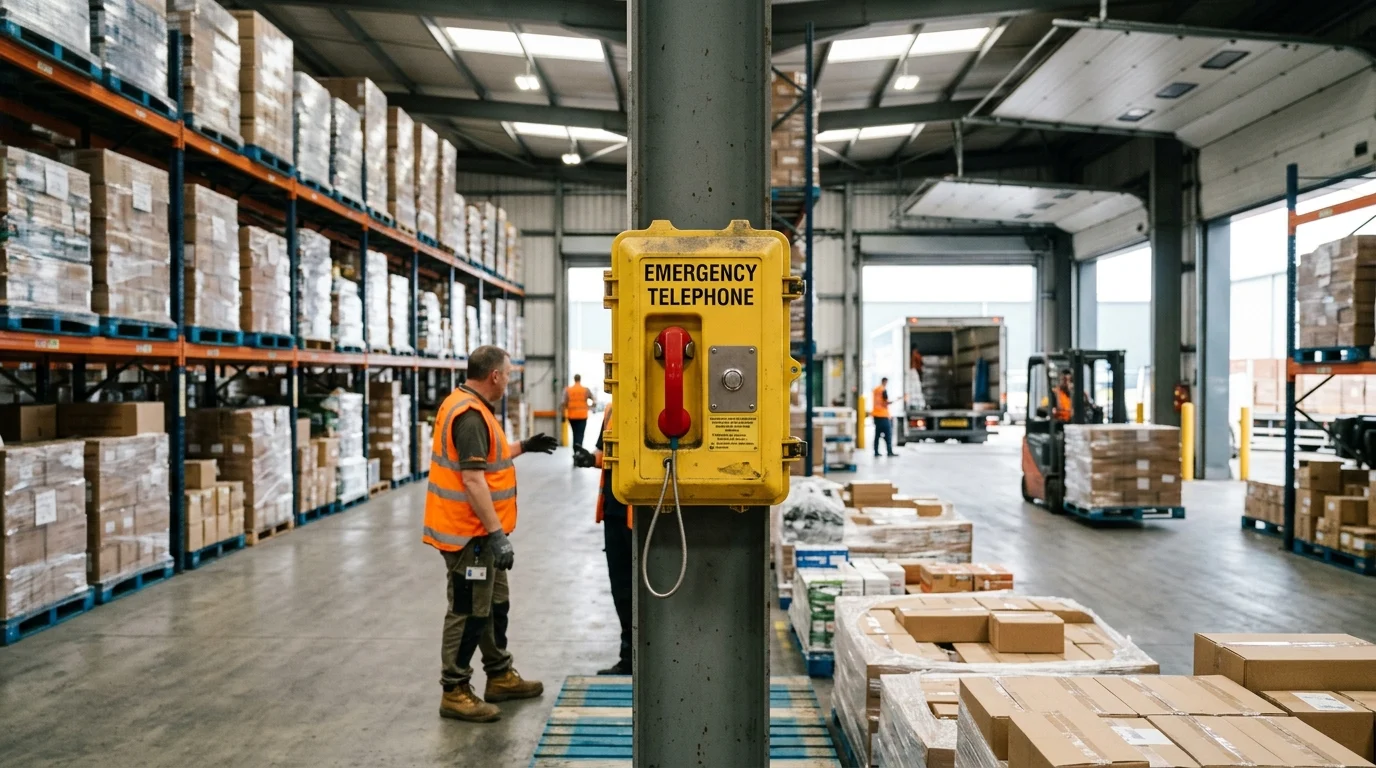
Despite the ubiquitous presence of mobile phones, dedicated emergency telephone systems remain a critical component of life-safety infrastructure. Mobile devices are susceptible to battery depletion, network outages, and cellular dead zones, rendering them unreliable in specific structural or geographic environments.
Dedicated systems provide a fixed, known point of communication that emergency responders can rely on. Furthermore, they fulfill stringent legal and regulatory mandates that require property owners to provide accessible emergency communication channels independent of a user’s personal device.
How they reduce response time
The primary advantage of a fixed emergency telephone system is the drastic reduction in emergency response times. When relying on a mobile phone, a caller must verbally articulate their exact location—a process that can be highly error-prone during high-stress situations or impossible if the caller is incapacitated.
Because dedicated emergency phones transmit precise ALI data immediately upon connection, dispatchers do not need to triangulate a signal or interrogate the caller for directions. Industry data indicates that fixed-location emergency systems can reduce initial dispatch times by 60 to 90 seconds compared to standard mobile 911 calls. In medical emergencies or active threat scenarios, this acceleration in resource deployment significantly improves outcome probabilities.
Where they are most critical
Emergency telephone systems are mandatory in environments characterized by isolation, high risk, or signal degradation. Subterranean infrastructure, heavily shielded buildings, and remote industrial zones frequently lack reliable cellular penetration.
| Deployment Environment | Primary Communication Challenge | Key System Requirement |
|---|---|---|
| Elevators & Shafts | Complete cellular signal blocking (Faraday cage effect) | Hands-free, ADA-compliant operation with automated location data |
| Underground Parking | Weak RF penetration, high ambient noise | Noise-canceling microphones, high-visibility strobe indicators |
| University Campuses | Expansive areas, delayed internal security routing | High-visibility blue light towers, SIP integration for mass notification |
| Industrial / Mining | Explosive atmospheres, extreme temperatures | ATEX/IECEx certified explosion-proof enclosures, IP67 ratings |
Technical, Compliance, and Integration Requirements
Deploying an emergency telephone system requires strict adherence to a complex web of building codes, accessibility standards, and technical specifications. Failure to meet these requirements not only compromises user safety but also exposes facility operators to severe legal and financial liabilities.
Codes and standards to consider
The Americans with Disabilities Act (ADA) dictates precise physical and operational parameters for emergency phones in the United States. ADA compliance requires that communication devices be operable without tight grasping, pinching, or twisting of the wrist, and must activate with a maximum force of 5 lbs. Furthermore, the highest operable part of the phone must be mounted no higher than 48 inches from the finished floor for forward or side reach.
For vertical transportation, the ASME A17.1/CSA B44 Safety Code for Elevators and Escalators governs emergency communication. Recent updates to this code mandate that elevator communication systems must include two-way video capabilities for the hearing impaired and must verify line operability on a daily basis. Additionally, the National Fire Alarm and Signaling Code (NFPA 72) outlines strict survivability requirements for the cabling and power supplies supporting these systems.
Environmental and uptime requirements
Emergency telephones must operate flawlessly in adverse conditions. Endpoints installed outdoors or in industrial settings demand high Ingress Protection (IP) ratings. An IP66 rating is generally the minimum standard for outdoor call boxes, ensuring protection against heavy seas or powerful jets of water, while IP67-rated devices can withstand temporary submersion.
Thermal resilience is equally critical. High-grade emergency telephone systems are engineered with extended operating temperature ranges, typically functioning reliably from -40°C to +65°C (-40°F to +149°F). To guarantee uptime, modern SIP-based systems utilize automated polling—pinging endpoints every 10 to 15 minutes. If an endpoint fails to respond, the system instantly generates an alert to facility managers, ensuring the unit is repaired before an actual emergency occurs.
Integration with elevators and security systems
Modern emergency telephone systems rarely operate in isolation; they are increasingly integrated into broader building management and physical security ecosystems. Through the use of open standards like ONVIF and SIP, an emergency call can trigger automated responses across multiple platforms.
For example, activating an emergency phone in a parking garage can automatically command an integrated Video Management System (VMS) to pan, tilt, and zoom (PTZ) the nearest surveillance camera onto the caller. Similarly, integration with access control systems allows central station operators to remotely unlock doors or gates for first responders directly from the emergency phone’s communication console, streamlining the intervention process.
Specification, Installation, and Maintenance
The lifecycle of an emergency telephone system—from initial specification to ongoing maintenance—requires a methodical approach to ensure continuous reliability. Procurement decisions must balance upfront capital expenditures with long-term operational costs and system longevity.
How to evaluate vendors
When selecting a vendor, buyers must evaluate the manufacturer’s track record for hardware durability and software support. Key metrics include the Mean Time Between Failures (MTBF), which for high-quality emergency endpoints should exceed 50,000 hours. Vendors should provide comprehensive documentation detailing compliance with UL, CE, and FCC standards.
Furthermore, buyers should assess the vendor’s warranty terms and technical support SLA. A reputable manufacturer will offer a minimum 2-year to 5-year warranty on critical hardware components and guarantee the availability of replacement parts for at least a decade, reflecting the expected lifecycle of life-safety infrastructure.
Main cost drivers
The total cost of ownership for an emergency telephone system is driven by hardware specifications, network architecture, and installation complexities. Basic indoor analog or SIP endpoints typically range from $300 to $600 per unit. However, ruggedized, IP67-rated, or ATEX-certified explosion-proof models for hazardous environments can easily exceed $1,500 to $2,500 per unit.
Infrastructure modifications represent another significant cost driver. Upgrading legacy analog systems to VoIP requires either pulling new Cat5e/Cat6 Ethernet cable or installing analog-to-IP gateways. For remote outdoor installations, trenching for conduit can be prohibitively expensive, making cellular gateways—despite their recurring monthly data costs—a more economical long-term solution.
Testing and maintenance practices
Passive reliance on emergency systems is a critical operational failure; rigorous, scheduled testing is mandatory. Historically, maintenance personnel had to physically walk to each endpoint, press the button, and verify the connection. Today, intelligent systems automate this process.
For instance, ASME A17.1 requires elevator emergency phones to automatically verify the integrity of the communication line at least once every 24 hours. If the line fails, the system must trigger a local audible and visual alarm. Beyond automated line checks, facility managers should conduct comprehensive manual tests quarterly, verifying microphone clarity, speaker volume, strobe functionality, and the accuracy of the transmitted ALI data to the PSAP.
How to Choose the Right Emergency Telephone System
Matching the correct emergency telephone system to a specific operational environment ensures regulatory compliance while optimizing infrastructure investments. The decision process hinges on evaluating existing network capabilities, environmental hazards, and the specific communication needs of the end-users.
Standalone vs integrated systems
Standalone systems operate independently of the enterprise network, utilizing dedicated analog lines or discrete cellular connections. These are highly resilient to localized network outages or cyber-attacks since they do not share infrastructure with standard IT data traffic. They are ideal for isolated locations or facilities with outdated IT networks.
Integrated networked systems, utilizing SIP/VoIP, consolidate emergency communications onto the corporate LAN/WAN. This approach dramatically reduces recurring telecommunication line costs and enables centralized management through a unified dashboard. Integrated systems support advanced features like mass broadcasting, where all emergency phone speakers can be simultaneously activated to issue public address announcements during a campus-wide crisis. However, they require robust network redundancy, including UPS-backed PoE (Power over Ethernet) switches, to ensure survival during power failures.
Selection criteria by use case
Selecting the optimal system requires a detailed use-case analysis. Buyers must map their physical environment to the appropriate technology.
| Primary Use Case | Recommended Technology | Critical Selection Criteria |
|---|---|---|
| Corporate / University Campus | SIP / VoIP | Centralized health polling (10-15 min intervals), VMS integration, mass notification capability |
| Remote Highway / Park | Cellular (LTE/5G) | Solar-power compatibility, dual-SIM redundancy, high-gain antennas |
| Heavy Industry / Petrochemical | SIP or Analog | ATEX/IECEx explosion-proof certification, noise-canceling audio (>85dB ambient noise rejection) |
| Legacy Elevator Retrofit | Analog-to-Cellular Gateway | ASME A17.1 compliance, daily automated line testing, battery backup |
By systematically evaluating these criteria—from ADA compliance and MTBF ratings to network topology and integration capabilities—facility managers can procure an emergency telephone system that provides an uncompromising, fail-safe lifeline when it is needed most.
Key Takeaways
- The most important conclusions and rationale for Emergency Telephone System
- Specs, compliance, and risk checks worth validating before you commit
- Practical next steps and caveats readers can apply immediately
Frequently Asked Questions
What is an emergency telephone system?
It is a dedicated communication system that connects users directly to security, dispatch, or a monitoring center with minimal delay, even during network congestion or power issues.
How does an emergency telephone system work?
When the button is pressed or handset lifted, the unit auto-dials a preset number and can send location data so responders know exactly where the call comes from.
Where are emergency telephones most needed?
They are most useful in mines, oil and gas sites, transport hubs, campuses, prisons, and outdoor or hazardous areas where mobile coverage, noise, or safety risks are concerns.
Should I choose analog, cellular, or VoIP emergency phones?
Choose analog for legacy lines, cellular for remote sites, and VoIP/SIP for campuses or industrial networks needing centralized management, health monitoring, and easier scalability.
What should buyers check when selecting an industrial emergency telephone system?
Focus on reliability, location reporting, backup power, weatherproof or explosion-proof design, certifications like ATEX or CE, and supplier support for integration, installation, and maintenance.
Post time: May-25-2026