
Introduction
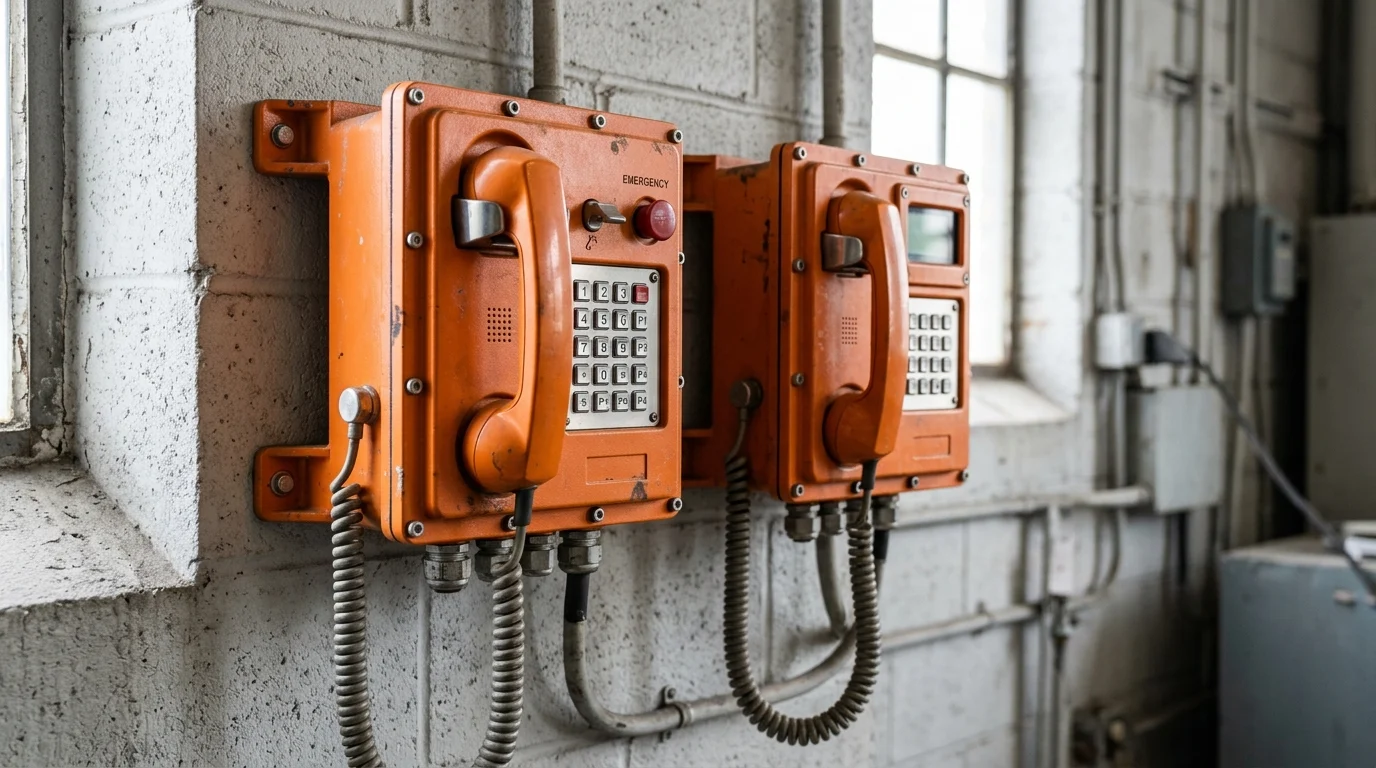
In facilities where flammable gases, vapors, or combustible dust are part of routine operations, communication equipment must be designed to eliminate ignition risk. Explosion proof telephones serve that role by enabling reliable voice communication in hazardous areas while meeting strict safety and compliance demands. This article examines the industries that depend most on these devices, from oil and gas to chemical processing and mining, and explains why their operating conditions make specialized telephones essential. By the end, readers will understand where explosion proof telephones are most commonly used and how they support both worker safety and operational continuity.
Why Explosion Proof Telephones Matter in High-Risk Environments
In industrial sectors where the presence of volatile gases, combustible dust, or flammable vapors is a daily reality, standard telecommunications equipment presents an unacceptable ignition risk. Explosion proof telephones are engineered specifically to prevent the electrical circuitry within the device from generating a spark or thermal event capable of igniting the surrounding atmosphere. These specialized communication endpoints are not merely accessories; they are critical life-safety and operational assets mandated by international regulatory frameworks.
The deployment of explosion proof communication devices forms the backbone of emergency response and daily operational coordination in high-risk environments. By housing internal components in heavy-duty, flameproof enclosures or utilizing intrinsically safe circuitry that limits energy transfer to harmless levels, these telephones ensure that essential communication lines remain open even during catastrophic facility events.
How they reduce operational risk and downtime
The primary function of an explosion proof telephone is to eliminate the device as a potential ignition source, thereby drastically reducing catastrophic operational risks. Standard industrial phones rely on mechanical hook-switches and unprotected circuitry that can easily arc during a ring cycle or when a handset is lifted. In contrast, explosion proof models utilize magnetic reed switches with zero moving parts and hermetically sealed electronics. This architectural shift prevents micro-sparks that could trigger an explosion in a highly concentrated gas environment.
Beyond preventing disasters, these devices directly impact facility uptime. High-risk environments often experience extreme vibrations, temperature fluctuations, and corrosive exposure that cause conventional electronics to fail rapidly. Industrial-grade explosion proof telephones are typically rated for a Mean Time Between Failures (MTBF) exceeding 50,000 hours. By minimizing equipment failure rates, plant managers can avoid communications-related work stoppages, which in sectors like offshore drilling can incur downtime costs exceeding $100,000 per hour.
Why hazardous area communication is now a strategic priority
Historically viewed strictly as compliance requirements, hazardous area communications have evolved into strategic operational priorities. The integration of modern explosion proof telephones into centralized unified communications platforms allows for real-time facility monitoring and automated emergency broadcasting. This integration ensures that a localized incident can trigger instantaneous, plant-wide alerts without manual intervention.
Furthermore, modern strategic communication planning demands 99.99% availability for critical safety infrastructure. By deploying network-monitored Voice over IP (VoIP) explosion proof telephones, control room operators can continuously poll device health, instantly identifying offline units or cable faults before an emergency occurs. This proactive approach shifts hazardous area communication from a passive safety net to an active, intelligence-gathering component of industrial risk management.
Industries That Need Explosion Proof Telephones Most
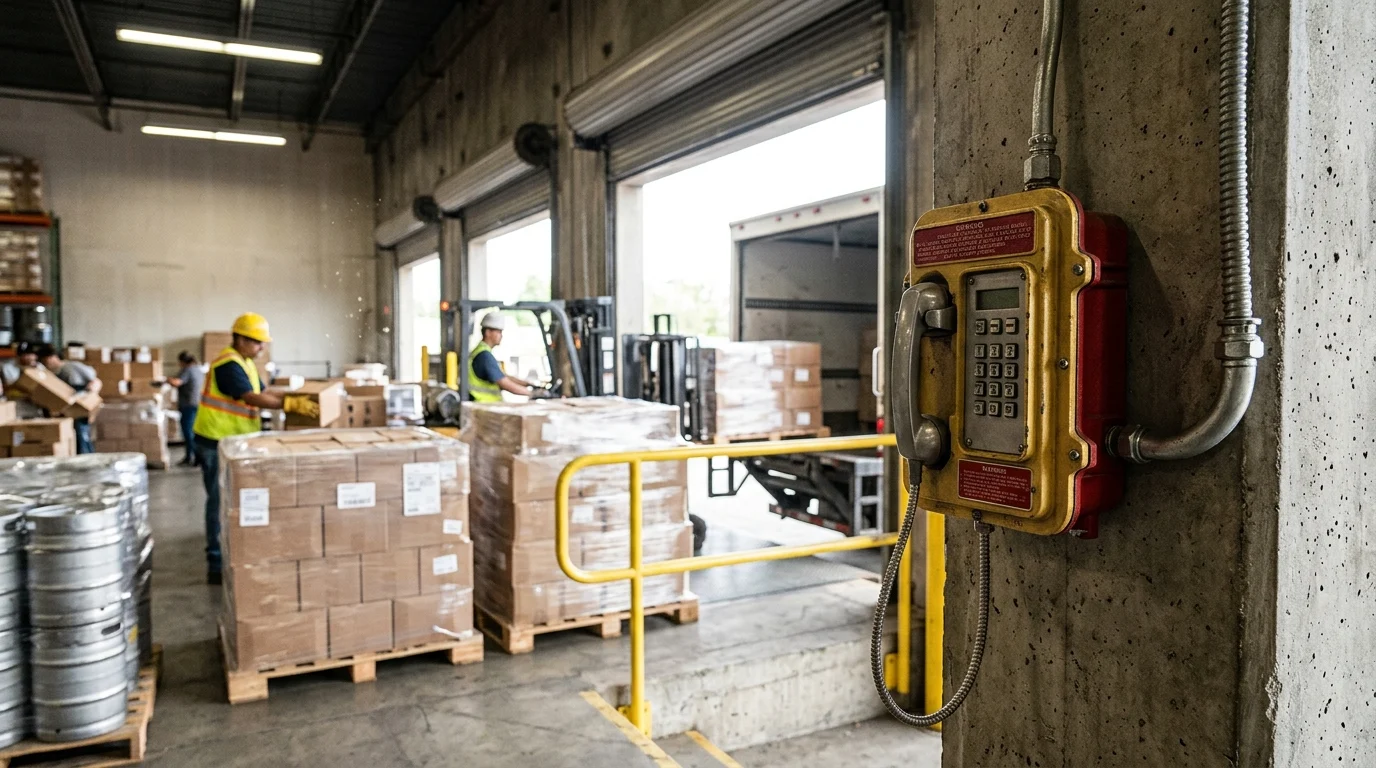
The demand for explosion proof telephones is concentrated in industries where the atmospheric concentration of flammable substances routinely reaches explosive limits. These sectors operate under strict environmental and safety regulations that dictate the precise type of communication equipment permissible in designated hazardous zones.
Oil and gas, petrochemical, and refinery applications
The oil and gas industry, encompassing upstream extraction, midstream transportation, and downstream refining, represents the largest consumer of explosion proof telecommunications. In these facilities, hydrocarbon gases such as methane, propane, and hydrogen are ubiquitous. Telephones deployed on offshore rigs or refinery pump stations must typically meet Zone 1 or Class I, Division 1 classifications, ensuring they can operate safely in environments where explosive gas mixtures are likely to occur during normal operations.
Petrochemical plants face similar, and sometimes more complex, challenges due to the diverse array of reactive chemicals processed simultaneously. Devices in these environments must not only prevent ignition but also resist severe chemical corrosion. Consequently, explosion proof phones in petrochemical settings are frequently housed in Glass Reinforced Polyester (GRP) or 316L stainless steel enclosures, providing a vital barrier against both explosive atmospheres and aggressive chemical degradation.
Mining, chemical processing, marine, and power generation use cases
While oil and gas environments are primarily concerned with volatile gases, the mining and agriculture sectors face severe risks from combustible dust. In underground coal mines or grain processing facilities, suspended particulate matter can ignite with devastating force. Telephones in these sectors must meet Zone 21 or Zone 22 dust ignition-proof standards, requiring specialized sealing to prevent fine dust ingress from reaching internal circuitry.
Marine and power generation applications introduce additional environmental stressors. Offshore wind substations and marine vessels require communication devices that combine explosion proof certifications with extreme weather resistance. These units must withstand constant salt spray, heavy seas, and UV exposure. Power generation facilities, particularly those handling pulverized coal or utilizing hydrogen for generator cooling, require similar dual-threat protection to maintain critical communication channels during load-shedding or emergency shutdown protocols.
Operating conditions and ignition hazards that drive demand
The specific operating conditions and the nature of the ignition hazard are the primary drivers when selecting the appropriate telecommunications equipment. Engineers must evaluate the specific gas group, temperature class, and required ingress protection to ensure the device matches the environmental threat.
| Industry | Primary Hazard | Typical Zone / Division | Minimum IP Rating |
|---|---|---|---|
| Oil & Gas (Upstream) | Hydrocarbon gases, Hydrogen | Zone 1 / Class I Div 1 | IP66 |
| Mining (Underground) | Coal dust, Methane | Zone 21 / M1 | IP67 |
| Marine / Offshore | Saltwater, Vapors | Zone 2 / Class I Div 2 | IP67 (Corrosion Resistant) |
| Chemical Processing | Corrosive vapors, Solvents | Zone 1 / Zone 2 | IP66 |
This matrix of hazards dictates the physical and electrical engineering of the telephone. For instance, a device deployed in an offshore hydrogen processing area must not only carry a stringent IIC gas group rating but must also maintain an IP67 seal against high-pressure water jets and submersion, driving the demand for highly specialized, multi-certified hardware.
Technical and Compliance Factors to Evaluate
Evaluating an explosion proof telephone requires a rigorous analysis of its technical specifications and regulatory compliance. Industrial buyers must match the physical enclosure properties, regional certifications, and underlying communication protocols to their specific facility architecture.
Hazardous area classifications and enclosure protection
The foundation of any explosion proof telephone is its enclosure, which dictates its hazardous area classification. Equipment is generally classified for Zone 0, 1, or 2 (for gases) and Zone 20, 21, or 22 (for dust), depending on the frequency and duration of the explosive hazard. Most industrial telephones are designed for Zone 1 or Zone 2 deployment, utilizing flameproof enclosures (Ex d) that can contain an internal explosion without transmitting the ignition to the outside atmosphere, or increased safety designs (Ex e) that prevent sparks entirely.
Enclosure protection also extends to mechanical durability. Devices are evaluated for impact resistance, often requiring an IK10 rating to withstand strikes from heavy tools or falling debris. Materials such as die-cast copper-free aluminum or heavy-duty GRP are selected not just for their structural integrity, but for their anti-static properties, ensuring that the friction of a user wiping the phone does not generate an electrostatic discharge capable of acting as an ignition source.
Certifications, standards, and regional compliance requirements
Global deployment of explosion proof equipment is governed by a fragmented landscape of regional standards. In Europe, the ATEX directive is a strict legal requirement, while international projects generally look to the IECEx certification scheme. In North America, the UL and CSA standards dictate compliance under the Class and Division system. A premium explosion proof telephone will often carry dual or triple certifications to allow for standardized procurement across a multinational corporation’s global footprint.
Temperature classification is a critical compliance metric that is often overlooked. Devices are rated from T1 to T6 based on their maximum surface temperature under fault conditions. A T6 rating is the most stringent, guaranteeing that the external surface of the telephone will never exceed 85°C. This is mandatory when operating in environments containing gases with very low ignition temperatures, such as carbon disulfide.
Analog vs VoIP and wired vs wireless comparison points
The choice between legacy analog and modern VoIP infrastructure fundamentally alters the technical capabilities of the deployment. Analog phones remain prevalent due to their simplicity and ability to operate on existing 2-wire copper infrastructure, drawing standard 48V DC line power directly from a PBX. However, they lack advanced diagnostic capabilities and are susceptible to line noise over long distances.
VoIP (SIP) telephones represent the modern standard, utilizing Ethernet infrastructure and Power over Ethernet (PoE). VoIP devices offer superior audio quality, network-level remote diagnostics, and seamless integration with modern unified communications systems.
| Technology | Infrastructure | Power Delivery | Bandwidth Requirement |
|---|---|---|---|
| Analog | 2-wire copper | PBX Line Voltage (48V DC) | N/A (Voice band) |
| VoIP (SIP) | Cat5e / Cat6 Ethernet | PoE (IEEE 802.3af/at) | < 100 kbps per call |
| Wireless (Wi-Fi/LTE) | Access Points / Cellular | Internal Battery (Ex-certified) | Variable |
Wireless explosion proof devices are also emerging in the market, utilizing intrinsically safe batteries and specialized antennas. While offering ultimate mobility, wireless units face strict limitations on battery capacity to maintain their Ex certification, typically capping continuous talk time at 8 to 12 hours, which requires rigorous shift-based charging protocols.
Deployment, Sourcing, and Lifecycle Planning
Procuring and installing explosion proof telephones is a complex logistical exercise that requires meticulous planning. From initial acoustic assessments to long-term maintenance strategies, the lifecycle management of these devices significantly impacts both safety outcomes and total capital expenditure.
Site surveys and vendor qualification steps
Before a single device is ordered, comprehensive site surveys must be conducted to determine both the hazardous zoning and the acoustic challenges of the environment. Ambient noise in heavy industrial settings frequently exceeds 90 dB, rendering standard telephone ringers and handsets useless. Site surveys identify the need for auxiliary equipment, such as external explosion proof beacons and horns capable of outputting >110 dB, as well as noise-canceling microphones integrated into the handset.
Vendor qualification is equally critical. Buyers must verify that the manufacturer holds valid, auditable quality management certificates (such as ISO 9001 and specific ATEX Quality Assurance Notifications). Due to the specialized nature of these devices, vendors often enforce Minimum Order Quantities (MOQs) for custom configurations, and buyers should anticipate standard manufacturing lead times ranging from 6 to 12 weeks. Securing a vendor with a robust supply chain and transparent lead times is essential to prevent delays in facility commissioning.
Total cost of ownership, spare parts, and maintenance planning
The Total Cost of Ownership (TCO) for an explosion proof telephone extends far beyond the initial purchase price, which typically ranges from $800 to $2,500 per unit depending on certifications and IP protocols. Facilities must budget for specialized installation, which requires certified Ex-gland fittings, armored cabling, and highly trained personnel to ensure the integrity of the flameproof seals is maintained during mounting.
Maintenance planning and spare parts inventory are vital for controlling long-term Opex. While the core electronics are highly reliable, external components suffer mechanical wear. Facilities should maintain a localized stock of consumable spares, particularly armored handset cords—which should be rated for a minimum 1,000 lb pull strength—and replacement ear-pieces. Establishing a proactive maintenance schedule that includes regular visual inspections of enclosure seals and torque checks on securing bolts will extend the lifecycle of the deployment well past a decade.
How to Choose the Right Explosion Proof Telephone
Selecting the optimal explosion proof telephone requires balancing stringent safety mandates with practical usability and procurement budgets. A systematic approach ensures that the chosen hardware not only passes regulatory audits but also performs reliably during a critical emergency.
Matching device features to safety and procurement needs
Matching device features to specific safety needs involves looking beyond the basic Ex certification. For instance, in areas where workers wear heavy protective gloves, large, tactile, metallic keypads or auto-dial hotlines (ring-down phones with no keypad) are necessary for rapid use. Full-duplex communication is another critical feature, ensuring that both parties can speak and be heard simultaneously without the clipping associated with half-duplex systems.
Procurement teams must also evaluate the integration features of the device.
Key Takeaways
- The most important conclusions and rationale for Explosion Proof Telephones
- Specs, compliance, and risk checks worth validating before you commit
- Practical next steps and caveats readers can apply immediately
Frequently Asked Questions
Which industries most often need explosion proof telephones?
Oil and gas, petrochemical, mining, chemical processing, marine, power generation, and grain or dust-handling facilities need them most due to flammable gases, vapors, or combustible dust.
Why can’t standard industrial phones be used in hazardous areas?
Standard phones can create sparks or heat during ringing or switching. Explosion proof models use sealed enclosures or intrinsically safe circuits to prevent ignition in classified zones.
What certifications should I check before selecting an explosion proof telephone?
Match the phone to your site classification and look for approvals such as ATEX, CE, FCC, ROHS, and ISO9001-backed manufacturing quality. Always confirm Zone or Division suitability first.
Can explosion proof telephones support modern VoIP systems?
Yes. Many models support IP PBX/VoIP, allowing health monitoring, fast fault detection, and integration with paging or emergency broadcast systems for plant-wide communication.
How can Siniwo help with hazardous area communication projects?
Siniwo provides one-stop support from design and integration to installation and maintenance, with explosion-proof, weatherproof, and emergency communication products used in 70+ countries.
Post time: Jun-04-2026