
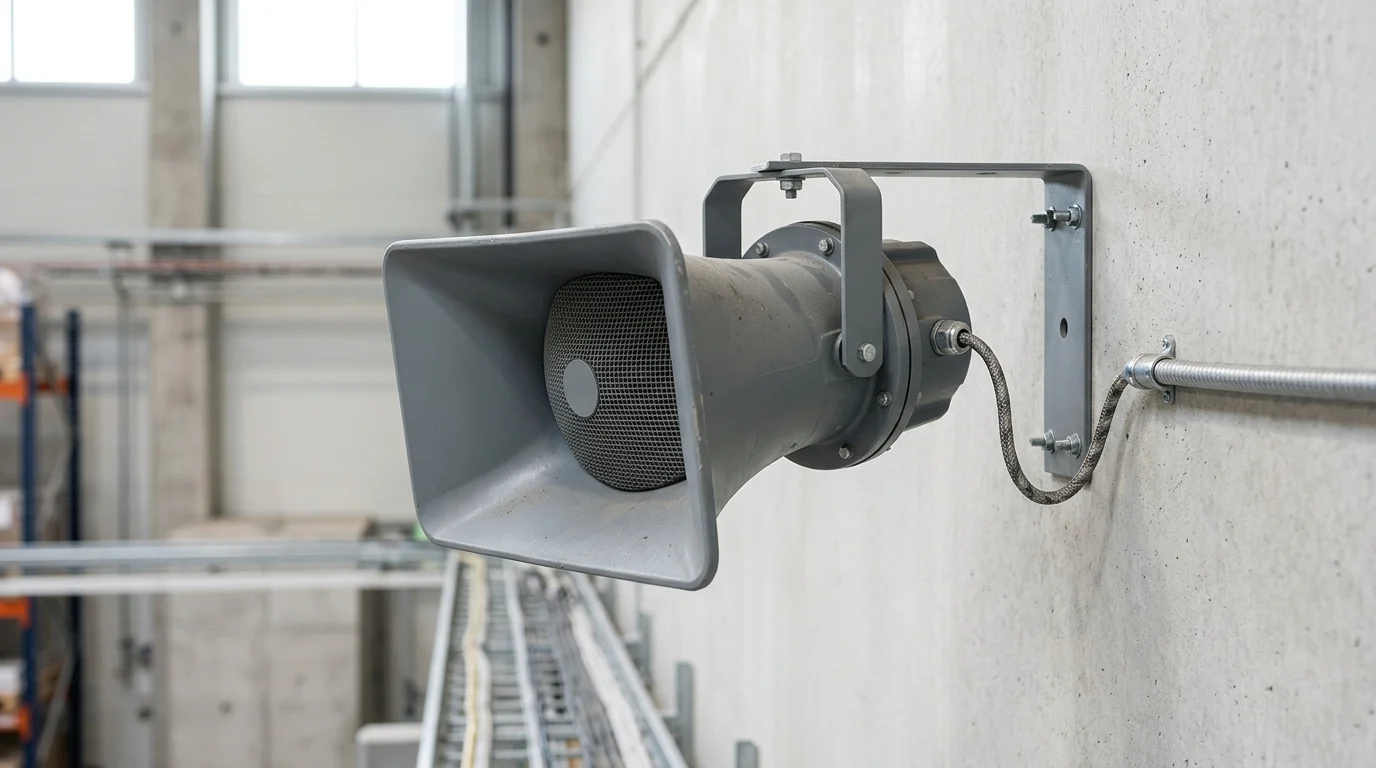
Why Industrial PA Speakers Matter in Factories
Industrial facilities present some of the most challenging acoustic environments in the modern built world. Between the constant hum of heavy machinery, the intermittent clatter of material handling equipment, and the vast, reverberant spaces of production floors, delivering clear audio communication is a highly complex engineering task. In these settings, standard commercial audio equipment rapidly fails or proves entirely ineffective. An industrial PA speaker is engineered specifically to overcome these acoustic and environmental barriers, ensuring that critical messages cut through the din.
The deployment of specialized industrial PA systems is not merely a matter of convenience; it is a fundamental requirement for facility safety and operational efficiency. When ambient noise levels routinely fluctuate between 85 dB and 115 dB, unassisted vocal communication is impossible, and standard paging speakers simply add unintelligible noise to the environment. Understanding the distinction between commercial-grade audio and purpose-built industrial acoustic equipment is the first step in designing a reliable facility communication network.
What Defines an Industrial PA Speaker
At its core, an industrial PA speaker is defined by its survivability and its acoustic output capabilities. Unlike commercial speakers designed for climate-controlled retail or office spaces, industrial units are built to withstand extreme environmental stressors. This includes enclosures fabricated from high-impact ABS, UV-resistant fiberglass, or marine-grade stainless steel. These materials prevent degradation from chemical exposure, airborne particulates, and constant vibration.
Internally, the components are equally specialized. Voice coils and driver diaphragms are constructed from phenolic resins or titanium rather than paper or standard plastics, allowing them to handle continuous high-wattage input without burning out. Furthermore, industrial PA speakers are designed to operate across an extreme temperature threshold, typically rated for continuous functionality from -40°C to +60°C (-40°F to 140°F). They also utilize specialized transformers for 70V or 100V distributed audio lines, enabling cable runs that can span thousands of feet across a manufacturing campus without significant signal degradation.
Where PA Speakers Create Operational Value
The operational value of an industrial PA speaker system extends far beyond simple voice paging. In modern manufacturing and logistics, these systems act as the auditory interface for the facility’s automated control systems. By integrating with Supervisory Control and Data Acquisition (SCADA) systems or Manufacturing Execution Systems (MES), PA networks can broadcast automated alerts when production bottlenecks occur, drastically reducing mean time to repair (MTTR) by notifying the exact required personnel instantly.
Furthermore, the value proposition is heavily weighted toward risk mitigation and liability reduction. Clear, intelligible communication during an emergency prevents panic and orchestrates safe, orderly evacuations. The financial impact of a poorly managed evacuation or an uncommunicated hazard can be catastrophic. Investing in high-intelligibility industrial audio ensures compliance with stringent occupational safety mandates while streamlining daily workflows.
| Feature | Standard Commercial PA Speaker | Industrial PA Speaker |
|---|---|---|
| Typical Enclosure | Thin plastic or lightweight metal | Fiberglass, cast aluminum, stainless steel |
| Max SPL (1W/1m) | 85 dB – 95 dB | 105 dB – 125 dB |
| Operating Temp Range | 0°C to +40°C | -40°C to +60°C (or higher) |
| Ingress Protection | IP20 to IP44 | IP66, IP67, or NEMA 4X |
| MTBF (Expected) | ~20,000 hours | >50,000 hours |
Key Applications of Industrial PA Speakers
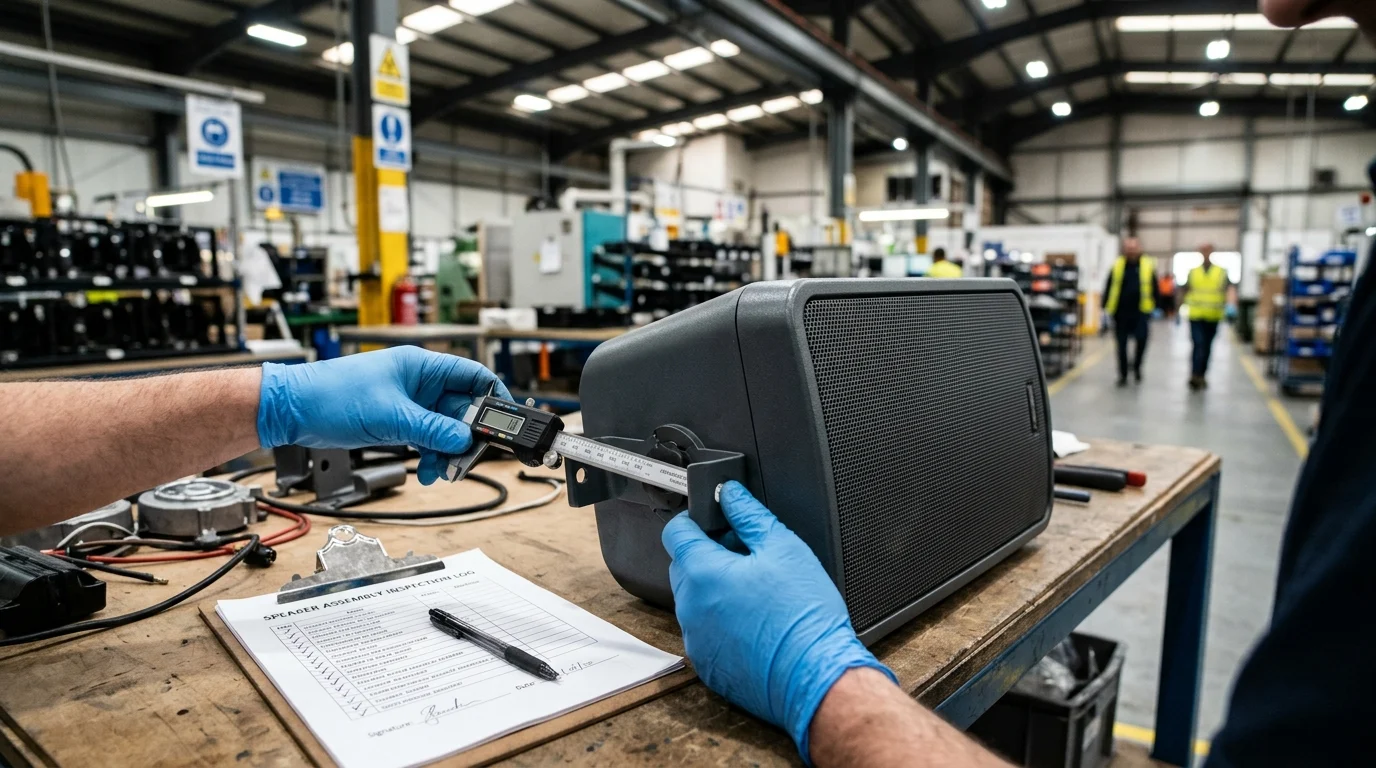
The versatility of an industrial PA speaker allows it to serve multiple critical functions within a single facility. Modern distributed audio architectures, particularly those leveraging IP/SIP (Session Initiation Protocol) technology, allow a single network of speakers to handle distinct, prioritized applications simultaneously. Understanding these primary use cases is essential for determining the correct zoning, speaker selection, and integration strategies for a facility.
Emergency Paging and Evacuation Alerts
The most critical application for any industrial PA speaker is the broadcasting of emergency evacuation alerts and safety pages. In the event of a fire, chemical spill, or severe weather event, the PA system must override all other audio traffic. Regulatory bodies, such as the NFPA (National Fire Protection Association) and OSHA, mandate strict performance criteria for these systems. Specifically, emergency tones and voice instructions must typically exceed the ambient noise level by at least 15 dB, or reach a maximum of 120 dB, to ensure they are perceived by workers wearing hearing protection.
Voice evacuation systems rely heavily on the intelligibility of the industrial PA speaker. While traditional sirens indicate a generic hazard, voice instructions can direct personnel away from specific danger zones or instruct them to shelter in place. This requires speakers capable of reproducing the human vocal frequency range (roughly 300 Hz to 4 kHz) with extreme clarity, minimizing distortion even at maximum output levels.
Production Communication and Workflow Updates
Beyond emergencies, industrial PA speakers facilitate the daily rhythm of production. Facilities utilize these systems for shift change notifications, break announcements, and localized paging for maintenance or supervisory staff. By establishing distinct audio zones, management can page specific production lines or departments without distracting the entire factory floor.
Advanced integration allows the PA system to become an extension of workflow automation. For example, if a specific machine faults, the control system can trigger a pre-recorded message or a synthesized text-to-speech alert directed only to the maintenance zone. This targeted approach reduces the “alarm fatigue” that occurs when workers are constantly subjected to facility-wide pages that do not pertain to their specific duties. Implementing a zoned approach can reduce unnecessary auditory interruptions by up to 70%.
Warehouse and Logistics Announcements
Warehouses and logistics hubs present unique acoustic challenges due to their vast square footage, high ceilings, and rows of dense racking, which can absorb or unpredictably reflect sound. Industrial PA speakers in these environments are essential for coordinating forklift traffic, directing incoming transport trucks to specific loading docks, and managing inventory cycles.
In high-bay warehouses, speakers are often suspended from the ceiling or mounted high on structural columns to cast sound downward, penetrating the aisles. A properly specified high-output horn speaker can effectively cover 5,000 to 10,000 square feet of floor space depending on the ambient noise and racking configuration. Effective logistics communication minimizes the time drivers spend waiting for dock assignments and ensures material handlers are rapidly deployed to areas requiring urgent inventory replenishment.
Industrial PA Speaker Specifications to Compare
Selecting the proper industrial PA speaker requires a rigorous evaluation of acoustic and physical specifications. Relying on wattage alone is a common procurement mistake; wattage merely indicates power consumption, not the actual volume or clarity of the sound produced. Instead, acoustic engineers and facility managers must evaluate a matrix of specifications that dictate how the speaker will perform in a specific industrial micro-environment.
Coverage, Sound Pressure, and Intelligibility
The true measure of a speaker’s volume is its Sound Pressure Level (SPL), typically measured in decibels (dB) at 1 watt of power from a distance of 1 meter. An industrial PA speaker must feature high sensitivity, often boasting SPL ratings between 105 dB and 115 dB (1W/1m). This ensures that the speaker can generate the massive volume required to overcome heavy machinery noise without demanding excessive amplifier power.
However, volume is useless without intelligibility. Intelligibility is quantified using the Speech Transmission Index (STI), a scale from 0 to 1.0. For emergency communication in industrial settings, an STI score of 0.5 or higher is generally mandated. Achieving this score requires a speaker with a carefully tuned frequency response that emphasizes consonant sounds, combined with proper placement to minimize reverberation and overlapping sound waves that muddy the audio.
IP Ratings, Weatherproofing, and Durability
Industrial environments expose equipment to harsh elements, making Ingress Protection (IP) and NEMA ratings critical specifications. An IP rating consists of two digits: the first indicates protection against solids (dust), and the second against liquids. A standard industrial PA speaker should carry a minimum rating of IP66, indicating it is totally dust-tight and protected against heavy seas or powerful jets of water—essential for facilities requiring high-pressure washdowns.
In North America, NEMA ratings are frequently used. A NEMA 4X rating is highly desirable, as it guarantees protection against windblown dust, rain, splashing water, and importantly, corrosion. For hazardous environments where combustible gases or dust are present, such as petrochemical plants or grain elevators, speakers must carry specific explosion-proof certifications (e.g., ATEX, IECEx, or Class I, Division 1/2). These units feature heavy-duty, flame-proof enclosures designed to contain any internal electrical spark, preventing it from igniting the external atmosphere.
Horn Speakers vs Cabinet Speakers
The physical architecture of the industrial PA speaker fundamentally dictates its acoustic dispersion and ideal application. The two most common form factors are horn speakers and cabinet (or surface-mount) speakers. Horn speakers use a flared waveguide to acoustically amplify the driver’s output, resulting in extremely high SPL and highly directional sound. They are highly efficient but typically lack low-frequency (bass) reproduction, making them ideal for piercing alarms and clear voice paging in noisy, expansive areas.
Cabinet speakers, conversely, utilize a more traditional box enclosure, often housing multiple drivers (a woofer and a tweeter). They provide a wider frequency response and better overall audio fidelity, making them suitable for background music and voice paging in quieter industrial zones like break rooms, laboratories, or packaging areas. However, they lack the sheer punch and weather resistance of a dedicated industrial horn.
| Specification | Horn Speakers | Cabinet / Surface-Mount Speakers |
|---|---|---|
| Primary Use Case | High-noise areas, outdoor yards, long aisles | Low-to-medium noise areas, break rooms, labs |
| Frequency Response | Narrow (e.g., 300 Hz – 8 kHz) | Wide (e.g., 80 Hz – 20 kHz) |
| Dispersion Angle | Highly directional (40° to 90°) | Wide dispersion (90° to 120°) |
| Max SPL Capability | Extremely High (up to 130+ dB) | Moderate to High (90 dB – 110 dB) |
| Acoustic Efficiency | Excellent (requires smaller amplifiers) | Moderate (requires more power for high volume) |
Planning and Installing an Industrial PA Speaker System
Procuring the right hardware is only half the equation; the efficacy of an industrial PA speaker system relies entirely on expert planning, strategic placement, and rigorous installation protocols. Industrial acoustics are highly unforgiving. Poor placement can result in dead zones where critical alerts are inaudible, or echo chambers where overlapping speaker outputs render voice announcements completely unintelligible.
Site Survey, Zoning, and Speaker Placement
The foundation of any successful installation is a comprehensive acoustic site survey. Engineers must measure ambient noise levels across different operational states and map the physical dimensions of the space. Because sound follows the inverse square law—dropping by 6 dB every time the distance from the speaker doubles—engineers must calculate exactly how many speakers are needed to maintain the target SPL across the entire floor.
Zoning is the next critical step. Facilities should be divided into logical acoustic zones based on ambient noise and operational function. To achieve uniform coverage and avoid dead spots, speakers are typically spaced every 15 to 20 meters (50 to 65 feet) in high-noise environments. Rather than relying on a few massive speakers blasting at maximum volume, which creates deafening hotspots and poor intelligibility, distributed audio best practices dictate using a higher density of speakers tapped at lower wattage settings.
Integration with Fire Alarm and Safety Systems
In industrial settings, the PA system is rarely an isolated network; it must seamlessly interface with the facility’s life safety and fire alarm control panels (FACP). This integration ensures that when a fire alarm triggers, the PA system automatically mutes all background music or standard paging and broadcasts pre-recorded evacuation protocols. This requires dedicated contact closures or network-level API integrations between the two systems.
For life-safety compliance, the speaker lines themselves must be continuously monitored for faults. Modern industrial amplifiers utilize impedance monitoring or end-of-line (EOL) resistors to detect short circuits, open lines, or speaker failures. If a forklift severs a speaker cable in a warehouse aisle, the system must instantly report the fault to the central control room, ensuring the system is repaired before an emergency occurs.
Compliance, Testing, and Documentation
The installation of an industrial PA speaker system is subject to stringent regulatory compliance. In Europe, systems used for voice evacuation must comply with the EN 54-24 standard, which dictates strict performance and survivability criteria for the speakers themselves. In the United States, NFPA 72 governs the installation, performance, and testing of fire alarm and emergency communications systems.
Post-installation, comprehensive commissioning and testing are mandatory. Technicians must conduct acoustic measurements using calibrated SPL meters and STI analyzers to prove that the system meets the required volume and intelligibility thresholds in all zones. All test results, zoning maps, wiring diagrams, and baseline impedance measurements must be meticulously documented. This documentation forms the baseline for mandatory annual testing and ensures that future facility expansions do not compromise the integrity of the life-safety audio network.
How to Choose the Right Industrial PA Speaker Solution
Navigating the market for an industrial PA speaker solution requires balancing immediate acoustic needs with long-term infrastructure planning. Facility managers and procurement teams must evaluate potential systems not just on their spec sheets, but on how seamlessly they align with the facility’s IT infrastructure, maintenance capabilities, and future expansion plans.
Decision Criteria for Industrial Environments
The primary decision criteria hinge on the choice between traditional analog (70V/100V) systems and modern IP-based audio networks. If a facility has existing, high-quality copper wiring and requires a simple, unified paging system, a traditional 70V distributed system remains highly cost-effective and robust. However, if the facility requires granular zoning, automated software integrations, and remote monitoring, an IP/SIP-based system is superior.
IP-based industrial PA speakers connect directly to the facility’s local area network (LAN) via standard Ethernet cables. Many of these utilize Power over Ethernet (PoE or PoE+), drawing both data and up to 30 watts of power over a single cable. This drastically reduces installation labor and eliminates the need for massive centralized amplifiers. Decision-makers must assess their IT department’s bandwidth capacity and cybersecurity posture before deploying hundreds of network-attached audio endpoints.
Total Cost of Ownership and Supplier Support
When evaluating the Total Cost of Ownership (TCO), the initial capital expenditure on hardware represents only a fraction of the lifetime cost. Industrial environments degrade equipment rapidly; therefore, prioritizing speakers with a Mean Time Between Failures (MTBF) exceeding 50,000 hours is a sound financial strategy. Cheaper commercial speakers will require frequent replacement, driving up labor costs and necessitating costly scissor-lift rentals for high-bay replacements.
Finally, evaluate the supplier’s post-sale support and warranty structures. A reputable manufacturer of industrial audio equipment should offer comprehensive design assistance, acoustic modeling software support, and a minimum warranty period of 3 to 5 years on ruggedized hardware. Strong supplier support ensures that as the facility’s footprint evolves, the PA system can be seamlessly scaled and optimized without requiring a complete infrastructure overhaul.
Key Takeaways
- Choose industrial PA speakers instead of commercial audio equipment when ambient noise reaches 85 dB to 115 dB, because standard speakers often become unintelligible in those conditions.
- Specify rugged enclosure materials such as fiberglass, cast aluminum, stainless steel, or high-impact ABS for areas exposed to dust, vibration, chemicals, moisture, or UV.
- Use 70V or 100V distributed audio lines for large factories and warehouses where speaker cable runs may extend hundreds or thousands of feet.
- Place PA speakers strategically in production floors, loading docks, maintenance zones, outdoor yards, and evacuation routes to support both daily operations and emergency response.
- Integrate PA systems with SCADA, MES, VoIP, IP PBX, intercom, or dispatch platforms to automate alerts and reduce response time during production faults or safety events.
Frequently Asked Questions
What makes an industrial PA speaker different from a commercial speaker?
An industrial PA speaker is built for high noise, vibration, dust, moisture, chemicals, and temperature extremes. It typically uses rugged enclosures, high-output drivers, and 70V/100V line support for long cable runs across factories and warehouses.
Where are industrial PA speakers most useful in factories?
They are commonly used on production floors, assembly lines, loading docks, maintenance areas, emergency exits, and outdoor yards where clear paging, shift announcements, machine alerts, and evacuation instructions must be heard over machinery.
Can industrial PA speakers improve emergency response?
Yes. Clear PA announcements help guide evacuations, warn workers about hazards, and coordinate response teams. In noisy facilities, high-intelligibility speakers reduce confusion and support safer, faster emergency communication.
Do warehouses need industrial PA speakers?
Yes, especially large or high-ceiling warehouses where sound must travel across picking zones, packing stations, loading bays, and forklift traffic. Industrial PA speakers help broadcast operational updates, safety alerts, and logistics instructions clearly.
Can PA speakers integrate with VoIP or paging systems?
Many industrial PA systems can integrate with IP PBX, VoIP paging, dispatch consoles, intercoms, and emergency communication systems. This allows centralized announcements, automated alerts, and multi-zone paging across industrial sites.

Post time: Jun-18-2026