
Introduction
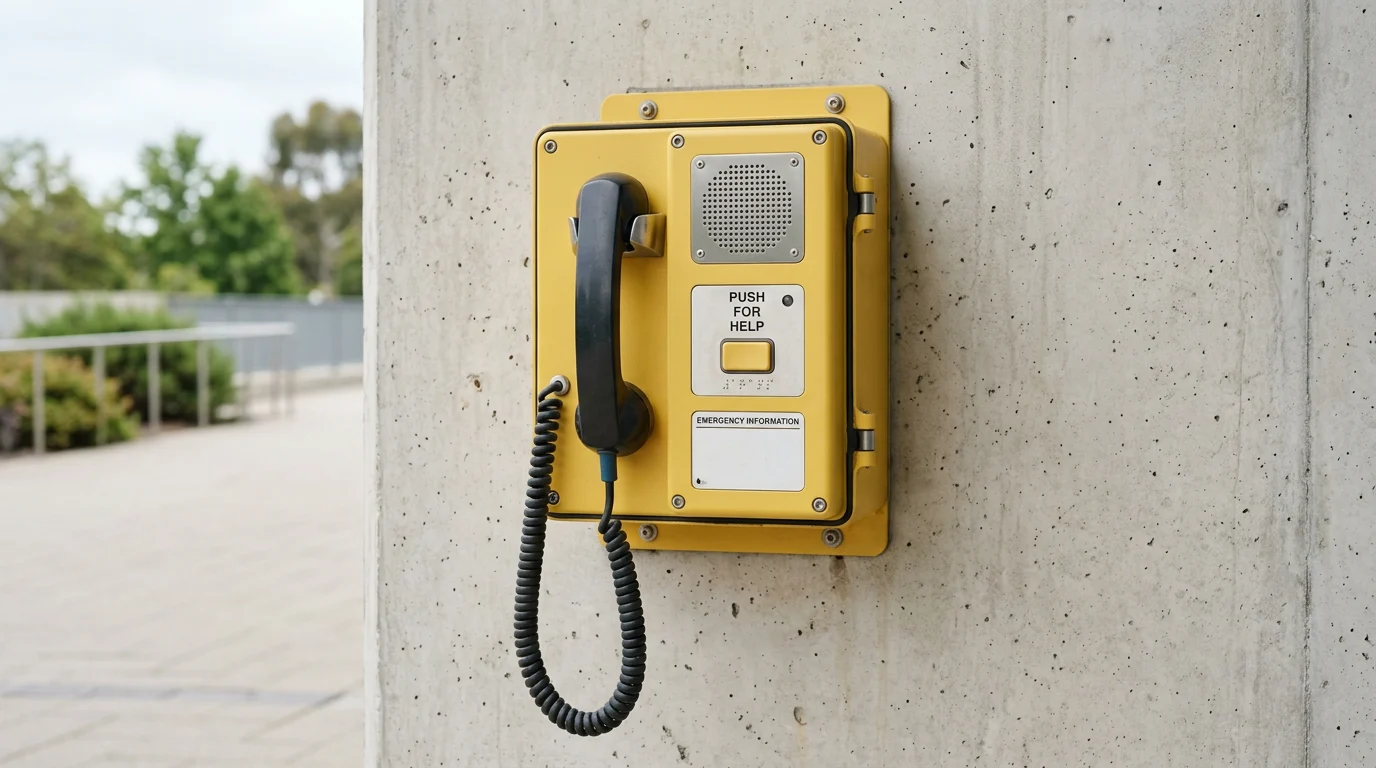
In industrial facilities, emergency telephones are not just backup devices; they are a critical layer of safety when noise, distance, hazardous conditions, or network failure make ordinary communication unreliable. The right system can shorten response times, support compliance, and give workers a clear, dependable way to report incidents the moment they occur. This article reviews ten emergency telephone systems suited for industrial use, with attention to durability, connectivity, hazardous-area compatibility, and deployment needs, so readers can compare options more effectively and identify which type best fits their site’s risk profile.
Why Emergency Telephone Selection Matters in Industrial Safety
In heavy industrial sectors, emergency communication networks form the backbone of incident management and life safety protocols. Relying solely on consumer-grade mobile devices or standard two-way radios introduces unacceptable risks, particularly in environments with poor signal penetration or explosive atmospheres. Industrial emergency telephones provide a hardened, dedicated communication channel that ensures critical alerts reach control centers without fail.
The deployment of purpose-built emergency telephone systems directly correlates with improved incident outcomes. By establishing a fixed, highly visible communication point, facilities can bypass congested cellular networks and guarantee immediate access to emergency responders, fundamentally altering the trajectory of industrial accidents.
How emergency telephones reduce response time and downtime
When an incident occurs, every second lost compounds the risk to personnel and the potential for equipment damage. Emergency telephones reduce communication latency by utilizing auto-dial features or hotlines that instantly connect the caller to a central security desk or emergency service. This immediate routing typically reduces initial connection times to under 5 seconds, compared to the 30 to 60 seconds often required to unlock a mobile device, find a signal, and dial a number.
Furthermore, this rapid communication drastically minimizes operational downtime. By enabling immediate reporting of hazardous material spills, machinery malfunctions, or fires, rapid-response teams can contain incidents before they escalate into facility-wide shutdowns. The financial impact of preventing even a single hour of unplanned downtime in a large-scale manufacturing plant can easily justify the investment in a comprehensive emergency intercom network.
Which industrial environments need them most
Not all industrial zones require the same level of communication infrastructure, but certain environments mandate robust emergency telephony due to extreme operational hazards. Offshore oil and gas platforms, underground mining operations, and petrochemical refineries are primary candidates. These locations frequently feature ambient noise levels exceeding 110 dB, requiring telephones equipped with noise-canceling microphones and integrated acoustic hoods to ensure voice clarity.
Additionally, facilities such as highway tunnels, railway networks, and heavy metallurgical plants demand dedicated emergency stations. In these sectors, compliance with international safety frameworks, often guided by bodies like the International Organization for Standardization (ISO), requires communication devices that can withstand extreme vibrations, corrosive dust, and severe temperature fluctuations while remaining fully operational.
What Defines a High-Performance Emergency Telephone
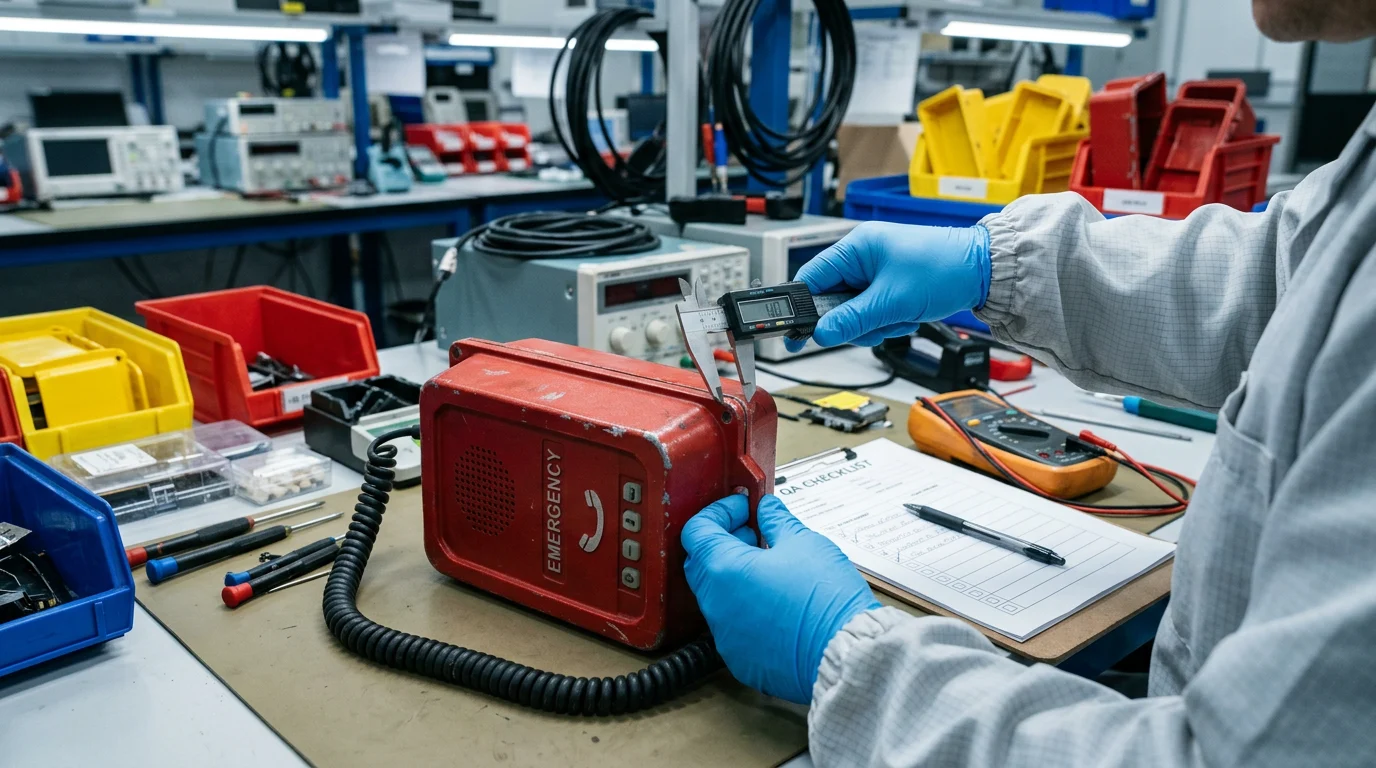
A high-performance emergency telephone is defined by its ability to operate flawlessly under the most punishing environmental conditions. Unlike commercial telecommunications equipment, industrial units are engineered with a focus on survivability, utilizing heavy-duty enclosures and specialized internal electronics.
Evaluating these devices requires a deep understanding of their technical thresholds. From extreme temperature resilience to impact resistance, the specifications of an emergency telephone dictate its suitability for specific industrial applications and its expected Mean Time Between Failures (MTBF), which should ideally exceed 50,000 hours.
Which technical and environmental specifications matter most
The core technical specifications of an emergency telephone revolve around audio clarity, environmental resilience, and physical durability. Operating temperature ranges are a critical metric; a true industrial-grade unit must function reliably between -40°C and +70°C. This ensures the device will not fail during a freezing winter in a remote mining camp or under the intense heat of a steel mill.
Physical durability is equally paramount. High-performance models feature enclosures constructed from cold-rolled steel, cast aluminum, or glass-fiber reinforced plastics (GFRP). These materials provide exceptional vandal resistance, often rated at IK10, meaning the enclosure can withstand a 20-joule impact without compromising the internal circuitry. High-visibility colors, such as RAL 1028 Yellow or RAL 3000 Red, are standard specifications to ensure rapid identification during a crisis.
How IP ratings, hazardous area certifications, and power options differ
Ingress Protection (IP) ratings and hazardous area certifications are the primary differentiators among high-end models. An IP66 rating is generally the baseline for outdoor industrial telephones, offering complete protection against dust and powerful water jets. However, marine or highly flood-prone environments may require IP67-rated devices capable of surviving temporary submersion.
Explosive atmospheres demand stringent certifications such as ATEX or IECEx. Telephones deployed in Zone 1 or Zone 2 hazardous areas must be intrinsically safe or housed in flameproof enclosures to prevent electrical sparks from igniting ambient gases. Power options also vary significantly based on infrastructure. While traditional analog phones draw power directly from the telephone line, modern SIP (Session Initiation Protocol) units typically utilize Power over Ethernet (PoE), drawing standard 48V DC over network cables. For highly remote installations, solar-powered GSM/4G units with internal battery backups offer a completely wireless solution.
| Feature/Standard | Typical Application | Key Specification Metric |
|---|---|---|
| IP66 / IP67 | Outdoor, Marine, Washdown areas | Withstands heavy seas / submersion up to 1m |
| IK10 Impact Rating | Public spaces, Heavy industry | Withstands 20J impact (approx. 5kg dropped from 40cm) |
| ATEX Zone 1 / 2 | Petrochemical, Oil & Gas | Intrinsically safe circuitry, no spark generation |
| PoE (IEEE 802.3af) | Modern factory floors, Tunnels | 15.4W max power delivered over standard Cat5e/Cat6 |
How the Top Emergency Telephone Systems Compare
Selecting the right system requires comparing the dominant technologies and models currently leading the market. The top emergency telephone systems are not monolithic; they are categorized by their underlying communication protocols—SIP, analog, and cellular (GSM/4G/5G)—and their physical enclosures.
Understanding how these categories compare allows facility managers to match the technology to their existing infrastructure and the specific risk profile of their site.
Which models fit different industrial use cases
Different industrial use cases demand entirely different telephone architectures. For instance, a sprawling underground mining operation with legacy copper wiring will heavily favor robust analog systems. These systems can transmit signals over distances up to 5 kilometers without the need for signal repeaters, making them ideal for deep-shaft environments.
Conversely, a modern automated manufacturing plant with extensive fiber-optic and Ethernet infrastructure will lean toward SIP-based VoIP telephones. These models integrate seamlessly into existing IP PBX systems, allowing for centralized management, automated health checks, and integration with public address (PA) systems and CCTV cameras for a unified security response.
What trade-offs separate SIP, analog, GSM, weatherproof, and explosion-proof options
The trade-offs between SIP, analog, and GSM systems center on installation complexity, maintenance, and reliability. Analog systems are highly reliable and immune to network outages, as they draw power directly from the central switch. However, they lack advanced remote diagnostic capabilities, meaning maintenance teams must physically test each unit.
SIP systems provide rich features, including HD audio and self-monitoring, alerting administrators instantly if a handset is left off the hook or if network connectivity drops. The trade-off is a reliance on the facility’s data network and power infrastructure (via PoE switches). GSM or 4G LTE telephones are the ultimate problem-solvers for remote locations like highway pillars or isolated pipelines where laying cable is cost-prohibitive. However, they require ongoing SIM card management and reliable cellular coverage, and their internal batteries must be monitored and replaced periodically.
How to compare the top 10 emergency telephones
When comparing the top 10 emergency telephones on the market, buyers should categorize them by their primary operational strength: Weatherproof SIP, Explosion-proof Analog, and Wireless GSM. Top-tier SIP weatherproof models from leading global manufacturers feature noise cancellation algorithms that filter out background machinery noise, ensuring clear communication.
Explosion-proof models stand out due to their heavy-duty cast aluminum enclosures and ATEX/IECEx certifications, often weighing upwards of 10 to 15 kilograms. Comparing these models requires evaluating their Mean Time Between Failures (MTBF), audio output volume (typically ranging from 80 dB to 95 dB at 1 meter), and integration capabilities with central management software.
| Technology Type | Best For… | Max Distance / Connectivity | Primary Trade-off |
|---|---|---|---|
| Analog (2-wire) | Legacy infrastructure, Mines | Up to 5 km from PBX | Lack of remote self-diagnostics |
| SIP / VoIP | Modern factories, Smart tunnels | 100m to switch (unlimited via fiber) | Dependent on network uptime and PoE |
| GSM / 4G LTE | Highways, Remote pipelines | Dependent on cell tower range | Ongoing cellular data costs and battery lifecycle |
How to Evaluate Compliance, Installation, and Total Cost
Procuring an emergency telephone system extends beyond technical specifications; it requires a rigorous evaluation of regulatory compliance, physical installation constraints, and the Total Cost of Ownership (TCO).
Industrial buyers must navigate a complex matrix of international standards and site-specific requirements to ensure the deployed system is legally compliant, physically accessible, and economically viable over its intended lifespan.
Which safety, telecom, and site standards apply
Compliance is non-negotiable in industrial safety. Depending on the region and industry, emergency telephones must adhere to strict telecommunications and accessibility standards. For example, in the United States, ADA (Americans with Disabilities Act) compliance dictates that emergency communication devices must be mounted at an accessible height, typically no higher than 48 inches from the floor, and must include features for the hearing impaired, such as inductive loop capabilities.
In the railway sector, equipment must meet EN 50121 standards for electromagnetic compatibility to ensure that high-voltage overhead lines do not interfere with emergency calls. Globally, infrastructure projects funded by institutions like the World Bank often require strict adherence to international safety and environmental standards, pushing buyers to select units with recognized CE, FCC, and RoHS certifications.
What improves placement, integration, and maintenance
Effective placement and integration are critical for maximizing the utility of an emergency telephone network. Telephones should be installed at strategic intervals—often every 50 to 150 meters in tunnels or along conveyor belts—ensuring that personnel are never more than a few seconds away from a communication point.
Modern integration significantly improves maintenance workflows. Advanced SIP emergency telephones feature automated self-diagnostics that test the microphone, speaker, and network connection at scheduled intervals. This capability can reduce manual maintenance checks by up to 80%, freeing up facility management teams while ensuring the system is always ready for a crisis.
How to assess acquisition, installation, and lifecycle costs
Assessing the total cost requires looking past the initial hardware acquisition. A standard heavy-duty analog telephone may have a low capital expenditure (CAPEX) of $300 to $500 per unit, but the cost of trenching and laying dedicated copper wiring across a large facility can easily dwarf the hardware costs.
Conversely, while a ruggedized ATEX-certified SIP telephone may cost between $1,000 and $2,500 per unit, it can leverage existing Ethernet infrastructure, drastically lowering installation expenses. Lifecycle costs (OPEX) must also be calculated over a typical 10 to 15-year operational lifespan, factoring in software licensing for central management systems, replacement parts like armored handset cords, and ongoing power consumption.
How Industrial Teams Can Choose the Right Emergency Telephone
The final selection of an emergency telephone system should never be made in a silo. It requires a collaborative approach that balances the immediate life-safety needs of the workforce with the technical realities of the facility’s infrastructure and the financial constraints of the organization.
By establishing a structured selection framework, industrial teams can cut through marketing claims and deploy a communication network that genuinely enhances site safety.
How safety, engineering, and procurement teams should align
Cross-functional alignment is the cornerstone of a successful procurement process. The safety and Health, Safety, and Environment (HSE) teams must define the operational requirements, such as the need for hands-free operation, acoustic hoods for 110 dB noise environments, or highly visible strobes. Their primary metric is incident response efficacy.
Engineering and IT teams must then validate these requirements against the facility’s infrastructure. They evaluate whether the network can support SIP traffic, if PoE switches have adequate power budgets, and how the new devices will integrate with the central PBX. Finally, procurement teams ensure the selected vendors meet financial guidelines, evaluating warranty terms, lead times, and the total cost of ownership to ensure maximum value.
What selection framework helps compare vendors and validate performance
To objectively compare vendors, organizations should adopt a multi-stage selection framework.
Key Takeaways
- The most important conclusions and rationale for Emergency Telephone
- Specs, compliance, and risk checks worth validating before you commit
- Practical next steps and caveats readers can apply immediately
Frequently Asked Questions
Why use an industrial emergency telephone instead of a mobile phone?
Industrial emergency telephones provide a fixed, always-available line, often with auto-dial in under 5 seconds. They also work better in noisy, remote, or signal-poor areas.
Which sites need emergency telephones most?
High-risk locations such as mines, refineries, offshore platforms, tunnels, railways, and heavy plants benefit most, especially where noise, dust, vibration, or hazardous atmospheres can disrupt normal communication.
What IP rating should an outdoor emergency telephone have?
IP66 is a practical minimum for most outdoor industrial sites. Choose IP67 if the unit may face flooding, washdown, or temporary submersion.
When are ATEX or IECEx certified emergency telephones required?
Use ATEX or IECEx models in explosive or flammable areas, such as petrochemical plants, gas zones, or dust-hazard environments. Certification should match the site’s hazard classification.
Where can I find industrial emergency telephone solutions from Siniwo?
You can explore Siniwo emergency communication and industrial safety solutions at siniwo.com, including options for mining, harsh environments, and custom project requirements.
Post time: May-27-2026