

Traditional railway emergency telephone systems no longer meet modern rail transit needs. An upgrade is critically important for passenger safety and operational continuity. Modern railway communication equipment, including advanced VoIP railway telephone units, provides an essential boost. This ensures an effective railway intercom system and robust emergency dispatching communication system to meet evolving demands.
Key Takeaways
- Old railway emergency telephone systems are dangerous. They cause communication failures and put passengers at risk.
- Modern railway emergency telephone systems offer clear communication. They use smart features and AI for faster responses and better safety.
- Upgrading these systems is important. It helps railways meet new demands and keeps people safe.
The Alarming Reality: Why ‘Old Phones’ Fail Modern Rail Transit

Outdated Technology: A Recipe for Disaster for Railway Emergency Telephone Systems
Old communication systems on railways present significant risks. These legacy setups often rely on analog technology, which inherently lacks the clarity and reliability of modern digital solutions. Poor audio quality, frequent static, and dropped connections are common issues. Such deficiencies make critical communication during an emergency difficult, if not impossible. Furthermore, these older systems often lack essential features like direct line access to emergency services or integrated location tracking. They are also more susceptible to environmental interference, including electromagnetic noise from trains or harsh weather conditions. Relying on such outdated technology creates a dangerous vulnerability, turning a potential incident into a full-blown disaster.
Increasing Demands of Modern Rail Transit Overwhelm Old Systems
Modern rail transit faces unprecedented challenges, and old communication systems simply cannot keep pace. Passenger volumes continue to grow, and network complexity increases, placing immense pressure on existing infrastructure. Railway operators must manage operational disruptions when upgrading aging rail infrastructure, balancing modernization urgency with minimizing service interruptions. Integrating new technologies with legacy systems also presents a significant hurdle, as older platforms often lack compatibility.
Modern rail operations demand constant vigilance and rapid response. Operators must optimize maintenance resources, as manual inspections are labor-intensive and limit inspection quality. They also need to monitor fleet health with increasing demand, which traditional maintenance methods often hinder by taking rolling stock out of service. Inspecting infrastructure like overhead line equipment (OLE) without impacting services is another critical challenge, as OLE failures can cause millions in daily costs and severe delays. Furthermore, creating workshop capacity for growing fleets and reducing the risk of in-service failures are paramount.
Beyond operational demands, evolving passenger needs and travel behavior, post-pandemic shifts, and technological advancements like AI-driven predictive maintenance require robust communication backbones. Regulatory and policy changes, economic pressures, and climate change mandates further complicate the landscape. These multifaceted demands overwhelm traditional communication systems, which were never designed for such complexity or scale.
The Cost of Inaction: More Than Just Money for Railway Operators
Failing to upgrade railway emergency telephone systems carries a heavy price, extending far beyond financial implications. The most significant non-monetary cost is the erosion of public trust. When communication fails during an incident, or when passengers experience unreliable service due to outdated systems, public confidence plummets.
A notable example involves Northern Rail, a UK nationalized rail operator. They admitted to using fax machines for relaying train schedules, a clear sign of outdated communication methods. This reliance led to operational failures, frequent service cancellations, and low staff morale. Passengers endured unreliable service, which resulted in widespread public and government backlash. The failure to modernize communication methods directly caused a significant loss of public trust.
A lack of transparency in communication breeds mistrust among all stakeholders. Public trust, once lost, becomes incredibly difficult to regain. Poor communication can create a “domino effect” of problems across an organization, leaving teams scrambling and customers frustrated. Beyond reputational damage, inaction directly compromises safety. Delayed responses, miscommunications, or the inability to contact help quickly can escalate minor incidents into severe accidents, potentially leading to injuries or fatalities. The operational inefficiencies caused by outdated systems also translate into lost revenue, increased operational costs, and a diminished capacity to respond effectively to crises. The true cost of inaction is a complex web of financial losses, reputational harm, and, most critically, compromised safety for passengers and staff.
The 2026 Boost: What Modern Railway Emergency Telephone Systems Offer
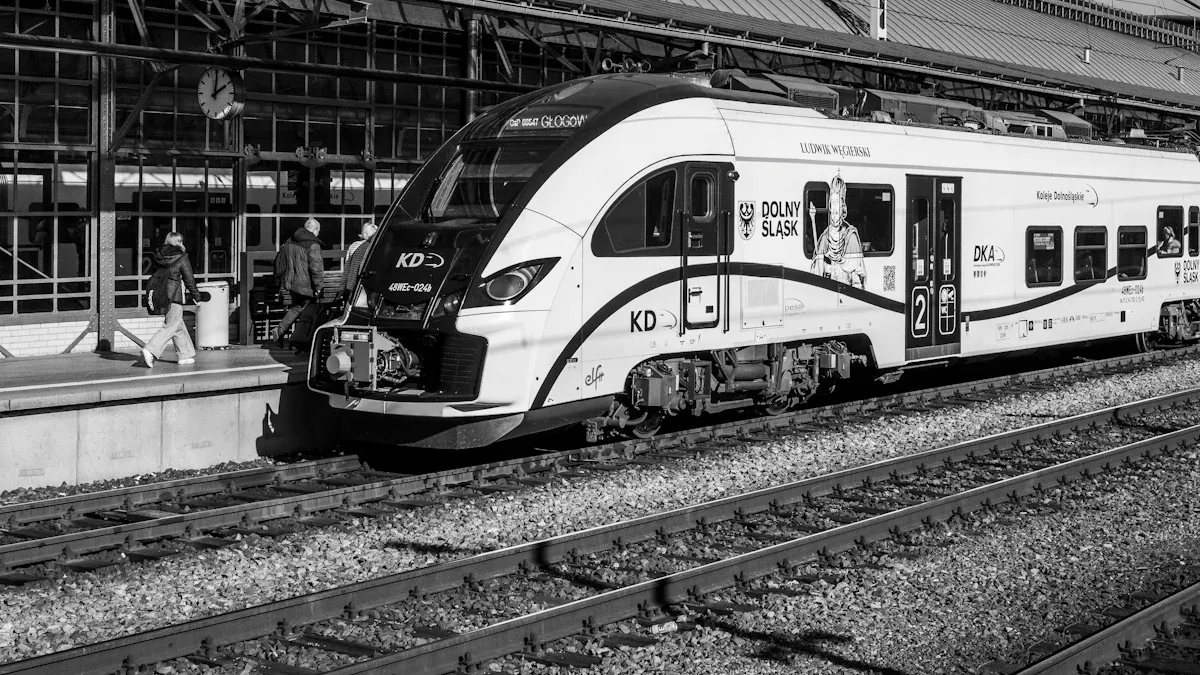
Modern railway operations demand communication systems that are not only reliable but also intelligent and adaptable. The year 2026 marks a pivotal moment for rail operators to embrace advanced solutions. These systems offer significant improvements in safety, efficiency, and operational resilience. They move beyond basic voice calls to provide comprehensive communication platforms.
Crystal-Clear Communication, Every Time, with Advanced Railway Emergency Telephones
Modern railway emergency telephone systems deliver unparalleled clarity and reliability. They achieve this through adherence to industry standards and advanced audio processing. These systems support SIP RFC standards and common codecs like G.711 and G.722. This ensures wideband audio for clear speech quality. Power over Ethernet (PoE) simplifies wiring, and battery backup units guarantee continuous availability even during power outages.
Advanced features dramatically improve speech intelligibility. Noise cancellation and wideband audio make conversations clear, even in noisy railway environments. Call prioritization mechanisms, such as VLAN tagging, DiffServ, and packet prioritization, maintain voice quality on congested networks. When a call comes in, the control room GUI automatically displays the station and location. This allows for a faster response. Remote management capabilities, including firmware upgrades via TFTP/HTTP/HTTPS, remote diagnostics, and SNMP/APIs for status monitoring, enhance reliability and simplify maintenance. Furthermore, robust hardware with IP66/IP67 enclosure ratings and IK10 impact protection ensures durability in harsh transit environments.
Beyond Voice: Integrated Intelligence in Modern Railway Emergency Telephone Systems
Modern railway emergency telephone systems extend far beyond simple voice communication. They integrate intelligence to create a unified communication ecosystem. Control centers use sophisticated consoles that integrate with the GSM-R network. This allows for real-time monitoring and management of train operations, supporting both routine and emergency communications. GSM-R, the most widely used standard for wireless communications in railways globally, facilitates communication between trains and railway control centers. It forms a fundamental component of the European Rail Traffic Management System (ERTMS).
This integration means emergency calls from various sources—telephone, analog train radio, GSM-R, tunnel, and controller emergency calls—all appear within a single, unified user interface. A fixed GSM-R telephone acts as an emergency operator system. This ensures continued operation with minimal disruption, even if user interface errors occur. The new operational telephone system bundles communication connections for movement inspectors and train controllers. All available operating modes, including analog and digital train radio, operational telephone lines, controller lines, shunting radio, loudspeaker lines, and automatic railway telephone systems, integrate into a single operator device. This reduces the number of different communication tools at the movement inspector’s workplace. It also allows for recording all calls via an interface to a voice storage device. GSM-R provides communication for vehicle dispatching, power distribution, signal remote control, safety monitoring, maintenance, and passenger services. Drivers use GSM-R mobile phones to send voice messages and communicate with control center dispatchers via wayside repeaters and relay stations. Signal control systems integrate signaling equipment, level-crossing protection equipment, and ATP systems. They use wireless technology like GSM-R to communicate between onboard and wayside systems. This wireless communication allows dispatchers to manage traffic flow and ensure safe driving speeds.
Enhanced Safety Features for Rapid Response with New Railway Emergency Telephones
New railway emergency telephones significantly enhance safety by facilitating faster and more coordinated responses during incidents. By 2025, modern systems will leverage AI to detect anomalies and automatically alert responders. This will significantly reduce human response delays. This advancement projects a 20% reduction in incident escalation and improved passenger safety records.
These advanced systems include dedicated emergency call buttons on 4G railway public telephones. These buttons connect users directly to station security or emergency services for immediate assistance. Many models feature GPS integration. This helps responders quickly locate the caller, enabling a faster and more targeted response. Some telephones include automated alerts for system malfunctions. This ensures prompt identification and addressing of potential issues. VoIP Handsfree AI Telephones provide immediate and reliable connections. They establish a direct line to the operations control center (OCC) or rail control center (RCC) within seconds, minimizing response delays. Users can report their exact location and detailed incident information. This includes the nature of the emergency, affected tracks, and personnel involved. This enables operators to quickly assess urgency and initiate dispatch. The system integrates emergency alerts with rail signaling infrastructure. This allows operators to trigger protocols like automatic block restrictions or train stops. It also interfaces with traction power disconnection mechanisms for power cutoff. AI-powered voice command functionality allows personnel to operate communication systems hands-free. They can initiate calls or send messages with voice prompts. This frees their hands for critical tasks and enhances safety. AI algorithms filter out background noise. This ensures clear voice transmission in loud environments. This is crucial for safety-critical communications and reduces misunderstandings, improving response times.
Scalability and Future-Proofing Your Railway Emergency Telephone Infrastructure
Modernizing communication network infrastructure is crucial as rail networks expand and integrate new technologies. This must happen while supporting existing systems. Legacy time-division multiplexing (TDM) struggles with scalability. This leads railways to adopt packet-based solutions for improved business-critical communications. VoIP technology ensures clear, digital voice transmission over IP networks. It eliminates the limitations of analog systems. It also supports high data rates and low latencies required for modern, high-speed rail.
AI integration transforms telephones into intelligent operational assets. They process data, automate tasks, and enhance decision-making across the network. AI-driven signaling and communication systems predict potential failures by analyzing real-time data and detecting anomalies. This ensures continuous and safe train operations. AI monitors network traffic to detect unusual patterns or suspicious activity. It identifies threats like Man-in-the-Middle (MITM) attacks or unauthorized access attempts. AI-powered noise reduction algorithms filter out background noise. This ensures clear voice transmission in loud operational settings. This is crucial for safety-critical communications. Voice command functionality allows personnel to operate communication systems hands-free. They can initiate calls, send messages, or access information using simple voice prompts. AI agents analyze sensor data to flag anomalies. They suggest routing or speed changes. They also provide early warnings and richer situational awareness by integrating data from SCADA, signaling logs, and camera systems. AI capabilities enable proactive threat detection and prevention. They convert CCTV footage into structured events, detecting people, vehicles, and unusual occurrences. AI models forecast component failures by consuming temperature logs, vibration time series, and maintenance history. They predict remaining useful life and suggest interventions to reduce unplanned downtime. Automated alerts notify relevant personnel about schedule changes or operational issues, reducing manual intervention. AI analyzes communication logs, response times, and interaction patterns. This identifies trends and potential bottlenecks. It provides data-driven insights for refining operational procedures and supporting targeted training programs.
Key Considerations for Implementing a Modern Railway Emergency Telephone System
Implementing a modern communication system requires careful planning and strategic decisions. Operators must evaluate current infrastructure, select suitable partners, and ensure seamless integration with existing safety protocols. This proactive approach guarantees a successful transition and enhanced operational safety.
Assessing Your Current Railway Emergency Telephone Infrastructure
Before any upgrade, a thorough assessment of the existing communication infrastructure is essential. This evaluation identifies current system limitations, vulnerabilities, and areas needing improvement. Operators should analyze the reliability, coverage, and functionality of their current railway emergency telephone systems. They must also consider the age of equipment, maintenance records, and compliance with current industry standards. Understanding these aspects helps define the scope of the upgrade and prioritize specific needs. This assessment forms the foundation for a successful modernization project.
Choosing the Right Technology Partner for Your Railway Emergency Telephone Upgrade
Selecting an experienced technology partner is crucial for a successful upgrade. Operators should look for partners with a proven track record in industrial communication systems. Ideal partners offer comprehensive services, from design and integration to installation and maintenance. They possess strong in-house manufacturing capabilities, ensuring quality control and reliable delivery. Certifications like ATEX, CE, FCC, RoHS, and ISO9001 demonstrate a commitment to international standards. A partner with global experience and a customer-centric philosophy can provide tailored solutions and long-term strategic support.
Seamless Integration with Existing Safety Protocols for Railway Emergency Telephones
New communication systems must integrate smoothly with existing safety protocols and operational procedures. This ensures continuity and avoids disruptions. The modern system should complement current signaling, dispatching, and emergency response frameworks. Compatibility with legacy systems, where necessary, is also important during the transition phase. Effective integration minimizes training requirements and maximizes the efficiency of emergency responses. It also ensures that all personnel can utilize the new tools effectively within established safety guidelines.
Leading the Way: Innovations in Railway Emergency Telephone Technology
IP-Based Solutions for Robust Railway Emergency Telephone Communication
IP-based solutions represent a significant leap forward for railway communication. They overcome the limitations of traditional analog systems. These modern systems enable seamless communication between drivers and guards, and between drivers and control centers. They also support passenger announcements and crew communications. Two-way speech for call-for-aid units in toilets and wheelchair areas complies with PRM standards. An audio interface synchronizes audio messages with visual displays via Passenger Information Systems. Ambient noise monitoring software automatically adjusts audio output levels based on carriage noise. These systems leverage newer VoIP infrastructure and utilize existing networking tools for device monitoring. VoIP tools and reports determine quality of service.
IP-based railway emergency telephone systems enhance network resilience through their core IPPBX system. A call server manages all calls, handling authentication, accounting, and administration. This call server connects to Media Gateway Units (MGU) or Remote Line Units (RLU) via IP links. All backplane processing is IP-based. For enhanced resilience, the call server can be configured for high availability in a distributed processing architecture or a centralized mode. Load balancing and call admission control protocols further boost performance. A distributed cloud-based architecture provides resilience in the switching fabric across multiple locations. This ensures uninterrupted communication even if some sites become unreachable. IP-based digital systems significantly improve network security, reliability, and scalability in railway communications. This directly enhances older railway telecom systems. These older systems often lack modern security protocols. They are thus vulnerable to cyberattacks and operational failures. To enhance network resilience and ensure continuous communication, even with advanced security measures, a redundant telecom infrastructure with automatic failover systems is crucial. This ensures communications remain operational even if a part of the network is compromised by failures or cyber incidents.
Specialized Railway Emergency Telephone Systems for Demanding Environments
Railway environments present unique challenges. Specialized railway emergency telephone systems address these demanding conditions. Their housing is constructed from high-strength die-cast aluminum alloy with substantial wall thickness. This provides exceptional durability and strong impact resistance. An IP67 protection class, even with the door open, and a sealed door safeguard internal components from contaminants. The heavy-duty handset features a hearing aid compatible receiver and a noise-canceling microphone. An illuminated Stainless Steel Keypad is configurable for SOS, repeat, and other functions. These systems support 2 lines SIP, SIP 2.0 (RFC3261), G.711, G.722, G.729 audio codes, and various IP protocols. G.167/G.168 code support enables full duplex operation. They operate in ambient temperatures from -40℃ to +70℃, atmospheric pressure 80~110KPa, and relative humidity ≤95%. Corrosion Grade WF1 is standard. Equipment incorporates components and thermal management systems designed for wide operating temperatures. This ensures reliability across diverse global conditions. Essential design features include shock mounting and ruggedized components. These withstand continuous vibration and severe shocks from events like wheel slip or emergency braking. EMI shielding and filtering maintain signal integrity due to significant interference from traction motors, power systems, and radio equipment. NEMA and IP-protected enclosures shield sensitive electronics from environmental contaminants. Robust power conditioning and backup systems handle significant voltage variations and electrical noise.
Comprehensive Communication Platforms Beyond Just Railway Emergency Telephones
Modern railway operations benefit from comprehensive communication platforms. These platforms integrate various technologies into a single, unified system. A Unified Communication System combines Public Address, Voice Alarm, intercom, and mobile radio. This approach ensures all communication channels work together seamlessly. It allows for centralized management of daily announcements, security alerts, and emergency evacuation messages. This integration improves efficiency, reduces costs, and enables faster, more coordinated responses during critical situations. Organizations can develop a comprehensive emergency mass notification system. They leverage existing public address systems, digital signage, televisions, desktops, and phones. This allows for reaching every corner of a facility quickly during an emergency. Integrating two-way radios as an endpoint within a system streamlines emergency notifications and eliminates extra steps. POWERTRUNK’s TETRA solutions provide continuous voice and data communication for transport and transit markets. These solutions support metro and railway networks through various applications. These include voice communications with drivers, PA, and Intercom systems. They also manage critical data for alarms and vehicle diagnostics. NIS Rail integrates multiple third-party applications. These integrations include TETRA radio, help points, GSM-R telephones, and public address and CCTV systems.
These platforms unify communication across voice, video, and chat with precise location data in a single interface. They utilize AI-assisted workflows for transcription, translation, and triage. This enables quick and effective responses under stress. They facilitate cross-agency collaboration by instantly sharing live video and incident data with local law enforcement and EMS. They offer resilience at scale through cloud-native architecture with high inbound 911 call handling uptime. They support Hazmat Incident Response by sharing live video from derailment scenes for pre-arrival assessment. They enable multi-jurisdiction coordination by connecting local responders across county and state lines with a shared incident view. They provide remote verification using live video for access or security incidents at rail yards without needing onsite staff deployment. This improves safety and reliability. It reduces operational costs. It protects investments in infrastructure and rolling stock. It ensures high reliability with comprehensive redundancy design (99.999% reliability). It supports smooth evolution of communication technologies. It provides end-to-end solutions meeting extensive rail communication specifications and anticipating future requirements. This enhances passenger safety and builds greater public trust. It improves multi-agency collaboration. It offers cost-effective scalability. It strengthens resilience and emergency readiness through a proactive, secure, and scalable communication ecosystem for daily operations and crisis response.
Upgrading railway emergency telephone systems is critically important now. Modern solutions offer significant benefits in safety, efficiency, and reliability. Rail operators must assess current systems. They should invest in future-ready technology. This meets 2026 demands and beyond.
FAQ
What are the primary advantages of modern railway emergency telephone systems?
Modern systems significantly enhance safety, efficiency, and reliability. They provide crystal-clear communication and integrate intelligent features for rapid response. This ensures operational continuity.
How do new railway emergency telephones ensure clear communication in noisy environments?
Advanced railway emergency telephones use noise cancellation and wideband audio. They also feature robust hardware with high IP ratings. This guarantees clear speech quality, even in loud railway settings.
How does AI enhance the functionality of modern railway emergency telephone systems?
AI integrates intelligence for anomaly detection and automated alerts. It enables voice command functionality and predictive maintenance. This improves response times and overall system reliability.
Post time: Jan-23-2026