
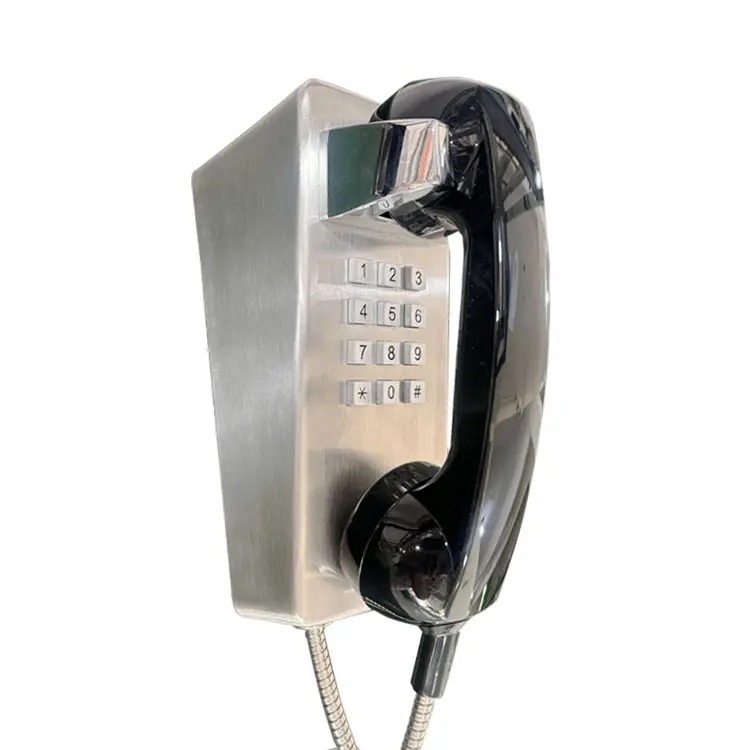
Specialized communication tools are vital for safety and operational continuity in high-risk environments. These tools prevent communication breakdowns, protecting personnel and the public. Vandal-Resistant Handsets offer extreme durability. Their robust design makes them indispensable for prisons, public spaces, and critical facilities. Users rely on these vandal resistant handsets for critical connections. Jail telephones provide secure communication. They are crucial for effective public safety communication.
Key Takeaways
- Vandal-resistant handsets are very strong. They use special materials and designs. This helps them last a long time in tough places.
- These handsets work well in many places. This includes prisons, public areas, and important buildings. They help people talk safely and clearly.
- Cordless handsets give people freedom to move. They also remove dangers from wires. This makes communication better and safer.
- These strong phones save money over time. They do not break easily. This means fewer repairs and replacements are needed.
- Vandal-resistant handsets make places safer. They help people talk during emergencies. This keeps important services running smoothly.
The Unyielding Design of Vandal-Resistant Handsets
Advanced Material Science for Durability
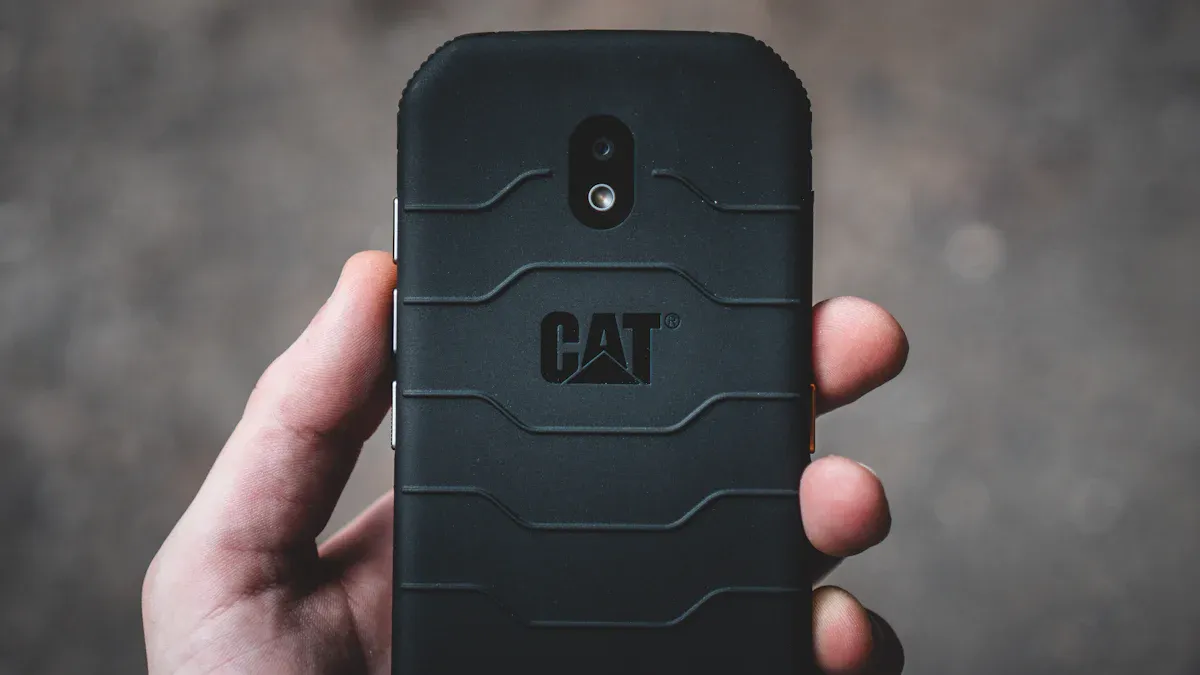
The strength of Vandal-Resistant Handsets begins with their material composition. Manufacturers carefully select advanced materials to withstand severe physical abuse. These materials provide superior impact resistance, ensuring the handsets remain functional even after harsh treatment.
| Material | Impact Resistance Properties |
|---|---|
| Polycarbonate (PC) | Hard, rigid plastic known for its high impact resistance. Excellent at protecting against scratches and direct impacts. Often used as an outer shell in multi-layered cases. |
| TPU (Thermoplastic Polyurethane) | Offers a balance of flexibility and durability. Good shock absorption and impact resistance. Resistant to abrasions, grease, and oils. |
| Hybrid Materials (e.g., PC + TPU) | Combines the rigidity of polycarbonate for structural integrity and scratch resistance with the flexibility and shock absorption of TPU. Offers comprehensive protection against various types of damage. |
| Metal (Aluminum, Stainless Steel) | Provides robust protection against bending and direct impacts. Offers a premium look and feel. |
| Kevlar | Aramid fiber known for its high strength-to-weight ratio and impact resistance. Used in some premium protective cases for extreme durability. |
| D3O | A non-Newtonian material that remains flexible until impact, at which point it hardens to absorb and dissipate energy. Offers excellent shock absorption without significant bulk. |
Polycarbonate, for instance, forms a hard, rigid shell, protecting against direct impacts and scratches. Thermoplastic Polyurethane (TPU) offers flexibility and shock absorption, making it ideal for bumpers or inner layers. Often, manufacturers combine these materials into hybrid designs. This approach leverages the strengths of each material, creating a comprehensive defense against various types of damage. Metals like aluminum and stainless steel provide robust protection against bending and direct impacts. Advanced materials such as Kevlar and D3O offer exceptional strength and impact absorption, ensuring the handset’s integrity in the most challenging environments.
Robust Construction and Tamper-Proof Features
Beyond material selection, the physical construction of these handsets actively deters vandalism and unauthorized access. Robust construction uses durable materials like thick ABS plastic and high-quality stainless steel. These materials form a formidable barrier against damage.
Manufacturers incorporate tamper-proof designs to prevent disassembly. These designs include tamper-evident seals, which indicate any attempt at breach. Some advanced systems even feature tamper-resistant casings. These casings can zero out security parameters if someone tries to open them. Armored cords further enhance security. These cords feature steel-wire wrapping and a built-in Tensile Steel Rope. This rope withstands up to 200 KG of tensile force. It prevents unplugging, damage, pulling, or twisting. Sturdy casings and secure mounting also deter easy dismantling or destruction. Anti-ligature designs contribute to safety and prevent disassembly. They feature smooth, rounded surfaces without gaps or sharp protrusions. This design makes it impossible to tie anything around them, removing potential leverage points for tampering.
Industry standards, such as IK Ratings, define the degree of protection enclosures provide against external mechanical impacts. This standard is crucial for communication devices in public or high-traffic areas prone to vandalism. It helps ensure their durability and functionality. The rating system specifies testing procedures, including impact energy levels measured in joules. It also considers factors like mounting, atmospheric conditions, and impact distribution.
| IK Rating | Impact Energy (Joules) | Equivalent Impact Description |
|---|---|---|
| IK00 | No Protection | No Protection |
| IK01 | 0.14 | 0.25kg mass dropped from 56mm |
| IK02 | 0.2 | 0.25kg mass dropped from 80mm |
| IK03 | 0.35 | 0.2kg mass dropped from 140mm |
| IK04 | 0.5 | 0.25kg mass dropped from 200mm |
| IK05 | 0.7 | 0.25kg mass dropped from 280mm |
| IK06 | 1 | 0.25kg mass dropped from 400mm |
| IK07 | 2 | 0.5kg mass dropped from 400mm |
| IK08 | 5 | 1.7kg mass dropped from 300mm |
| IK09 | 10 | 5kg mass dropped from 200mm |
| IK10 | 20 | 5kg mass dropped from 400mm |

Products with high IK ratings are essential for environments where devices are likely to be exposed to damage, such as industrial areas, schools, and prisons. An enclosure with an IK rating must also meet an equivalent IP rating, ensuring comprehensive protection.
Internal Reinforcement for Core Components
The protection of Vandal-Resistant Handsets extends deep within their core. Internal reinforcement safeguards sensitive electronic components from vibration and impact damage. Electronic housings create a physical barrier against external forces like impact, vibration, and shock. They absorb and distribute these forces, protecting delicate internal components.
Several mechanisms provide internal shock absorption:
- Foam inserts come in various densities. They provide cushioning to minimize the impact of sudden movements. This maintains the integrity of sensitive electronic equipment.
- Suspension mounts isolate equipment from external vibrations during transit.
- A Thermoplastic Polyurethane (TPU) core with a gyroid fill pattern is highly effective. It acts as a shock absorber, preventing damage from drops and other impacts.
- Structural textures applied to internal surfaces reinforce the model. This increases its resistance to impacts.
Manufacturers also employ specific methods to secure circuit boards and wiring. These methods protect against vibration and impact damage:
- Rubber spacers placed under Printed Circuit Boards (PCBs) significantly reduce displacement and peak acceleration. This makes PCBs safer from vibration.
- Potting involves encasing the entire electronics assembly in a compound like special epoxies or silicone rubbers. This encapsulation secures the assembly from high vibration, shock, and other factors.
- Design for Reliability (DFR) validates PCB reliability during the design phase. This addresses vibration issues before manufacturing. It helps counter negative effects on solder joints and component leads, which are susceptible to shock.
Environmental Resilience in Extreme Conditions
Vandal-Resistant Handsets must perform reliably in the harshest environments. Their design ensures protection against elements like dust, water, and extreme temperatures. This resilience guarantees continuous communication, regardless of external conditions. Manufacturers engineer these devices to withstand environmental challenges, maintaining functionality where standard phones fail.
The Ingress Protection (IP) rating system quantifies a device’s resistance to solids and liquids. This international standard is crucial for communication devices in public or industrial settings. It helps users understand the level of protection an enclosure provides. The first digit indicates protection against solid particles, such as dust. The second digit specifies protection against liquids, like water.
Different environments demand specific IP ratings:
- Dusty and Wet Environments (with washdown/steam cleaning): An IP rating of at least 55-68 is necessary. For harsher steam-cleaning procedures, IP69K should be considered.
- General Outdoor Use: IP68 is recommended. This rating ensures dust-tight enclosures and provides the highest possible level of protection against contaminants. The second digit should be at least 5 for water resistance.
- Industrial Use: IP65 is often considered the minimum. Industries with high hygiene standards, such as food processing or pharmaceutical facilities, require daily high-pressure wash-downs. For these, IP68 or IP69K is mandatory.
- Outdoor Field Use: Professionals working outdoors in rain, snow, mud, and dust, like those in construction, utility, or military roles, need an IP67 rating. This ensures dust-tightness and survival in temporary immersion.
Beyond IP ratings, these handsets also endure wide temperature fluctuations. They operate effectively in freezing cold and intense heat. Specialized components and robust housing prevent thermal damage. This ensures the internal electronics remain stable. Furthermore, some models resist corrosive agents, making them suitable for chemical plants or marine environments. This comprehensive environmental resilience makes them indispensable tools for critical communication.
The Strategic Advantage of Cordless Telephone Handsets
Enhanced Mobility in Critical Operations
Cordless telephone handsets provide unparalleled mobility, which is crucial for personnel in critical operations. Security teams can move freely throughout large facilities, responding to incidents without being tethered to a fixed location. These devices offer real-time notifications for equipment malfunctions, generator activations, and environmental conditions. They also feature motion detection capabilities, preventing unauthorized access to restricted zones. Scheduled alarms add an extra layer of security during off-hours. Panic buttons in courtrooms and administrative offices allow staff to address security threats swiftly. Automated alerts for issues like elevator malfunctions or propped doors enhance safety. Geo-location tracking allows security teams to monitor mobile emergency buttons, ensuring faster response times. Wireless sensors support panic buttons, door contacts, motion detectors, and environmental sensors. Virtual computer buttons allow staff to initiate alerts discreetly from their workstations. In an automotive manufacturing plant, real-time alerts for machinery malfunctions reduced downtime, and enhanced perimeter security prevented unauthorized access. Automated escalation protocols ensured swift emergency responses.
Eliminating Vulnerabilities from Cords
Cordless handsets eliminate the inherent vulnerabilities associated with traditional wired systems. Cords present tripping hazards, and they can be cut, damaged, or used for tampering. Removing these physical connections enhances safety and operational reliability. Cordless solutions prevent intentional damage or accidental disconnections that could disrupt critical communications. This design choice significantly reduces maintenance needs and improves the overall resilience of the communication system.
Seamless Integration with Facility Communication Systems
Cordless telephone handsets integrate seamlessly with existing facility communication systems, creating a unified and responsive security network. Responding personnel receive discrete alert notifications, providing emergency information without creating obvious signs that could escalate situations. Integration with video surveillance systems allows security personnel to visually assess situations before determining response strategies. Automatic location tracking helps responders approach from optimal positions and maintains situational awareness. GPS tracking provides meter-level accuracy for faster responder deployment and effective search. Two-way communication enables situation assessment, preventing unnecessary deployments and ensuring appropriate resources reach genuine emergencies. Integration with security infrastructure triggers automatic responses like camera focusing, door lockdowns, elevator controls, and lighting adjustments, enhancing responder safety and situational awareness. Digital mobile radios maintain strong signals in areas where cell phones often fail, such as basements or stairwells, ensuring consistent communication during emergencies.
Reliable Battery Life and Charging Solutions
Cordless telephone handsets demand robust battery life to ensure uninterrupted communication during critical operations. Manufacturers equip these devices with advanced battery technology, providing extended operational periods. This design minimizes the need for frequent recharging, allowing personnel to focus on their tasks without interruption. Efficient charging methods are equally crucial for maintaining continuous availability and quick turnaround times.
Modern charging solutions address the need for constant readiness. Pantograph chargers offer a versatile solution for minimizing downtime with rapid recharging. These systems, available with high power options up to 540 kW, utilize pantograph rails on vehicles for quick, hands-free charging through an automated conductive connection. This method proves ideal for high-frequency routes and high-demand fleets, ensuring continuous service with minimal interruption. It enables rapid recharging at depots or along the route.
Inductive charging provides another innovative solution, ensuring continuous equipment performance without disrupting operations. It allows machines, such as electric forklifts and autonomous mobile robots, to automatically position themselves at a charging station and recharge without human intervention. This method, especially when combined with automated energy management and advanced technologies like supercapacitors, speeds up charging cycles. It maximizes device availability, thereby boosting productivity. These sophisticated charging infrastructures ensure that vandal-resistant handsets remain powered and ready for use, supporting critical communication needs around the clock.
Vandal-Resistant Handsets in Action: Essential Applications
Securing Communication in Correctional Facilities
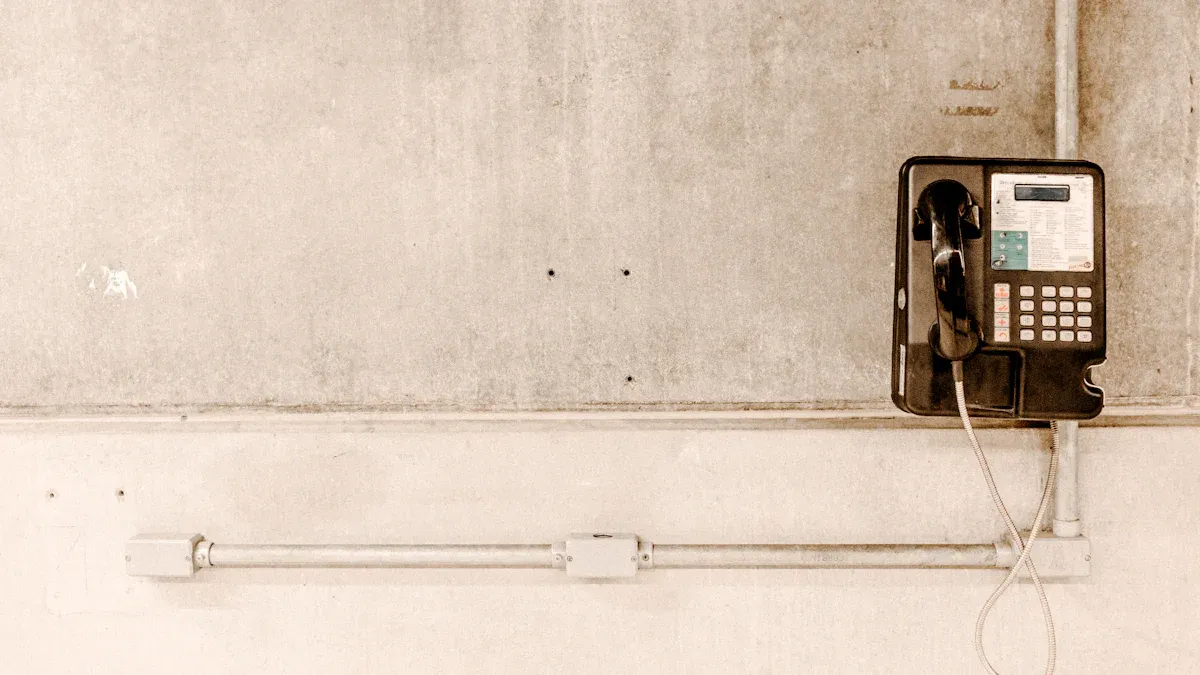
Correctional facilities require robust communication systems. These systems must withstand abuse and maintain strict security. Vandal-resistant phones enhance inmate safety. They prevent damage, hiding contraband, or creating weapons from phone parts. Specialized keypads and armored cords resist cutting, chewing, and breaking. This prevents parts from becoming weapons or tools. The robust design prevents inmates from easily disassembling phones. This removes potential hiding spots for contraband like tiny tools or drug packets.
Facility management also improves significantly. These phones reduce maintenance costs. They provide reliable communication, which lessens inmate frustration. This leads to fewer incidents and a calmer environment. This improves staff safety. Integration with security systems allows for monitoring and evidence collection. Call recording is a key security protocol. Pre-approved number dialing often requires PINs or card swipes. Volume control and emergency call buttons are standard features.
These systems integrate with existing PABX systems for reliable voice connectivity. They convert analog signals to SIP through a standard voice gateway for IP-based networks. Many support VoIP SIP2.0 with DTMF dialing and various audio codes. They operate on 10/100 BaseTX Ethernet (RJ45) and use IP Protocols like IPv4, TCP, UDP, and SIP. Power over Ethernet (PoE) is often supported. A centralized SIP server manages inmate phone calls. This enables partition and monitoring integration. Remote programming via telephone and DTMF tones allows for centralized network management. Direct dialing to assigned locations and programmable auto hang-up timers are common. Call restriction to pre-approved numbers and ring group call records further enhance control. Authority management controls access to functions.
Public Safety in High-Traffic Spaces
Public spaces, like university campuses and transportation hubs, need reliable emergency communication. Vandal-resistant handsets are essential here. They provide immediate access to help. University campuses use blue-light phones. These visible, illuminated call boxes provide quick access to campus security or emergency services. The University of Illinois at Chicago installed over 100 units by the mid-1990s after safety concerns arose.
Elevators also use emergency phones. These phones enable trapped passengers to contact building management or first responders. They offer hands-free operation, amplified voice clarity, and automatic location identification. This ensures ADA compliance. Bridges, such as the Natchez Trace Parkway Bridge, feature solar-powered crisis phones. These connect callers directly to mental health hotlines or emergency dispatch. They often integrate near physical barriers to enhance immediate intervention for suicide attempts.
Coastlines benefit from weather-resistant emergency call points. These facilitate direct contact with the coast guard or rescue services. They work in areas with unreliable mobile coverage. Examples in the UK show fixed landline or GSM-based phones routing calls to local coastguard centers. Parks and beaches use durable units. These have vandal-proof enclosures and corrosion-resistant materials. They withstand exposure to salt air and storms. They provide a reliable link to lifeguard patrols or paramedics. European beach systems in regions like Cornwall demonstrate this.
These phones incorporate internal steel reinforcement. This makes them highly resistant to breakage or detachment. Cords are armored with steel. This prevents cutting, pulling, or tangling. They are securely attached to the phone body. Anti-tamper features include internal switches or sensors. These trigger alarms or alerts if someone unauthorized opens the housing. The design minimizes pry points. Buttons, microphones, and speakers are recessed to prevent damage. Smooth outer surfaces without sharp edges or gaps deter gripping for vandalism. They also simplify cleaning. Industrial-grade components ensure reliable operation across extreme temperatures. Sealed housing protects internal electronics from rapid temperature changes. Special anti-corrosion coatings and seals protect against humidity, salt air, and moisture. This prevents rust and degradation. Noise-canceling microphones and robust speakers provide clear audio in loud environments. These phones are installed in public and high-risk locations. These include train stations, airports, prisons, schools, universities, parking garages, industrial sites, and emergency call points. They operate reliably in diverse climates, from freezing to very hot conditions. They effectively resist humidity and corrosion, even in damp or salty coastal regions. High IP ratings (e.g., IP66) ensure they are dustproof. They can withstand strong water jets. This protects internal components in all weather conditions.
Critical Infrastructure Communication Needs
Critical infrastructure facilities, like power plants, water treatment centers, and transportation networks, demand uninterrupted communication. These environments often face harsh conditions and require extreme reliability. Communication systems must function during emergencies, natural disasters, or security threats. Vandal-resistant Handsets play a crucial role here. They ensure personnel can communicate effectively, even when standard equipment fails.
These facilities rely on robust communication for daily operations and emergency response. For example, a power plant needs secure lines for engineers to coordinate maintenance or respond to outages. A water treatment facility requires reliable communication for monitoring systems and addressing potential contamination issues. Transportation hubs, such as airports and railway stations, depend on constant communication for safety protocols and operational efficiency. The durability of these handsets means they can withstand accidental damage or intentional tampering. This maintains vital communication links. Their environmental resilience ensures they perform in extreme temperatures, high humidity, or dusty conditions common in industrial settings. This continuous functionality is paramount for maintaining public services and national security.
Durable Handsets for Healthcare and Emergency Services
Healthcare and emergency services operate in dynamic, often chaotic environments. They require communication tools that perform reliably under pressure. Durable handsets are essential for paramedics, doctors, and first responders. These professionals need devices that withstand harsh conditions and maintain critical communication links. Vandal-Resistant Handsets offer the resilience these demanding fields require.
Emergency medical services (EMS) personnel face unique challenges in field operations. Their communication devices must meet stringent requirements to ensure effective patient care and team coordination. Key features make these handsets indispensable for EMS:
- Durability: Devices must withstand extreme temperatures, vibrations, shocks, drops, and exposure to water or dust. Robust materials ensure resistance to physical damage in challenging environments.
- Reliability: Reinforced casings, shock-absorbing materials, and sealed ports protect against impact, dust, and moisture. This guarantees consistent operation in harsh settings like accident scenes or outdoor emergencies.
- Extended Battery Life: Long-lasting batteries are crucial for personnel working in remote locations or during prolonged shifts. Devices remain operational without frequent recharging, supporting continuous service.
- Specialized Features: Integration of tools like barcode scanners, thermal imaging cameras, Near Field Communication (NFC), Global Positioning System (GPS), and dedicated emergency buttons enhances efficiency and effectiveness in critical situations.
- Connectivity: Advanced wireless options such as 4G LTE or satellite communication are essential for reliable and uninterrupted communication. This is especially true in remote or disaster-stricken areas, and for interoperability with existing systems.
- Ease of Use: Devices should be user-friendly and simple to operate, even under high-stress conditions. This allows emergency personnel to quickly and efficiently utilize them, minimizing response time.
These robust handsets ensure paramedics can communicate vital patient information from an accident scene to a hospital. They allow emergency room staff to coordinate with incoming ambulances. Their design prevents damage from accidental drops, exposure to bodily fluids, or extreme weather. This reliability means medical professionals can focus on their life-saving tasks without worrying about device failure. For instance, a paramedic can confidently use a handset in heavy rain or after a fall, knowing it will continue to function. This unwavering performance supports rapid decision-making and seamless coordination, directly impacting patient outcomes.
Beyond Durability: The Broader Impact of Robust Vandal-Resistant Handsets
Cost-Effectiveness Through Reduced Maintenance
Vandal-resistant handsets offer significant long-term cost savings. Their robust design minimizes the need for frequent repairs and replacements. For example, the JR200 Series vandal-resistant telephones feature an armored cord handset. This design withstands pulling, twisting, and heavy use. It significantly reduces maintenance costs and downtime. By minimizing failures from vandalism or misuse, these devices ensure uninterrupted communication. They provide a cost-effective solution for long-term public installations. High-quality materials and strict manufacturing standards contribute to a lower total cost of ownership. They also reduce maintenance requirements over extended periods. Buyers increasingly emphasize durability and compliance to reduce maintenance costs. Products with certified vandal-proof enclosures demonstrate superior performance compared to non-certified counterparts. This contributes to long-term return on investment through reduced maintenance. Investment in vandal-resistant devices is evaluated based on their ability to reduce maintenance costs and enhance security over time.
Elevating Safety and Security Standards
Robust vandal-resistant handsets play a crucial role in enhancing overall safety and security. They provide reliable communication channels, which are essential during emergencies. The expertise of an incident response team, coupled with effective communication, is crucial for the speed and efficiency of incident response. This includes both internal communication within the team and external communication with stakeholders. These stakeholders include law enforcement and regulatory bodies. Rapid and robust incident response capabilities, influenced by communication, enable organizations to better manage future threats. They maintain operational resilience. They also foster trust among customers and partners by demonstrating a commitment to data protection. Effective communication and collaboration significantly shorten incident response times. By establishing predefined communication protocols and clear roles, organizations prevent delays during an incident. Real-time communication enhances cooperation within security teams and with other departments.
Ensuring Operational Continuity and Reliability
Vandal-resistant handsets guarantee uninterrupted operations in critical environments. Their inherent durability means they function consistently, even under adverse conditions. This reliability is paramount for facilities where communication breakdowns can have severe consequences. These handsets ensure that essential services continue without interruption. They support critical decision-making and coordination. This continuous functionality safeguards personnel, assets, and public safety. Organizations can depend on these devices for consistent performance. This minimizes risks and maintains high operational standards.
Delivering Clear and Consistent Audio Quality
Vandal-resistant handsets do more than just withstand abuse; they also deliver clear and consistent audio quality. This capability is crucial for effective communication, especially in noisy or challenging acoustic environments. These devices employ advanced technologies to ensure every message transmits clearly, minimizing misunderstandings and enhancing operational efficiency.
Manufacturers integrate sophisticated audio signal processing to enhance speech intelligibility and reduce background noise. For instance, Auracast technology utilizes Bluetooth Low Energy (LE) Audio. It broadcasts sound to multiple receiving devices simultaneously. This allows compatible hearing aids to receive clear, direct audio streaming from public address systems or other audio sources. This ensures accessibility and clarity for all users.
Beyond broadcasting, these handsets incorporate various noise reduction techniques. Predictive noise modeling uses algorithms to forecast noise levels, aiding in the design of spaces to minimize sound interference. Active Noise Cancellation (ANC) employs sophisticated algorithms. It analyzes and counteracts unwanted sounds in real-time by generating antiphase sound waves. This effectively cancels noise. Sound masking systems introduce background noise to cover unwanted sounds. Advanced systems dynamically adjust the masking sound based on the acoustic environment.
The physical design of the handsets also contributes significantly to audio clarity. Strategic interior layouts and zoning control sound travel and absorption. They separate noisy systems from critical listening areas using acoustic partitions. Properly sealed compartments and door gaskets reduce incoming sound energy by up to 15 dB. This significantly improves speech intelligibility. Directional microphones and digital filtering further enhance sound quality. They employ beamforming microphones and digital noise filters. These isolate voices and suppress background hum. They maintain clarity in multi-speaker settings. This combination of advanced technology and robust design ensures reliable, high-quality audio transmission, even in the most demanding conditions.
Specialized design and cordless functionality ensure uninterrupted, secure, and efficient communication. Robust construction, advanced materials, and internal reinforcement provide extreme durability. Cordless operation offers unparalleled mobility and eliminates vulnerabilities. These features make Vandal-Resistant Handsets critical for safety, operational continuity, and overall security in demanding environments. They guarantee reliable communication when it matters most.
FAQ
What environments benefit most from vandal-resistant handsets?
Prisons, public spaces, and critical infrastructure facilities greatly benefit. These handsets ensure reliable communication in high-risk areas. They withstand abuse and extreme conditions. This guarantees safety and operational continuity.
How do vandal-resistant handsets achieve their durability?
Manufacturers use advanced materials like polycarbonate and stainless steel. Robust construction includes tamper-proof features and internal reinforcement. High IK and IP ratings confirm their resistance to impact, dust, and water.
What advantages do cordless vandal-resistant handsets offer?
Cordless handsets provide enhanced mobility for personnel. They eliminate tripping hazards and vulnerabilities from cords. They integrate seamlessly with existing communication systems. Reliable battery life ensures continuous operation.
How do these handsets contribute to cost savings?
Their robust design minimizes frequent repairs and replacements. This reduces maintenance costs significantly. Long-term durability ensures uninterrupted communication. This provides a cost-effective solution for public and industrial installations.
Post time: Jan-27-2026