
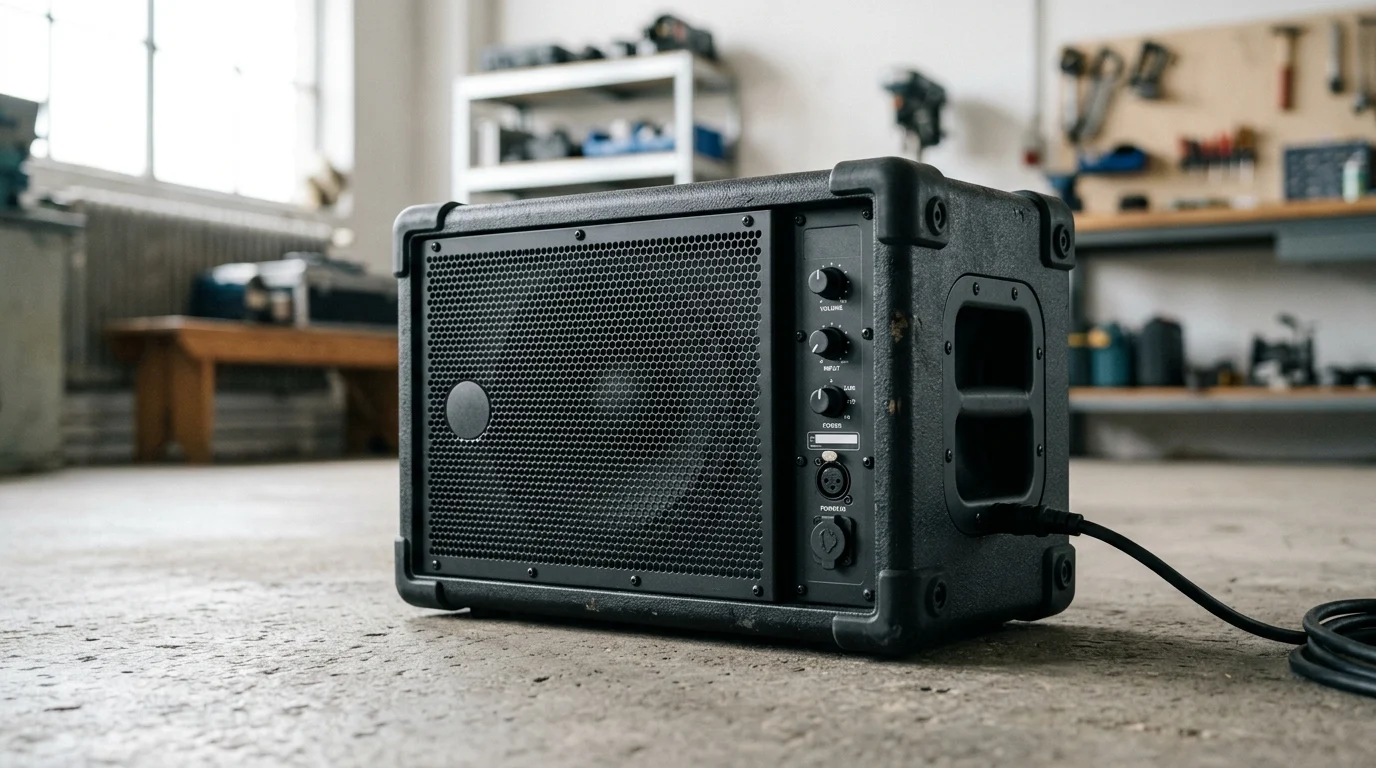
Why Choose Heavy-Duty Outdoor Horn Speakers
Deploying an effective public address system in extreme environments requires acoustic equipment engineered for maximum survivability and penetration. As industrial facilities, transportation networks, and sprawling outdoor campuses prepare for 2026 infrastructure upgrades, the heavy-duty speaker remains the uncompromising cornerstone of life-safety and mass notification networks. Unlike commercial-grade audio systems designed for background music and aesthetic subtlety, industrial PA systems must prioritize critical voice intelligibility and raw acoustic power over high-fidelity musical reproduction.
Selecting a heavy-duty outdoor horn speaker involves navigating a complex matrix of acoustic physics, material science, and regulatory compliance. Facilities must ensure their paging systems can cut through high ambient noise floors, override heavy machinery, and deliver clear emergency instructions, all while withstanding relentless environmental degradation. A failure in these systems is not merely an operational inconvenience; it represents a critical breakdown in life-safety protocols.
Defining Heavy-Duty Speaker Requirements
A heavy-duty speaker is defined by its ability to maintain continuous operation under severe environmental stress without measurable acoustic degradation. These units are specifically engineered to endure extreme temperature fluctuations, typically rated for continuous operation in thermal bands between -40°C and +60°C. Beyond thermal resilience, heavy-duty classifications demand structural defenses against high-velocity impacts, persistent low-frequency vibration, and highly corrosive atmospheres.
At the component level, a heavy-duty rating indicates the presence of reinforced structural mounting brackets, UV-stabilized enclosures, and hermetically sealed driver units. For marine, petrochemical, or chemical processing environments, these requirements expand significantly. True industrial-grade speakers must include 316L stainless steel hardware, specialized anti-corrosion powder coatings capable of surviving 500-hour continuous salt spray tests, and internal components resistant to airborne particulates and chemical vapors.
When Horn Speakers Outperform Conventional Speakers
Horn speakers fundamentally outperform conventional cone-based loudspeakers in outdoor and industrial applications due to the physics of acoustic impedance matching. By utilizing a mathematically calculated flared horn structure—often utilizing exponential or tractrix flare geometries—to couple the acoustic energy from the driver’s high-pressure diaphragm to the low-pressure ambient air, horn speakers achieve exceptional electro-acoustic efficiency.
A standard heavy-duty horn speaker can produce a sound pressure level (SPL) of 105 dB to 115 dB at 1 watt measured at 1 meter. In stark contrast, a conventional cone speaker might only generate 85 dB to 90 dB under the identical 1W/1m conditions. This represents a massive disparity in efficiency, meaning the horn speaker requires a fraction of the amplifier power to achieve the same volume.
This efficiency translates directly to superior throw distance and penetration through high ambient noise. When broadcasting critical voice instructions across a 150-meter rail yard or over the 95 dB ambient roar of a manufacturing floor, the focused directivity of a horn speaker prevents acoustic energy from dissipating harmlessly into the environment. Conventional speakers require exponentially more amplifier power to achieve comparable distances, which increases thermal stress on the voice coils, necessitates larger gauge cabling, and drastically inflates total project costs.
Key Specifications for Outdoor PA Performance
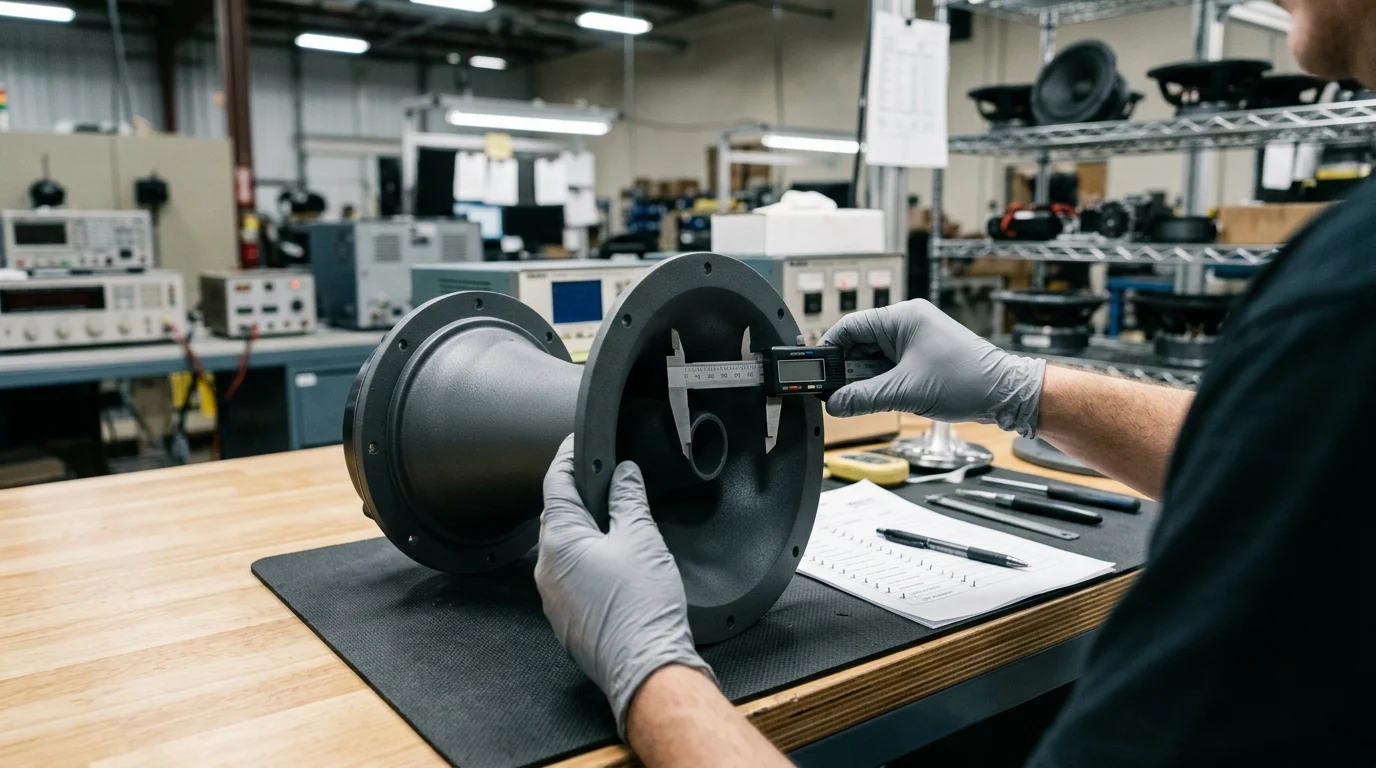
Evaluating heavy-duty speakers requires a rigorous analysis of their electro-acoustic specifications and physical construction parameters. For 2026 deployments, system specifiers and acoustic engineers must meticulously align hardware capabilities with the precise physical, electrical, and acoustic realities of the deployment site.
SPL, Sensitivity, Dispersion, and Frequency Response
Sound Pressure Level (SPL) and sensitivity are the primary quantitative metrics for determining a speaker’s output capability. A heavy-duty horn speaker should offer a minimum sensitivity of 105 dB/1W/1m, ensuring maximum output with minimal amplifier strain. Dispersion angles—typically ranging from 60° to 90° horizontally and 40° to 60° vertically—dictate the exact coverage footprint. Narrow dispersion focuses acoustic energy over longer distances (ideal for perimeters), while wider dispersion covers broader, closer areas (ideal for assembly zones).
Frequency response in horn speakers is intentionally constrained to maximize vocal intelligibility. While full-range commercial speakers operate from 20 Hz to 20 kHz, outdoor horn speakers are typically tuned to a strict 250 Hz to 10 kHz band. This specific range encompasses the critical frequencies of human speech. Deliberately cutting out low-frequency energy prevents the amplifier from wasting massive amounts of power on bass frequencies that do not contribute to voice clarity and often become lost in industrial rumble.
Enclosure, Driver, Diaphragm, Gasket, and Coating
The long-term durability of an outdoor speaker relies entirely on its enclosure materials and internal driver components. Drivers utilizing neodymium magnets offer a significantly higher strength-to-weight ratio compared to traditional ferrite, though ferrite remains the standard in highly cost-sensitive or extreme high-temperature deployments. Inside the compression driver, diaphragms constructed from phenolic resin, polyimide, or titanium provide the necessary resistance to moisture and physical fatigue, preventing the tearing and warping that plagues paper or standard polymer cones.
| Enclosure Material | Impact Resistance | UV & Weather Resistance | Ideal Deployment Scenario |
|---|---|---|---|
| ABS / Polycarbonate | Moderate to High | High (with UV stabilizers) | General outdoor campuses, light industrial |
| Powder-Coated Aluminum | Very High | Excellent | Heavy manufacturing, transport hubs, rail yards |
| Fiberglass / GRP | Extreme | Excellent | Marine environments, chemical processing plants |
To ensure internal acoustic chamber protection, heavy-duty units utilize custom-molded silicone gaskets and multi-layer polyurethane conformal coatings on internal electronics, sealing the unit against microscopic dust, corrosive gases, and moisture ingress.
IP Rating, Transformer Taps, Impedance, and Amplifier Matching
Ingress Protection (IP) ratings are strictly non-negotiable for outdoor PA systems. A minimum rating of IP66 (complete protection against dust and powerful water jets, tested at 100 liters per minute) is standard for industrial use. IP67 (protection against temporary submersion) is increasingly required for extreme weather zones or areas subject to severe flooding.
Beyond physical protection, electrical integration depends on proper transformer configurations. Most heavy-duty outdoor PA systems operate on 70V or 100V constant-voltage lines, allowing dozens of speakers to be daisy-chained over thousands of feet of cable without significant signal loss. Speakers must include multi-tap step-down transformers (e.g., selectable at 7.5W, 15W, 30W, and 50W) with an insertion loss of less than 1.5 dB.
Impedance matching ensures the centralized amplifier operates efficiently without overheating. For example, a 500W amplifier can safely drive ten 50W horn speakers, provided the total wattage taps (500W) do not exceed the recommended 80% to 90% continuous load capacity of the amplifier’s rated output.
How to Compare Speaker Options by Site
Deploying a uniform speaker model across an entire enterprise footprint often leads to acoustic dead zones, dangerous intelligibility drop-offs, or massive cost overruns. Comparing speaker options requires segmenting the facility into distinct acoustic zones and matching specific hardware profiles to the environmental realities of each site.
Comparison Criteria for Outdoor Horn Speakers
The primary comparison criteria for outdoor horn speakers involve the required throw distance and the baseline ambient noise floor of the target area. Acoustic engineers rely on the inverse square law, which dictates a 6 dB drop in SPL for every doubling of distance from the sound source in a free field. If a speaker outputs 110 dB at 1 meter, it will deliver approximately 86 dB at 16 meters, and 80 dB at 32 meters. Comparing speakers requires mapping these specific drop-off rates against the ambient noise floor to ensure the broadcast remains audible and intelligible.
Directivity index (DI) and Speech Transmission Index (STI) capabilities also heavily differentiate premium models from budget options. A speaker with a high DI will push sound efficiently down a narrow corridor or along a fence line, whereas a lower DI is suited for wide-open assembly areas. Specifiers must compare the polar plots provided by manufacturers to ensure the acoustic energy hits the actual listener plane (typically 1.5 meters off the ground) rather than reflecting off adjacent metal structures, which drastically reduces STI.
Use Cases for Plants, Hubs, Warehouses, and Campuses
Different industrial sectors impose unique acoustic and physical demands on PA hardware, requiring tailored specifications for each distinct zone.
| Site Profile | Typical Ambient Noise | Target SPL at Listener | Recommended Hardware Profile |
|---|---|---|---|
| Heavy Manufacturing | 85 dB – 95 dB | 100 dB – 105 dB | 50W+ Aluminum Horn, Narrow Dispersion |
| Logistics Hub / Rail | 75 dB – 85 dB | 90 dB – 95 dB | 30W-50W IP66 Horn, Long Throw (100m+) |
| Warehouse Interior | 65 dB – 75 dB | 80 dB – 85 dB | 15W-30W ABS Horn, Wide Dispersion |
| Corporate Campus | 55 dB – 65 dB | 75 dB – 80 dB | 10W-15W Aesthetic Horn, High STI Focus |
In heavy manufacturing plants, overriding mechanical noise requires high-wattage horn speakers positioned relatively close to the workforce (typically mounted at 4 to 6 meters). Conversely, expansive logistics hubs and rail yards benefit from ultra-high-efficiency horns mounted on tall masts (8 to 12 meters) to cover vast acreages with fewer units. Inside warehouses, high reverberation times (RT60 often exceeding 3 seconds) require a higher density of lower-wattage speakers to prevent the audio from becoming a muddy, unintelligible echo.
Cost Drivers and Total Project Value
Total project value extends far beyond the unit price of the individual speaker. While basic commercial horn speakers may cost between $80 and $150, true heavy-duty, industrial-grade units typically range from $250 to $600. Explosion-proof (ATEX-certified) variants required for oil, gas, and volatile chemical facilities can easily exceed $1,200 to $2,000 per unit.
However, hardware costs usually represent only 30% to 40% of the total deployment budget (CAPEX). The remaining 60% to 70% is consumed by heavy-duty cabling, rigid conduit installation, centralized amplifier racks, and specialized labor. Investing in higher-efficiency horn speakers (e.g., 115 dB sensitivity vs 105 dB) can reduce the total number of units required to cover a zone by 20% to 30%. This subsequently slashes the miles of copper wire, conduit, and the number of amplifier channels needed. Therefore, spending a premium on high-efficiency speakers often yields a lower total project cost.
Compliance, Sourcing, and Quality Checks
Procurement of heavy-duty PA equipment carries significant life-safety and legal implications. Sourcing managers and system integrators must rigorously verify manufacturer claims, ensuring that every unit deployed meets stringent international standards for emergency broadcasting, industrial durability, and long-term reliability.
Standards and Certifications to Verify
Life-safety and mass notification systems are heavily regulated across all major global markets. In the European market, EN 54-24 certification is mandatory for loudspeakers used in voice alarm systems. For outdoor and heavy-duty applications, the equipment must specifically meet EN 54-24 Type B environmental requirements, which dictate strict performance parameters during fire conditions, including the mandatory use of ceramic terminal blocks and thermal fuses to prevent a melting speaker from shorting out the entire amplifier line.
In North America, UL 1480 (Speakers for Fire Alarm and Signaling Systems) serves a similar regulatory function. For hazardous environments where combustible gases, vapors, or combustible dust are present, standard IP ratings are legally insufficient. Facilities must source ATEX, IECEx, or Class I Division 1/2 certified explosion-proof speakers. Furthermore, NEMA 4X certifications verify that the enclosure not only repels water and dust but also provides a proven, tested defense against corrosion.
How to Assess Speaker Manufacturers
Assessing a speaker manufacturer requires looking beyond marketing brochures and critically examining their quality management systems and testing infrastructure. Top-tier manufacturers operate under strict ISO 9001 standards and maintain in-house anechoic chambers for precise acoustic measurements. Buyers should request comprehensive spec sheets that include verifiable polar plots, EASE (Enhanced Acoustic Simulator for Engineers) data files for acoustic modeling, and third-party laboratory test reports for IP ratings and impact resistance.
Supply chain reliability is equally critical for keeping projects on schedule. For large enterprise rollouts, buyers must assess the manufacturer’s production capacity, automated testing protocols, and standard Minimum Order Quantities (MOQs). A reliable industrial audio supplier should be able to fulfill orders of 100 to 500 units with consistent lead times of 4 to 8 weeks. Furthermore, they should demonstrate a documented hardware defect rate of less than 0.5% across production batches, achieved through rigorous Factory Acceptance Testing (FAT).
Lifecycle Factors to Negotiate
Heavy-duty PA systems are capital investments expected to perform reliably for a decade or more, often targeting a Mean Time Between Failures (MTBF) of 50,000+ hours. During the sourcing phase, procurement teams must actively negotiate lifecycle support terms. Standard warranties for industrial acoustic equipment should span 3 to 5 years, with premium manufacturers offering up to 10 years on passive components and enclosures.
Negotiations should also secure guaranteed pricing and availability for critical spare parts, particularly diaphragm replacement kits and specialized mounting hardware. Because diaphragms are the most common point of failure—typically due to massive electrical surges from lightning strikes or extreme mechanical fatigue over years of use—the ability to replace the internal acoustic driver in the field without discarding the entire expensive aluminum enclosure significantly reduces long-term operational expenditures (OPEX).
How to Choose the Right Heavy-Duty PA Speaker
Transitioning from theoretical specifications to a fully functional deployment requires a systematic approach to acoustic system design. Choosing the right heavy-duty PA speaker is a process of precise acoustic mathematics, comprehensive environmental auditing, and strategic future-proofing.
Step-by-Step Site Survey Process
The selection process must begin with a comprehensive site survey. Acoustic engineers must measure the ambient noise floor using A-weighted decibels (dBA) during peak operational hours to establish the baseline. The golden rule of industrial paging is that the broadcast audio must arrive at the listener’s ear at least 10 dB to 15 dB above the ambient noise level. If a factory floor generates a continuous 85 dBA of ambient machinery noise, the target SPL at the listener’s position must be strictly engineered to hit 95 dB to 100 dB.
Once the target SPL at the listener plane is established, engineers calculate back to the proposed speaker mounting location using the inverse square law (-6 dB per doubling of distance). If the worker is 16 meters away from the speaker, the sound will have dropped by 24 dB from the 1-meter output. Therefore, to deliver 100 dB at 16 meters, the speaker must output 124 dB at 1 meter. This critical calculation dictates whether a 15W, 30W, or 50W transformer tap is required, directly informing the exact hardware model selection.
Decision Matrix for Intelligibility, Coverage, and Durability
Balancing intelligibility, coverage, and durability requires a weighted decision matrix. Intelligibility is scientifically measured by the Speech Transmission Index (STI), scaling from 0 to 1.0. For emergency paging and mass notification, an STI of 0.5 or higher is universally required. Achieving high STI in highly reverberant environments requires deploying a higher density of lower-wattage horn speakers, as blasting a single 100W speaker will cause chaotic acoustic reflections that destroy speech clarity.
Coverage mapping ensures there are no acoustic blind spots across the facility. System designers use EASE software to visualize the 3D dispersion patterns of chosen speakers overlaid on the facility’s floor plan. Durability acts as the final, overriding filter in the matrix; a speaker that meets all SPL and STI targets but features a standard ABS plastic enclosure will be immediately disqualified if the mounting location is exposed to heavy mechanical impacts, requiring a shift to a powder-coated aluminum equivalent.
When to Upgrade from Basic Outdoor Horn Speakers
While traditional 70V/100V analog horn speakers remain the industry standard for sheer reliability and long-distance cabling, 2026 infrastructure demands often require more intelligent endpoints. The threshold for upgrading from basic passive horns to active, IP-based (SIP) horn speakers is crossed when a facility requires granular zone control, automated self-testing, and direct integration with VoIP telephone networks.
IP-based heavy-duty speakers feature built-in amplifiers and digital signal processors (DSPs), drawing power and data via standard network cables using PoE+ (IEEE 802.3at, up to 30W) or PoE++ (IEEE 802.3bt, up to 60W/90W). If a facility requires dynamic volume adjustment based on fluctuating ambient noise—utilizing built-in ambient noise sensing microphones—or needs to page specific individual loading docks without broadcasting to the entire yard, upgrading to SIP-enabled outdoor horn speakers becomes a logistical necessity. While the per-unit cost increases significantly, the elimination of massive centralized amplifier racks and the addition of real-time fault monitoring often justify the technological leap.
Key Takeaways
- Choose heavy duty speakers rated for harsh operating conditions, including temperature ranges around -40°C to +60°C where extreme outdoor performance is required.
- Use horn speakers instead of conventional cone speakers when long throw distance, focused coverage, and voice intelligibility are more important than music fidelity.
- Specify industrial horn speakers with typical sensitivity of 105 dB to 115 dB at 1W/1m to reduce amplifier load and improve paging coverage.
- For marine, petrochemical, and corrosive environments, prioritize 316L stainless steel hardware, anti-corrosion coatings, sealed drivers, and salt-spray-tested construction.
- Match PA system design to ambient noise levels, site layout, regulatory requirements, and integration needs such as VoIP, IP PBX, intercoms, and emergency call boxes.
Frequently Asked Questions
What makes a heavy duty speaker suitable for industrial PA systems?
A heavy duty speaker is built for continuous operation under stress, with reinforced brackets, sealed drivers, UV-stabilized enclosures, corrosion-resistant hardware, and reliable performance in extreme temperatures, vibration, dust, moisture, and high-noise environments.
Why are horn speakers preferred for outdoor emergency paging?
Horn speakers deliver higher acoustic efficiency and focused sound projection, helping voice announcements travel farther and remain intelligible across rail yards, plants, campuses, ports, and other noisy outdoor areas.
What SPL should I look for in an outdoor horn speaker?
Many industrial horn speakers produce about 105 dB to 115 dB at 1 watt/1 meter, far above typical cone speakers. Higher SPL helps overcome machinery noise and improves emergency message coverage.
Are heavy duty speakers needed in hazardous environments?
Yes. Oil and gas, mining, chemical plants, and similar sites often need rugged, certified communication equipment. Systems should be selected with relevant compliance needs such as ATEX, CE, FCC, ROHS, and site safety requirements.
How do weatherproof PA speakers differ from commercial speakers?
Weatherproof PA speakers prioritize durability, voice clarity, and survivability over music fidelity. They are designed to resist rain, UV exposure, corrosion, temperature swings, impacts, and long-term outdoor degradation.

Post time: Jun-24-2026