
Introduction
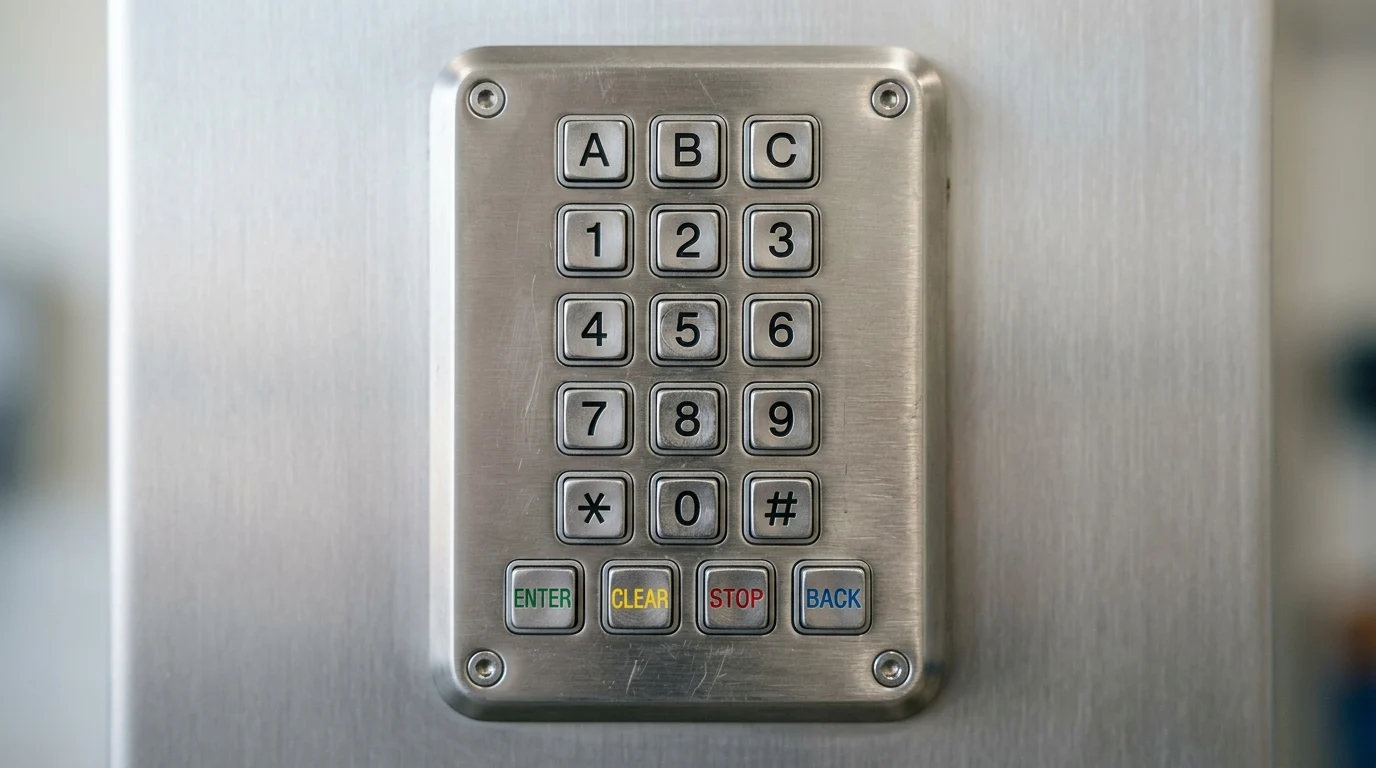
For outdoor kiosks and telephones, keypad material directly affects durability, maintenance, and service continuity. This comparison focuses on why stainless steel keypads are often preferred in exposed or high-risk installations, especially where vandal resistance, weather tolerance, and long operating life matter more than lowest upfront cost. You’ll see how stainless steel and plastic differ in impact strength, environmental performance, wear over time, and maintenance demands, so it’s easier to match the keypad to the realities of public use and long-term ownership.
Why choose stainless steel vs plastic keypads
Selecting the optimal interface material for outdoor kiosks, emergency telephones, and access control systems dictates the long-term reliability of an installation. Engineers and product managers must evaluate environmental rigors and usage patterns to determine whether a stainless steel keypad or a plastic alternative best aligns with a project’s operational parameters.
Vandal resistance, weather exposure, and uptime
In unsupervised public environments, input devices face a high probability of abuse, blunt-force impact, and deliberate vandalism. Stainless steel keypads typically achieve an impact protection rating of IK09 to IK10, capable of withstanding up to 20 joules of impact energy. Conversely, standard ABS or polycarbonate plastic keypads usually max out at IK07 (2 joules), making them highly susceptible to cracking or shattering under targeted duress. For outdoor deployments, this mechanical resilience translates directly into system uptime, preventing catastrophic failures that can render emergency communications or ticketing kiosks inoperable.
Lifecycle performance and maintenance impact
An input device’s lifecycle is deeply tied to its material composition and required maintenance frequency. A high-grade stainless steel keypad is engineered to deliver 2 to 3 million actuation cycles per key without mechanical degradation. While high-quality engineering plastics can also achieve high cycle counts in controlled environments, their outdoor lifespan is frequently truncated by environmental stress cracking and material fatigue. Consequently, the maintenance frequency for plastic keypads in harsh environments is significantly higher. They often require complete module replacements every 12 to 24 months, whereas stainless steel units can operate continuously for 5 to 10 years with minimal intervention.
What defines a stainless steel keypad
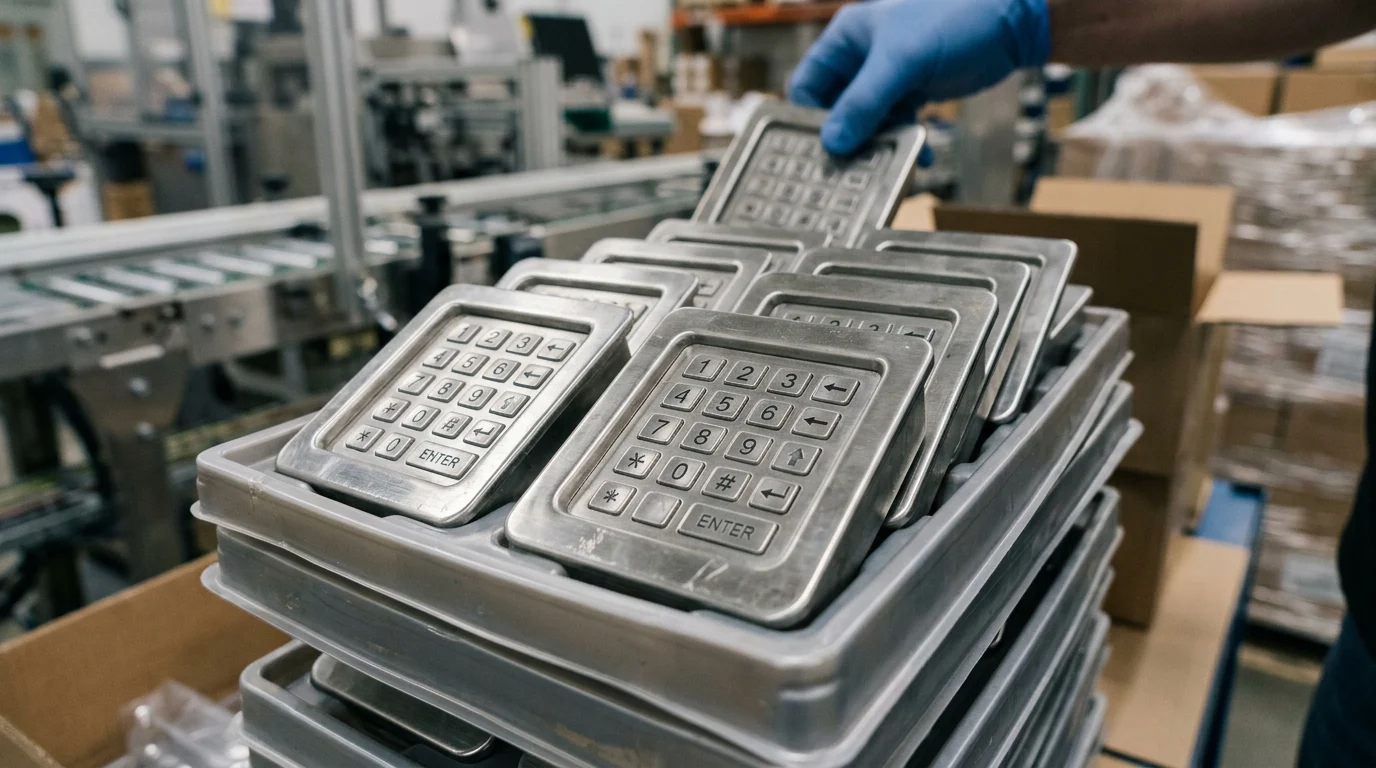
A true stainless steel keypad is defined by its rigorous metallurgical composition and specialized electromechanical architecture. Typically fabricated from SUS304 or marine-grade SUS316L alloys, these keypads integrate robust metallic fascias and keycaps with highly sealed switching matrices, isolating internal electronics from external contaminants.
Construction, switch types, and sealing
The construction of a stainless steel keypad relies on precision-machined or stamped keycaps seated within a matching steel bezel. To achieve ingress protection ratings of IP65, IP67, or even IP68, manufacturers utilize specialized silicone sealing gaskets and polymeric encapsulation around the printed circuit board (PCB). The underlying switch technology frequently employs gold-on-gold or carbon-on-gold dome switches, ensuring reliable electrical contact even if micro-condensation occurs. This internal sealing, combined with the metallic exterior, creates an impermeable barrier against dust, heavy rain, and pressurized water jets.
Tactile feel, visibility, and accessibility
Despite the rigid material, engineering a precise tactile response is critical for user feedback. Actuation forces for stainless steel keys are typically calibrated between 1.5N and 3.0N, with a key travel distance ranging from 0.45mm to 2.0mm, depending on the switch type. To ensure broad accessibility and compliance with the Americans with Disabilities Act (ADA) or equivalent international standards, keycaps are often laser-engraved or chemically etched with high-contrast legends. Additionally, raised tactile markers and Braille dots can be integrated directly into the steel tooling, providing permanent accessibility features that will not wear off after millions of interactions.
How stainless steel keypads compare with plastic
Evaluating stainless steel against plastic requires a systematic comparison of mechanical, environmental, and aesthetic variables. While plastic offers high design flexibility and lower upfront costs, metal variants excel in durability and extreme environmental tolerance.
Key specifications and comparison criteria
When benchmarking these two materials, engineers must weigh specific performance metrics against the intended application. The following table highlights the primary specification differences between typical industrial stainless steel and polycarbonate (plastic) keypads.
| Specification Matrix | Stainless Steel Keypad (SUS304/316) | Plastic Keypad (Polycarbonate/ABS) |
|---|---|---|
| Impact Rating | IK09 – IK10 | IK04 – IK07 |
| Ingress Protection | IP65 – IP68 | IP54 – IP65 |
| Actuation Lifespan | > 2,000,000 cycles | 500,000 – 1,000,000 cycles |
| Weight (Standard 3×4) | 250g – 400g | 50g – 100g |
| Relative Unit Cost | High ($30 – $80+) | Low ($5 – $15) |
UV, temperature, chemicals, and cleaning
Environmental exposure accelerates material degradation, particularly regarding ultraviolet (UV) radiation and thermal extremes. Stainless steel is entirely immune to UV embrittlement, maintaining its structural integrity and finish indefinitely under direct sunlight. In contrast, even UV-stabilized plastics will eventually discolor, chalk, and become brittle over prolonged exposure. Thermally, stainless steel keypads reliably operate in extreme ranges from -40°C to +80°C. Plastics typically suffer from a narrower operational band, often warping or cracking if subjected to rapid thermal cycling beyond -20°C to +50°C. Furthermore, stainless steel resists highly corrosive cleaning agents, solvents, and petrochemicals that can easily dissolve or craze plastic surfaces.
Aesthetics, branding, and perceived quality
Beyond raw specifications, the aesthetic and tactile feedback of the keypad heavily influences the perceived quality of the terminal. Stainless steel imparts a premium, industrial-grade aesthetic that communicates security and reliability to the user. This is particularly advantageous for banking terminals, high-end access control points, and transit kiosks. Plastic, while capable of supporting complex geometries, custom colors, and backlighting with greater ease, often conveys a consumer-grade feel that may not align with the branding of ruggedized or high-security infrastructure.
Cost, compliance, and sourcing factors
Transitioning from the engineering phase to procurement introduces a new set of variables centered on unit economics, manufacturing scalability, and regulatory adherence. The supply chain dynamics for metal fabrication differ significantly from those of plastic injection molding.
Tooling, customization, lead times, and MOQ
The financial outlay for tooling and customization heavily dictates the material choice for low-to-medium volume deployments. Stainless steel keypads typically utilize CNC machining or laser cutting for the fascias, allowing for high customization with relatively low tooling costs. Consequently, manufacturers can often support Minimum Order Quantities (MOQs) as low as 50 to 100 units. Conversely, plastic keypads require expensive injection molding tools, which can cost upwards of $5,000 to $15,000 depending on complexity. This necessitates high MOQs (often 1,000 to 5,000 units) to amortize the tooling investment. Standard lead times for custom stainless steel keypads average 4 to 6 weeks, providing agility for specialized kiosk projects.
Testing, compliance, and certification
Regulatory compliance ensures the keypad will not introduce electrical interference or fail under environmental stress. Procured keypads must carry standard certifications such as CE, FCC, and RoHS. For outdoor maritime or coastal deployments, stainless steel units must undergo rigorous salt spray testing; a standard 304 stainless steel unit should pass a 48-hour to 96-hour salt fog test, while marine-grade 316L units are often tested for 120 hours or more without exhibiting red rust. Buyers should mandate verifiable test reports from independent laboratories confirming both the IP ingress ratings and IK impact protection claims.
Inspection, supplier checks, and samples
Effective sourcing requires stringent incoming inspection and supplier vetting. Quality control protocols should include membrane switch continuity testing, actuation force verification, and dimensional tolerance checks. Procuring pre-production samples is critical; engineers must physically evaluate the tactile feedback, legend durability, and gasket compression before authorizing mass production. Auditing the supplier’s ISO 9001 certification and reviewing their historical defect rates (which should ideally remain below 0.5% for industrial keypads) safeguards the supply chain against premature field failures.
How to choose for outdoor kiosks or telephones
Selecting the correct keypad material requires a holistic evaluation of the deployment environment, expected user behavior, and the total cost of ownership over the hardware’s intended lifespan. A structured decision framework mitigates the risk of over-engineering or under-specifying the component.
Decision framework by deployment conditions
Project managers should map their deployment conditions against the physical limitations of available materials. The following decision matrix provides a baseline for matching environmental profiles with the appropriate keypad technology.
| Deployment Environment | Primary Threats | Recommended Material | Minimum Protection |
|---|---|---|---|
| Indoor / Supervised | High usage, spills | Plastic / Polycarbonate | IP54, IK04 |
| Outdoor / Unsupervised | Vandalism, UV, rain | SUS304 Stainless Steel | IP65, IK09 |
| Coastal / Industrial | Salt fog, chemicals, freezing | SUS316L Stainless Steel | IP67, IK10 |
By categorizing the deployment into these distinct tiers, hardware teams can quickly eliminate unsuitable materials and focus on optimizing the switch technology and integration methods for the chosen tier.
When stainless steel is the better investment
Ultimately, a stainless steel keypad is the superior investment whenever the cost of downtime and field maintenance exceeds the initial component premium. In applications such as highway emergency telephones, unattended payment terminals, and prison communication systems, a single dispatch for a technician to replace a shattered plastic keypad can cost upwards of $200 to $500 in labor and travel alone. By investing in a stainless steel interface with a 10-year operational lifespan, organizations drastically reduce their Total Cost of Ownership (TCO). While the upfront capital expenditure is higher, the guaranteed uptime, resistance to extreme weather, and immunity to vandalism yield a definitive return on investment for mission-critical outdoor infrastructure.
Key Takeaways
- The most important conclusions and rationale for Stainless steel keypad
- Specs, compliance, and risk checks worth validating before you commit
- Practical next steps and caveats readers can apply immediately
Frequently Asked Questions
Why is a stainless steel keypad better for an outdoor emergency telephone?
It resists vandalism, rain, dust, and UV better than plastic, helping outdoor phones stay operational longer with fewer replacements.
When should I choose SUS316L over SUS304 for a keypad?
Choose SUS316L for coastal, marine, or chemical-heavy sites. Use SUS304 for most general outdoor kiosks and telephones.
How long does a stainless steel keypad usually last outdoors?
A quality unit can last 5 to 10 years outdoors and support over 2 million key presses, depending on environment and maintenance.
Can Siniwo supply stainless steel keypads for hazardous or harsh industrial sites?
Yes. Siniwo focuses on rugged industrial communication solutions for harsh and hazardous environments, with design, integration, and maintenance support.
What ratings should I check before buying a stainless steel keypad?
Check IP65-IP68 for sealing, IK09-IK10 for impact resistance, material grade like SUS304 or SUS316L, and lifecycle testing for key presses.
Post time: Jun-03-2026