
Introduction
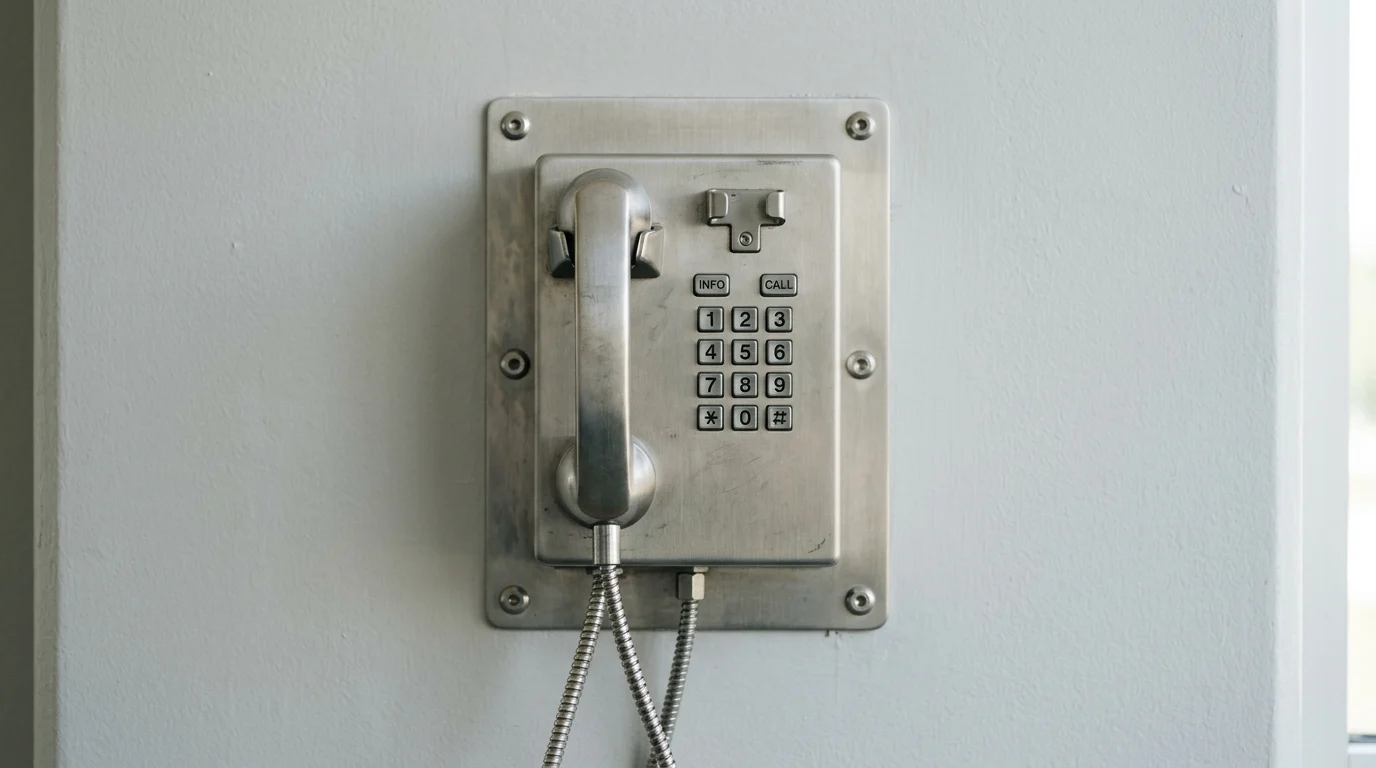
Reliable inmate communication depends on hardware built for abuse, not office use. In correctional settings, a vandal resistant jail phone supports legal access, reduces service interruptions, and helps prevent tension from escalating when inmates cannot reach attorneys, family, or support services. This article explains why rugged construction matters, with a close look at stainless steel keypads and other design features that improve durability, hygiene, and tamper resistance. It also connects these engineering choices to broader operational goals such as uptime, compliance, maintenance control, and day-to-day facility safety, setting up a clearer understanding of what makes prison communication systems effective in demanding environments.
Why Vandal-Resistant Jail Phones Matter
The deployment of a vandal-resistant jail phone is not merely a logistical necessity; it is a critical pillar of correctional facility infrastructure. These communication endpoints serve as lifelines in highly volatile environments, requiring specialized engineering to withstand intentional destruction while maintaining continuous, uncompromised operation.
Safety, uptime, and legal access requirements
Correctional facilities operate under strict legal mandates ensuring inmate access to legal counsel, bail bondsmen, and family networks. Failure to provide this access can result in constitutional violations, regulatory audits, and costly litigation. Consequently, facility communication networks must target a minimum uptime threshold of 99.9%, a metric impossible to achieve with standard commercial telephony equipment.
Beyond legal compliance, reliable communication functions as a vital pressure-release mechanism within the inmate population. Consistent access to external communication correlates directly with reduced internal violence and fewer administrative grievances. When a phone unit fails due to vandalism, the resulting bottleneck in communication can rapidly escalate cell block tensions, making hardware reliability a direct component of both officer and inmate safety.
Why rugged endpoints and stainless steel keypads are preferred
Standard telecommunications hardware disintegrates rapidly in penal environments. Rugged endpoints mitigate this through specialized materials and heavy-duty construction techniques designed to neutralize specific threat models. Stainless steel keypads, in particular, are prioritized because they actively resist puncturing, prying, and impact from improvised weapons or contraband.
To meet institutional requirements, these devices must routinely adhere to IK10 impact resistance standards. Achieving an IK10 rating requires the enclosure and the human-machine interface to withstand up to 20 Joules of kinetic energy—equivalent to a 5.0 kg steel mass dropped from a height of 400 millimeters. Surviving this impact without compromising the internal circuitry or exposing jagged edges that could be weaponized is the absolute baseline expectation for modern correctional communication hardware.
What Defines a High-Performance Vandal-Resistant Jail Phone
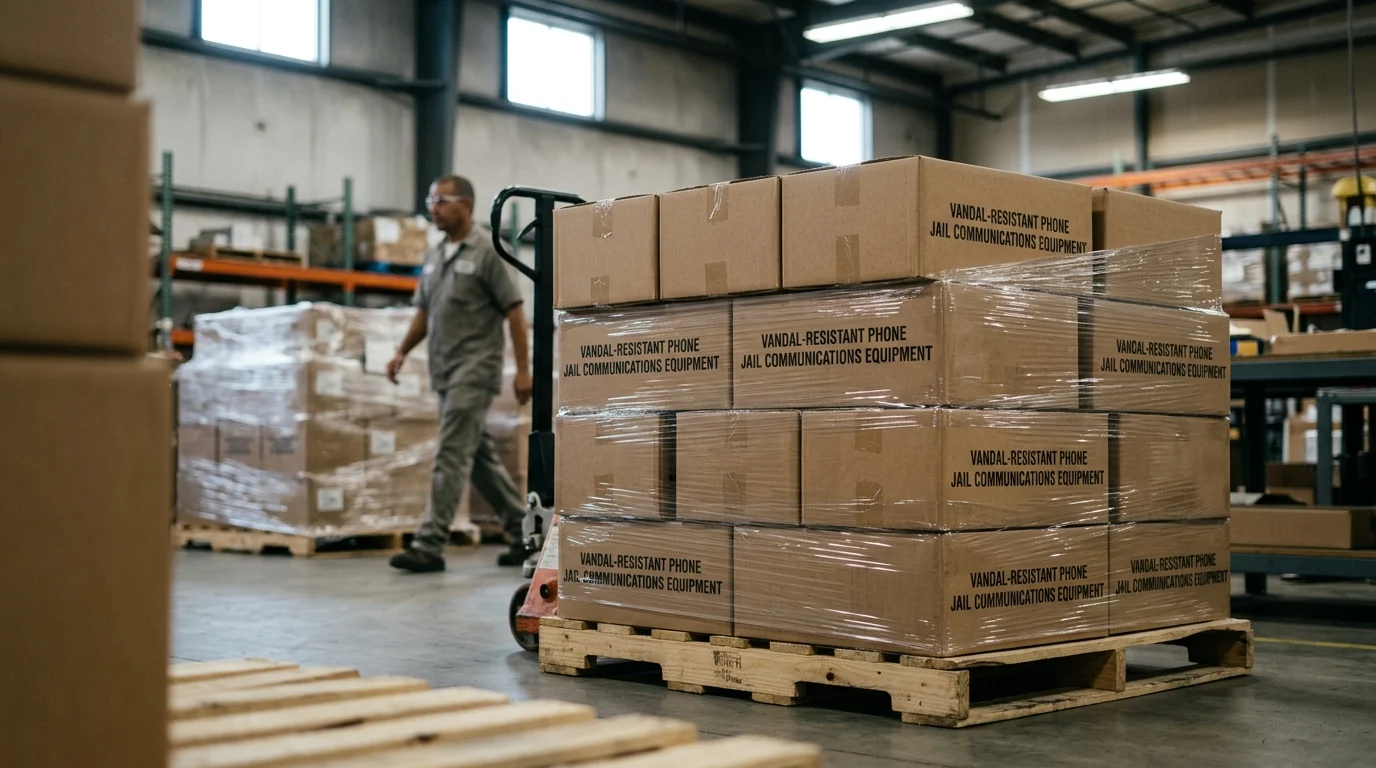
High-performance correctional communication hardware relies on a synthesis of mechanical fortification and advanced acoustic engineering. The specifications defining these units dictate their survivability and functionality in some of the most hostile operating environments.
Core design features of vandal-resistant jail phones
The chassis of a true vandal-resistant jail phone is typically constructed from heavy-duty 14-gauge (approximately 1.9mm thick) brushed stainless steel or cold-rolled steel with a baked powder-coated finish. This thickness prevents the enclosure from being dented or breached by blunt force. Handsets are cast from high-impact ABS plastic or solid aluminum, engineered to prevent shattering into sharp fragments.
These handsets are tethered via armored stainless steel lanyards engineered to withstand minimum pull loads of 800 pounds (approximately 360 kg). This extreme tensile strength ensures the cord cannot be snapped or utilized as a ligature. Furthermore, all assembly points utilize tamper-proof security screws, such as pin-in-Torx or spanner heads, to prevent unauthorized disassembly and the harvesting of internal components.
Key technical specifications and test criteria
Beyond physical armor, technical resilience is validated through rigorous environmental and electrical testing. Ingress protection is paramount, with leading models carrying an IP65 or IP66 rating. This ensures total protection against dust ingress and resistance to high-pressure water jets, a necessity during routine cell block washdowns. Internally, the printed circuit boards (PCBs) are conformal coated with silicone or acrylic to resist high humidity and corrosive cleaning agents.
Mean Time Between Failures (MTBF) for these specialized units is strictly benchmarked. Institutional-grade endpoints require an MTBF exceeding 50,000 operational hours under continuous use. Acoustically, these phones must feature noise-canceling microphones to filter out the severe ambient noise typical of cell blocks, ensuring clear audio transmission for both the user and the automated recording systems.
| Specification | Industry Standard | Primary Operational Purpose |
|---|---|---|
| Enclosure Thickness | 14-Gauge (1.9mm) | Prevents denting, breaching, and weaponization |
| Lanyard Pull Strength | 800+ lbs (360+ kg) | Prevents cord snapping and use as a ligature |
| Impact Rating | IK10 (20 Joules) | Ensures internal component survival during blunt force attacks |
| Ingress Protection | IP65 / IP66 | Protects circuitry from liquids, dust, and aggressive cleaning |
How Stainless Steel Keypads Compare with Other Input Designs
The keypad serves as the primary human-machine interface and is statistically the most frequent point of failure in public and institutional telephony. Comparing stainless steel keypads against alternative input designs highlights distinct operational trajectories and failure rates.
Operational trade-offs of stainless steel keypads
Membrane and standard polycarbonate keypads offer low initial procurement costs and inherently high resistance to liquid ingress due to their seamless surfaces. However, they are highly susceptible to puncturing by smuggled sharp objects or melting via clandestine lighters. A single puncture can allow bodily fluids or cleaning chemicals to short-circuit the underlying matrix.
Stainless steel keypads eliminate these specific vulnerabilities. Constructed with individual metal keys seated in a steel bezel, they resist burning and cutting. The operational trade-off primarily involves tactile feedback and actuation force. Stainless steel keys require a higher actuation force—typically between 2.0 and 3.5 Newtons—and rely on specialized conductive rubber or sealed metal dome switches beneath the steel caps to register inputs without allowing debris penetration.
Durability, cost, and usability comparison points
From a lifecycle perspective, the durability of stainless steel creates a massive divergence in total cost of ownership. While a stainless steel keypad module commands a 30% to 40% capital expenditure premium over heavy-duty plastic alternatives, its lifespan is exponentially longer.
High-grade stainless keypads are tested to endure over 1,000,000 actuation cycles per key. In maximum-security deployments, plastic keypads often require replacement within 12 to 18 months due to localized vandalism. Conversely, stainless steel variants frequently operate flawlessly for 7 to 10 years, dramatically reducing maintenance labor and replacement part expenditures over the life of the facility.
| Keypad Material | Puncture Resistance | Burn Resistance | Est. Actuation Cycles | Relative Upfront Cost |
|---|---|---|---|---|
| Polycarbonate/Plastic | Low | Low | 250,000 | Baseline (1.0x) |
| Membrane | Very Low | Low | 500,000 | 1.1x |
| Zinc Alloy | High | High | 750,000 | 1.3x |
| 304/316 Stainless Steel | Very High | Very High | 1,000,000+ | 1.4x |
Compliance, Deployment, and Procurement Considerations
Integrating vandal-resistant jail phones into a broader correctional infrastructure requires strict adherence to regulatory standards, specialized installation methodologies, and careful logistical planning during the procurement phase.
Code compliance and monitoring requirements
Telephony in correctional environments must comply with federal accessibility mandates, notably the Americans with Disabilities Act (ADA). This requires endpoints to feature hearing aid-compatible (HAC) handsets and specialized volume control buttons capable of boosting audio output by at least +12dB, and up to +29dB for environments with exceptionally high ambient noise.
Modern facilities rely heavily on Voice over IP (VoIP). SIP-based jail phones must utilize standard protocols (e.g., SIP RFC 3261) to seamlessly integrate with centralized monitoring software. This integration allows administrators to remotely configure devices, monitor SIP registration status on segregated VLANs, and execute real-time audio recording for security audits and evidentiary purposes.
Deployment steps that reduce installation risk
Installation methodology directly impacts hardware survivability. Flush-mounting the device into a wall cavity presents the lowest profile, minimizing leverage points for prying. When surface mounting is unavoidable due to architectural constraints, heavy-duty angled back boxes must be utilized to deflect downward strikes.
Conduit routing must be completely concealed within the wall or encased in rigid steel piping. Installers must secure backplates using specialized masonry anchors with a minimum pull-out strength of 1,500 pounds, ensuring the entire unit cannot be ripped from the concrete block. Utilizing the correct security bits, such as a Torx T20 with a center pin, is mandatory to secure the faceplate against tampering.
Vendor selection and procurement criteria
Procurement of institutional telecommunications hardware differs significantly from commercial IT purchasing. Administrators must evaluate vendors based on supply chain stability and long-term replacement part availability, as facility phone systems are typically expected to operate for a decade or more.
Custom configurations, such as specific lanyard lengths or proprietary firmware for legacy PBX integration, typically require a Minimum Order Quantity (MOQ) ranging from 20 to 50 units. Standard manufacturing and shipping lead times range from 4 to 8 weeks, necessitating accurate forecasting for new wing construction or mass retrofit projects. Furthermore, comprehensive warranties of 3 to 5 years should be established as a baseline requirement during the vendor selection process.
How to Choose the Right Vandal-Resistant Jail Phone
Selecting the optimal hardware configuration requires aligning the physical attributes of the phone with the specific demographic, security classification, and architectural realities of the correctional facility.
Matching security level, traffic volume, and environment
Device specification must scale precisely with the security classification of the deployment zone. Minimum-security and transitional facilities can often safely deploy surface-mounted units with standard 18-inch to 24-inch armored cords. These environments prioritize usability and accessibility over extreme hardening.
Conversely, maximum-security and behavioral management units demand flush-mounted enclosures and extremely short lanyards—often restricted to 12 inches to strictly eliminate ligature risks. These high-risk zones also require cords rated for a full 1,000 pounds of pull force. High-traffic intake areas benefit from heavy-duty hook switches, frequently utilizing magnetic reed switches with no moving external parts, to survive constant, aggressive receiver slamming without mechanical failure.
Balancing durability, compliance, and cost
The ultimate procurement decision rests on a precise balance of upfront capitalization, regulatory compliance, and long-term durability. Facility managers should model the Total Cost of Ownership (TCO) over a standard 10-year depreciation cycle, factoring in both hardware costs and the labor rates for maintenance dispatches.
Investing in 316-grade stainless steel enclosures and keypads may increase initial hardware costs by 25% compared to standard commercial models. However, achieving an annualized hardware failure rate of less than 1% offsets these initial costs rapidly. By eliminating frequent repairs, reducing downtime, and ensuring uninterrupted compliance with inmate communication mandates, the premium investment in maximum-durability endpoints yields significant long-term operational dividends.
Key Takeaways
- The most important conclusions and rationale for Vandal resistant jail phone
- Specs, compliance, and risk checks worth validating before you commit
- Practical next steps and caveats readers can apply immediately
Frequently Asked Questions
What makes a jail phone truly vandal resistant?
Look for a 14-gauge steel housing, IK10 impact rating, tamper-proof screws, and an armored handset cord rated around 800 lbs pull strength.
Why are stainless steel keypads preferred in correctional phones?
They resist prying, puncture damage, and heavy wear better than plastic keys, while staying reliable under frequent use and aggressive cleaning.
What IP rating should a vandal resistant jail phone have?
IP65 or IP66 is ideal. It helps protect the phone from dust, washdowns, and moisture in demanding correctional environments.
Can Siniwo customize prison communication phones for specific facilities?
Yes. Siniwo provides one-stop services from design and integration to installation and maintenance, supporting tailored industrial communication solutions.
How does a rugged jail phone improve facility operations?
It reduces downtime, supports legal access requirements, and helps maintain calmer housing units by keeping inmate communication available and dependable.
Post time: Jun-04-2026