
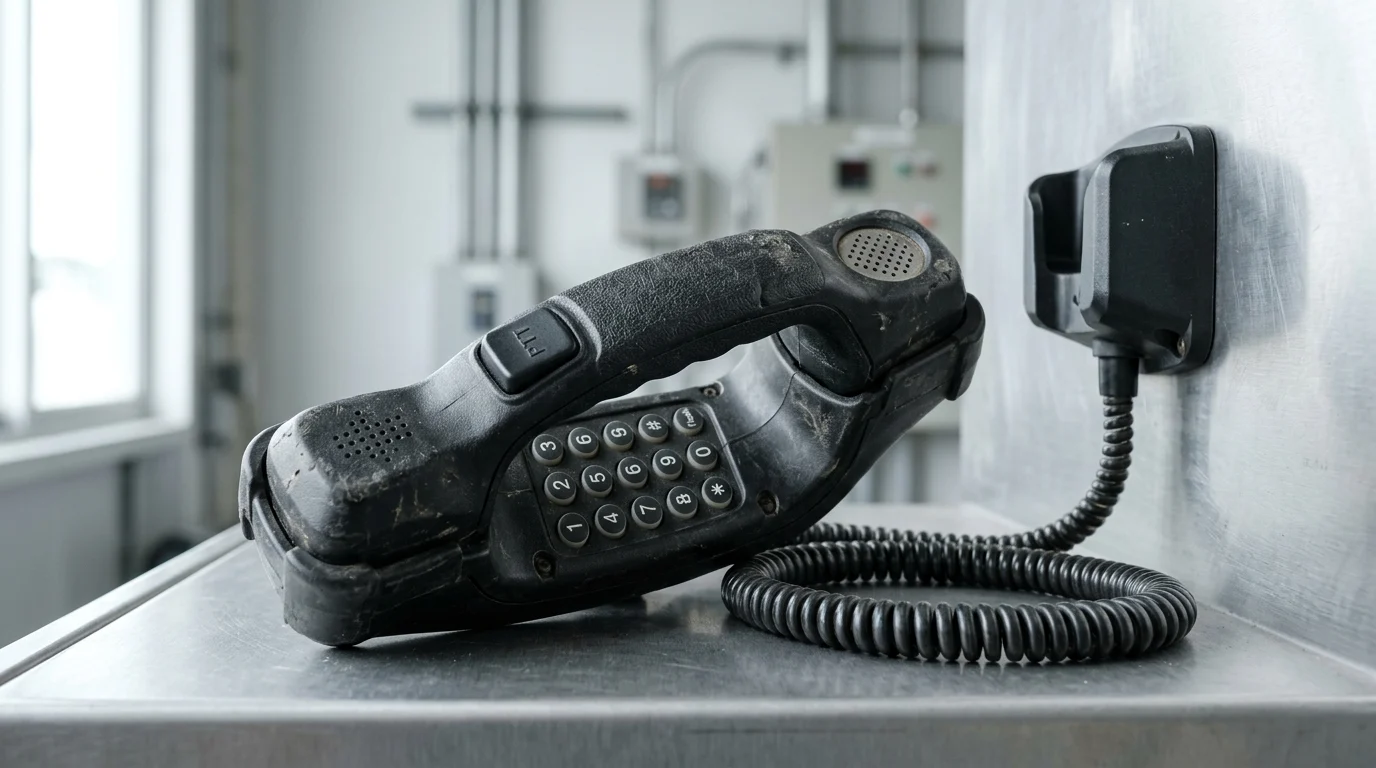
Why Industrial Telephone Handsets Matter in B2B Systems
Industrial telephone handsets serve as critical lifeline components within enterprise and heavy-duty communication networks. Unlike standard consumer or commercial telephony equipment, these handsets are engineered to maintain continuous operational integrity in environments where equipment failure can lead to severe safety hazards or costly production halts. For B2B wholesale buyers, system integrators, and distributors, understanding the precise technical and operational parameters of these devices is essential for specifying the right hardware for complex industrial deployments.
Impact on system uptime and reliability
System uptime is a non-negotiable metric in industrial facilities. Industrial telephone handsets are designed to achieve a Mean Time Between Failures (MTBF) exceeding 50,000 hours, ensuring that emergency call boxes, PA systems, and IP PBX/VoIP networks remain functional year-round. When a handset fails in a critical zone, the resulting downtime can stall operations, requiring immediate, often expensive maintenance interventions. High-reliability handsets mitigate this risk by utilizing robust internal wiring, industrial-grade transmitters, and receivers that resist degradation from continuous use and exposure to harsh elements.
High-risk operating scenarios and use cases
These handsets are deployed across a spectrum of high-risk operating scenarios, including oil and gas refineries, underground mining operations, maritime vessels, and high-security correctional facilities. Each environment dictates specific threshold requirements. For instance, handsets used in heavy manufacturing must frequently provide active noise cancellation capable of filtering out ambient noise up to 100 dB. Similarly, extreme environments require components rated for operating temperatures ranging from -40°C to +70°C, ensuring that the handset neither cracks in freezing conditions nor overheats in direct solar exposure.
Key Specifications for Industrial Telephone Handsets
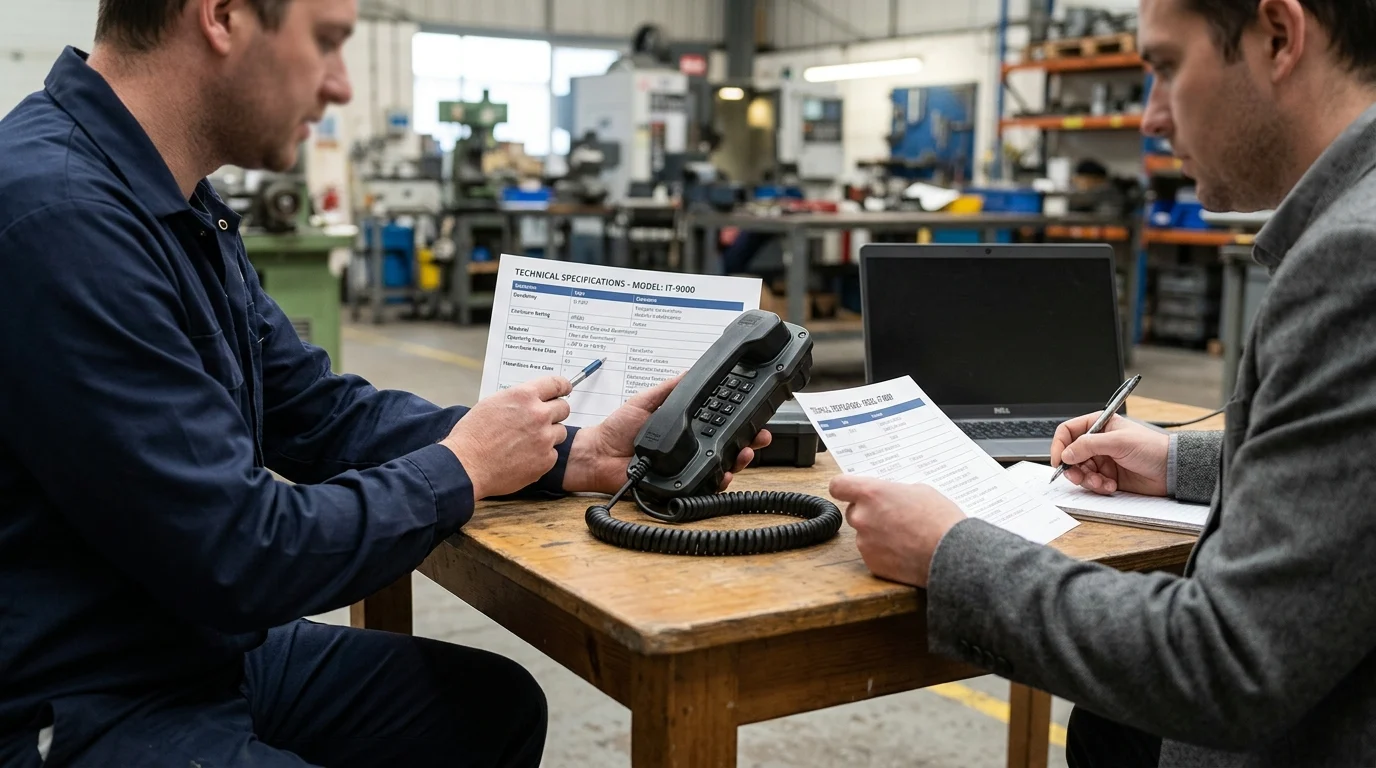
Specifying the correct industrial telephone handset requires a deep dive into mechanical, acoustic, and environmental tolerances. Procurement teams must evaluate these specifications to ensure compatibility with existing intercoms, emergency help points, and broader industrial communication architectures.
Mechanical, acoustic, and environmental requirements
Acoustic performance in industrial settings hinges on specialized transmitters and receivers, typically featuring an impedance of 150 to 300 ohms to match industrial PBX systems. Acoustic shock protection is a mandatory requirement, limiting sudden noise spikes to below 115 dB to protect the user’s hearing. Environmental requirements dictate that these internal acoustic components are protected by conformal-coated printed circuit boards (PCBs) that resist humidity and chemical vapors.
| Specification | Commercial Handset | Industrial Handset |
|---|---|---|
| MTBF Target | < 20,000 hours | > 50,000 hours |
| Operating Temp | 0°C to 40°C | -40°C to +70°C |
| Acoustic Shock Limit | Not standard | < 115 dB |
| Ambient Noise Filtering | Basic | Up to 100 dB |
Materials, sealing, and vandal resistance
Material selection directly influences a handset’s vandal resistance and environmental sealing. High-grade industrial handsets are typically molded from advanced Polycarbonate/ABS blends or carbon-loaded compounds that prevent static build-up in explosive atmospheres. Cords are reinforced with stainless steel armor, capable of withstanding pull forces exceeding 200 kg. Sealing ratings are critical; a true industrial handset must achieve an Ingress Protection rating between IP65 and IP68, rendering it impervious to high-pressure water jets and fine dust. Furthermore, the housing must meet IK09 or IK10 impact resistance standards, absorbing strikes up to 20 joules without functional compromise.
How to compare standard and custom models
Comparing standard off-the-shelf models to custom variants involves analyzing specific project requirements. Standard models generally feature an 800 mm armored cord and standard spade lug connectors. Custom models, however, can be configured with extended 1200 mm to 1500 mm cords, specialized modular RJ connectors, or aviation-grade multi-pin plugs. Customization also extends to magnetic reed switches embedded within the handset for hook-switch operation, which eliminates moving parts and enhances the overall IP rating of the telephone unit.
How to Evaluate Suppliers and Compliance
Selecting a reliable manufacturing partner is just as critical as the hardware specifications. B2B buyers must rigorously evaluate suppliers based on their manufacturing capabilities, compliance with international safety directives, and strict quality control protocols.
Relevant certifications and quality controls
Industrial communication hardware must adhere to stringent global standards. For explosive environments, ATEX and IECEx certifications for Zone 1 and Zone 2 are mandatory. General industrial applications require CE, FCC, and RoHS compliance. Buyers should verify that the manufacturer operates under an ISO9001-certified quality management system. Leading suppliers maintain strict quality controls, targeting an Acceptable Quality Limit (AQL) defect rate of less than 0.5%. Testing documentation, such as 96-hour salt spray test reports for corrosion resistance on armored cords, should be requested during the supplier audit.
OEM, ODM, and traceability requirements
For importers and brand owners, OEM and ODM capabilities dictate the flexibility of the supply chain. Suppliers should offer comprehensive traceability, embedding unique serial numbers and batch codes into the handset molds. This traceability is crucial for managing warranties and executing targeted recalls if component defects are discovered. An ideal ODM partner retains control over the majority of the production process; manufacturers that produce 90% or more of their core components in-house offer superior supply chain stability compared to assemblers who rely entirely on outsourced parts.
Supplier qualification for importers and distributors
Distributors and system integrators must qualify suppliers based on financial stability and long-term support capabilities. Qualification criteria should include a review of the supplier’s engineering team size, in-house testing facilities (such as acoustic anechoic chambers and drop-test rigs), and historical lead-time accuracy. A qualified supplier will not only provide raw compliance certificates but also offer comprehensive technical files, integrating seamlessly into the distributor’s own compliance and localized certification processes.
Cost, MOQ, Packaging, and Logistics
Effective procurement of industrial telephone handsets requires a strategic approach to unit economics, minimum order quantities, and international logistics. Managing these variables ensures that distributors maintain healthy margins while meeting the rapid deployment demands of their end-users.
MOQ, tooling, lead times, and spare-part planning
Minimum Order Quantities (MOQ) for standard industrial handsets typically range from 100 to 500 units, depending on the supplier’s inventory model. For custom designs requiring new injection molding, buyers should anticipate tooling costs ranging from $3,000 to $10,000 or more, alongside extended initial lead times of 8 to 12 weeks. Standard production lead times hover between 3 to 6 weeks. Procurement teams must also factor in spare-part planning, maintaining a buffer stock of at least 5% of total deployed units to ensure immediate replacement availability for critical infrastructure projects.
Main cost drivers and margin factors
Understanding the cost drivers is essential for margin optimization. The primary cost components include the raw material of the housing (standard ABS vs. anti-static carbon-loaded polymers), the length and gauge of the stainless steel armored cord, and the integration of specialized acoustic components like noise-canceling dynamic microphones.
| Cost Driver | Standard Configuration | High-End / Hazardous Area |
|---|---|---|
| Housing Material | Standard PC/ABS | Carbon-loaded Anti-static |
| Cord Assembly | 800mm Armored | 1500mm Armored + Teflon Wiring |
| Microphone | Electret Condenser | Dynamic Noise-Canceling |
| Estimated Margin Impact | Baseline | +15% to +25% Premium |
Incoterms, shipping modes, and delivery planning
Logistics planning directly impacts the landed cost. Industrial handsets are dense and heavy, with a standard carton of 20 units often weighing over 15 kg. Shipping via air freight (FCA or EXW) is suitable for urgent project shortages but significantly erodes margins. For bulk replenishment, sea freight under FOB terms is the standard. Packaging must be specified to withstand transit abuse; buyers should mandate that export cartons pass standard 1.2-meter drop tests to prevent damage to the sensitive acoustic membranes during global transit.
How to Make the Right Buying Decision
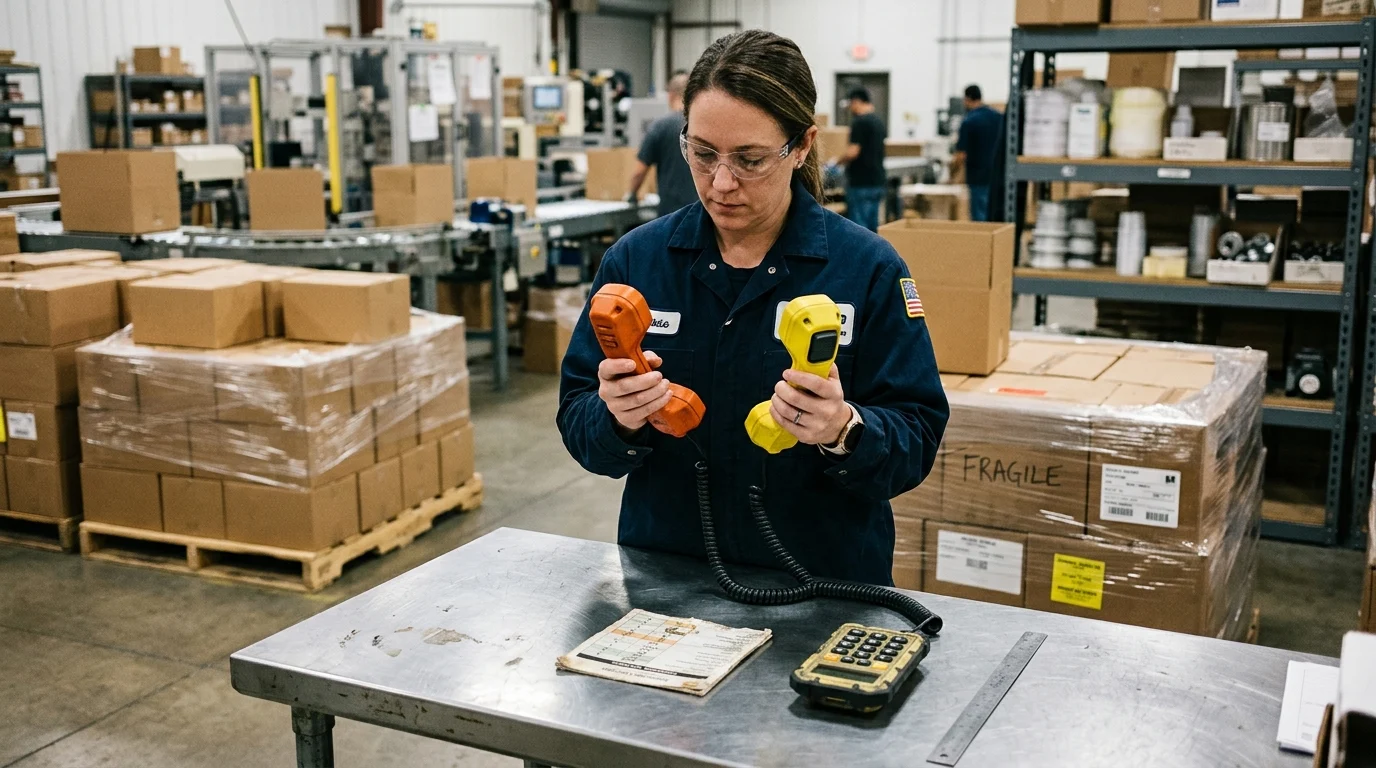
Synthesizing technical specifications, compliance requirements, and logistical constraints into a cohesive procurement strategy is the final step for B2B buyers. A structured decision-making process ensures alignment between the hardware procured and the operational demands of the end-user.
Decision matrix for procurement teams
Procurement teams should utilize a weighted decision matrix to evaluate handset options objectively. A standard matrix might allocate 40% weight to compliance and certifications (e.g., ATEX, IP68), 30% to mechanical durability and acoustic specs, 20% to Total Cost of Ownership (TCO), and 10% to supplier lead times. TCO is particularly critical; an industrial handset with a slightly higher upfront cost but a proven 5- to 10-year lifecycle will consistently out-perform cheaper alternatives that require annual replacements and incur high maintenance labor costs.
Positioning and selection guidance for distributors
For distributors, selection guidance centers on market positioning and catalog diversity. Carrying a tiered inventory allows distributors to capture both budget-conscious facility managers and high-end hazardous area projects. Distributors should position standard weatherproof models for general outdoor and campus applications, while reserving high-margin, explosion-proof, and intrinsically safe handsets for the oil, gas, and mining sectors. Securing favorable warranty terms—typically 12 to 36 months—and comprehensive marketing support from the manufacturer will further solidify the distributor’s competitive edge in the industrial communications market.
Key Takeaways
- Wholesale sourcing and supply-chain implications for Industrial Telephone Handset
- Specifications, compliance, and commercial terms buyers should validate
- Actionable recommendations for distributors and procurement teams
Frequently Asked Questions
What makes an industrial telephone handset different from a standard handset?
It is built for harsh sites, with higher MTBF, wider temperature tolerance, noise filtering, and stronger sealing than commercial handsets.
Which protection ratings should I check before buying an industrial telephone handset?
Look for IP65 to IP68 for dust and water protection, plus IK09 or IK10 for impact resistance in rough industrial areas.
When is an explosion-proof handset necessary?
Use one in hazardous zones such as oil, gas, chemical, or mining sites where explosive gases or dust may be present.
Can Siniwo customize industrial telephone handsets for different projects?
Yes. Siniwo can support custom cord lengths, connector types, hook-switch options, and integration needs for industrial communication systems.
How do I verify handset quality for long-term industrial use?
Check certifications like ATEX, CE, FCC, ROHS, and ISO9001, and ask about in-house manufacturing, testing, and delivery consistency.
Post time: Apr-16-2026