
Why Supplier Type Matters
Procurement of industrial audio components requires navigating a highly fragmented global supply chain. The primary structural decision for procurement managers and hardware engineers involves selecting between a direct manufacturer and a trading company. This fundamental choice dictates the trajectory of unit economics, intellectual property security, and long-term production scalability. Understanding the operational mechanics of both entity types is essential for aligning supply chain strategy with project requirements.
Manufacturer vs Trading Company
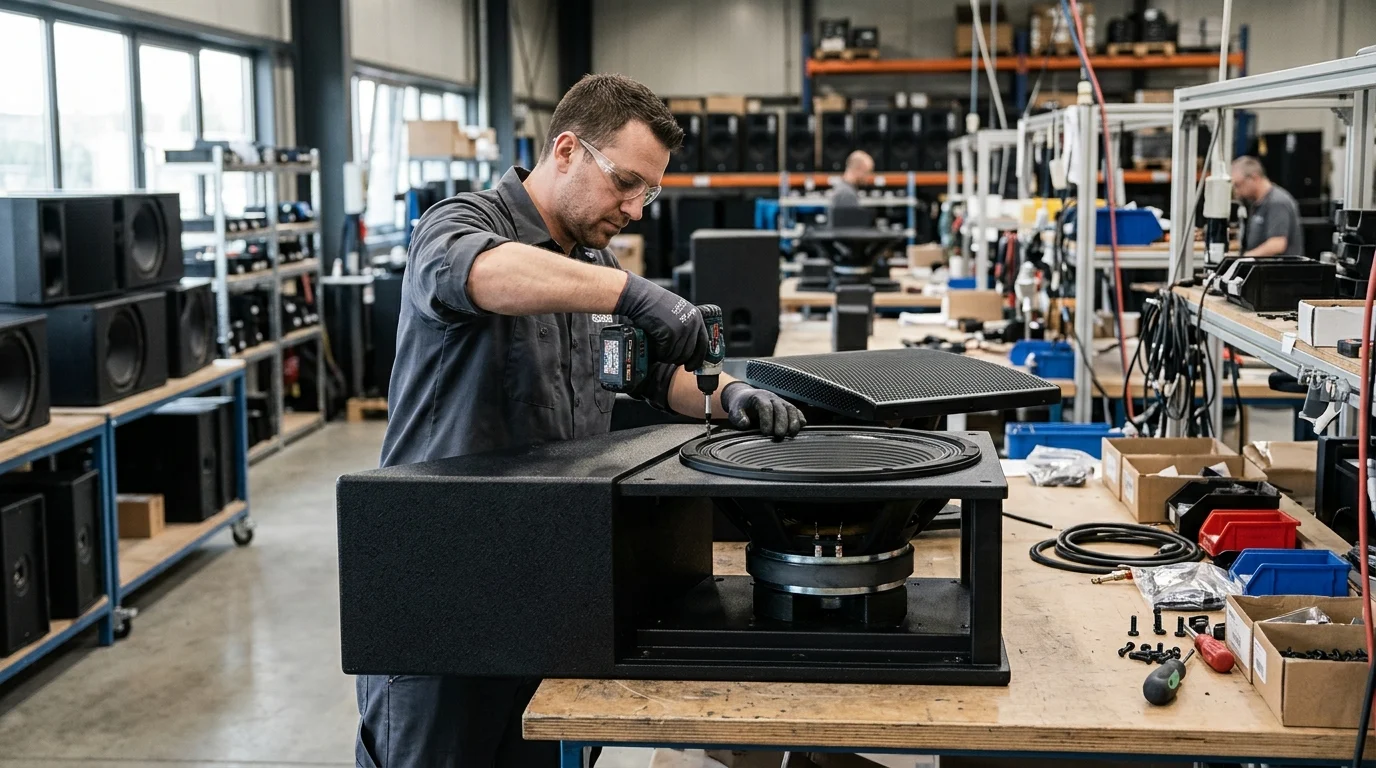
A true design manufacturer operates the physical assembly lines, manages the raw material supply chain, and employs the engineers responsible for transducer design. They control the injection molding for housing, the winding of voice coils, and the magnetization processes. It is important to distinguish these full-capability factories from mere assemblers or ODMs, which may offer limited engineering support or intellectual property protection in practice. Conversely, trading companies act as intermediaries, leveraging established networks to source finished products from multiple factories. While they typically apply a variable margin markup—often estimated between 15% and 30% depending on the region and product complexity—to cover overhead, trading companies offer legitimate advantages. They frequently provide vital export documentation support, favorable credit terms, local after-sales service, and act as essential language or cultural bridges for buyers who lack direct import experience.
Key Sourcing Priorities
Strategic sourcing priorities dictate the optimal supplier model. For rapid procurement of standard, off-the-shelf components for small-scale deployments, trading companies offer unparalleled flexibility. They frequently accommodate Minimum Order Quantities (MOQs) as low as 100 to 500 units by pooling orders from various clients. However, when the priority shifts to strict regulatory compliance—such as EN 54-24 certification for voice alarm systems, UL 1480 for fire protective signaling, or specific MIL-STD shock tolerances—direct interaction with a factory becomes critical. Manufacturers ensure the strict traceability of materials and testing data required for these certifications, a standard that fragmented intermediary sourcing can sometimes struggle to meet.
Where Manufacturers Add Value
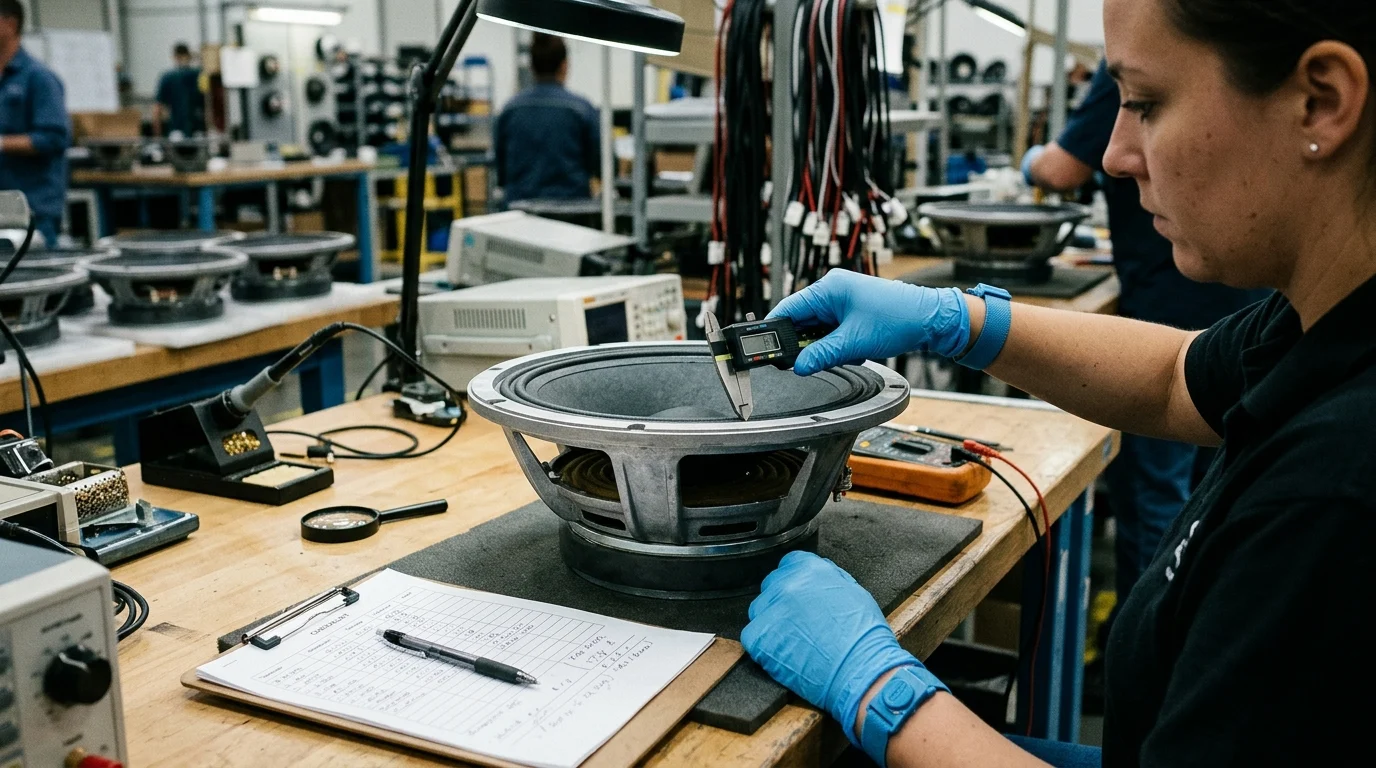
Direct engagement with a component manufacturer provides structural advantages in both product development and lifecycle management. By bypassing intermediary layers, original equipment manufacturers (OEMs) gain unfiltered access to deep engineering capabilities and direct raw material procurement channels, fundamentally altering the cost-to-performance ratio.
Quality Control and Customization
Customization in industrial audio requires precise control over component specifications, such as voice coil impedance, magnet flux density (utilizing specific grades of Neodymium or Ferrite), and diaphragm materials. A direct manufacturer can engineer bespoke solutions, such as achieving an IP67 ingress protection rating with specialized hydrophobic meshes for harsh maritime environments, or tuning frequency responses for highly specific ambient noise profiles in heavy machinery applications. Furthermore, direct oversight of the production line enables stringent quality control via automated testing chambers. Direct manufacturing partnerships with standardized QA can yield defect rates below 0.5%, whereas multi-factory sourcing through intermediaries may see defect rates fluctuate higher due to inconsistent assembly tolerances and shifting sub-tier suppliers.
Cost, Lead Time, and Support
The elimination of intermediary communication nodes often accelerates both prototyping iterations and mass production timelines. When engineers communicate directly with the factory floor, design modifications are implemented without the latency of third-party translation. A direct manufacturer can typically compress tooling and prototyping lead times to 25 to 35 days, compared to the 45 to 60 days sometimes required when negotiating through a trading firm.
| Feature | Direct Manufacturer | Trading Company |
|---|---|---|
| Unit Cost | Baseline factory price | Variable markup (often 15% – 30%) |
| Typical MOQ | 1,000 – 3,000+ units | 100 – 500 units |
| Lead Time | 25 – 35 days | 45 – 60 days |
| Customization | High (Bespoke tooling/specs) | Low (Off-the-shelf limits) |
| Defect Rate | Often < 0.5% (Standardized QA) | Variable (Multi-source sourcing) |
| Direct IP Control | High (Direct NDAs) | Low (Risk of factory leakage) |
How Buyers Should Decide
Selecting the correct supplier architecture requires rigorous due diligence and a clear understanding of procurement goals. Procurement teams must deploy systematic verification protocols to differentiate genuine manufacturers from sophisticated trading entities masquerading as factories, ensuring the chosen partner aligns with the project’s operational scale.
Supplier Verification Steps
Effective supplier verification relies on concrete documentation rather than marketing claims or generic website photography. Auditors should request the supplier’s ISO 9001:2015 quality management certificate and cross-reference the registered business scope. In many jurisdictions, a genuine manufacturer’s business license will explicitly list “production,” “assembly,” or “manufacturing” rather than merely “sales,” “technology consulting,” or “distribution.” Additionally, examining the entity’s registered capital can provide insight into its operational infrastructure. In certain manufacturing hubs, registered capital exceeding $500,000 USD correlates with the asset-heavy nature of physical factory ownership, tooling machinery, and anechoic testing chambers. However, it is crucial to note that verification criteria and capital thresholds differ significantly by jurisdiction, so these rules may not apply universally. Requesting a comprehensive Bill of Materials (BOM) for a sample unit further tests the supplier’s technical depth; a true manufacturer will provide granular details on magnet grades, cone paper sourcing, and adhesive thermal limits.
When to Choose Direct Manufacturing
The decision to partner with a direct manufacturer ultimately hinges on project scale, lifecycle duration, and technical complexity. Direct manufacturing is often the mathematically superior choice for custom projects scaling beyond typical break-even points, which can sometimes be around 5,000 annual units depending on product complexity. At this volume threshold, the amortized cost of bespoke tooling, plastic injection molds, and custom enclosures becomes negligible, while the unit cost savings derived from avoiding intermediary markups compound significantly. For mission-critical applications where component failure carries high operational liability—such as mass transit public address systems, mining evacuation sirens, or industrial warning alarms—the direct line of accountability to the factory floor is an indispensable risk management asset.
Key Takeaways
- Use a direct industrial speaker manufacturer when your project requires custom acoustic design, certification traceability, and stable lifecycle support.
- Consider a trading company for small, standard orders because traders may support MOQs as low as 100 to 500 units.
- Account for the typical 15% to 30% trading company markup when comparing total landed cost against direct factory pricing.
- For regulated applications such as voice alarm, fire signaling, or hazardous-area communication, prioritize suppliers that can provide testing records and material traceability.
- Direct manufacturers can reduce quality variation by controlling core processes such as housing, voice coil, magnet, diaphragm, and final acoustic testing.
- For harsh environments, specify requirements early, including IP rating, corrosion resistance, operating temperature, ambient noise level, and certification needs.
Frequently Asked Questions
When is a direct industrial speaker manufacturer the better choice?
Choose a direct manufacturer when your project needs customization, strict quality control, certification traceability, stable long-term supply, or engineering support for harsh, noisy, outdoor, or hazardous environments.
When does a trading company make sense for industrial audio sourcing?
A trading company can be useful for small-volume, standard products, faster sourcing from multiple factories, export documentation help, local communication support, and lower MOQs, often around 100 to 500 units.
How much margin can a trading company add?
Trading companies commonly add an estimated 15% to 30% margin, depending on product complexity, region, service level, and logistics requirements.
Why is certification traceability important for industrial speakers?
Projects involving voice alarm, fire signaling, mining, oil and gas, or hazardous areas may require documented testing, material traceability, and compliance with standards such as CE, FCC, ATEX, or other project-specific certifications.
Can a manufacturer provide better customization than a trader?
Yes. A true manufacturer can directly adjust components such as impedance, diaphragm materials, housing design, sealing, and acoustic tuning to meet specific performance, IP rating, or environmental requirements.
Post time: Jun-19-2026