
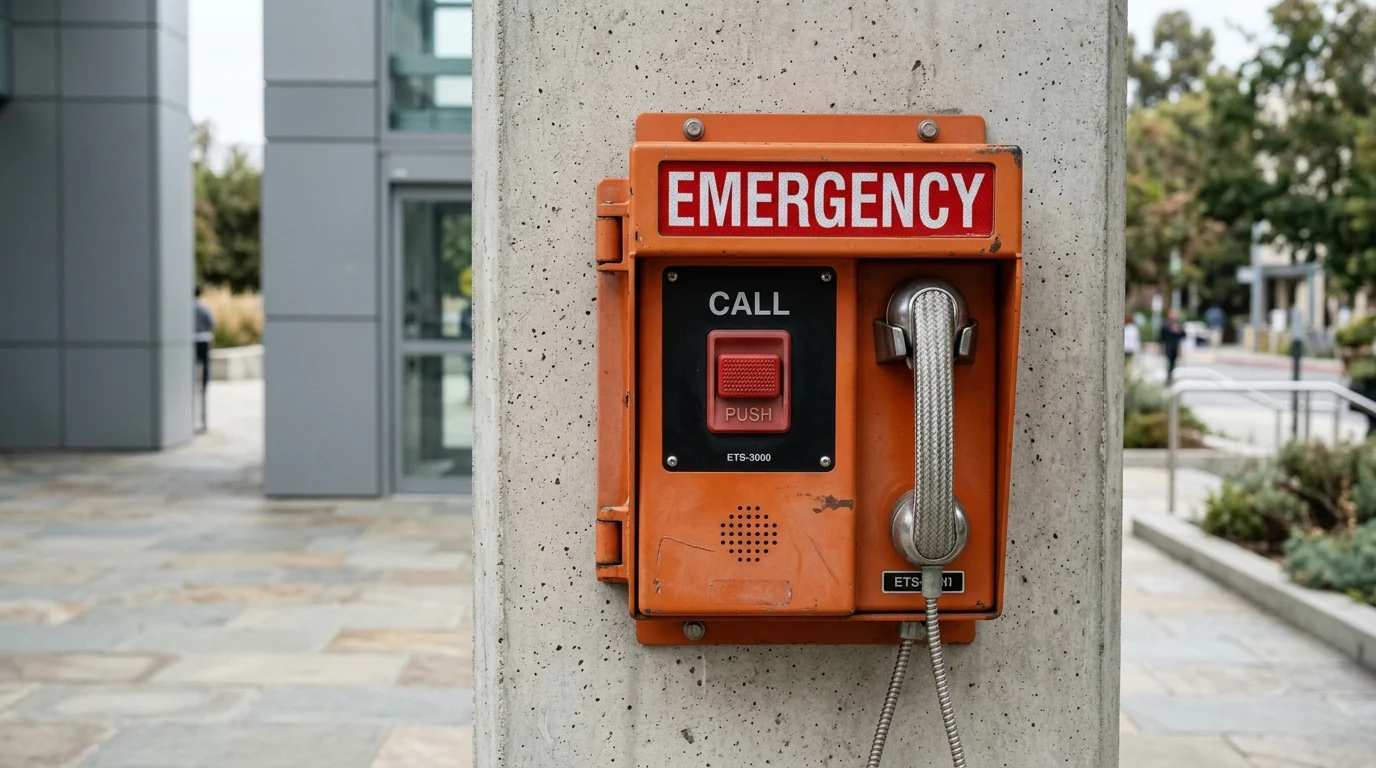
Why Emergency Telephone Systems Are a Strategic Safety Investment
Capital expenditure on emergency telephone systems represents a critical risk mitigation strategy for heavy industry and complex infrastructure. Unlike consumer-grade communication devices, industrial emergency telephones are engineered to maintain 99.9% uptime in environments where standard networks fail or hardware degradation accelerates. For procurement teams, investing in these specialized systems is not merely a compliance exercise, but a strategic operational safeguard that directly impacts liability profiles and insurance premiums.
Deploying ruggedized communication infrastructure ensures critical alerts are transmitted instantaneously during catastrophic events. By bypassing congested consumer cellular networks and utilizing dedicated hardwired or localized IP networks, these systems guarantee reliable communication channels when they are most urgently required.
How emergency telephone systems reduce response time
In critical scenarios, standard communication protocols often suffer from latency, network congestion, or signal interference. Emergency telephone systems are designed specifically to bypass these bottlenecks, reducing communication latency from several minutes to under 30 seconds. Features such as pre-programmed auto-dialing, direct-to-control-room routing, and public address (PA) integration ensure a single button press immediately connects the user with emergency responders.
Furthermore, modern SIP-based emergency phones utilize Power over Ethernet (PoE) and redundant network topologies. This architecture ensures that even if a primary network switch fails, the localized emergency communication loop remains active, shaving vital seconds off response times during fires, chemical spills, or security breaches.
Which industrial environments drive the strongest demand
Demand for heavy-duty emergency telephones is highly concentrated in sectors characterized by extreme operational hazards. Mining operations, offshore oil and gas platforms, and chemical processing plants require explosion-proof communication devices capable of preventing spark generation in volatile atmospheres. Similarly, maritime environments and coastal facilities demand highly corrosion-resistant housings to combat constant salt-spray exposure.
In addition to hazardous materials, extreme acoustic environments drive specific hardware requirements. Heavy manufacturing floors, highway tunnels, and railway hubs frequently experience ambient noise levels exceeding 100 to 120 decibels (dB). In these settings, standard microphones are rendered useless, necessitating the integration of advanced noise-canceling technology and high-output acoustic horns to ensure voice transmission remains intelligible.
What Technical Specifications Buyers Should Compare
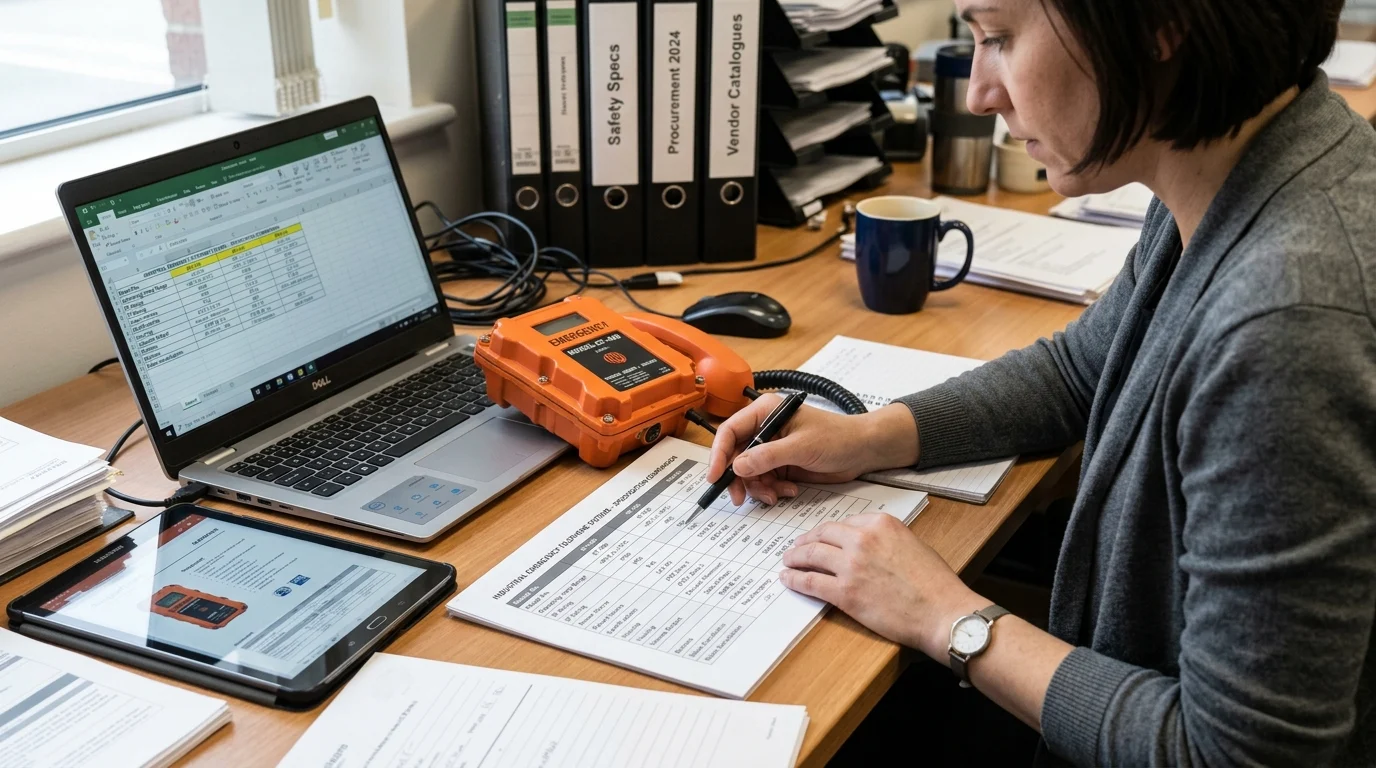
Sourcing the correct emergency telephone system requires procurement engineers to evaluate hardware against stringent operational thresholds. Because these devices are deployed in unforgiving environments, their technical specifications must align perfectly with the specific environmental and networking realities of the installation site.
Which hardware and protection ratings matter most
The physical durability of an emergency telephone is primarily defined by its Ingress Protection (IP) and Impact Protection (IK) ratings. Industrial buyers must match these ratings strictly to the deployment environment to prevent premature hardware failure. High-quality industrial telephones typically feature an operational lifespan defined by a Mean Time Between Failures (MTBF) exceeding 50,000 hours.
| Protection Rating | Environmental Resistance | Typical Application Environment |
|---|---|---|
| IP66 | High-pressure water jets and total dust ingress | Outdoor transit stations, factory floors |
| IP67 / IP68 | Temporary or continuous underwater submersion | Maritime docks, mining tunnels, flood zones |
| IK09 | 10 Joules of impact (equivalent to 5kg mass dropped from 200mm) | Prisons, public spaces with vandalism risk |
| IK10 | 20 Joules of impact (highest standard impact resistance) | Heavy industrial sites, high-security facilities |
How analog, SIP, VoIP, GSM, and PA-integrated systems differ
The underlying transmission technology dictates the system’s integration capabilities and infrastructure requirements. Analog systems remain prevalent in legacy infrastructure, utilizing simple 2-wire setups that offer high reliability over long distances without complex networking. However, analog systems lack centralized diagnostic capabilities.
Voice over IP (VoIP) and Session Initiation Protocol (SIP) systems represent the modern standard for new deployments. Utilizing PoE (802.3af/at), these systems allow for centralized health monitoring, remote configuration, and seamless integration with existing IP-PBX architectures. For remote or off-grid locations—such as solar-powered highway call boxes—GSM or 4G LTE-enabled telephones provide wireless connectivity. Additionally, PA-integrated systems allow a single emergency phone to broadcast SIP-paged announcements through connected external loudspeakers, serving dual purposes as both an intercom and a mass notification node.
What evaluation criteria procurement teams should use
When evaluating technical data sheets, procurement teams must look beyond basic connectivity. Operational temperature tolerance is a critical metric; industrial units must typically guarantee functionality across a wide thermal band, often ranging from -40°C to +70°C. Component materials also require scrutiny: cold-rolled steel, die-cast aluminum, and glass-reinforced polyester (GRP) each offer different profiles for tensile strength, weight, and chemical resistance.
Power redundancy is another vital evaluation criterion. Buyers should verify whether IP systems support fallback power options (such as local 12V/24V DC inputs) if the PoE network is compromised. Finally, compatibility with major SIP server platforms (such as Asterisk, Cisco, or Broadsoft) must be validated to ensure frictionless integration into the buyer’s existing telecommunications backbone.
How to Evaluate Compliance and Supplier Capabilities
Regulatory compliance is non-negotiable in the industrial communication sector. Deploying uncertified equipment in hazardous areas introduces severe legal liability, risks catastrophic industrial accidents, and voids facility insurance policies. Thorough supplier vetting ensures that hardware meets global safety standards.
Which certifications and standards buyers should verify
For environments containing flammable gases or combustible dust, equipment must strictly adhere to explosion-proof directives. In Europe and many international markets, ATEX and IECEx certifications are mandatory. Buyers must verify specific zone ratings: Zone 1 (high risk) versus Zone 2 (lower risk) certifications dictate the level of intrinsic safety required in the telephone’s circuitry.
Beyond explosion-proof ratings, baseline regulatory compliance includes CE (European conformity), FCC (electromagnetic interference standards for North America), and RoHS (restriction of hazardous substances). Furthermore, verifying that a supplier holds an active ISO 9001 certification provides assurance that their quality management systems are regularly audited, ensuring consistent manufacturing standards across large production runs.
How manufacturing depth, traceability, and testing affect supplier reliability
Supplier reliability is heavily influenced by their degree of vertical integration. Manufacturers that produce 90% or more of their core components in-house present significantly lower supply chain risks compared to pure assemblers relying on fragmented third-party component networks. In-house manufacturing allows for strict batch traceability, which is essential for diagnosing anomalies and executing targeted recalls if necessary.
Advanced testing capabilities also separate premium suppliers from lower-tier vendors. Procurement teams should inquire about a supplier’s internal testing infrastructure. Reliable manufacturers conduct extensive pre-shipment evaluations, including anechoic chamber acoustic testing, salt-spray corrosion tests, and extreme humidity cycling. Suppliers capable of providing comprehensive factory acceptance test (FAT) documentation demonstrate a higher maturity level, directly translating to lower field failure rates.
What Commercial and Logistics Factors Influence Purchasing
Beyond technical specifications and certifications, commercial viability dictates the success of a procurement strategy. Distributors, system integrators, and direct buyers must balance unit costs with supply chain reliability, ensuring that procurement terms align with project timelines and profitability targets.
How to assess MOQ, lead times, and private labeling options
Minimum Order Quantities (MOQs) and lead times vary significantly based on the level of customization required. For standard off-the-shelf IP66 weatherproof telephones, suppliers often accommodate low MOQs (e.g., 10 to 50 units) with rapid lead times of two to four weeks. However, specialized requests—such as custom firmware, specific RAL color matching, or specialized ATEX certifications—can push MOQs to 100+ units and extend lead times to six to eight weeks.
Private labeling (OEM/ODM) is a crucial factor for distributors looking to build brand equity. Buyers should assess the supplier’s capability to provide custom faceplates, branded user interfaces, and bespoke packaging. Negotiating flexible OEM terms early in the relationship allows distributors to scale their product offerings without bearing the overhead of full-scale internal R&D.
Which cost, margin, and after-sales support factors matter most
For wholesale buyers, unit cost is only one component of the broader financial equation. Margin preservation depends heavily on the total cost of landed goods and post-installation reliability. Distributors typically target gross margins between 20% and 35% on industrial communication hardware, which requires securing favorable volume-based pricing tiers from the manufacturer.
| Commercial Parameter | Standard Industry Expectation | Premium/Custom Expectation |
|---|---|---|
| Minimum Order Quantity (MOQ) | 10 – 50 units | 100 – 500+ units |
| Production Lead Time | 14 – 30 days | 45 – 60 days |
| Standard Warranty Period | 12 – 24 months | 36 – 60 months |
| Spare Parts Availability | Minimum 3 years post-EOL | Up to 10 years post-EOL |
After-sales support is equally critical to protecting margins. High defect rates or slow RMA (Return Merchandise Authorization) processes can quickly erode profitability. Procurement teams must negotiate clear warranty terms—typically demanding 12 to 36 months of coverage—and secure commitments on the availability of spare parts (such as replacement handsets, mainboards, and keypads) to ensure local servicing capabilities.
How to Build the Right Vendor Selection Framework

Finalizing the procurement strategy requires a structured vendor selection framework. By standardizing the evaluation process, B2B buyers can objectively compare suppliers, minimize lifecycle costs, and ensure that the chosen emergency telephone systems align seamlessly with both physical site constraints and long-term IT infrastructure.
What site assessment and vendor selection process to follow
The selection process must begin with a comprehensive site assessment. Procurement and engineering teams should collaborate to execute acoustic mapping, identify hazardous zone boundaries, and audit existing network infrastructure (e.g., assessing the availability of PoE switches or analog copper lines). This site data forms the foundation of the Request for Proposal (RFP).
Once the RFP is issued, the vendor selection process should follow a multi-stage funnel. Initial screening filters out suppliers lacking mandatory certifications (e.g., ATEX or FCC). The second stage involves evaluating sample units for build quality, acoustic clarity, and software integration. Finally, the process concludes with an audit of the supplier’s commercial stability, production capacity, and historical performance in similar industrial sectors.
Which decision criteria procurement teams should prioritize
When comparing final bids, procurement teams should prioritize the Total Cost of Ownership (TCO) over the initial unit price. A cheaper analog system may seem cost-effective initially but could incur significant maintenance costs due to a lack of remote diagnostic capabilities. Conversely, a slightly higher-priced SIP system that supports centralized health monitoring will drastically reduce field-technician dispatch costs over a 10-year lifecycle.
Interoperability and scalability are also paramount decision criteria. The chosen system must utilize open standards (such as standard SIP) to prevent vendor lock-in, allowing the buyer to integrate the emergency phones with third-party IP-PBX systems, CCTV networks, and centralized security dashboards. Furthermore, buyers should secure robust post-installation Service Level Agreements (SLAs), prioritizing vendors who can guarantee 24- to 48-hour technical support responses and rapid hardware replacement, ensuring maximum uptime for critical safety infrastructure.
Key Takeaways
- Wholesale sourcing and supply-chain implications for Emergency Telephone System
- Specifications, compliance, and commercial terms buyers should validate
- Actionable recommendations for distributors and procurement teams
Frequently Asked Questions
Why are industrial emergency telephone systems safer than mobile phones?
They use dedicated hardwired or SIP/VoIP networks, so calls still go through during congestion or poor signal. Features like one-touch auto-dial and direct control-room routing cut response time fast.
Which industries need emergency telephones most?
High-risk sites such as mining, oil and gas, chemical plants, tunnels, rail hubs, ports, and factories benefit most. These environments need durable communication that works in noise, weather, or explosive atmospheres.
What ratings should I check before buying an emergency telephone system?
Focus on IP and IK ratings. IP66 suits dusty or wet outdoor areas, IP67/IP68 fit flood-prone or marine sites, and IK09/IK10 help where vandal or heavy impact resistance is required.
Should I choose analog, SIP/VoIP, or GSM emergency phones?
Choose analog for simple legacy lines, SIP/VoIP for IP-PBX integration and remote monitoring, and GSM/4G for remote sites without wired networks. Match the technology to your infrastructure and maintenance needs.
Can Siniwo support emergency telephone projects for hazardous environments?
Yes. Siniwo provides design, integration, installation, and maintenance for industrial communication systems, including explosion-proof and weatherproof phones, call boxes, PA, and VoIP solutions for harsh and hazardous sites.
Post time: Apr-17-2026