
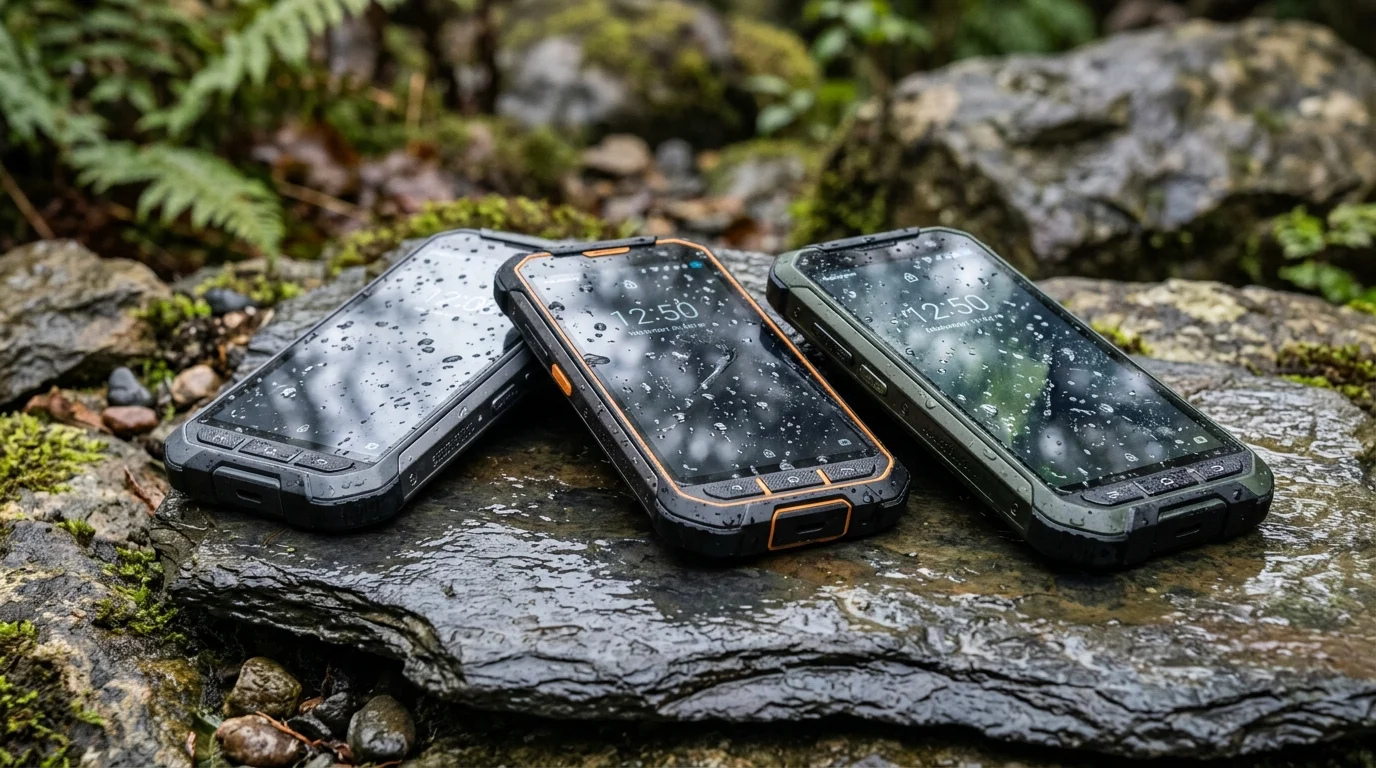
How Weatherproof Phones Improve Outdoor Communication Safety
Industrial operations in forestry, construction, oil and gas, and maritime sectors operate under inherently hazardous conditions. In these environments, communication is not merely an operational convenience; it is a critical safety mechanism. When personnel are isolated in remote areas or exposed to severe weather conditions, the failure of a communication device can escalate a minor operational incident into a life-threatening emergency. Statistical analyses of industrial safety incidents demonstrate that reliable field communication can reduce emergency response times by up to 30%, directly correlating with improved survival rates and faster hazard mitigation.
Weatherproof phones bridge the critical gap between fragile consumer technology and the harsh realities of the field. By ensuring that communication lines remain open regardless of environmental extremes, these devices provide a dependable link between lone workers and central dispatch. Understanding how these specialized devices function as active safety controls is essential for any organization aiming to minimize risk and comply with stringent occupational safety regulations.
Why Weatherproof Phones Are a Safety Control
Within the hierarchy of hazard controls, weatherproof phones function as vital administrative and engineering safeguards. Occupational Safety and Health Administration (OSHA) guidelines mandate reliable communication for lone workers, particularly in environments where ambient noise exceeds 85 decibels or where visibility is severely compromised. A purpose-built weatherproof device ensures that safety protocols, such as mandatory check-ins, remote monitoring, and emergency broadcasts, are executed without hardware-induced interruptions.
By maintaining continuous functionality through torrential rain, extreme temperature fluctuations, and heavy particulate exposure, these devices guarantee that safety networks remain intact. They serve as the primary conduit for distress signals, GPS coordinate transmission, and real-time operational updates, fundamentally mitigating the risks associated with environmental isolation and ensuring that safety officers have constant visibility over deployed personnel.
Common Outdoor Communication Failures They Prevent
Standard consumer smartphones frequently succumb to the environmental stressors common in outdoor industries. One of the most prevalent failures is internal condensation, which occurs when a device transitions rapidly from a cold outdoor environment to a heated indoor space. This moisture can short-circuit logic boards, leading to a total loss of functionality and leaving workers stranded without communication. Furthermore, standard lithium-ion batteries experience severe voltage drops in freezing conditions, often losing up to 50% of their effective capacity when temperatures drop to -10°C (14°F).
Weatherproof phones prevent these catastrophic failures through hermetically sealed chassis, conformal coating on internal electronics, and specialized battery chemistries designed to discharge steadily even at -20°C. Additionally, they eliminate the risk of port corrosion—a common issue where standard USB-C connectors degrade rapidly after repeated exposure to moisture and atmospheric salinity. By addressing these specific failure points, weatherproof phones ensure continuous operation in environments that would permanently disable conventional hardware.
What Defines a Professional Weatherproof Phone
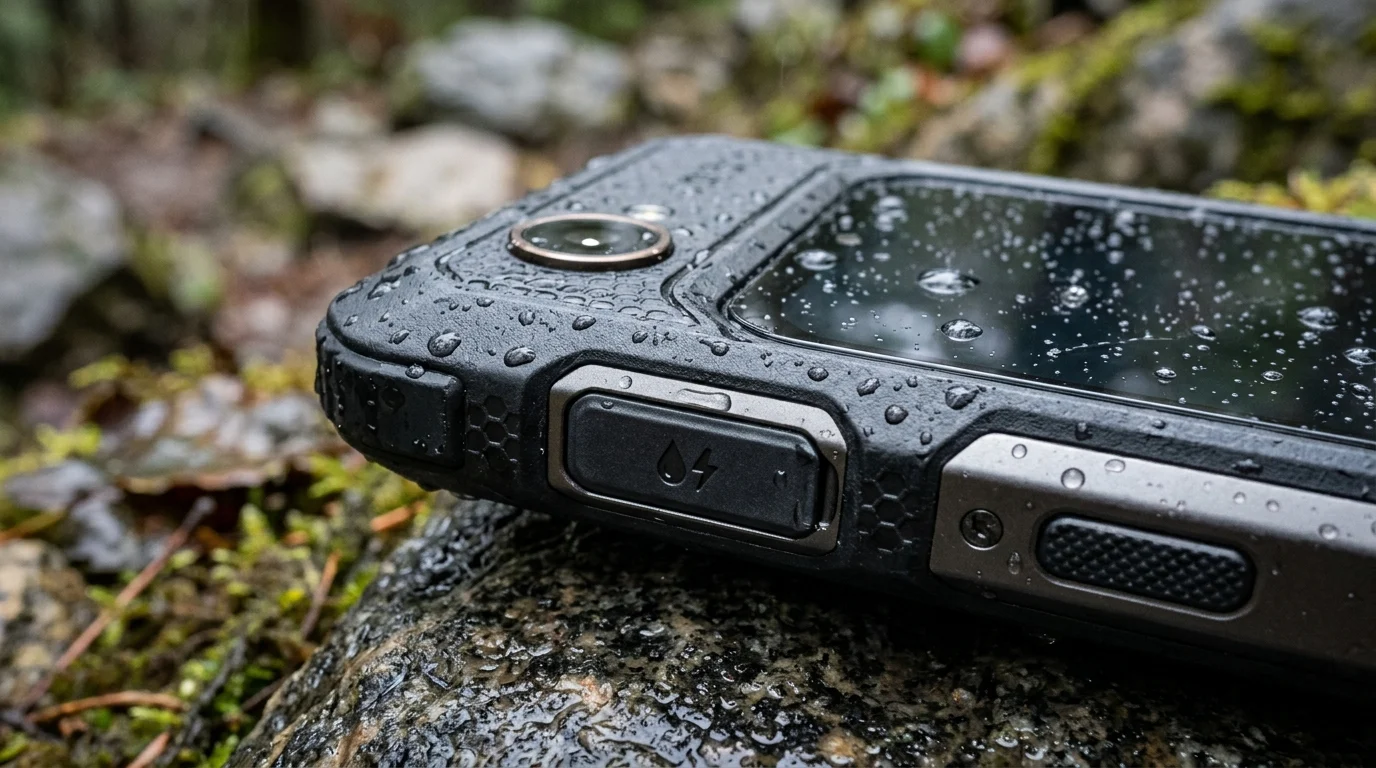
Defining a professional weatherproof phone requires moving beyond consumer marketing terms like “water-resistant” and examining rigorous industrial testing standards. A true weatherproof and ruggedized device is engineered from the component level upward to survive catastrophic environmental exposure. For instance, while a standard consumer device might survive a brief drop into a shallow pool, an industrial weatherproof phone is designed to withstand continuous exposure to high-pressure, high-temperature water jets—specifically 80°C water at 1450 PSI—without compromising its internal seals or acoustic membranes.
IP Ratings, Drop Resistance, and Temperature Tolerance
The foundation of a weatherproof phone’s durability lies in its Ingress Protection (IP) ratings and adherence to military-standard testing protocols, such as MIL-STD-810H. A professional device typically carries a dual rating of IP68 and IP69K. This signifies complete protection against microscopic dust ingress and prolonged submersion in water up to 1.5 meters for 30 minutes, alongside absolute resistance to high-pressure industrial washdowns.
Drop resistance is equally critical for field operations. These devices feature reinforced polycarbonate or aerospace-grade aluminum frames, coupled with shock-absorbing thermoplastic polyurethane (TPU) bumpers capable of surviving repeated drops onto solid concrete from heights of 1.5 to 2.0 meters. Furthermore, temperature tolerance extends significantly beyond consumer norms, with operational limits generally spanning from -20°C to 60°C, ensuring the device neither shuts down in arctic conditions nor suffers thermal runaway in direct desert sunlight.
Weatherproof vs Rugged vs Waterproof Phones
Understanding the distinction between weatherproof, waterproof, and rugged designations is essential for accurate procurement. “Waterproof” implies a device can be submerged, but it does not guarantee protection against kinetic impact or extreme temperatures. “Rugged” indicates physical durability against drops and shocks but may lack comprehensive environmental sealing against fine dust or pressurized water. A professional weatherproof phone synthesizes all these elements into a single, highly resilient platform.
| Feature Category | Standard Consumer Phone | Waterproof Phone | Professional Weatherproof Phone |
|---|---|---|---|
| Ingress Protection | IP67 (Variable, degrades) | IP68 | IP68 & IP69K |
| Drop Survival | < 1.0m (High glass break risk) | < 1.0m (Often requires bulky case) | 1.5m – 2.0m (Bare device) |
| Operating Temp | 0°C to 35°C | 0°C to 35°C | -20°C to 60°C |
| Chemical Resistance | None | Minimal | High (Oils, Solvents, Salt Fog) |
Key Environmental and Operational Limits
Beyond basic water and drop resistance, professional weatherproof phones must endure complex environmental variables that rapidly degrade standard electronics. Solar radiation testing ensures that prolonged exposure to ultraviolet light does not degrade the outer casing materials or cause the optically clear display adhesive to delaminate. Humidity tolerance is meticulously tested up to 95% non-condensing humidity to prevent internal microbial growth or localized oxidation on internal connectors.
For maritime, coastal, or winter road operations, devices undergo rigorous salt fog testing. This typically involves continuous exposure to a 5% sodium chloride solution for 48 to 96 hours, verifying that exposed contacts, speakers, and charging ports will not corrode in highly saline atmospheres. These strict operational limits ensure the device remains a reliable safety tool rather than a hazardous liability in dynamic, chemically aggressive outdoor environments.
Key Specifications for Reliable Field Communication
The physical durability of a weatherproof phone must be matched by technical specifications tailored for mission-critical field communication. An unbreakable device is useless if it cannot maintain a network connection, clearly broadcast audio over heavy machinery, or last through an extended shift. Procurement teams must evaluate these specifications meticulously, as industrial environments demand performance metrics that far exceed standard enterprise requirements, such as speaker outputs exceeding 100 decibels to penetrate ambient industrial noise.
Radios, Network Bands, Push-to-Talk, and GPS
Connectivity is the backbone of field safety. Professional weatherproof phones support extensive LTE and 5G NR bands, including specialized public safety networks like Band 14 (FirstNet) in North America, ensuring priority routing during emergencies. Dual-band Global Navigation Satellite Systems (GNSS), utilizing both L1 and L5 frequencies, are critical for pinpointing worker locations with sub-meter accuracy even under dense forest canopies or in urban canyons.
Additionally, Push-to-Talk (PTT) functionality transforms these smartphones into digital two-way radios. Dedicated, programmable tactile PTT buttons allow for instantaneous voice transmission over cellular networks (PoC), maintaining latencies below 300 milliseconds. This capability eliminates the need for personnel to carry both a smartphone and a traditional Land Mobile Radio (LMR), streamlining their gear while enhancing communication range beyond traditional line-of-sight limitations.
Battery Life, Display Visibility, Audio, and Glove Use
Power management and user interface adaptations are vital for uninterrupted outdoor operation. Professional devices utilize high-capacity batteries exceeding 5000mAh, designed to deliver over 24 hours of continuous operational use, including constant GPS tracking and screen-on time. Displays must utilize high-luminance panels, typically rated at 700 to 1000 nits, to remain legible under direct, glaring sunlight.
Audio engineering in these devices accounts for high-decibel environments. Dual front-facing speakers with active noise cancellation microphones filter out wind and machinery noise, ensuring voice clarity. Furthermore, touchscreens feature advanced digitizers configured for “glove mode” and “wet tracking.” This allows the screen to accurately register inputs through 2mm to 5mm thick leather or nitrile work gloves, and prevents erratic screen behavior when the display is covered in water droplets.
Buyer Comparison Criteria
Selecting the appropriate device requires matching specifications to the specific operational role. A field worker requires different capabilities than a site supervisor or an emergency responder. Evaluating devices based on these user profiles ensures capital is deployed efficiently while maintaining strict safety standards.
| Requirement / Role | Field Worker | Site Supervisor | Emergency Responder |
|---|---|---|---|
| Battery Capacity | 5000mAh (Standard Shift) | 4000mAh (Lighter weight) | 6000mAh+ (Extended/Hot-Swap) |
| PTT Integration | Essential (Dedicated Button) | Optional (Software based) | Mission Critical (MCPTT certified) |
| Display Brightness | 700 nits | 700 nits | 1000+ nits |
| GPS Precision | Standard (L1) | Standard (L1) | High-Precision (L1+L5) |
| Camera Needs | Basic documentation | High-res for inspections | Thermal imaging capability |
How to Deploy Weatherproof Phones Across Outdoor Teams
Successfully deploying weatherproof phones across a distributed outdoor workforce requires a structured approach to provisioning, software management, and daily logistics. Handing a rugged device to an employee without an integration strategy often leads to security vulnerabilities and operational friction. Utilizing enterprise-grade Mobile Device Management (MDM) platforms and zero-touch enrollment protocols can reduce initial deployment time by up to 75%, allowing IT teams to provision hundreds of devices remotely before they even reach the field.
Device Readiness and Field Setup
Device readiness begins with physical kitting and software lockdown. Before deployment, devices should be fitted with 9H hardness tempered glass or specialized polymethyl methacrylate (PMMA) screen protectors to add a sacrificial layer against abrasive materials. Lanyards and heavy-duty belt clips should be attached to prevent accidental drops into inaccessible areas, such as deep water or active machinery.
On the software side, IT administrators must utilize Kiosk Mode or strict app whitelisting. This restricts the device strictly to work-essential applications, preventing unauthorized app installations that could drain battery life or compromise network security. Firmware updates should be managed centrally and scheduled during off-shift hours to ensure devices are not rendered inoperable during critical operational windows.
Integration with Dispatch and Safety Systems
To maximize the safety benefits of weatherproof phones, they must be deeply integrated with central dispatch and safety monitoring systems. This is primarily achieved through specialized Lone Worker applications that leverage the phone’s internal gyroscopes, accelerometers, and GPS modules. These applications monitor for “man-down” scenarios, typically triggering an automated alert if the device detects a sudden impact followed by a sustained tilt angle greater than 45 degrees for more than 30 seconds.
Furthermore, API integrations with central dispatch consoles allow for geofencing capabilities. Dispatchers can create virtual perimeters around known hazardous zones. If a worker carrying a weatherproof phone enters a restricted area or leaves a designated safe zone, both the worker and the safety officer receive immediate, automated warnings. This real-time telemetry transforms the phone from a simple communication tool into an active environmental awareness system.
Maintenance, Inspection, and Charging Procedures
Maintaining a fleet of weatherproof phones requires strict daily protocols to ensure longevity and readiness. Traditional USB-C charging ports, even when waterproof, are susceptible to mechanical wear and particulate accumulation. Implementing multi-bay charging docks that utilize magnetic pogo-pin connectors eliminates mechanical port wear and ensures devices are properly seated and charged at the end of every shift.
Battery health management is equally critical. Industrial usage profiles, characterized by extreme temperatures and frequent charging, degrade lithium-ion cells faster than consumer use. IT departments should monitor battery cycle counts via MDM software, establishing a strict replacement protocol when a battery’s total health drops below 80%—typically occurring after 500 full charge cycles. Routine visual inspections of the device’s external gaskets and port covers should also be mandated weekly to ensure the IP rating has not been compromised by physical damage.
How to Choose Weatherproof Phones for Long-Term Safety
Choosing the right weatherproof phones is a strategic investment that impacts long-term operational safety and corporate profitability. Procurement decisions must look beyond the initial hardware purchase price and evaluate the Total Cost of Ownership (TCO) over a three- to five-year lifecycle. Industry data indicates that while professional rugged devices command a higher upfront premium, their TCO is frequently 40% lower than deploying standard consumer devices in harsh environments, primarily due to drastically reduced replacement rates and minimized operational downtime.
Certifications, Warranty, and Repair Support
Regulatory compliance and hazardous environment certifications are non-negotiable criteria for specific industries. For operations in oil and gas, chemical processing, or grain handling, devices must carry intrinsically safe certifications such as ATEX or IECEx for Zone 1 or Zone 2 environments. These certifications guarantee that the device cannot generate a spark or thermal output sufficient to ignite explosive atmospheric mixtures.
Equally important is the manufacturer’s warranty and repair infrastructure. Consumer warranties almost universally void coverage for water damage or significant impact trauma. Professional weatherproof phone manufacturers typically offer comprehensive two- to three-year warranties that cover accidental damage. Furthermore, they provide guaranteed lifecycle support, ensuring that replacement parts, batteries, and security patches remain available for up to five years, preventing premature fleet obsolescence.
Total Cost of Ownership and Downtime Risk
The true financial impact of device selection becomes apparent when analyzing downtime risk. While a professional weatherproof phone may cost between $500 and $1,200 upfront, the cost of a device failure in the field is exponentially higher. In sectors like mining or offshore drilling, operational downtime caused by a loss of communication can incur costs exceeding $5,000 per hour. When a fragile consumer device fails, the cost is not just the replacement hardware; it encompasses the lost labor hours, the logistical expense of delivering a replacement to a remote site, and the heightened safety risk during the communication blackout.
By modeling the Total Cost of Ownership, organizations can clearly see the financial advantage of ruggedization. If the annualized failure rate of consumer devices in a specific outdoor environment exceeds 20%, the mathematical breakeven point aggressively favors the deployment of purpose-built weatherproof phones. They eliminate the hidden costs of “churn”—the continuous cycle of breaking, re-provisioning, and replacing inadequate hardware.
When Weatherproof Phones Are the Right Choice
Weatherproof phones are the definitively correct choice when environmental conditions consistently exceed the engineering limits of standard technology, and where communication failure presents a tangible risk to human safety. They are indispensable for lone workers, emergency response teams, and industrial personnel operating in areas prone to heavy precipitation, extreme temperatures, or high particulate matter.
Ultimately, the decision to deploy weatherproof phones is a commitment to workforce safety and operational resilience. By prioritizing robust ingress protection, industrial-grade connectivity, and comprehensive lifecycle management, organizations ensure their communication networks remain functional in the exact moments they are needed most, transforming a simple piece of hardware into an indispensable lifeline.
Key Takeaways
- Use weatherproof phones as part of a formal safety communication plan for lone workers, remote crews, and outdoor industrial teams.
- Choose professional rugged devices rather than consumer water-resistant phones when operations involve rain, dust, salinity, vibration, or temperature extremes.
- Reliable field communication can reduce emergency response times by up to 30%, making device durability a measurable safety factor.
- Assess failure risks such as condensation, port corrosion, and cold-weather battery loss before selecting outdoor communication equipment.
- For oil and gas, mining, or other hazardous sites, verify whether explosion-proof certification such as ATEX is required in addition to weatherproof protection.
- Integrate weatherproof phones with dispatch, intercom, paging, VoIP, or emergency call systems to maintain continuous site-wide communication.
Frequently Asked Questions
What makes a weatherproof phone different from a consumer smartphone?
A weatherproof phone is built for harsh outdoor use with sealed housings, protected electronics, corrosion-resistant parts, and stable performance in rain, dust, salinity, and temperature extremes. Consumer smartphones may be water-resistant, but they are not designed for continuous industrial safety communication.
Where are weatherproof phones most useful?
They are especially useful in mining, oil and gas, construction, transportation, maritime sites, campuses, prisons, and other outdoor or hazardous environments where workers need reliable emergency communication despite noise, weather, dust, or remote locations.
How do weatherproof phones improve emergency response?
They keep communication lines available during severe conditions, enabling faster distress calls, check-ins, dispatch coordination, and emergency broadcasts. Reliable field communication can reduce emergency response times by up to 30%, helping teams respond before incidents escalate.
Can weatherproof phones work in freezing conditions?
Professional weatherproof phones are designed to perform in cold environments where standard batteries may lose up to 50% capacity at -10°C. Rugged models use stronger sealing, protected electronics, and battery systems intended for dependable low-temperature operation.
Are weatherproof phones suitable for hazardous industrial areas?
Yes, but hazardous areas may require certified explosion-proof models. SINIWO offers weatherproof, waterproof, and explosion-proof telephones and intercoms for harsh and hazardous environments, with relevant certifications such as ATEX, CE, FCC, ROHS, and ISO9001.

Post time: Jun-16-2026