
Introduction
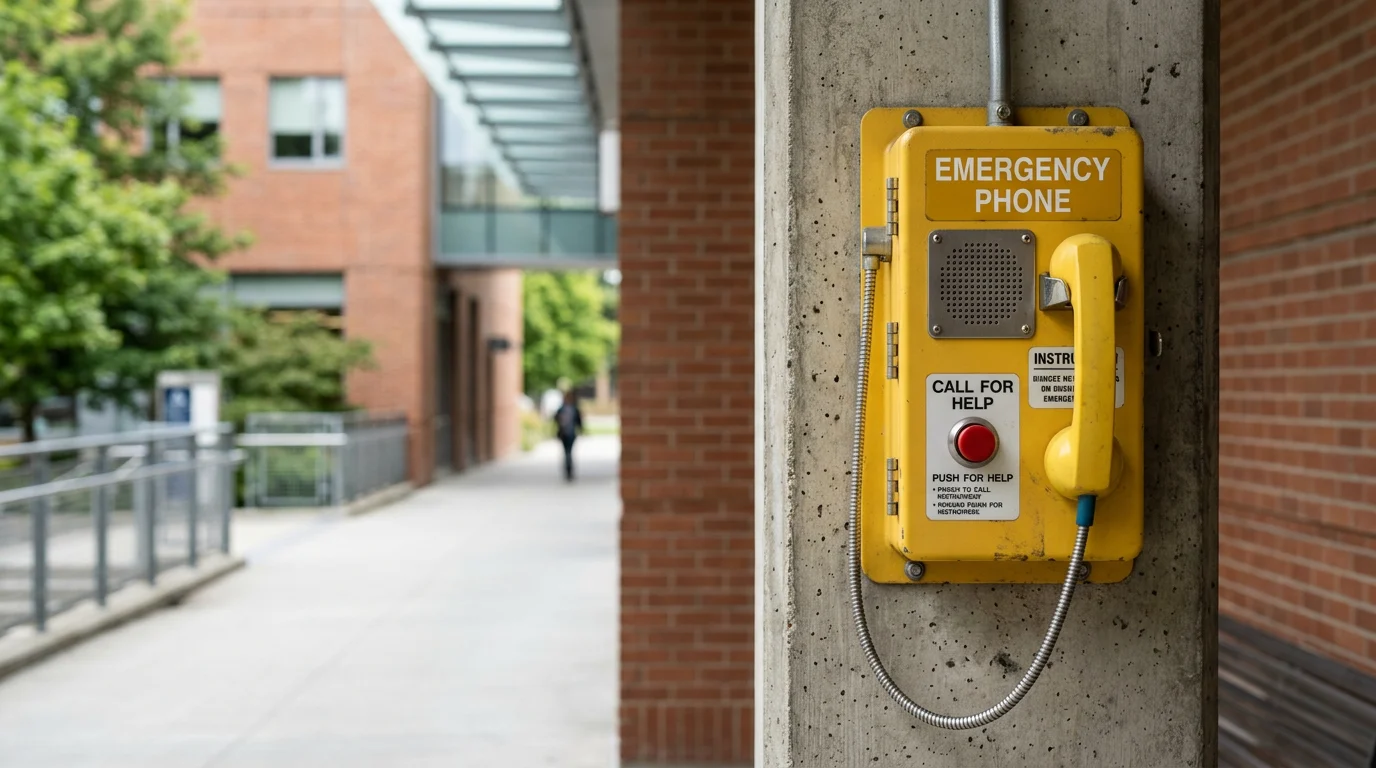
Faster emergency response depends on more than responder speed; it starts with how quickly a call is placed, routed, and understood. Emergency phone systems are designed to remove common delays such as dialing, network congestion, and unclear location reporting, giving dispatchers immediate, actionable information. This article explains how dedicated emergency phones shorten the critical first moments of an incident, where they outperform standard mobile calls, and which features most directly improve coordination with security teams and public safety agencies. With that context, the body examines the specific operational and technical factors that make response times measurably faster.
How Emergency Phone Systems Improve Response Time
When an emergency occurs, the gap between the initial incident and the arrival of first responders is the most critical window for mitigating harm. Traditional commercial communication networks often introduce unpredictable latency during crises, whereas dedicated emergency phone systems are engineered to compress this timeline. By establishing a direct, uninterrupted line to dispatchers, these systems can reduce initial reporting times from a standard average of 2 to 3 minutes down to under 30 seconds.
Operational delays they reduce
During high-stress situations, individuals relying on personal mobile devices frequently encounter operational delays. These include unlocking devices, dialing, waiting for carrier routing, and struggling to articulate their exact location. In densely populated areas or during mass events, localized cellular network congestion can completely block outgoing calls, leading to a failure rate that can exceed 15% during peak crises.
Dedicated emergency phone systems eliminate these bottlenecks. With single-button activation, the hardware instantly initiates a connection, bypassing public switched telephone network (PSTN) congestion and routing the user directly to campus security, facility management, or a specific Public Safety Answering Point (PSAP).
Effects of call routing and location accuracy
One of the most profound impacts on response time comes from the elimination of location ambiguity. Mobile 911 calls often rely on Phase II E911 triangulation, which can have a margin of error ranging from 50 to 300 meters, particularly in dense urban environments or multi-story structures. This forces dispatchers to spend valuable seconds interrogating the caller about their whereabouts.
Modern emergency phone systems utilize Automatic Number Identification (ANI) and Automatic Location Identification (ALI) protocols to transmit exact geographic coordinates or specific building nodes the millisecond a call connects. Dispatchers instantly see a facility map pinpointing the active terminal, allowing them to deploy security personnel or emergency medical services to an exact location with a precision of less than 10 feet.
What Defines a High-Performance Emergency Phone System
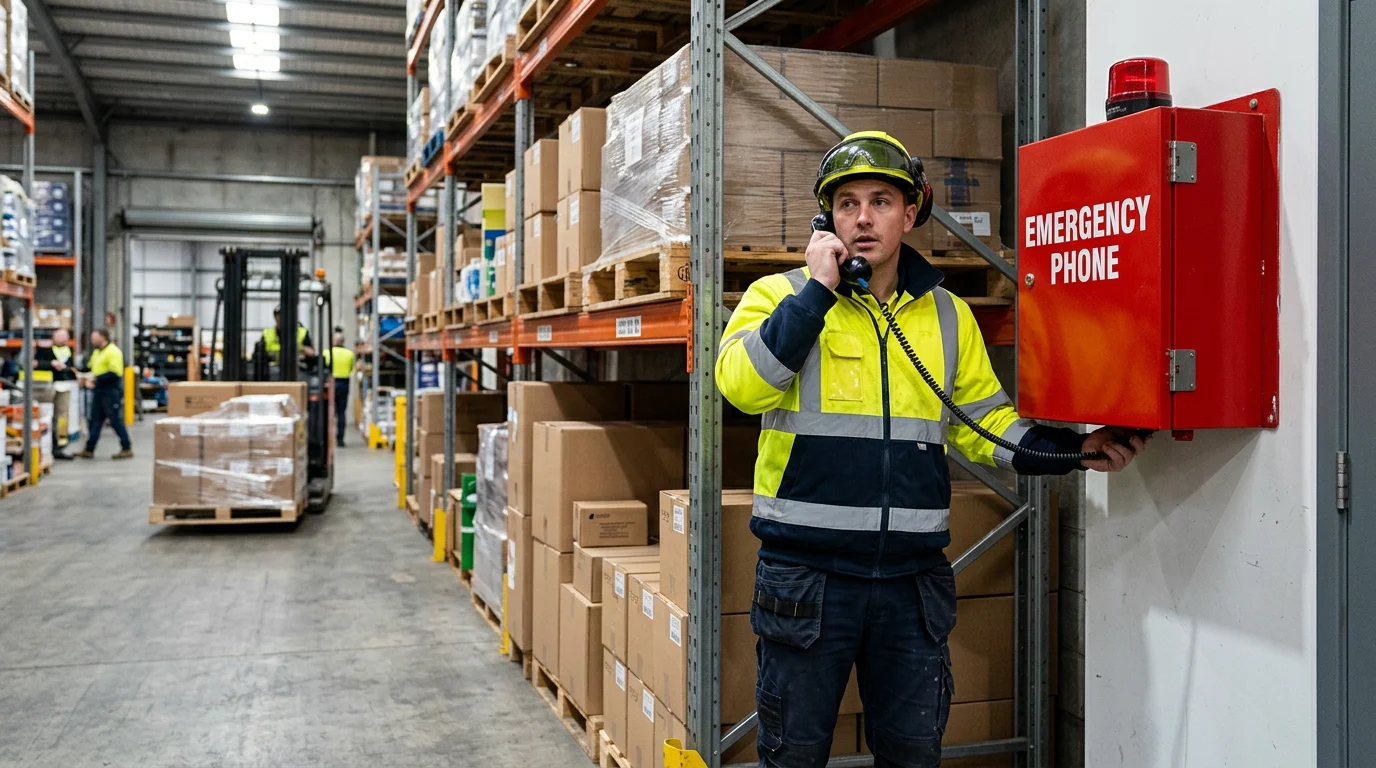
Not all communication endpoints are capable of functioning reliably under duress or in harsh environmental conditions. A high-performance emergency phone system is defined by its physical resilience, audio clarity, and technological adaptability. Institutional buyers typically require hardware that meets strict ingress protection ratings, such as IP66 for dust and water resistance, or NEMA 4X for corrosion resistance.
Core components that matter most
The core components of a reliable emergency terminal go far beyond a standard microphone and speaker. Full-duplex audio is mandatory, allowing both the caller and the dispatcher to speak simultaneously without clipping or echoing. Advanced noise-canceling algorithms are integrated to filter out ambient sound, effectively reducing background noise by 20 to 30 decibels, which is crucial in transit hubs, highways, or industrial sites.
Visual components also play a vital role. High-visibility LED strobes, often emitting between 1.5 million candlepower and 320 lumens, activate upon call initiation. This not only reassures the caller but acts as a visual beacon for arriving responders, cutting down search times in large parking lots or dark campuses.
Analog vs VoIP vs cellular vs wireless options
The underlying transmission technology dictates both the installation requirements and the long-term reliability of the system. Facility managers must choose between analog, Voice over Internet Protocol (VoIP), cellular, and proprietary wireless configurations based on existing infrastructure and geographic constraints.
| Technology Type | Infrastructure Required | Power Source | Typical Latency | Primary Advantage |
|---|---|---|---|---|
| Analog | Copper wiring (RJ11) | Line-powered (48V DC) | < 50 ms | Operates during local power grid failures |
| VoIP (SIP) | Ethernet / Fiber (RJ45) | Power over Ethernet (PoE) | 50 – 150 ms | Deep integration with IT and security networks |
| Cellular | LTE / 5G Modems | Solar or local AC with battery | 100 – 300 ms | Ideal for remote areas without cabling |
| Wireless (RF) | Proprietary RF network | Solar or local AC with battery | < 100 ms | Rapid deployment without trenching costs |
VoIP systems utilizing Session Initiation Protocol (SIP) have become the industry standard for new deployments due to their bandwidth efficiency. They typically require only about 100 kbps per active call while carrying both high-definition voice and continuous diagnostic data over a single connection.
System Design and Integration for Faster Emergency Response
Procuring high-quality hardware is only the first step; the physical placement and digital integration of these endpoints determine the true efficacy of the network. A poorly placed unit with a 99.9% uptime still yields a zero percent success rate if a victim cannot reach it within seconds.
Placement strategies for maximum coverage
Placement strategies dictate that emergency phones should be deployed using a line-of-sight methodology. In open environments like university quads or corporate parking lots, industry best practices recommend spacing units no more than 200 to 300 feet apart. A person in distress should be able to see at least two emergency beacons from any given vantage point.
For indoor environments, placement should prioritize high-risk or isolated zones, such as stairwells, elevator lobbies, and subterranean parking levels where cellular signals typically degrade. Units should be mounted at highly visible intersections, avoiding blind corners or areas obstructed by physical barriers or landscaping.
Integration with dispatch and mass notification systems
To truly accelerate response times, emergency phones must act as nodes within a broader security ecosystem. When integrated with Video Management Systems (VMS), pressing the emergency button can trigger nearby Pan-Tilt-Zoom (PTZ) cameras to automatically focus on the terminal, providing dispatchers with instant situational awareness before they even speak to the caller.
Furthermore, integration with mass notification platforms allows the speakers on the emergency phones to be utilized as a wide-area public address system. During an active threat or severe weather event, dispatchers can broadcast pre-recorded or live audio instructions across all terminals simultaneously, achieving decibel levels capable of projecting up to 400 feet per unit.
Key criteria for comparing system options
When comparing system options, decision-makers must evaluate objective performance metrics alongside feature sets. Key criteria include a Mean Time Between Failures (MTBF) exceeding 50,000 hours, ensuring long-term hardware reliability. Buyers should also assess the maximum concurrent call capacity of the central server, ensuring the system can handle sudden spikes in usage without dropping connections.
How to Evaluate Compliance, Maintenance, and Vendor Support
An emergency communication network carries significant liability. Failing to meet regulatory standards or neglecting routine maintenance can result in catastrophic failures during an incident, followed by severe legal repercussions. Organizations must adhere to strict building codes and align with recognized ISO quality management principles to ensure continuous operational readiness.
Codes, accessibility, and testing requirements
Compliance begins with accessibility. Under the Americans with Disabilities Act (ADA) and similar international equivalent standards, emergency phone interfaces must be mounted so that operable parts are between 34 and 48 inches from the finished floor. The hardware must include Braille lettering, raised call buttons, and hands-free operation to accommodate individuals with mobility or visual impairments.
Elevator installations face additional regulatory scrutiny, typically governed by ASME A17.1 codes. These regulations mandate that elevator communications must automatically route to a 24/7 staffed monitoring center and include video or text-based communication capabilities for the hearing impaired.
Maintenance, diagnostics, and redundancy planning
Maintenance protocols have evolved heavily from manual testing to automated oversight. Legacy systems required security personnel to physically walk the campus and test each unit monthly. Modern VoIP and cellular systems feature self-diagnostic software that polls each endpoint periodically to guarantee functionality.
| Maintenance Tier | Testing Frequency | Diagnostic Focus | Redundancy Action |
|---|---|---|---|
| Level 1 (Automated) | Every 12-24 Hours | Network connection, power state, SIP registration | Alert generated in central dashboard |
| Level 2 (Acoustic) | Weekly | Microphone/speaker integrity via tone testing | Work order dispatched if threshold fails |
| Level 3 (Physical) | Bi-Annually | Enclosure integrity, strobe brightness, button mechanics | Hardware replacement or firmware flash |
Redundancy planning is equally critical. Vendor support agreements should guarantee that central servers operate in a high-availability cluster. Local endpoints must feature uninterruptible power supplies (UPS) or localized battery backups capable of sustaining standby operation for 24 to 48 hours, and continuous talk time for at least 4 hours during a total grid failure.
Decision Framework for Selecting an Emergency Phone System
Selecting the right emergency phone system requires a structured procurement framework that balances immediate capital expenditures against long-term operational resilience. Organizations must move beyond superficial product comparisons and execute a comprehensive site and threat analysis.
Step-by-step assessment process
The assessment process begins with a physical infrastructure audit. Facility teams must map existing telecommunications pathways, noting the availability of dark fiber, spare copper pairs, and PoE-capable network switches. This audit informs whether a wired or wireless deployment is most viable.
Following the audit, a localized threat assessment helps determine the necessary durability of the units. A coastal facility will require 316 marine-grade stainless steel to prevent salt corrosion, whereas an inland corporate campus might prioritize aesthetic integration and vandalism resistance. Finally, stakeholders must map the call routing logic: determining who answers the call during business hours versus after-hours, and whether a third-party monitoring service is required.
How to weigh cost, scalability, and integration
Weighing cost, scalability, and integration requires analyzing the Total Cost of Ownership (TCO) over a standard 7 to 10-year lifecycle. While analog systems may present lower initial hardware costs (often between $500 and $1,200 per unit), the expense of maintaining dedicated copper lines can add thousands of dollars in recurring annual carrier fees.
Conversely, VoIP and cellular endpoints have higher upfront costs—ranging from $1,500 to $3,500 per unit—but leverage existing IT networks, drastically reducing monthly telecommunication bills. Scalability also heavily favors IP-based systems; adding a new VoIP terminal to an expanding campus requires only a single network drop, averaging $3 to $5 per foot for cabling, alongside a software license, rather than trenching new dedicated analog lines back to a central demarcation point.
Key Takeaways
- The most important conclusions and rationale for Emergency Phone Systems
- Specs, compliance, and risk checks worth validating before you commit
- Practical next steps and caveats readers can apply immediately
Frequently Asked Questions
How do emergency phone systems improve response time?
They connect with one button, avoid mobile dialing delays, and send location data instantly, helping responders arrive faster.
Which emergency phone system works best for my site?
Use VoIP for networked buildings, analog for power-failure resilience, cellular for remote areas, and wireless when trenching is impractical.
Why is location accuracy so important in an emergency call?
Exact ANI/ALI location lets dispatchers send help to the right terminal immediately, reducing time spent confirming where the caller is.
What features should I look for in an outdoor emergency phone?
Choose IP66 or NEMA 4X protection, full-duplex audio, noise cancellation, and a bright LED strobe for visibility and durability.
Can SINIWO emergency phones integrate with existing security or PBX systems?
Yes. SINIWO offers SIP/VoIP-compatible emergency phones that can connect with IP PBX, security desks, and facility response workflows.
Post time: May-27-2026