
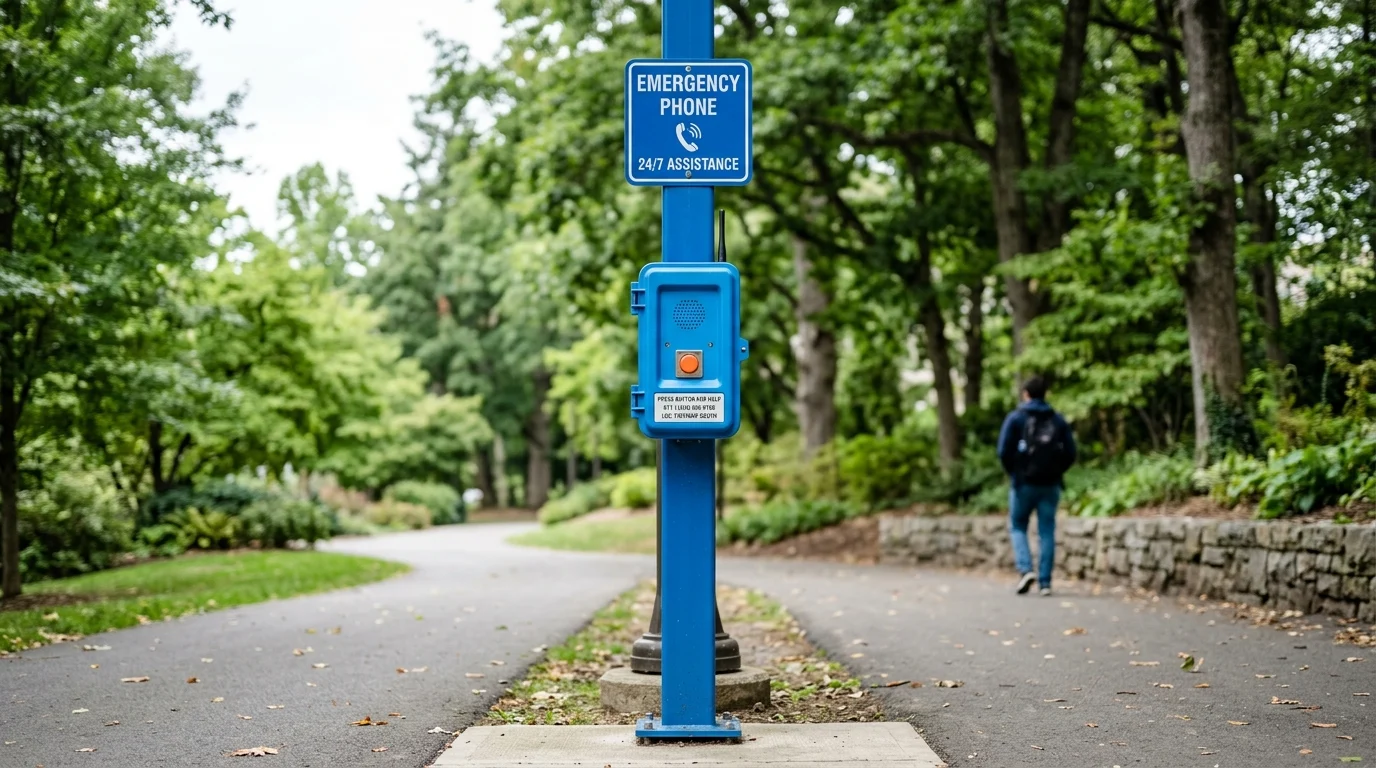
Why Outdoor Emergency Phones Are Critical Safety Systems
Outdoor emergency phones serve as critical lifelines in environments where standard communication infrastructure is either unavailable, unreliable, or inaccessible during a crisis. While the ubiquity of mobile devices has shifted general communication paradigms, high-risk industrial facilities, sprawling university campuses, and remote transit corridors still require dedicated, fixed-point communication hardware. These systems guarantee an immediate, uncompromised link to emergency dispatchers, bypassing the variables of dead zones, dead batteries, and network congestion.
The deployment of these systems transcends basic convenience; it is a fundamental component of institutional risk management and life safety engineering. By establishing a recognizable, highly visible point of contact, organizations fulfill their duty of care while significantly streamlining the logistics of emergency response. Understanding the precise role and operational demands of these devices is the first step in engineering a resilient security ecosystem.
Reducing Response Time and Liability
The primary function of an outdoor emergency phone is to eliminate friction during the critical first moments of an incident. In a conventional mobile 911 call, dispatchers must often rely on cellular triangulation to determine the caller’s location, a process that can consume valuable time and yield inaccurate results, particularly in multi-level structures or dense industrial sites. Fixed-point emergency phones are hard-coded with precise geographic data in the private branch exchange (PBX) or computer-aided dispatch (CAD) system.
This pre-programmed location identification reduces emergency response initiation times by an average of 40 to 60 seconds compared to standard mobile calls. Furthermore, deploying these systems actively mitigates institutional liability. By providing reliable, accessible emergency communication, organizations demonstrate compliance with duty-of-care obligations, which can positively impact insurance premiums and protect against negligence claims in the event of severe security incidents or workplace accidents.
Defining Harsh-Environment Emergency Phones
Standard telecommunications equipment degrades rapidly when exposed to environmental stressors. A harsh-environment emergency phone is specifically engineered to survive conditions that would instantly destroy commercial-grade electronics. These units are built to operate flawlessly across extreme temperature spectrums, typically rated for continuous function from -40°C to +70°C (-40°F to +158°F).
Beyond temperature resilience, true harsh-environment phones feature conformal-coated printed circuit boards (PCBs) to prevent short circuits caused by condensation, high humidity, or corrosive atmospheric gases. The internal components are selected for exceptional longevity, often boasting a Mean Time Between Failures (MTBF) exceeding 50,000 hours. This structural and electronic fortification ensures that the device remains fully operational even after years of exposure to UV radiation, freeze-thaw cycles, and airborne particulates.
Common Outdoor Emergency Phone Applications
The deployment of outdoor emergency phones spans multiple sectors, each with unique environmental and operational demands. Transit authorities rely heavily on these systems, installing highway call boxes at intervals of 1 to 2 miles to assist stranded motorists outside of reliable cellular coverage. Similarly, railway platforms and subterranean transit tunnels utilize these units to manage passenger safety and report track-side emergencies.
In the industrial sector, petrochemical plants, wastewater treatment facilities, and mining operations deploy intrinsically safe emergency phones in areas where explosive gases or combustible dust are present. Educational and corporate campuses represent another major application, where blue light emergency towers are strategically placed to ensure that any individual is always within a 200- to 300-foot line of sight of a communication endpoint, deterring crime and providing immediate assistance during security events.
Key Technical Specifications to Evaluate
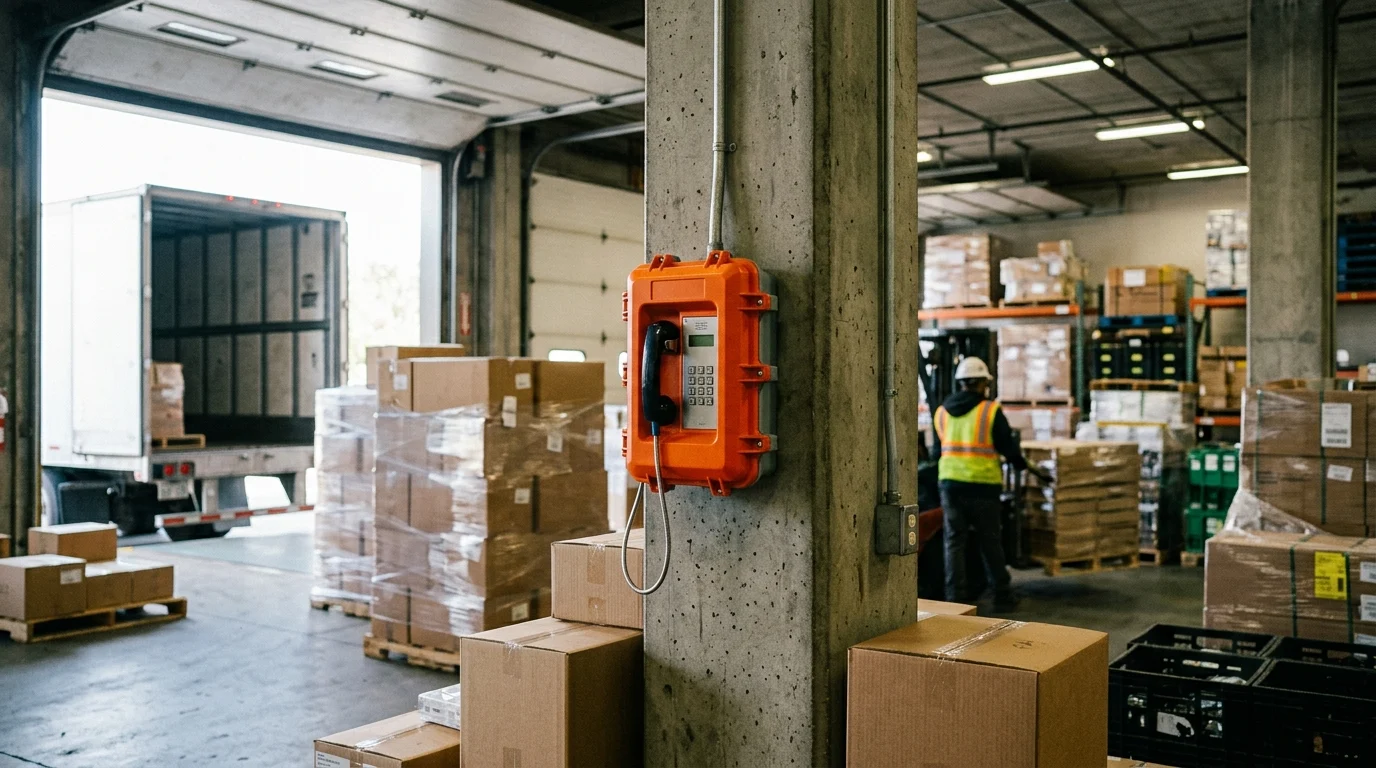
Evaluating the technical specifications of outdoor emergency phones requires a rigorous approach to ensure the hardware aligns with site-specific hazards. Procurement decisions must be driven by empirical data and standardized testing metrics rather than superficial design features. The core objective is to match the phone’s capabilities with the worst-case environmental scenarios it will face.
Security directors and system integrators must analyze three primary technical domains: environmental and physical protection ratings, power and network infrastructure compatibility, and user interface efficacy. A deficiency in any of these areas can compromise the entire safety network during a critical event.
IP Ratings and IK Impact Ratings
Ingress Protection (IP) and Impact Protection (IK) ratings are the definitive metrics for evaluating a phone’s physical resilience. The IP rating system dictates the enclosure’s ability to repel dust and moisture. For outdoor and harsh environments, an IP66 rating (dust-tight and protected against powerful water jets) is the minimum standard, while IP67 (capable of temporary submersion up to 1 meter) is required for flood-prone areas or marine environments.
Equally important is the IK rating, which measures the enclosure’s resistance to mechanical impact and vandalism. An IK10 rating indicates that the device can withstand an impact of 20 joules, equivalent to a 5 kg mass dropped from 400 mm above the impact surface. Devices lacking adequate IK ratings are highly susceptible to deliberate destruction or accidental strikes from heavy machinery.
| Protection Standard | Rating Level | Technical Definition | Typical Application Environment |
|---|---|---|---|
| Ingress (IP) | IP65 | Dust-tight, protected against low-pressure water jets | Covered parking garages, moderate climates |
| Ingress (IP) | IP66/IP67 | Dust-tight, withstands heavy seas or temporary submersion | Highways, marine docks, heavy industrial plants |
| Impact (IK) | IK08 | Withstands 5 joules of impact | Controlled access campuses, light commercial |
| Impact (IK) | IK10 | Withstands 20 joules of impact | Public transit, high-crime areas, heavy manufacturing |
Power and Connectivity Options
Continuous operation relies on robust power and connectivity architecture. Modern IP-based emergency phones predominantly utilize Power over Ethernet (PoE), conforming to 802.3af (15.4W) or 802.3at (PoE+ up to 30W) standards. PoE simplifies installation by combining power and data over a single Cat5e/Cat6 cable, though it is limited by the standard 100-meter Ethernet distance constraint unless extenders or fiber optic converters are utilized.
In remote locations where trenching is prohibitively expensive, solar-powered configurations paired with cellular communication (4G LTE or 5G) are deployed. These systems typically operate on 12V or 24V DC battery banks engineered to provide 5 to 7 days of autonomy during prolonged periods of low sunlight. For legacy infrastructure, analog POTS (Plain Old Telephone Service) lines are still supported by many manufacturers, though these require dedicated copper lines and are increasingly being phased out in favor of SIP-based VoIP solutions.
Audio Quality, Visibility, and Accessibility
In chaotic environments, the audio quality of an emergency phone can dictate the success of a rescue operation. Harsh-environment phones must incorporate advanced Digital Signal Processing (DSP) and acoustic echo cancellation. High-end units are capable of filtering out up to 85 dB of ambient background noise, ensuring that dispatchers can clearly hear the caller even next to active highway traffic or heavy industrial machinery.
Visibility and accessibility are heavily regulated technical parameters. High-intensity strobe lights, often emitting between 1 million and 1.5 million peak candlepower, are integrated to guide users to the phone and help security personnel locate the active call visually. Furthermore, to comply with the Americans with Disabilities Act (ADA), the physical push buttons must be mounted between 34 and 48 inches from the finished floor or ground level, requiring less than 5 pounds of force to activate, and must be accompanied by Braille signage and LED call-status indicators.
Comparing Weatherproof Emergency Phone Types
The physical architecture of an emergency phone determines its survivability and lifecycle costs. Selecting the appropriate form factor and enclosure material is heavily dependent on the specific installation environment, the availability of existing mounting structures, and the anticipated threat level from both nature and human interference.
Security integrators must weigh the benefits of highly visible, freestanding structures against the cost-effectiveness and spatial efficiency of wall-mounted units. Additionally, understanding the metallurgical and chemical properties of the enclosures will prevent premature hardware failure due to corrosion, UV degradation, or physical trauma.
Enclosure Materials and Durability
The longevity of an outdoor emergency phone is intrinsically linked to its enclosure material. For coastal areas, offshore platforms, or regions utilizing heavy road salts, 316L marine-grade stainless steel is the premier choice. The addition of molybdenum in the 316L alloy drastically increases its resistance to chloride-induced pitting, allowing these units to survive salt spray testing exceeding 1,000 hours without structural degradation.
For less corrosive but highly physical environments, heavy-duty cast aluminum enclosures coated with UV-resistant polyester powder paint offer an excellent balance of weight, cost, and durability. Conversely, cold-rolled steel (even when treated) should generally be avoided in harsh outdoor environments, as any deep scratch that penetrates the coating will inevitably lead to rapid oxidation and rust.
| Enclosure Material | Relative Cost | Corrosion Resistance | Best Application Environment |
|---|---|---|---|
| Polycarbonate / Plastic | Low | High (Chemical), Low (UV) | Sheltered outdoor, light commercial |
| Powder-Coated Cast Aluminum | Medium | Moderate to High | University campuses, urban transit |
| 304 Stainless Steel | High | High | General industrial, non-coastal outdoor |
| 316L Stainless Steel | Premium | Exceptional (Chloride resistant) | Marine, offshore, heavy chemical plants |
Pedestal Phones vs Wall-Mounted Call Boxes
The choice between pedestal phones (often referred to as blue light towers) and wall-mounted call boxes involves significant logistical and financial trade-offs. Pedestal phones are highly visible monoliths, typically standing 9 to 10 feet tall. They serve as a powerful psychological deterrent to crime and provide a 360-degree beacon for individuals in distress. However, they require substantial civil engineering, including poured concrete foundations and deep trenching for conduit, bringing the total installed cost to $2,000 to $5,000+ per unit.
Wall-mounted or pole-mounted call boxes offer a much lower barrier to entry. By leveraging existing infrastructure—such as building facades, structural pillars, or existing light poles—these units drastically reduce civil works costs. While they lack the towering visibility of a pedestal, they are highly effective in parking garages, along building perimeters, and within industrial corridors where space is at a premium.
Low-Cost Call Stations vs Rugged Emergency Phones
Procurement teams often weigh the upfront costs of low-cost call stations against rugged, heavy-duty emergency phones. Light-commercial units, often constructed from polycarbonate or thin-gauge metals, typically range from $300 to $600. While budget-friendly, these units generally lack internal environmental sealing and are prone to UV embrittlement, often requiring replacement within 3 to 5 years when exposed to direct sunlight and extreme weather.
In contrast, true rugged emergency phones demand a higher capital expenditure, generally ranging from $1,200 to $3,000+ for the hardware alone. However, these units are engineered for 15- to 20-year lifespans. They feature tamper-proof spanner screws, heavy-duty armored handset cords (capable of withstanding up to 800 pounds of pull force), and self-closing weatherproof doors. In harsh environments, the ROI of rugged units is realized through the elimination of frequent replacement cycles and reduced maintenance labor.
Compliance, Integration, and Maintenance
Hardware deployment represents only the first phase of establishing a reliable emergency communication network. The true efficacy of an outdoor emergency phone system lies in its compliance with regulatory standards, its seamless integration into centralized security operations, and the implementation of rigorous, automated maintenance protocols.
An isolated, unmonitored call box is a liability rather than an asset. Modern emergency communication strategies require these endpoints to function as intelligent nodes within a broader Internet of Things (IoT) security ecosystem, providing real-time data on their operational status and situational awareness during an event.
Safety, Accessibility, Electrical, and Telecom Standards
Regulatory compliance dictates strict parameters for emergency communication systems. In North America, the Americans with Disabilities Act (ADA) mandates specific physical dimensions, tactile requirements, and dual audio-visual feedback mechanisms. In the elevator and lift sector, standards like EN 81-28 govern the specific operational protocols for emergency alarms, ensuring two-way communication without requiring the trapped individual to hold down a button.
For harsh industrial environments, electrical safety standards are paramount. Facilities handling volatile chemicals or combustible dust must utilize equipment certified for Hazardous Locations. Emergency phones deployed in these areas must meet UL/CSA standards for Class I, Division 1 or Division 2 (or equivalent ATEX/IECEx Zone 1/Zone 2 standards), ensuring the device is intrinsically safe or explosion-proof and cannot generate a spark capable of igniting the surrounding atmosphere.
Integration With Security Operations
Modern emergency phones function as IoT endpoints, utilizing the Session Initiation Protocol (SIP) to integrate directly with enterprise PBX systems, computer-aided dispatch, and unified security platforms. This integration allows for complex call routing, such as automatically rolling over an unanswered call from an on-site security desk to a municipal 911 dispatch center after 15 seconds.
Furthermore, advanced units feature ONVIF compliance or relay outputs that integrate with Video Management Systems (VMS). When a user presses the emergency button, the SIP system can trigger an immediate command to nearby Pan-Tilt-Zoom (PTZ) cameras, directing them to automatically focus on the call box location. This convergence of audio and visual data provides dispatchers with critical situational awareness before they even speak to the caller.
Inspection, Testing, and Remote Monitoring
Maintaining a fleet of outdoor emergency phones historically required labor-intensive physical inspections. Today, IP-based systems utilize automated fault detection to ensure operational readiness. Central management software can be configured to execute SIP registration pings at regular intervals—typically every 60 to 120 seconds—instantly alerting administrators if a unit goes offline due to network failure or power loss.
More advanced diagnostics include automated audio loop tests. The system periodically emits a tone from the speaker and uses the integrated microphone to verify that the sound is accurately captured, confirming that both components are functioning. These remote monitoring capabilities dramatically lower operational expenses, reducing physical maintenance truck rolls by up to 70% while guaranteeing that the system is fully functional before an emergency occurs.
How to Choose the Right Outdoor Emergency Phone
The final procurement decision requires a methodical approach that synthesizes site-specific environmental data, integration requirements, and long-term financial modeling. Purchasing outdoor emergency phones based solely on the lowest hardware bid frequently results in catastrophic system failures during severe weather events or critical emergencies.
Security professionals must execute a comprehensive evaluation process to ensure the selected hardware provides unquestionable reliability. This involves mapping the physical terrain, calculating the true lifecycle costs, and applying a stringent set of selection criteria tailored to harsh environments.
Site Survey and Coverage Gap Assessment
Before evaluating hardware, security directors must conduct a thorough site survey to identify communication coverage gaps. This involves mapping cellular dead zones across the campus or facility, particularly in topographical depressions, heavily wooded areas, or adjacent to structures with heavy steel and concrete footprints that block RF signals.
Line-of-sight planning is critical for the placement of highly visible blue light towers. Depending on the topography and ambient lighting, a high-intensity strobe can be visible from up to 3,000 feet away. The site survey must identify optimal installation points that maximize this visibility while minimizing the distance a user must travel—aiming for a maximum travel distance of 200 feet between emergency communication endpoints in high-risk zones.
Total Cost of Ownership
Evaluating the Total Cost of Ownership (TCO) is essential for accurate budget forecasting. Capital Expenditures (CAPEX) include not just the hardware, but the substantial costs of civil works. Trenching for conduit to supply power and data can run anywhere from $50 to $150 per linear foot, often dwarfing the cost of the phone itself. This makes solar-cellular models highly attractive for remote perimeter installations despite their higher unit cost.
Operational Expenditures (OPEX) must also be factored into the 10- to 15-year lifecycle. These include SIP trunk licensing fees, monthly cellular data plans for wireless units, and routine maintenance labor. Over a standard 10-year lifecycle, installation and OPEX frequently account for 60% to 70% of the TCO, emphasizing the financial benefit of investing in highly reliable, remote-monitored hardware that minimizes ongoing maintenance requirements.
Final Selection Criteria for Harsh Environments
The final selection matrix should prioritize reliability, environmental suitability, and vendor support. Hardware must carry the appropriate IP and IK ratings, and the enclosure material must match the site’s specific chemical and weather exposures. Organizations should demand rigorous documentation of MTBF metrics and independent laboratory certifications for extreme temperature operation.
Finally, evaluate the manufacturer’s warranty and component availability. In harsh environments, a standard 1-year warranty is insufficient; organizations should look for manufacturers offering 3- to 5-year minimum warranties on rugged equipment. Ensuring that the vendor guarantees the availability of replacement parts—such as PCBs, microphones, and button assemblies—for at least a decade will protect the investment and ensure the life safety system remains operational for its intended lifespan.
Key Takeaways
- Use fixed outdoor emergency phones where mobile coverage, battery life, or network congestion could delay emergency communication.
- Select harsh-environment phones rated for approximately -40°C to +70°C to maintain operation in extreme outdoor conditions.
- Specify conformal-coated circuit boards and rugged sealed housings to protect electronics from humidity, condensation, dust, UV exposure, and corrosive gases.
- Integrate emergency phones with PBX, VoIP, CAD, dispatch, paging, or PA systems so responders receive precise location information quickly.
- For oil and gas, mining, chemical, and other hazardous sites, choose explosion-proof models with suitable certifications such as ATEX.
- Evaluate lifecycle reliability, including long MTBF ratings and manufacturer quality controls, before purchasing for mission-critical safety applications.
Frequently Asked Questions
Why use outdoor emergency phones instead of relying only on mobile phones?
Fixed emergency phones provide a direct, reliable connection when mobile coverage is weak, batteries are dead, or networks are congested. They can also transmit a pre-programmed location to dispatch, helping responders act faster.
What temperature range should a harsh-environment emergency phone support?
For severe outdoor and industrial sites, look for units rated for continuous operation from about -40°C to +70°C. This helps ensure reliable performance through freezing winters, high heat, and rapid temperature changes.
Which industries need rugged outdoor emergency phones?
Common users include mining, oil and gas, transportation, prisons, maritime facilities, campuses, construction sites, cleanrooms, and safety or security operations where dependable communication is required in noisy, remote, hazardous, or exposed locations.
What features improve reliability in rain, humidity, and corrosive environments?
Choose weatherproof or waterproof housings, sealed keypads, corrosion-resistant materials, conformal-coated circuit boards, and components designed for long service life. These features help prevent failures caused by moisture, condensation, dust, UV exposure, and corrosive gases.
Do hazardous areas require explosion-proof emergency phones?
Yes. Locations with flammable gases, vapors, or dust may require explosion-proof phones certified for hazardous areas. Products with relevant certifications such as ATEX help support safer communication in oil, gas, chemical, mining, and similar environments.

Post time: Jun-16-2026