
Introduction
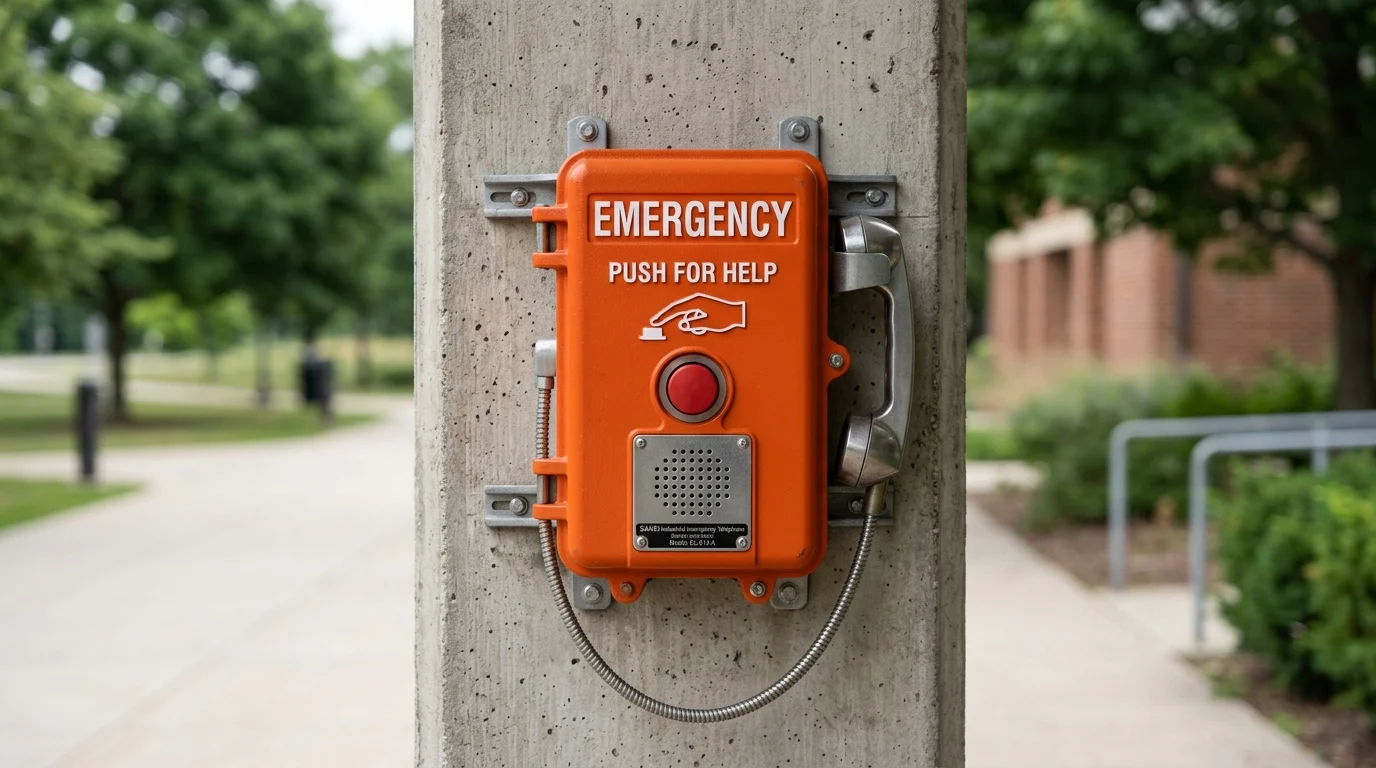
Public spaces need more than personal smartphones to ensure reliable access to help. Emergency telephones add a fixed, visible, and resilient communication layer that remains available when mobile networks are congested, batteries fail, or callers cannot clearly explain their location. Their value goes beyond convenience: they support faster dispatch, strengthen duty-of-care obligations for campuses, transit systems, and municipalities, and create dependable contact points during high-stress incidents. This article examines how emergency telephones fit into modern public safety infrastructure, where they deliver the greatest operational benefit, and why they remain essential even in an era dominated by mobile devices.
Why Emergency Telephones Matter in Public Safety
Emergency telephones represent a foundational layer of public safety infrastructure, serving as dedicated, highly visible communication nodes that bypass the vulnerabilities of personal mobile devices. As municipalities, transit authorities, and campus administrators evaluate their security postures, the integration of hardened communication endpoints remains a critical strategy for mitigating risk and ensuring rapid emergency response.
While ubiquitous smartphone ownership has transformed how individuals access emergency services, institutional duty-of-care mandates require fail-safe mechanisms. Emergency telephones provide an immediate, location-aware lifeline that integrates seamlessly with centralized dispatch centers, establishing a resilient communication backbone for public spaces.
How emergency telephones improve resilience when mobile networks fail
The reliance on consumer mobile networks introduces significant vulnerability during localized crises. During mass casualty events, natural disasters, or severe weather, commercial cellular networks frequently experience congestion, dropping call success rates to below 20% in densely populated areas. Furthermore, mobile devices rely on battery power and localized cell towers, both of which are susceptible to failure during extended power outages.
Hardwired emergency telephones, conversely, operate on isolated communication pathways. Analog lines can draw power directly from the central office, while modern Voice over IP (VoIP) systems utilize Power over Ethernet (PoE) backed by uninterruptible power supplies (UPS) and generator redundancies. This architectural isolation ensures that when commercial networks fail, the public safety infrastructure remains fully operational and capable of routing distress calls to emergency operators without delay.
Which public environments benefit most from emergency telephones
High-traffic and geographically isolated public environments derive the greatest utility from dedicated emergency communication endpoints. Transit hubs, including subterranean subway stations and expansive airport terminals, often suffer from poor cellular penetration, making hardwired endpoints essential. Similarly, large university campuses and medical centers utilize highly visible “blue light” emergency towers to deter crime and provide immediate access to campus security.
In remote environments such as national parks, highway call boxes, and industrial facilities, emergency telephones bridge vast connectivity gaps. Data indicates that campuses equipped with comprehensive blue light phone networks achieve average security response times of under 90 seconds, a stark contrast to the 3 to 5 minutes typically required when routing calls through municipal 911 dispatch centers before reaching local campus security.
Technical and Functional Requirements for Emergency Telephones
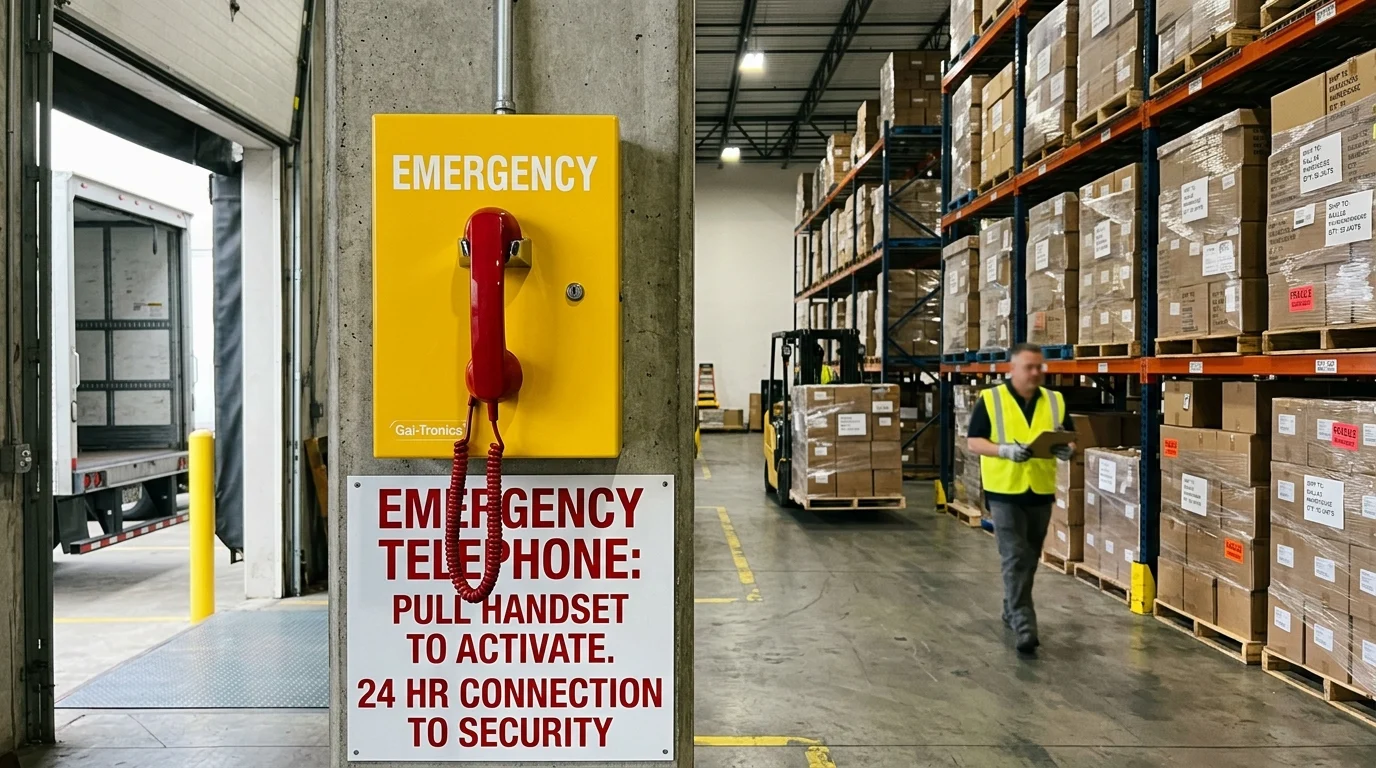
The specification and selection of emergency telephones require a rigorous technical evaluation to ensure operational reliability in hostile environments. Modern endpoints have evolved from simple analog circuits to sophisticated, network-connected devices capable of self-diagnostics, video integration, and mass broadcasting.
Which core specifications matter most in emergency telephones
To guarantee survivability, emergency telephones must meet stringent environmental and durability standards. Ingress Protection (IP) ratings are paramount; outdoor units typically require an IP66 or IP67 certification to withstand heavy rain, dust, and direct water jets. Similarly, impact resistance is quantified by the IK scale, with high-risk public deployments necessitating IK09 or IK10 ratings to survive severe vandalism attempts using tools or blunt force.
Operating temperature ranges must accommodate regional climate extremes, with industrial-grade units specified to function seamlessly from -40°C to +70°C. Furthermore, reliability engineers look for a Mean Time Between Failures (MTBF) exceeding 50,000 hours. Acoustic performance is equally critical; full-duplex communication with active ambient noise cancellation is required to ensure voice clarity in environments where background noise routinely exceeds 85 decibels, such as alongside active railways or highways.
How analog, VoIP, cellular, and networked emergency telephones compare
The underlying transmission technology dictates the system’s scalability, power requirements, and integration capabilities. The industry is currently undergoing a massive migration from legacy copper infrastructure to IP-based solutions.
| Technology Type | Infrastructure Requirement | Power Source | Key Advantage | Primary Limitation |
|---|---|---|---|---|
| Analog (POTS) | Copper wiring | Line power (Central Office) | Operates during local power loss | Copper network obsolescence |
| VoIP (SIP) | Cat5e/Cat6 or Fiber | PoE / PoE+ | Advanced integration, self-diagnostics | Distance limits (100m on copper) |
| Cellular (4G/5G) | SIM card & network signal | Solar or local AC/DC | No trenching required | Recurring data costs, signal drops |
| Wi-Fi / Mesh | Wireless access points | Local AC/DC | Rapid deployment in covered areas | Susceptible to RF interference |
Organizations must weigh these architectural differences against their existing infrastructure. While VoIP provides the most robust feature set for enterprise integration, cellular solutions often present the most cost-effective deployment model for remote perimeters where trenching fiber is financially prohibitive.
What criteria help buyers evaluate emergency telephone systems
When evaluating system architectures, buyers must scrutinize both the physical deployment constraints and the software ecosystem. Power delivery is a primary consideration; while PoE simplifies installation by combining power and data, standard Ethernet is limited to cable runs of 100 meters. Extending beyond this requires fiber optic cabling with media converters or localized power injection.
Additionally, standard compliance is non-negotiable. Buyers should mandate adherence to open Session Initiation Protocol (SIP) standards rather than proprietary communication protocols. Open SIP ensures that the emergency telephones can register with virtually any modern Private Branch Exchange (PBX) or unified communications platform, preventing vendor lock-in and extending the viable lifecycle of the hardware investment.
Compliance, Risk Management, and System Integration
Navigating the regulatory landscape is a critical phase of emergency telephone deployment. Failure to adhere to local, federal, and industry-specific mandates not only compromises public safety but exposes organizations to severe legal and financial liabilities.
Which codes, accessibility rules, and duty-of-care requirements apply
In the United States, the Americans with Disabilities Act (ADA) dictates strict physical and functional parameters for emergency communication devices. Hardware must be installed so that operable parts, such as push buttons, are located between 15 and 48 inches above the finished floor to accommodate wheelchair users. Furthermore, the devices must offer hands-free operation, tactile Braille signage, and visual indicators (such as a strobe or LED) to acknowledge that a call has been connected for the hearing impaired.
Beyond ADA, specific building codes like NFPA 72 govern the survivability of emergency communication circuits, often requiring two-hour fire-rated cabling in high-rise applications. In the elevator sector, ASME A17.1 and European standard EN 81-28 mandate continuous line monitoring and two-way communication capabilities. Organizations failing to meet these accessibility and safety standards face significant risk; a first-time ADA violation can result in federal civil penalties exceeding $75,000, alongside potential civil litigation stemming from a failure in the duty of care.
How emergency telephones should integrate with dispatch and notification systems
Modern emergency telephones are no longer standalone devices; they act as critical triggers within a broader unified security ecosystem. Utilizing open SIP protocols and Application Programming Interfaces (APIs), these endpoints seamlessly integrate with centralized Video Management Systems (VMS) and physical access control platforms.
When a user presses the emergency button, the system can automatically direct Pan-Tilt-Zoom (PTZ) surveillance cameras to slew to the device’s location, typically within 500 milliseconds. This provides dispatchers with immediate situational awareness before they even speak to the caller. Additionally, integration with mass notification systems allows security personnel to utilize the high-decibel public address speakers built into many emergency towers to broadcast evacuation instructions or severe weather alerts across a campus or transit facility.
Procurement, Deployment, and Maintenance Best Practices
Effective procurement and deployment of emergency telephones demand a lifecycle management approach. From initial site surveys to ongoing maintenance protocols, careful planning ensures the infrastructure remains reliable and cost-effective over its projected 10- to 15-year lifespan.
What steps organizations should follow for site assessment and deployment
Deploying an emergency telephone network begins with a comprehensive site assessment focused on visibility, accessibility, and infrastructure availability. Planners must map out high-risk zones, such as isolated parking structures, pedestrian walkways, and subterranean transit levels. A standard deployment metric in parking garages dictates placing one emergency phone every 200 feet, ensuring that a user is never more than a short sprint from assistance and that the devices serve as a continuous visual deterrent to criminal activity.
During the assessment, engineers must identify existing conduit pathways, power availability, and network topology. Line-of-sight studies are crucial for outdoor environments, particularly when utilizing solar-powered cellular towers, to ensure adequate sun exposure and optimal antenna positioning for cellular backhaul. Detailed site surveys prevent costly change orders during the installation phase and ensure that the final deployment meets both coverage and compliance objectives.
Which cost drivers, service models, and maintenance routines matter most
The Total Cost of Ownership (TCO) for emergency telephones extends far beyond the initial hardware purchase. Organizations must account for trenching, cabling, licensing, and ongoing maintenance.
| Cost Component | Typical Expense Range (Per Unit) | Frequency | Key Driver |
|---|---|---|---|
| Hardware (Endpoint) | $500 – $3,500 | One-time | IP/IK ratings, integrated cameras, tower structures |
| Installation/Trenching | $1,000 – $10,000+ | One-time | Distance to network closet, concrete cutting, fiber runs |
| Connectivity (Cellular/POTS) | $15 – $50 / month | Recurring | Carrier data plans, copper line tariffs |
| Software Licensing | $0 – $150 / year | Recurring | Proprietary PBX fees, cloud management platforms |
To mitigate maintenance costs and ensure reliability, organizations must implement automated monitoring routines. Modern VoIP emergency telephones support automated SIP polling, which pings the device every 12 to 24 hours to verify network connectivity, microphone functionality, and speaker integrity. This remote diagnostic capability drastically reduces the need for manual, in-person testing, lowering operational expenditure while ensuring the system is ready to perform during a crisis.
How to Prioritize Emergency Telephone Investments
Resource allocation for public safety infrastructure requires a strategic approach to balance immediate security needs with long-term financial sustainability. Prioritizing emergency telephone investments involves assessing risk profiles, regulatory pressures, and the technological trajectory of the telecommunications industry.
What decision framework balances coverage, compliance, risk, and budget
A robust decision framework begins with a localized risk matrix, plotting the probability of security incidents against the potential impact on human safety. High-risk, low-visibility zones—such as remote campus perimeters, unmonitored stairwells, and late-night transit platforms—must receive immediate prioritization for hardware deployment.
Budget constraints often dictate phased rollouts. With fully integrated tower systems costing upwards of $5,000 to $8,000 per endpoint when factoring in trenching and concrete pouring, organizations must balance ideal coverage with financial reality. A hybrid approach often yields the best results: deploying high-visibility, hardwired towers in primary pedestrian corridors, supplemented by cost-effective, wall-mounted cellular units in secondary locations. This balances the duty of care with capital expenditure limits.
Which upgrade and procurement choices support long-term value
Long-term value is heavily dependent on the procurement choices made today, particularly regarding the phase-out of legacy infrastructure. Following the FCC’s Order 19-72, which permits carriers to retire aging copper networks, investing in new POTS (Plain Old Telephone Service) lines is a stranded asset strategy. Organizations must prioritize the procurement of IP-based or cellular endpoints to ensure forward compatibility.
Strategic upgrades should focus on open-architecture hardware. By selecting SIP-compliant devices that do not require proprietary backend servers, organizations retain the flexibility to change their telecommunications providers or VMS platforms in the future without ripping and replacing the physical endpoints. This commitment to interoperability and standard compliance maximizes the lifecycle of the investment, ensuring that the emergency telephone network remains a resilient, adaptable cornerstone of public safety infrastructure for decades.
Key Takeaways
- The most important conclusions and rationale for Emergency Telephones
- Specs, compliance, and risk checks worth validating before you commit
- Practical next steps and caveats readers can apply immediately
Frequently Asked Questions
Why install emergency telephones if most people have smartphones?
They provide a fixed, visible, location-aware call point that still works when mobile batteries die or cellular networks are congested.
Where are emergency telephones most effective?
They work best in transit hubs, campuses, highways, parks, and industrial sites where coverage is weak, distances are large, or rapid local response is critical.
What specifications should an outdoor emergency telephone have?
Look for at least IP66/IP67, IK09/IK10, clear full-duplex audio, and a wide operating range such as -40°C to +70°C for reliable outdoor service.
Should I choose analog or VoIP emergency telephones?
Use analog where line-powered resilience matters and copper exists. Choose VoIP/SIP for easier integration, monitoring, and scaling with PoE-backed networks.
Can Siniwo emergency telephones be used in hazardous or harsh environments?
Yes. Siniwo supplies weatherproof and explosion-proof emergency communication products for mining, oil and gas, transportation, maritime, and other demanding sites.
Post time: May-26-2026