
A PA horn speaker is most effective when it can deliver clear voice instructions above machinery noise, wind, and reverberation. This guide explains how to compare specifications, match them to site conditions, and request accurate quotes for project use.
Article Outline
- What a PA horn speaker does in an industrial PA system
- Key specifications that affect performance and compliance
- How to compare outdoor, hazardous-area, and general-purpose loudspeakers
- Where these products are used in factories, ports, mines, and plants
- How to request quotes and shortlist suppliers objectively
What a PA Horn Speaker Does in an Industrial PA System
A PA horn speaker is a directional audio device designed to project speech over long distances in noisy environments. In industrial settings, it is usually part of a broader PA system used for announcements, alarms, evacuation, and shift coordination.
Industrial facilities often need intelligible speech rather than simple sound output. OSHA notes that 85 dBA over an 8-hour time-weighted average triggers a hearing conservation program, which shows how quickly workplace noise can become a communication problem. In practice, that is why outdoor horns and rugged loudspeakers are specified for plants, ports, and transport sites. OSHA Occupational Noise Exposure Overview and OSHA 29 CFR 1910.95 are useful references for understanding the noise context.
For buyers, the main question is not whether the speaker can make noise. The real question is whether it can deliver intelligible voice at the right coverage angle, with enough durability for the site.
Key Specifications to Compare Before Requesting Quotes
The best quote starts with the right specification list. A serious industrial loudspeaker comparison should include ingress protection, acoustic output, line voltage, enclosure material, mounting style, and certification scope.
Comparison Table: Core Selection Factors for PA Horn Speaker Projects
| Specification | Why It Matters | Typical Project Impact |
|---|---|---|
| IP rating | Shows resistance to dust and water | Important for outdoor, marine, and washdown areas |
| Sound pressure level | Indicates how far speech can carry | Critical in noisy plants and open yards |
| 70V/100V line compatibility | Simplifies multi-speaker distribution | Useful for large PA system layouts |
| Housing material | Affects corrosion and impact resistance | Important in ports, steel mills, and chemical sites |
| Certification | Supports compliance and procurement approval | Needed for hazardous or regulated areas |
IP ratings are often the first filter for outdoor use. NEMA explains that enclosure types are designed to protect equipment from dirt, rain, sleet, snow, and other environmental conditions, while IECEx focuses on equipment used in explosive atmospheres. NEMA Enclosure Types and IECEx Standards are authoritative starting points for procurement teams.
For hazardous locations, certification matters as much as acoustics. IECEx states that its scheme is for equipment used in explosive atmospheres, and it operates through international standards and approved certification bodies. If the project is in a petrochemical unit, offshore platform, or mining zone, the compliance file should be checked before any price comparison. IECEx Overview and IECEx Guides are helpful for this review.
Comparison Table: Outdoor Horn Speaker vs Industrial Loudspeaker vs Explosion-Proof Speaker
| Type | Best Use Case | Selection Priority |
|---|---|---|
| Outdoor horn speaker | Open yards, stations, campuses, and general PA coverage | Coverage angle and weather resistance |
| Industrial loudspeaker | Factories, warehouses, and plant rooms | Speech clarity and mounting flexibility |
| Explosion-proof speaker | Hazardous zones in oil, gas, and chemical plants | Certification and enclosure integrity |
In many projects, the speaker is only one part of the system. NEMA notes that enclosures protect electrical equipment in industrial and utility applications, which is relevant when speakers are paired with junction boxes, poles, or control enclosures. That is why installation hardware should be reviewed together with the audio device. NEMA Enclosures supports this broader view.
How Industrial Noise Changes Speaker Selection
Industrial noise changes the selection rule because intelligibility matters more than raw volume. A speaker that sounds loud in a showroom may fail in a refinery, steel mill, or tunnel if it cannot cut through background noise.
OSHA’s noise guidance emphasizes that exposure is measured in dBA and that engineering controls should reduce noise at the source or along the path. In PA design, the same logic applies in reverse: the speaker must overcome the ambient sound field without creating unnecessary distortion. OSHA Noise Exposure Controls is a practical reference for this principle.
For this reason, many engineers specify horn-loaded designs for long throw and ceiling or wall speakers for distributed coverage. The right choice depends on whether the site needs focused projection, wide-area paging, or both.
Common Industrial Applications for PA Horn Speaker Projects
The most suitable industrial loudspeaker is usually determined by the site, not the catalog. Ports, mines, offshore platforms, power plants, and steel mills each have different acoustic and environmental demands.
- Oil and gas: hazardous-area alerting, shift announcements, and emergency evacuation.
- Marine and offshore: corrosion resistance, wind noise tolerance, and long-range paging.
- Mining and tunnels: high noise, dust, vibration, and emergency coordination.
- Steel mills and heavy manufacturing: speech intelligibility near machinery and conveyors.
- Warehouses and logistics hubs: area paging, alarm messaging, and dispatch coordination.
These use cases often require more than a single speaker model. A project may combine horn speakers for outdoor coverage, wall speakers for interior zones, and explosion-proof units for restricted areas. That is why system compatibility should be checked before final quotation.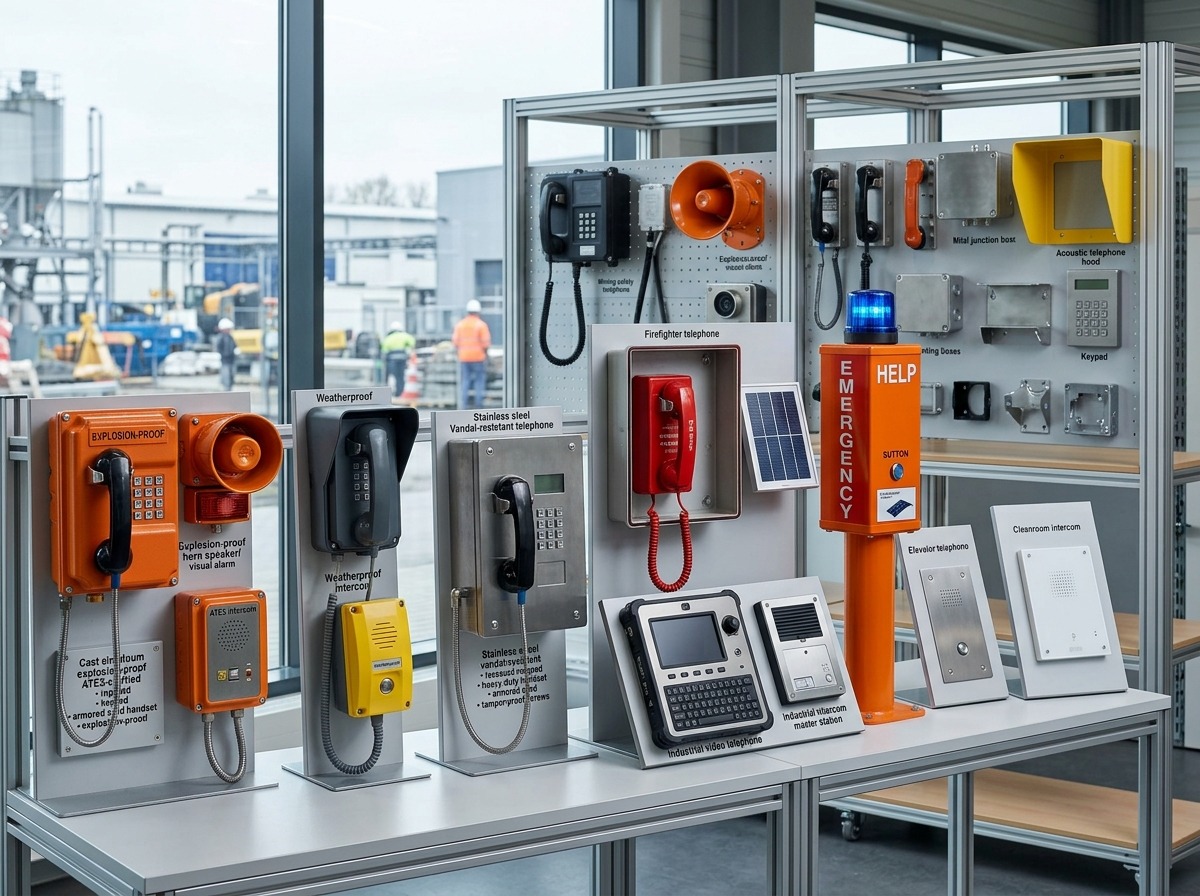
What to Ask When Requesting Custom Quotes
A useful quote request should describe the site, not only the product name. Buyers should provide mounting height, coverage distance, ambient noise level, power line preference, environmental exposure, and any certification requirement.
Table: Quote Request Checklist for a PA System Project
| Information to Provide | Why the Supplier Needs It |
|---|---|
| Site type and industry | Determines environmental and compliance needs |
| Coverage distance | Helps estimate speaker quantity and output level |
| Noise level and background conditions | Supports intelligibility planning |
| Indoor or outdoor installation | Affects IP rating and housing selection |
| Hazardous-area classification | Determines whether explosion-proof equipment is required |
| Power and integration method | Confirms 70V/100V line or low-impedance compatibility |
When a supplier receives this information, the quote is usually more accurate and easier to compare. It also reduces the risk of over-specifying the system, which can raise cost without improving performance.
Related Resources and Product Categories
For buyers who are comparing complete industrial communication systems, a supplier should be able to support multiple product categories, not only one speaker model. On the target site, relevant product groups include industrial communication systems, public address system products, and horn speaker solutions.
Project teams that also need emergency communication, outdoor paging, or hazardous-area coverage should review the broader product catalog and the site’s main domain for related system components. This is especially useful when the PA system must integrate with intercom, emergency phone, or alarm functions.
For mining-related projects, the site’s mining communication category can also be relevant when the PA system is part of a larger safety network. Buyers should confirm whether the speaker, enclosure, and mounting hardware match the site’s safety plan before requesting a final price.
Selection Summary for Procurement Teams
The best PA horn speaker is the one that matches the site’s acoustics, environment, and compliance requirements. A strong procurement decision balances speech intelligibility, weather resistance, certification, and installation practicality.
For general industrial use, a weatherproof horn with the right coverage pattern is often enough. For petrochemical, offshore, or mining projects, certification and enclosure integrity become the deciding factors. For steel mills, ports, and power plants, output level and corrosion resistance usually matter most.
In short, buyers should ask for a quote only after defining the application, the noise environment, and the required standards. That approach produces better technical proposals and fewer installation surprises.
FAQ
1. What is the difference between a PA horn speaker and an industrial loudspeaker?
A PA horn speaker is usually directional and designed for long-throw speech projection. An industrial loudspeaker may use a different acoustic pattern for broader indoor coverage. The right choice depends on whether the site needs focused alerting, distributed paging, or a mix of both.
2. Do I need an explosion-proof speaker for every outdoor industrial site?
No. Explosion-proof equipment is only needed where hazardous atmospheres may exist, such as oil, gas, chemical, or certain mining areas. Many outdoor sites only need weatherproof or vandal-resistant speakers with the correct IP rating and mounting hardware.
3. Why are 70V and 100V line systems common in PA system projects?
They simplify multi-speaker distribution over long distances and reduce wiring complexity. This is useful in factories, campuses, ports, and plants where many speakers are installed across large areas. The final choice depends on amplifier design and system architecture.
4. What technical data should be included in a quote request?
At minimum, include site type, coverage distance, ambient noise, indoor or outdoor exposure, mounting height, and certification needs. If the project is regulated, add hazardous-area classification, preferred line voltage, and any integration requirements with alarms or intercom systems.
5. How can I tell whether a speaker will work in a noisy plant?
Check the sound pressure level, coverage pattern, and intended application. Also compare the design against the ambient noise conditions. In very loud environments, intelligibility testing or a system-level design review is often more reliable than relying on catalog volume claims alone.

June Lau
Post time: Jun-30-2026