
Introduction
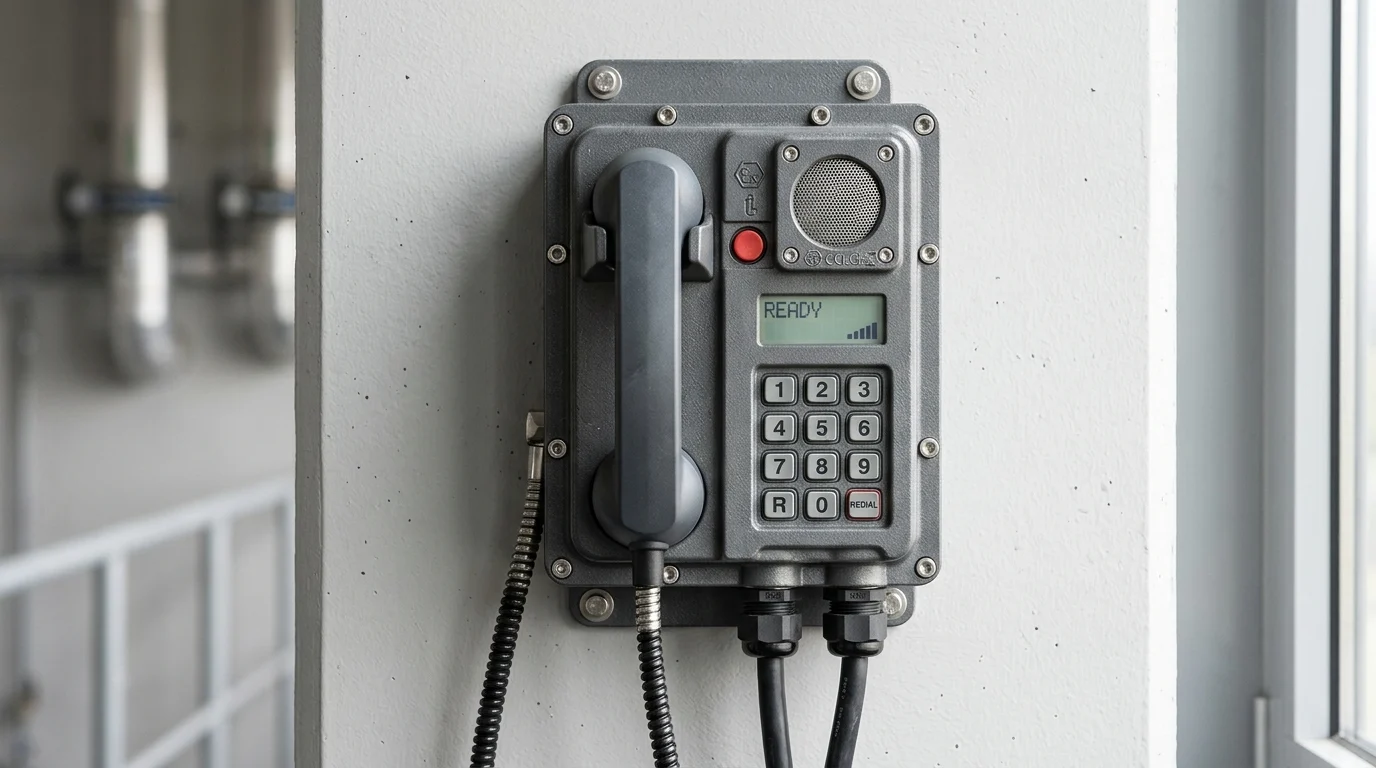
Choosing between an explosion proof telephone and a weatherproof phone starts with understanding the difference between hazardous-area protection and basic environmental resistance. Although both are built for demanding sites, they solve different problems: one is designed to prevent ignition in volatile atmospheres, while the other is intended to keep working in rain, dust, and temperature extremes. This guide explains how their construction, certifications, and intended use diverge, so you can match the phone to the actual risks on site. By the end, you will be able to compare safety requirements, compliance needs, and deployment scenarios with far greater confidence.
Why the explosion proof vs weatherproof phone choice matters
Specifying industrial communication equipment requires a precise understanding of ambient environmental stressors and facility risk profiles. When evaluating heavy-duty telecommunications, the distinction between an explosion proof telephone and a standard weatherproof unit is not merely a matter of durability—it is a fundamental divergence in engineering philosophy.
Industry data indicates that up to 40% of critical communication network failures in heavy industrial environments stem from deploying hardware with inadequate environmental or hazardous area ratings. Selecting the correct housing and certification type is paramount to ensuring continuous operational uptime and maintaining strict site safety compliance.
Risk environment, uptime, and safety obligations
Regulatory frameworks mandate strict adherence to safety protocols in environments where volatile substances are present. Facility operators face severe legal and financial obligations under frameworks such as OSHA, ATEX, and IECEx.
The primary goal of an explosion proof telephone is to ensure that the device itself cannot act as an ignition source. In contrast, a weatherproof phone is designed solely to maintain its own operational uptime against meteorological and physical ingress. Failing to specify the correct rating can result in catastrophic facility damage, compromised life safety, and regulatory fines frequently exceeding $100,000 per violation.
Operating contexts that drive the decision
The operating context dictates the baseline requirements for device specification. Non-hazardous heavy industries, such as commercial ports, railway tunnels, and highway emergency systems, demand robust resistance to moisture, dust, and vandalism. In these contexts, a weatherproof phone provides the necessary resilience.
Conversely, downstream oil and gas refineries, petrochemical processing plants, and grain handling facilities feature atmospheres laden with combustible gases, vapors, or combustible dust. These contexts require equipment engineered to contain internal sparks or thermal events, making the explosion proof telephone a non-negotiable requirement for legal compliance and operational safety.
Key differences between explosion proof and weatherproof phones
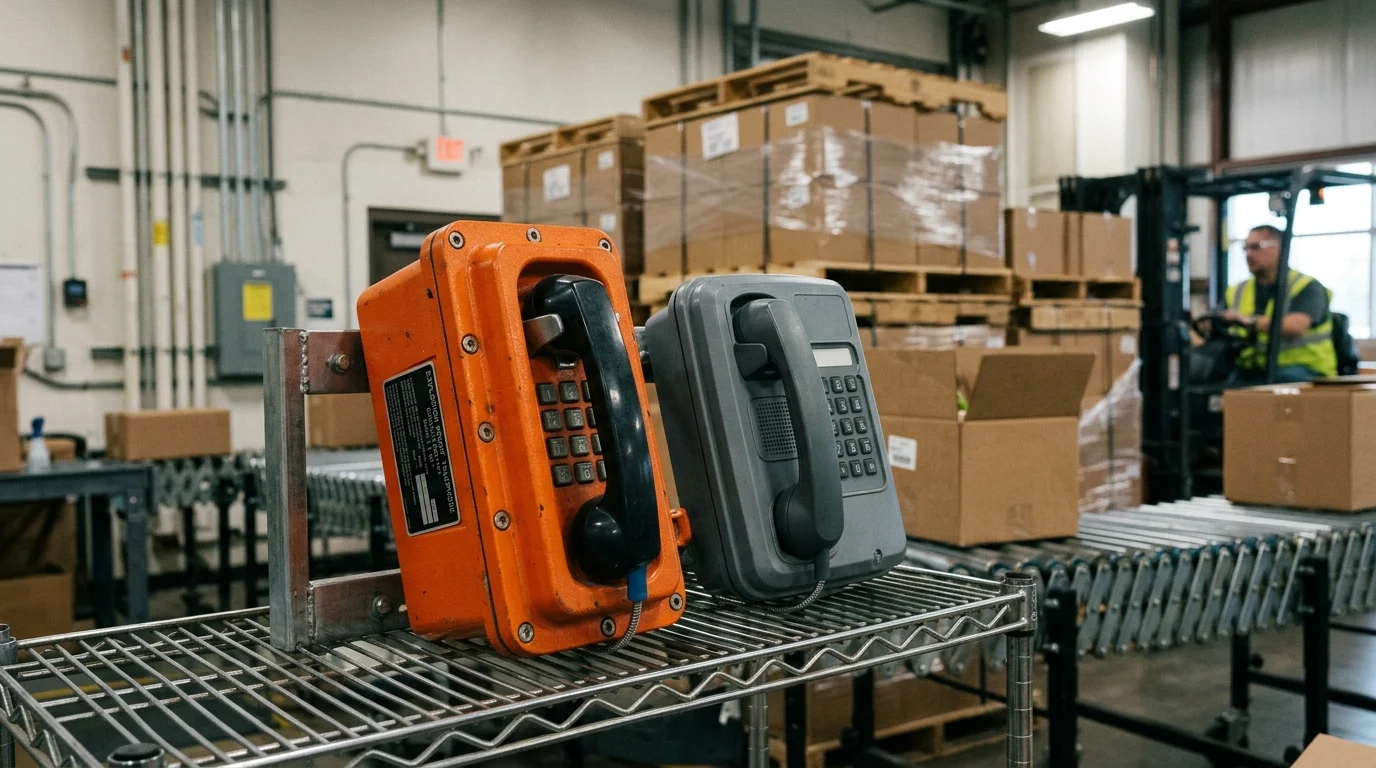
While both device categories feature ruggedized external housings, high-visibility colors, and heavy-duty handsets, their internal architecture and certification pathways are entirely different. Understanding these mechanical and electrical variances is critical for engineering teams tasked with procurement.
How explosion proof phones contain ignition risk
An explosion proof telephone relies on rigorous containment strategies, typically utilizing Flameproof (Ex d) or Intrinsically Safe (Ex i) design principles. In a flameproof design, the enclosure is constructed from heavy-duty materials—often 5mm to 8mm thick die-cast aluminum alloy or specialized glass-reinforced polyester (GRP)—engineered to withstand the pressure of an internal explosion.
Machined labyrinth joints and tight dimensional tolerances ensure that any escaping gases are cooled below the ignition temperature of the surrounding atmosphere. Alternatively, intrinsic safety restricts the electrical energy within the circuitry to levels below the minimum ignition energy (MIE) of the hazardous gas, often keeping spark energy strictly below 0.2 millijoules.
How weatherproof phones resist water, dust, and impact
Weatherproof phones prioritize ingress protection against environmental elements rather than ignition containment. These devices utilize thick silicone gaskets, conformal-coated printed circuit boards (PCBs), and sealed cable entries to prevent water and particulate intrusion.
High-quality weatherproof units typically achieve an Ingress Protection rating of IP66 or IP67, meaning they are entirely dust-tight and can withstand powerful water jets or temporary submersion. Their operating temperature ranges are optimized for extreme climates, reliably functioning from -40°C to +70°C, and their enclosures are often built to resist severe mechanical impacts, frequently achieving IK09 or IK10 ratings.
Standards, ratings, and markings to compare
Comparing the two requires a clear understanding of international industrial standards and equipment markings. Explosion proof devices carry complex nomenclature detailing their exact safe operating parameters, whereas weatherproof devices rely primarily on IP and IK rating systems.
| Feature/Metric | Explosion Proof Telephone | Weatherproof Phone |
|---|---|---|
| Primary Standard | ATEX, IECEx, UL/CSA HazLoc | IEC 60529 (IP), EN 62262 (IK) |
| Design Objective | Prevent ignition of surrounding atmosphere | Protect internal components from elements |
| Typical Housing | Ex d (Flameproof) Aluminum / Ex e GRP | Standard GRP, Cold-rolled steel, Aluminum |
| Cost Multiplier | 3.0x – 5.0x base cost | 1.0x base cost |
| Key Markings | Ex db IIC T6 Gb, II 2G | IP66, IP67, IK10 |
How to compare explosion proof and weatherproof phones
Selecting the appropriate industrial communication device requires a comprehensive evaluation matrix that goes beyond the initial purchase price. Because an explosion proof telephone typically carries a 3x to 5x cost multiplier compared to a standard weatherproof unit, engineers must carefully weigh technical specifications against lifecycle maintenance demands.
Core technical selection criteria
Core technical criteria must align with the acoustic and environmental demands of the deployment zone. Both types of phones require high-output audio capabilities to overcome ambient industrial noise; ringers must typically produce sound pressure levels exceeding 85 dB(A) at a one-meter distance.
Mean Time Between Failures (MTBF) is another critical metric, with premium industrial models expected to deliver >50,000 hours of continuous reliability. The choice of housing material—whether marine-grade stainless steel (SUS316L) for highly corrosive offshore environments or impact-resistant GRP—must be specified based on chemical exposure and UV degradation risks.
Certification, maintenance, and spare parts
The certification and maintenance lifecycle presents the most significant operational divergence between the two options. An explosion proof telephone requires strict adherence to its certification parameters throughout its operational life.
Any replacement parts, from handset cords to internal relays, must be certified components supplied by the original manufacturer to maintain the ATEX or IECEx rating. Unauthorized modifications automatically void the safety certificate. Conversely, weatherproof phones offer more flexible maintenance protocols, allowing maintenance teams to perform standard component-level repairs without jeopardizing regulatory compliance.
Installation, cabling, grounding, and inspection
Installation complexity heavily influences the total cost of deployment. Explosion proof installations mandate specialized Ex-certified cable glands (such as barrier glands filled with compound) to prevent gas migration through the cable core.
Grounding protocols are exceptionally stringent, often requiring equipotential bonding with earth resistance verified at < 1 ohm. Furthermore, explosion proof equipment is subject to mandatory periodic inspections under standards like BS EN 60079-17, requiring specialized personnel to verify joint tolerances and seal integrity. Weatherproof phones require standard IP-rated nylon or brass glands and follow standard industrial electrical installation codes, significantly reducing labor hours and inspection overhead.
When to specify an explosion proof phone
The threshold for specifying an explosion proof telephone over a weatherproof alternative is dictated exclusively by the formal hazardous area classification of the installation site. Facility engineers conduct comprehensive risk assessments to map areas where combustible materials are present, directly dictating equipment selection.
Hazardous area classification and process conditions
Hazardous areas are classified into Zones (European/IECEx system) or Divisions (North American system) based on the frequency and duration of explosive atmospheres. Telephones deployed in these areas must correspond exactly to the designated classification.
| Area Classification | Presence of Hazard | Required Equipment Rating |
|---|---|---|
| Safe Area | None | Weatherproof Phone (IP66/IP67) |
| Zone 2 / Div 2 | Abnormal conditions only (short duration) | Ex n, Ex ec, or Ex d (Explosion Proof) |
| Zone 1 / Div 1 | Normal operations (likely to occur) | Ex d, Ex i, Ex e (Explosion Proof) |
| Zone 0 | Continuous or long periods | Ex ia (Highly specialized Intrinsically Safe) |
Common specification mistakes to avoid
Procurement and engineering teams frequently encounter specification errors that compromise safety or inflate budgets. A common mistake is over-specifying—deploying an explosion proof telephone in an unclassified Safe Area merely for perceived durability, thereby wasting capital expenditure and complicating future maintenance.
Conversely, under-specifying by placing a standard weatherproof phone in a Zone 2 area because the space is deemed “well-ventilated” introduces severe catastrophic risk. Another frequent oversight is ignoring the specific Gas Group and Temperature Class. For example, an environment containing hydrogen requires a strict Group IIC rating, and equipment must carry an appropriate temperature class (such as T6, ensuring maximum surface temperatures never exceed 85°C) to prevent auto-ignition of the specific ambient chemicals.
How procurement teams can make the right choice
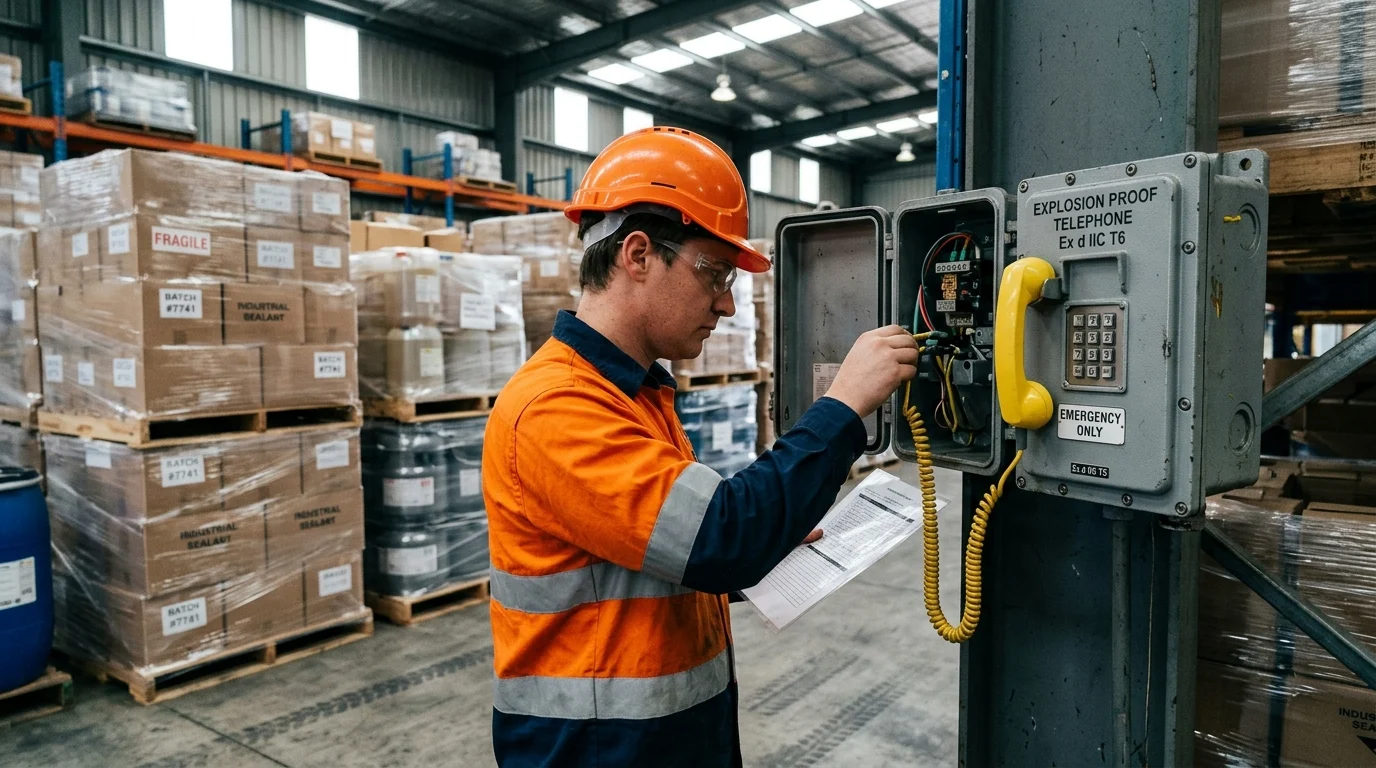
For procurement teams, bridging the gap between stringent engineering mandates and commercial realities requires a structured approach. Selecting the correct industrial telephone involves balancing safety compliance, integration capabilities, and commercial viability over the equipment’s lifespan.
A step-by-step evaluation process
A robust evaluation process begins with a formal audit of the site’s area classification drawings to confirm whether an explosion proof telephone is legally required. Next, teams must define the communication protocol—deciding between standard analog, SIP/VoIP, or specialized optical fiber connections based on the existing PBX infrastructure.
Environmental stressors beyond explosion risks, such as extreme saline corrosion or ambient noise exceeding 100 dB, must be documented. Finally, procurement should calculate the Total Cost of Ownership (TCO) over a standard 10-year lifecycle, factoring in the higher initial capital expenditure, specialized installation labor, and mandated inspection costs of Ex-rated equipment versus standard weatherproof alternatives.
Final vendor decision criteria
When moving to the vendor selection phase, procurement managers must scrutinize several commercial and technical indicators. Verifiable third-party test reports and certificates from recognized notified bodies (such as TUV, PTB, or SGS) are mandatory for any explosion proof equipment; self-certification is unacceptable.
Supply chain logistics also play a crucial role, as specialized Ex equipment often carries lead times of 6 to 12 weeks, compared to the 2 to 4 weeks typical for weatherproof units. Teams should also negotiate Minimum Order Quantities (MOQs) for spare parts and demand comprehensive warranty terms, prioritizing vendors that offer 24 to 36 months of coverage alongside guaranteed long-term availability of certified replacement components.
Key Takeaways
- The most important conclusions and rationale for Explosion Proof Telephone
- Specs, compliance, and risk checks worth validating before you commit
- Practical next steps and caveats readers can apply immediately
Frequently Asked Questions
When should I choose an explosion proof telephone instead of a weatherproof phone?
Use an explosion proof telephone in hazardous areas with combustible gas, vapor, or dust, such as oil, gas, chemical, or grain sites. Choose weatherproof phones for rain, dust, and outdoor abuse only.
Are weatherproof phones safe for hazardous zones?
No. A weatherproof phone resists water, dust, and impact, but it is not designed to prevent ignition. For classified hazardous areas, use ATEX or IECEx certified explosion proof models.
What certifications should I check before buying an explosion proof telephone?
Confirm the exact hazardous-area certification, such as ATEX or IECEx, plus the gas or dust group, temperature class, and zone marking. Also verify CE, FCC, or ROHS if your project requires them.
Does Siniwo provide both explosion proof and weatherproof industrial phones?
Yes. Siniwo supplies explosion-proof and weatherproof telephones, intercoms, and emergency communication products for harsh industrial environments, with design, integration, installation, and maintenance support.
How can I select the right phone for my site conditions?
Start with your site risk assessment: hazardous classification, indoor or outdoor use, IP/IK needs, temperature range, and network type such as analog, SIP, or VoIP. Then match the model to those requirements.
Post time: Apr-29-2026