
Introduction
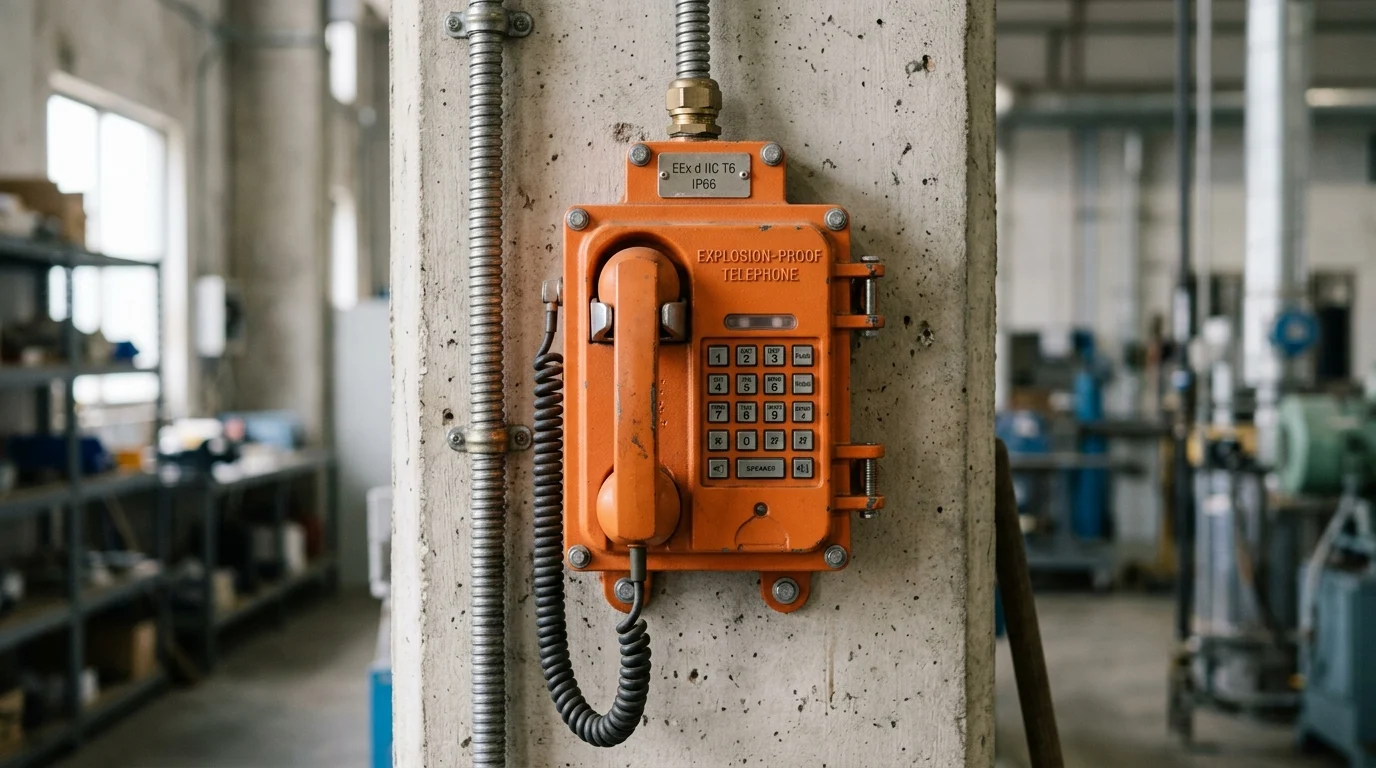
In hazardous industrial environments, a telephone is part of the safety system, not just a communication tool. The right explosion proof telephone must do more than survive dust, moisture, and corrosion; it must prevent ignition risks while staying reliable during alarms, shutdowns, and routine operations. This article highlights the features that matter most, from enclosure integrity and spark-resistant design to durability, audio clarity, and compliance with hazardous-area standards. By understanding these essentials, readers can evaluate equipment more confidently and choose a system that supports both regulatory requirements and fast, dependable communication when conditions are at their most critical.
Why Explosion Proof Telephone Selection Matters
Industrial facilities operating within volatile environments cannot rely on standard communication infrastructure. Deploying an explosion proof telephone is a strict engineering necessity for chemical plants, offshore platforms, and refineries where flammable gases, vapors, or combustible dust are present.
Selecting the correct communication apparatus goes beyond regulatory tick-boxing; it directly influences operational efficiency and emergency response times. When volatile atmospheric conditions mandate specialized equipment, understanding the core protective mechanisms of these devices becomes essential.
How explosion proof telephones reduce communication failures
Engineered with robust internal circuitry and encapsulated components, these devices prevent electrical arcing from igniting surrounding volatile atmospheres. High-grade models feature a Mean Time Between Failures (MTBF) exceeding 50,000 hours, ensuring continuous operability even in highly corrosive environments.
Integrating conformal-coated printed circuit boards (PCBs) protects against humidity and corrosive airborne particulates. By isolating the power supply and utilizing spark-proof switches, these telephones radically reduce failure rates compared to commercial-grade telephony, maintaining an open line of communication even when machinery automation fails.
What risks increase when hazardous area communication is inadequate
Without intrinsically safe or flameproof telecommunications, an industrial facility’s risk profile scales exponentially. The inability to broadcast emergency alerts or coordinate rapid manual shutdowns can turn minor localized events into catastrophic, facility-wide incidents.
A mere 60-second delay in halting a critical process—often due to a dropped call or disabled handset—can push pressure vessels past their safety thresholds. Furthermore, non-compliant devices introduce unacceptable ignition vectors. Installing standard electronics in a Zone 1 area carries a high statistical probability of triggering an explosion, risking multimillion-dollar liability claims, profound structural damage, and devastating human casualties.
Key Features to Prioritize
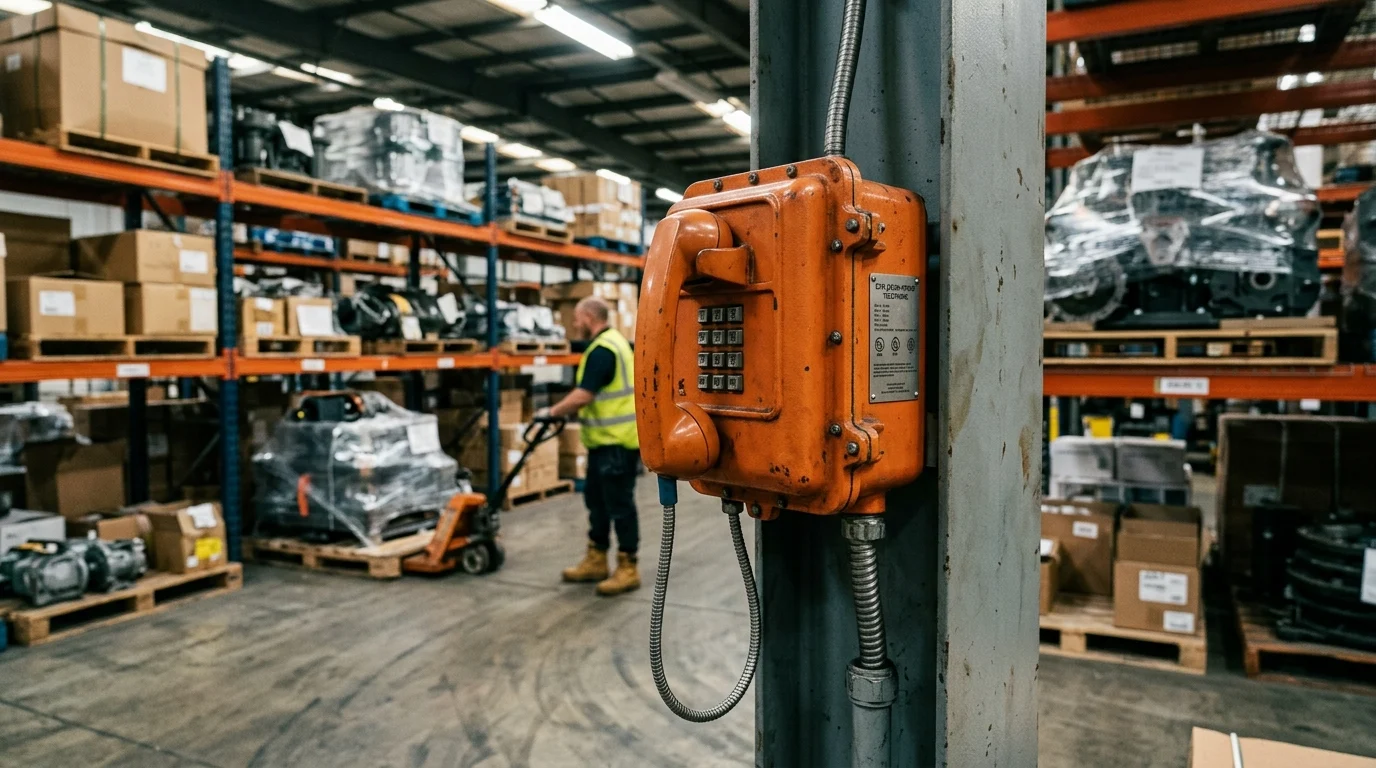
Specifying an explosion proof telephone requires a granular assessment of both mechanical resilience and electronic capabilities. Procurement engineers must move beyond basic functionality to evaluate hardware capable of withstanding extreme industrial punishment while maintaining crystal-clear signal transmission.
Hazardous area ratings, ingress protection, and enclosure durability
Enclosures must survive severe mechanical impacts, chemical exposure, and harsh weather. Standard specifications demand a minimum of IP66 or IP67 ingress protection, ensuring total defense against microscopic dust and high-pressure water jets during facility washdowns.
The enclosure material dictates long-term survivability. Glass-Reinforced Polyester (GRP) and copper-free cast aluminum are industry standards. They are frequently required to meet IK10 impact resistance ratings, meaning the enclosure can withstand 20 joules of impact energy without compromising its internal seal.
| Enclosure Material | Impact Resistance (IK Rating) | Corrosion Resistance | Typical Weight Range |
|---|---|---|---|
| Glass-Reinforced Polyester (GRP) | IK09 to IK10 | Excellent (Chemicals/Salt) | 3.5 kg – 5.0 kg |
| Copper-Free Cast Aluminum | IK10 | High (Requires Epoxy Coating) | 5.0 kg – 7.5 kg |
| 316L Stainless Steel | IK10+ | Superior (Offshore/Marine) | 6.5 kg – 9.0 kg |
Audio, signaling, and call handling essentials
In environments where ambient machinery noise routinely exceeds 85 dB, standard handset audio is virtually useless. Explosion proof telephones must incorporate active noise-canceling microphones capable of filtering out 30 to 40 dB of background noise, paired with high-gain receivers.
Integrated signaling features are equally critical. Secondary 110 dB sounders and high-intensity flashing LED beacons ensure incoming calls are visually and audibly acknowledged, even when personnel wear heavy-duty hearing protection.
Power supply, network interface, and redundancy options
Modern industrial telecommunications favor Voice over IP (VoIP) architectures, utilizing SIP protocols for seamless integration into existing PBX systems. These devices typically use Power over Ethernet (PoE) via IEEE 802.3af/at standards, drawing less than 15W per unit to vastly simplify cabling requirements.
For mission-critical zones, engineers should prioritize models featuring dual LAN ports for network redundancy. Localized backup power capacitors or integrated battery backups are also vital options, as they maintain signaling and call capabilities during transient micro-outages or primary power failures.
Compliance and Certification Requirements
Navigating the complex landscape of hazardous area certifications is non-negotiable for compliance and safety. An explosion proof telephone is only as reliable as the rigorous third-party testing it undergoes to secure regulatory approvals.
Certifications and markings to verify before purchase
Evaluating a device’s nameplate requires fluency in protection concepts such as Ex d (flameproof enclosures), Ex e (increased safety), or Ex i (intrinsic safety). Procurement teams must verify that the specific protection method aligns with the facility’s hazardous area classification.
A critical metric to verify is the Temperature Class (T-Class), which defines the maximum surface temperature the device will reach under fault conditions. For instance, a T6 rating guarantees the external surface will never exceed 85°C. This threshold makes it safe for environments containing highly volatile gases with low ignition temperatures, such as carbon disulfide. Verifying these markings ensures compatibility with the specific gas group present on site (e.g., IIA, IIB, or IIC).
ATEX, IECEx, and regional approval differences
Global operations must reconcile overlapping but distinct regulatory frameworks. The ATEX directive (2014/34/EU) is a legal prerequisite for installations within the European Union, dividing environments into Zones based on the frequency and duration of explosive atmospheres.
Conversely, IECEx provides a voluntary framework recognized internationally, streamlining compliance across borders. North American facilities operate under the NEC/CEC system, utilizing a Class and Division structure rather than the Zone system, which requires completely different product markings and testing protocols.
| Certification Framework | Region of Authority | Classification System | Example Marking |
|---|---|---|---|
| ATEX | European Union | Zones (0, 1, 2, 20, 21, 22) | II 2 G Ex db IIC T6 Gb |
| IECEx | International (Global) | Zones (0, 1, 2, 20, 21, 22) | Ex db eb IIC T5 Gb |
| NEC/CEC | North America | Classes and Divisions (1, 2) | Class I, Div 1, Groups A-D |
Comparing Suppliers and Product Reliability
Beyond the specification sheet, the long-term viability of an explosion proof telephone network depends heavily on the manufacturer’s operational maturity. Assessing supplier reliability prevents stranded assets and ensures communication continuity over the lifespan of the facility.
Criteria for comparing explosion proof telephones
When vetting hardware, procurement teams should demand empirical quality control data from prospective vendors. Tier-one suppliers typically demonstrate hardware defect rates below 0.5% and operate under strict ISO 9001:2015 quality management systems.
Warranty terms serve as an immediate proxy for product confidence. A baseline warranty of 24 to 36 months is standard for ruggedized telecom equipment; anything less may indicate substandard internal componentry or poor manufacturing tolerances unlikely to survive industrial deployment.
Supplier support, spare parts, and customization
The availability of modular replacement parts is vital for minimizing downtime. Key wear items, such as armored handset cords capable of withstanding 200 kg of pull strength or field-replaceable magnetic reed hook switches, must be easily sourced directly from the supplier.
Suppliers should also offer comprehensive technical support, including custom firmware configurations for complex SIP routing and PBX integration. Furthermore, supply chain agility matters heavily in project execution. Standard units should boast a lead time of 2 to 4 weeks, whereas heavily customized configurations—such as those requiring integrated fiber-optic transceivers or bespoke relay switches—may require 8 to 12 weeks.
Finalizing the Purchase Decision

The final phase of procurement demands a holistic analysis of plant infrastructure, lifecycle costs, and operational constraints. A structured evaluation guarantees that the chosen explosion proof telephone aligns with both engineering safety standards and financial allocations.
Step-by-step evaluation for engineering and procurement teams
The procurement process must begin with a rigorous site audit. Engineers must measure peak ambient noise levels; if readings consistently exceed 85 dB, acoustic hoods or noise-canceling booths must be factored into the installation plan to ensure intelligibility.
Next, the IT department must audit the network topology to confirm compatibility with the chosen SIP/VoIP codecs (such as G.711 or G.722) and ensure adequate switch port capacity and PoE power budgets. Finally, a physical layout review determines the necessary cable gland specifications—typically M20 or NPT threads—for secure, vapor-tight conduit integration.
Final decision criteria for plant requirements and budget
Balancing Capital Expenditure (CAPEX) with Operational Expenditure (OPEX) is the ultimate decision threshold. The unit cost for an explosion proof telephone typically ranges from $800 for a basic analog model to over $2,500 for an advanced VoIP unit equipped with integrated visual beacons and secondary control relays.
However, decision-makers must also calculate the total cost of ownership (TCO). Investing an additional 15 to 20% upfront for a highly durable, IP67-rated GRP model with dual-network redundancy often yields a significantly lower TCO over a 10-year lifecycle. This proactive investment drastically reduces maintenance interventions, minimizes spare parts inventory, and eliminates costly operational downtime caused by communication blackouts.
Key Takeaways
- The most important conclusions and rationale for Explosion Proof Telephone
- Specs, compliance, and risk checks worth validating before you commit
- Practical next steps and caveats readers can apply immediately
Frequently Asked Questions
What hazardous-area certification should an explosion proof telephone have?
Match the phone’s marking to your site classification, such as ATEX Ex d or Ex e for Zone 1/2 areas. Always verify the exact nameplate and certificate before purchase.
Which enclosure features matter most in harsh industrial sites?
Prioritize IP66 or IP67 sealing, IK10 impact resistance, and corrosion-resistant materials like GRP, copper-free aluminum, or 316L stainless steel for offshore or chemical environments.
How can an explosion proof telephone stay usable in very noisy plants?
Choose models with noise-canceling microphones, high-gain receivers, and optional 110 dB ringers with LED beacons so calls are noticed and understood above machinery noise.
Should I choose analog or VoIP for an explosion proof telephone?
VoIP is often best for modern plants because SIP phones integrate with IP PBX systems and can use PoE for simpler cabling. Use analog where legacy infrastructure must be retained.
Why buy from Siniwo for explosion proof telephones?
Siniwo provides one-stop industrial communication services, in-house manufacturing of most core components, and products aligned with certifications like ATEX, CE, FCC, ROHS, and ISO9001.
Post time: May-12-2026