

Emergency telephones provide you with immediate, reliable, and location-specific communication. They connect you directly to operators. This bypasses common mobile network limitations. A Highway telephone ensures rapid aid deployment. A railway emergency telephone enhances overall safety. These systems improve operational efficiency in critical environments. They are vital for effective traffic control communication.
Key Takeaways
- Emergency telephones provide immediate and reliable communication. They connect you directly to help. This is important on highways and railways.
- Personal mobile phones often fail in emergencies. They have no signal in some areas. Emergency telephones use their own networks to ensure a connection.
- Emergency telephones help operators respond quickly. They offer one-touch connection and show your exact location. This helps responders find you fast.
- These systems improve safety for everyone. They help authorities manage incidents better. They also reduce how long it takes for help to arrive.
- Emergency telephones are still important. They use new technology like IoT. They are built strong to work in bad weather.
The Critical Need for Dedicated Communication on Highways and Railways
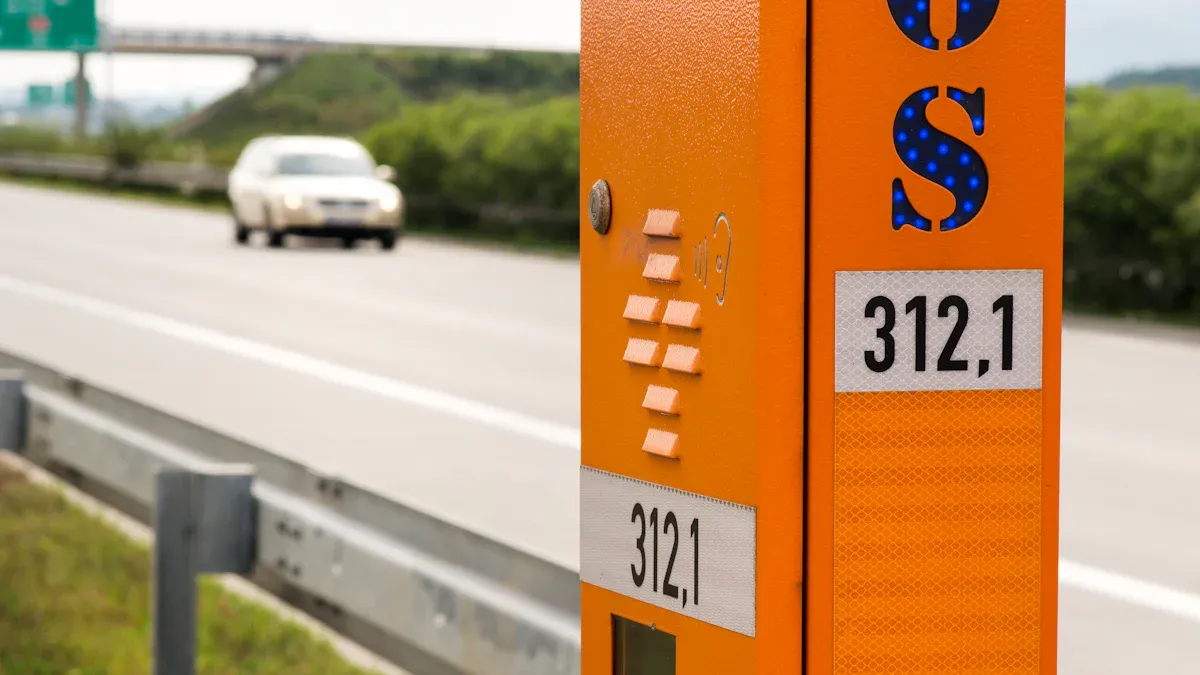
Why Personal Mobile Phones Fall Short in Emergencies
You rely on your mobile phone every day. However, personal mobile phones often fail you in critical moments on highways and railways. Imagine driving through a “dead zone” on a highway; your phone has no signal. This means you cannot call for help. On trains, even with some coverage, network performance can degrade. This happens due to congestion or capacity limits. Many users streaming videos or uploading photos can overwhelm the network. For railways, you often find coverage blind spots in transit hubs like subway stations and train depots. These areas frequently lack reliable mobile service. Your personal device simply cannot guarantee a connection when you need it most.
Inherent Dangers Requiring Instant, Reliable Contact
Highways and railways present unique dangers. These environments demand instant, reliable communication. You need to report incidents immediately to prevent further harm. Consider these serious events that require urgent contact:
- Train accidents causing serious injury to two or more crew members or passengers requiring hospitalization.
- Train accidents leading to the evacuation of a passenger train.
- Fatalities at highway-rail grade crossings resulting from a train accident or incident, where death occurs within 24 hours.
- Train accidents causing an estimated $150,000 or more in damage to railroad and non-railroad property.
- Train accidents causing an estimated $25,000 or more in damage to a passenger train, including railroad and non-railroad property.
- Collisions or derailments on main lines used for scheduled passenger service.
- Incidents that foul a main line used for scheduled passenger service.
These situations show why you cannot wait for a mobile signal. You need a direct line to help.
How Dedicated Systems Overcome Mobile Network Limitations
Dedicated communication systems, like a robust Highway telephone, specifically address these challenges. They do not rely on public mobile networks. Instead, they use their own infrastructure. This ensures a connection even in remote areas or during network congestion. These systems provide a direct, reliable link to emergency services or control centers. You get immediate assistance. This dedicated approach guarantees you can always report an incident. It ensures help arrives quickly, enhancing your safety and the safety of others.
How Emergency Telephones Ensure Rapid Incident Reporting for Operators

Emergency telephones give operators crucial tools for quick incident response. They provide a direct, clear, and precise way to get information. This helps operators make fast decisions and send help quickly.
Direct, One-Touch Connection to Control Centers
You need help fast during an emergency. Emergency telephones offer a simple, one-touch solution. You just press a button, and the system connects you directly to a control center. This bypasses dialing numbers or navigating menus on a mobile phone. This direct link saves valuable time. It removes any delay in reaching trained personnel. Operators receive your call instantly. They can begin assessing the situation without delay. This streamlined process ensures you get immediate attention when every second counts.
Automatic Location Identification for Precise Pinpointing
When you use an emergency telephone, the system automatically identifies your exact location. This feature is vital for rapid response. Operators do not need to ask where you are. They see your precise coordinates immediately. This automatic identification helps responders find the incident site quickly. It reduces search times, especially in remote or unfamiliar areas.
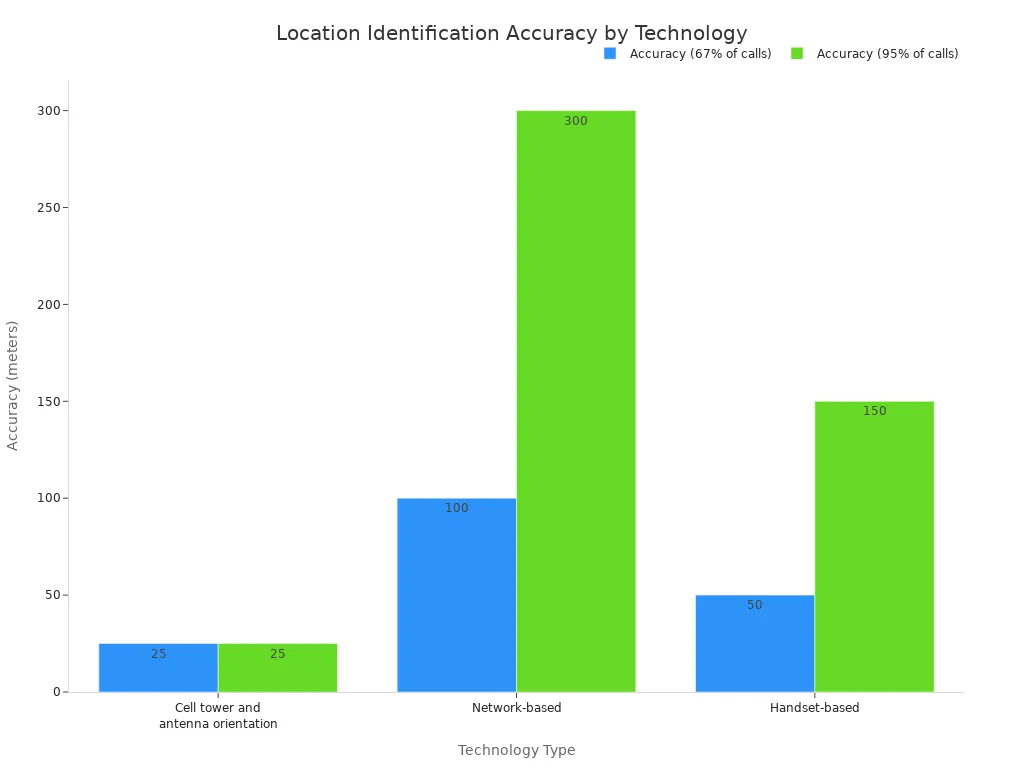
Different technologies provide varying levels of accuracy for location identification. You can see how these technologies perform:
| Phase | Technology Type | Accuracy (67% of calls) | Accuracy (95% of calls) | Notes |
|---|---|---|---|---|
| Phase I | Cell tower and antenna orientation | 3 to over 25 square miles (gross location) | 3 to over 25 square miles (gross location) | Depends on wireless carrier; covers about half of major US population centers |
| Phase II | Network-based | 100 meters | 300 meters | Uses time to reach multiple cell towers; works with any cellular phone |
| Phase II | Handset-based | 50 meters | 150 meters | Often GPS or A-GPS; more accurate but needs special hardware |
You can also visualize the accuracy differences:
This precise information allows operators to dispatch the closest and most appropriate emergency services. It ensures help arrives exactly where you need it.
Enhanced Voice Clarity in Harsh Environments
Highways and railways are often noisy places. Engine sounds, wind, and passing traffic can make communication difficult. Emergency telephones overcome these challenges with advanced acoustic technologies. They ensure your message comes through clearly.
These systems use several features to enhance voice clarity:
- Intelligent microphone arrays track your voice dynamically. They focus on what you say.
- Ceiling and wall-mounted acoustic panels control echoes and reduce background noise.
- Beamforming microphone technology captures your voice while eliminating surrounding noise. It also offers automated voice tracking.
For extremely loud environments, like offshore oil rigs or chemical plants, specialized solutions exist. Acoustic noise reduction phone booths and call noise reduction devices are designed for these conditions. Manufacturers rigorously test these devices. They use an acoustic anechoic chamber for precise testing. This chamber eliminates sound reflections and outside noise. It ensures high-precision acoustic measurements. This verifies the phone’s performance against strict design standards.
Additionally, some systems use Dante speakers with Power over Ethernet (PoE). These provide high-fidelity sound and very low latency. This means you hear and are heard with real-time clarity. Sound masking devices also help. They generate white or pink noise. This neutralizes ambient disturbances. It creates acoustic barriers and enhances privacy during your call. These technologies ensure operators hear your report clearly, even in the loudest settings.
Immediate Information Relay for Faster Operator Decision-Making
Emergency telephones do more than just connect you to help. They instantly relay vital information to control centers. This immediate data stream empowers operators to make quick, informed decisions. When you activate an emergency telephone, the system automatically sends crucial data. Operators immediately receive your caller’s location. This precise location information allows them to pinpoint your exact position without delay. They also get a call-back number. This ensures they can re-establish contact if the line drops or if they need more details. Furthermore, the system often provides an incident notification. This initial alert gives operators a heads-up about the type of emergency. This rapid transfer of information is critical. It allows operators to understand the situation quickly. They can then assess the severity of the incident. This immediate understanding helps them dispatch the right resources. You get faster, more effective assistance because operators have all the necessary details at their fingertips. This streamlined process minimizes confusion and maximizes response efficiency.
Operational Benefits of Highway Telephone Systems for Authorities
You understand that managing incidents on highways and railways requires precision and speed. Authorities gain significant advantages from dedicated communication systems. These systems streamline operations and improve safety for everyone.
Streamlined Communication Protocols for Incident Management
You need clear and consistent communication during an emergency. Highway telephone systems provide this by establishing standardized protocols. When someone uses an emergency telephone, the system automatically routes the call to the correct control center. This eliminates confusion about who to call or which number to dial. Operators receive calls through a dedicated channel. This means they do not contend with busy lines or general public inquiries.
Consider these benefits for your incident management:
- Direct Reporting: Callers connect instantly to trained personnel. This bypasses intermediate steps.
- Automated Data Transfer: The system sends location data and call-back information automatically. This reduces manual data entry errors.
- Consistent Procedures: All calls follow the same established process. This ensures every incident receives a uniform response.
- Dedicated Channels: Emergency calls use separate communication lines. This prevents network congestion from affecting critical communications.
These streamlined protocols allow your teams to focus on the incident itself. They spend less time on communication logistics. This efficiency is crucial for effective incident resolution.
Reduced Response Times Minimizing Disruption and Secondary Incidents
Rapid response is critical on highways and railways. Every minute saved can prevent further accidents or reduce their severity. Emergency telephone systems significantly cut down response times. When a caller reports an incident, the direct connection and automatic location identification mean operators know exactly where to send help. They do not waste time trying to pinpoint the location.
For example, if a vehicle breaks down on a busy highway, a quick call from a Highway telephone alerts authorities immediately. Responders can reach the scene faster. This rapid arrival helps you:
- Clear Obstructions Quickly: You remove disabled vehicles or debris before they cause more problems.
- Manage Traffic Flow: You can reroute traffic or set up warnings to prevent secondary collisions.
- Provide Medical Aid Sooner: Injured individuals receive help faster, improving outcomes.
By minimizing the time between incident occurrence and response, you reduce traffic congestion. You also lower the risk of additional accidents. This protects both the public and your operational personnel.
Improved Resource Allocation and Deployment Efficiency
Effective incident management relies on deploying the right resources to the right place at the right time. Emergency telephone systems enhance your ability to do this efficiently. Because operators receive precise location data and initial incident details instantly, they can make informed decisions about resource allocation.
You can quickly determine:
- Which emergency services are needed: Is it police, fire, ambulance, or a tow truck?
- How many units to dispatch: A minor fender-bender needs fewer resources than a multi-vehicle pile-up.
- The fastest route to the scene: Knowing the exact location helps dispatchers guide responders efficiently.
This optimized resource allocation prevents over-deployment or under-deployment of assets. You avoid sending too many units to a minor incident, freeing them for other emergencies. Conversely, you ensure severe incidents receive adequate support from the start. This efficiency saves valuable resources and ensures your teams are always ready for the next call.
Enhanced Safety for Public and Operational Personnel
You want to feel safe on the road or near railway lines. Emergency telephone systems significantly boost safety for both you, the public, and the people who respond to emergencies. These systems create a safer environment for everyone.
For you, the public, these systems mean help arrives faster and more reliably. You get a more accurate emergency response. This happens because communication channels are better. Situational awareness improves. Data collection capabilities are stronger. When you use an emergency telephone, you can share your exact location. Your device’s GPS sends this information. Public Safety Answering Point (PSAP) personnel can then find you instantly. They respond quickly. The system also helps during disasters. It can reroute calls to other operational PSAPs if a local center is down. This ensures continuous service. Even during natural disasters or technical problems, you can still get help. The system also gathers important data from smart devices and sensors. This leads to more accurate and informed responses.
For the operational personnel, like PSAP staff and first responders, these systems make their jobs easier and safer. They use a more user-friendly interface and workflow. This means fewer screens and tools to manage. Daily operations become smoother. Different public safety agencies can work together better. They communicate more efficiently. This leads to more coordinated responses. First responders on the scene get real-time access to important information. The system connects with various public safety information systems. These include criminal records, fire, and emergency medical systems. For example, a Highway telephone system can provide building plans during a fire. This helps responders act proactively. The system also handles multimedia. It supports pictures, data, and live-streaming videos. These come from sensors or wearable devices. This gives a clearer picture of emergencies. It helps responders choose the right actions.
Advancements and Future Relevance of Emergency Telephones
You see emergency telephones constantly evolving. They integrate new technologies to offer even greater safety and efficiency. These systems move beyond simple voice calls. They become smart, resilient, and capable of transmitting diverse data.
Integration with Modern Control Systems and IoT Platforms
You find emergency communication systems now connect with the Internet of Things (IoT). IoT sensors, like smoke detectors, motion sensors, and security cameras, enhance these systems. These networked sensors automatically trigger alerts. For example, a chemical sensor can detect a gas leak and send warnings to personnel without human action. First responders receive automatic building sensor data directly to their devices while en route. This integration provides you with real-time situational awareness through sensor dashboards.
IoT and Voice over IP (VoIP) integration also addresses security concerns. It secures communication channels like SMS and voice. You can control IoT video devices and access systems remotely. Alerts go to remote devices during onsite emergencies. This enables automation throughout an organization. Cloud phone systems facilitate easy IoT integration. They automate company devices and software, both onsite and remotely. Modern emergency telephone systems create smart city environments. Embedded sensors transmit data via wireless networks. This data processes in real-time. The system automatically triggers alerts to emergency response units. It also notifies civilians via mobile devices.
Robust, Sustainable Designs for Continuous Operation
You need emergency telephones that withstand harsh conditions. Manufacturers design these systems for continuous operation in demanding environments. A Highway telephone, for instance, must endure extreme weather. Weatherproof telephones are built for harsh conditions. Waterproof telephones establish safe and direct communication lines. These designs ensure reliability when you need it most. They guarantee the system works even after severe weather or incidents. This focus on durability means you always have a reliable communication point.
Potential for Advanced Data Transmission Capabilities
Beyond voice, you can expect more from these systems. Advanced data transmission capabilities are emerging. Verizon now offers seamless connection to Satellite SOS messaging. This works on the Galaxy S25 series for emergency services. It helps in areas without cellular connectivity. You can also send SMS over satellite directly from smartphones. Deutsche Telekom, Skylo, and Qualcomm have demonstrated this. Verizon also expanded its satellite texting capabilities. This allows you to send text messages via satellite when outside terrestrial cellular networks. Non-Terrestrial Network (NTN) Connectivity for vehicles is also developing. This enables seamless location tracking, remote diagnostics, and emergency communications for your vehicle.
Enduring Importance in an Increasingly Connected World
You might think that in our highly connected world, dedicated emergency telephones would become obsolete. However, their importance is actually growing. Modern railway operations demand communication systems that are not only reliable but also intelligent and adaptable. The year 2026 marks a pivotal moment for rail operators to embrace advanced solutions. These systems offer significant improvements in safety, efficiency, and operational resilience. They move beyond basic voice calls. They provide comprehensive communication platforms.
Modern railway emergency telephone systems extend far beyond simple voice communication. They integrate intelligence to create a unified communication ecosystem. Control centers use sophisticated consoles. These integrate with the GSM-R network. This allows for real-time monitoring and management of train operations. It supports both routine and emergency communications. You see these advancements in several key areas:
- IP-based solutions: These overcome limitations of traditional analog systems. They enable seamless communication between drivers, guards, and control centers. They support passenger announcements and crew communications. They also enhance network resilience through core IPPBX systems.
- VoIP technology: This ensures clear, digital voice transmission over IP networks. It eliminates analog limitations. It supports high data rates and low latencies. These are required for modern, high-speed rail.
- AI integration: This transforms telephones into intelligent operational assets. It processes data and automates tasks. It enhances decision-making. It predicts failures and detects anomalies. It provides proactive threat detection and prevention.
- Enhanced Safety Features: These include dedicated emergency call buttons on 4G railway public telephones. They also have GPS integration for quick caller location. Automated alerts for system malfunctions are common. AI-powered voice command functionality allows for hands-free operation and noise reduction.
By 2025, modern systems will leverage AI to detect anomalies. They will automatically alert responders. This projects a 20% reduction in incident escalation. It also improves passenger safety records. These systems ensure continuous and safe train operations. They provide richer situational awareness. They integrate data from SCADA, signaling logs, and camera systems. They enable proactive threat detection and prevention. The adoption of advanced solutions ensures an effective railway intercom system. It also provides a robust emergency dispatching communication system. This meets evolving demands. It significantly improves network security, reliability, and scalability.
You now understand emergency telephones are vital for quick incident response on highways and railways. They give you a strong, dependable, and direct way to communicate. This greatly improves safety and how well operations run. These systems help operators manage tough situations well. They ensure help arrives fast. They also reduce dangers.
FAQ
How do emergency telephones work without mobile networks?
Emergency telephones use their own dedicated infrastructure. This includes wired lines or private radio networks. You get a reliable connection even in areas with no cell service. This ensures you can always call for help.
Why are emergency telephones more reliable than your cell phone during an incident?
Your cell phone relies on public networks. These can fail in emergencies or remote areas. Emergency telephones offer a direct, one-touch connection to control centers. They provide automatic location identification. This ensures immediate and precise help.
Can emergency telephones withstand harsh weather conditions?
Yes, manufacturers design emergency telephones for extreme environments. They are robust and weatherproof. This ensures continuous operation. You can rely on them even in severe weather.
Will new technologies make emergency telephones unnecessary?
No, emergency telephones remain crucial. They integrate with modern control systems and IoT platforms. This enhances their capabilities. They provide a vital, reliable communication link in an increasingly connected world.
Post time: Jan-26-2026