

Effective communication plays a crucial role in marine and offshore operations. Approximately 20% of marine accidents stem from communication failures, highlighting the need for reliable systems like an emergency voice communication system. Harsh environmental conditions, such as extreme weather and corrosive saltwater, challenge communication efforts. Selecting the right industrial telephone, such as a waterproof industrial telephone for marine use or an explosion proof telephone offshore, can significantly enhance safety and operational efficiency. Additionally, utilizing a heavy duty telephone for offshore platforms ensures that communication remains intact even in the most demanding environments.
Key Takeaways
- Choose industrial telephones with high environmental resistance to withstand harsh marine conditions. Look for features like corrosion resistance and high IP ratings to ensure reliability.
- Ensure communication reliability by investing in emergency voice communication systems. These systems help maintain clear communication during critical situations, enhancing safety.
- Prioritize compliance with industry standards when selecting telephones. Adhering to regulations like IEC 60945 and the ATEX Directive ensures safety and operational integrity.
Environmental Resistance
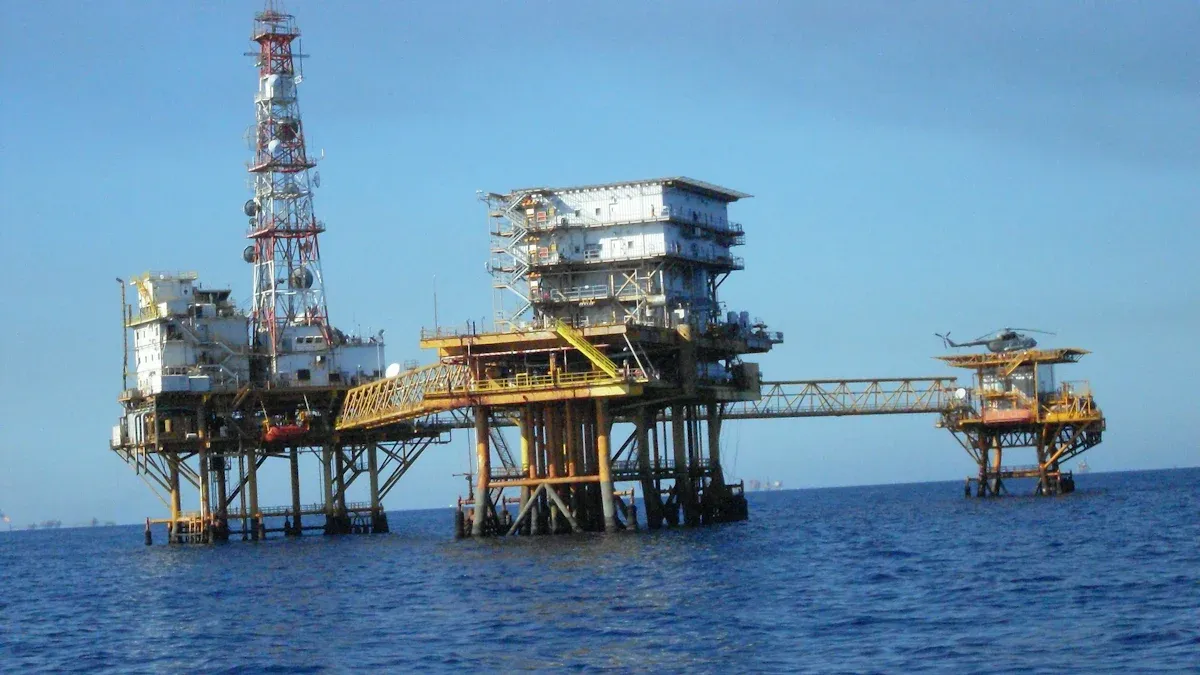
Marine and offshore environments present unique challenges for industrial telephones. These devices must withstand harsh conditions, including salt corrosion, UV radiation, and water ingress. Selecting telephones with robust environmental resistance is crucial for ensuring reliable communication.
The following table outlines common environmental hazards faced by industrial telephones in marine and offshore applications:
| Environmental Hazard | Description |
|---|---|
| Salt Corrosion | Weatherproof and marine-grade telephones resist salt corrosion. |
| UV Radiation | Telephones are designed to withstand UV radiation. |
| Water Ingress (IP66/IP67 rated) | Ensures protection against water ingress. |
| Explosion Risk | Explosion-proof models are used in hazardous areas like engine rooms. |
| Vibration | Vibration-resistant mounting ensures stability on moving vessels. |
| Noise Interference | Amplified audio allows clear communication over engine and wave noise. |
To further enhance durability, industrial telephones should have high Ingress Protection (IP) ratings. The table below summarizes recommended IP ratings for these devices:
| IP Rating | Description |
|---|---|
| IPX1 | Dripping water: Vertically falling water drops at the rate of 1 mm/minute applied for 10 minutes. |
| IPX2 | Dripping water when tilted up to 15°: Similar to IPX1, but with the enclosure tilted up 15° from its normal position. |
| IPX3 | Spraying water: Water falling as a spray at any angle up to +/-60° from vertical. |
| IPX4 | Splashing of water: Similar to IPX3 but more exposure at up to +/-180° from vertical. |
| IPX5 | Water jets: Water projected by a 6.3 mm nozzle against the product enclosure from any direction. |
| IPX6 | Powerful water jets: Same as IPX5, but with a 12.5 mm nozzle and 100 liters/minute. |
| IPX7 | Immersion up to 1 m: Immerse the product in water 1 meter for 30 minutes. |
| IPX8 | Immersion beyond 1 m: Defined by the manufacturer. |
| IPX9 | High Pressure and Temperature Water Jets: Fan jet nozzle at 15 liters/minute for 30 seconds per spray position. |
By choosing telephones with these features, operators can significantly reduce the risk of device failure due to environmental factors. This proactive approach ensures that communication remains effective, even in the most challenging offshore conditions.
Communication Reliability

Reliable communication forms the backbone of safe and efficient marine and offshore operations. Industrial telephones must deliver clear, uninterrupted voice transmission, especially during emergencies. The emergency voice communication system plays a vital role in alerting personnel and coordinating responses when seconds matter.
Emergency Voice Communication System
The emergency voice communication system integrates multiple technologies to ensure messages reach all personnel promptly, even in noisy or hazardous environments. One key component is the Public Address and General Alarm (PA/GA) system, which broadcasts emergency alerts across offshore platforms. This system overrides regular communications to deliver urgent messages clearly. Two-way radios complement the PA/GA by enabling direct contact between crew members and control rooms. Additionally, the Emergency Broadcast System (EBS) provides dedicated frequencies for emergency alerts, enhancing message reach and clarity. Modern installations often include alarm management systems that centralize monitoring and automate alert responses, reducing human error and improving response times.
Maintaining connectivity during power outages or critical incidents requires robust backup solutions. Operators should:
- Set up automatic failover systems that switch communication to mobile devices or alternate internet sources without delay.
- Regularly test backup power supplies and connectivity systems to ensure they function correctly when needed.
- Train personnel on emergency procedures, including the use of mobile VoIP applications and alternative communication methods during outages.
- Communicate backup plans proactively to all relevant staff and stakeholders.
Investing in an Uninterruptible Power Supply (UPS) proves essential. A UPS provides temporary power to routers, modems, and VoIP handsets with built-in batteries. This setup allows communication devices to operate for 30 to 60 minutes or longer during short power interruptions, maintaining the emergency voice communication system’s effectiveness.
Design Features
When selecting industrial telephones for marine and offshore applications, specific design features set them apart from standard telephones. These features enhance durability, reliability, and functionality in challenging environments.
The following table highlights key design features of industrial telephones:
| Design Feature | Description |
|---|---|
| Corrosion Resistance | Utilizes robust materials like 316L stainless steel to withstand rust and chemical attacks. |
| Advanced Sealing | High IP ratings protect against water, dust, and salt ingress. |
| Durability | Impact-resistant construction and durable internal components ensure stable performance. |
| EMI Protection | Designed to minimize electromagnetic interference, enhancing communication reliability. |
| Extended Equipment Lifespan | Built to last in harsh conditions, contributing to operational continuity and personnel safety. |
Marine industrial telephones commonly use materials that resist corrosion and degradation. These include:
- Marine-grade stainless steel, which prevents rust.
- UV-stabilized polycarbonate, ensuring protection against sunlight.
- Powder-coated aluminum, which adds an extra layer of durability.
Additionally, these telephones feature sealed enclosures with IP66-rated gaskets to protect internal components from moisture and dust. They also incorporate condensation-resistant circuitry and conformal-coated printed circuit boards (PCBs) to withstand high humidity.
By focusing on these design features, operators can ensure that their communication systems remain effective and reliable, even in the most demanding marine and offshore environments.
Compliance with Standards
Compliance with industry standards is essential when selecting industrial telephones for marine and offshore applications. These standards ensure that devices meet safety, reliability, and performance requirements. Organizations must adhere to various regulations to maintain operational integrity and protect personnel.
Marine environments typically follow broader maritime regulations. These regulations address general safety and operational protocols. In contrast, offshore environments have specific codes tailored to their unique challenges. These codes consider environmental factors and operational safety, emphasizing the need for specialized knowledge in offshore projects. Understanding the various facility types and their respective requirements is crucial for compliance.
Key standards to consider include:
- IEC 60945: This standard outlines the general requirements for marine navigation and radio communication equipment.
- ATEX Directive: This directive governs equipment used in explosive atmospheres, ensuring safety in hazardous locations.
- ISO 9001: This standard focuses on quality management systems, promoting consistent quality in products and services.
Tip: Always verify that the selected industrial telephone complies with relevant standards before purchase. This verification helps prevent costly delays and ensures that the equipment operates safely and effectively.
By prioritizing compliance with these standards, operators can enhance safety and reliability in their communication systems. This proactive approach minimizes risks and fosters a culture of safety within marine and offshore operations.
Maintenance and Support
Regular maintenance plays a vital role in ensuring the reliability and longevity of industrial telephones in harsh marine and offshore environments. Operators must prioritize preventive maintenance strategies to avoid costly downtime and dangerous situations. Key maintenance practices include:
- Regular inspections to identify potential issues.
- Proper cleaning to prevent corrosion and debris buildup.
- Timely repairs to address any malfunctions.
- Adequate training for personnel on equipment usage and care.
By implementing these strategies, operators can significantly enhance the performance of their communication systems.
Manufacturers also provide various support services tailored to the needs of marine and offshore applications. These services ensure that operators have the necessary resources to maintain their equipment effectively. The following table outlines common support services offered:
| Support Service | Description |
|---|---|
| Technical Support | Assistance with product functionality and troubleshooting. |
| Warranty & Support | Information on warranty coverage and support policies for products. |
| Training | Educational resources and training sessions for users of the equipment. |
| Rental Support | Options for renting equipment as needed for temporary projects. |
Investing in maintenance and support not only enhances communication reliability but also fosters a culture of safety within marine and offshore operations. By ensuring that industrial telephones remain in optimal condition, operators can maintain effective communication, even in the most challenging environments.
Selecting the right industrial telephone for marine and offshore applications requires careful consideration of several factors. The five key considerations include:
- Environmental Resistance
- Communication Reliability
- Design Features
- Compliance with Standards
- Maintenance and Support
These factors collectively enhance operational safety and communication effectiveness. For instance, predictive maintenance anticipates equipment failures, while risk management identifies hazards.
Advancements in technology also influence selection criteria:
- Compatibility with existing systems prevents operational silos.
- Scalability allows for future expansion.
- Durability withstands harsh conditions.
- Regulatory compliance ensures safety standards.
Prioritizing these aspects will lead to improved safety and efficiency in marine and offshore operations.
FAQ
What features should I look for in an industrial telephone for marine use?
Look for corrosion resistance, high IP ratings, and durability to withstand harsh marine conditions.
How often should I maintain industrial telephones?
Conduct maintenance checks quarterly to ensure optimal performance and reliability in challenging environments.
Are there specific standards for marine communication equipment?
Yes, standards like IEC 60945 and the ATEX Directive ensure safety and reliability in marine applications.
Post time: Mar-26-2026