

Emergency voice communication systems, often referred to as what is an emergency voice communication system, play a vital role in ensuring safety within tunnels. These systems, including the tunnel communication system, face unique challenges such as unreliable communication infrastructure, sensor noise, and hazardous conditions that can disrupt clarity. A reliable tunnel emergency telephone system is crucial, as well as a fiber optic telephone that enhances communication capabilities. Additionally, the fiber optic telephone broadcasting system provides an effective means of disseminating information. Accessible features are essential to save lives and coordinate effective responses during emergencies.
Key Takeaways
- Robust signal transmission is crucial for clear communication in tunnels. Use fiber optic cables and signal repeaters to maintain strong connections.
- Implement redundant communication paths to ensure the system remains operational during emergencies. Multiple routes prevent total failure and improve response times.
- Real-time monitoring helps detect faults early, allowing for quick maintenance. This feature enhances situational awareness and speeds up emergency responses.
Technology Integration Features
Robust Signal Transmission
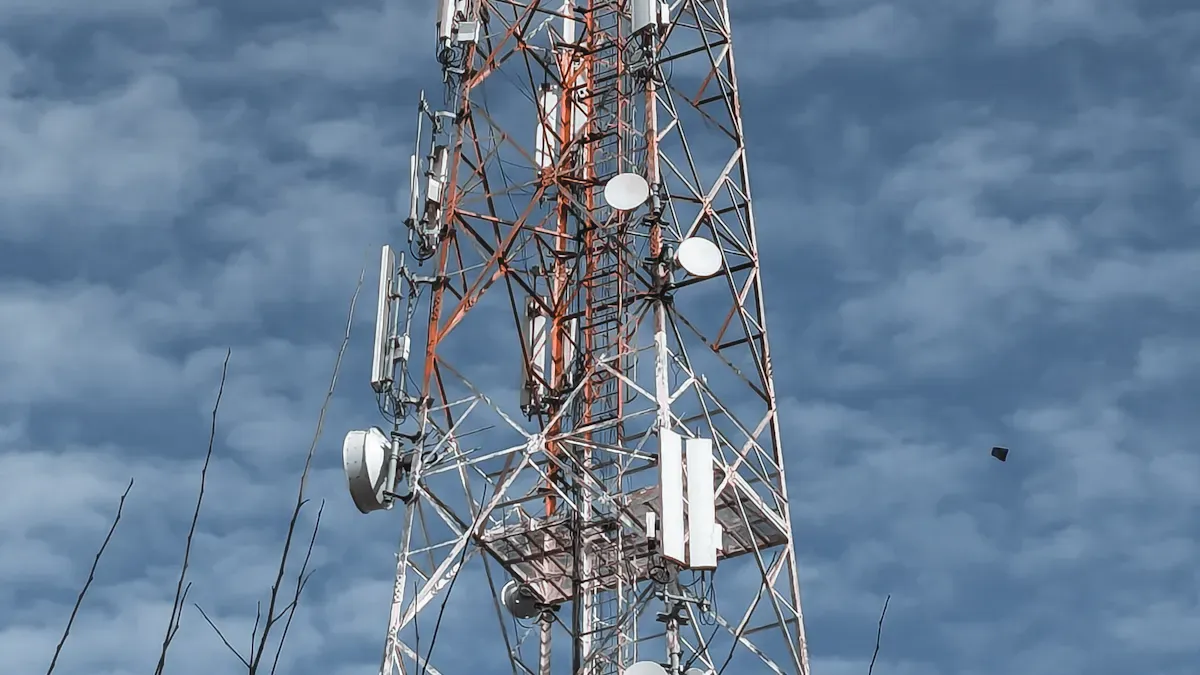
Reliable signal transmission forms the backbone of any emergency voice communication system in tunnels. Tunnels present unique challenges such as signal attenuation, interference, and complex structural layouts that can degrade communication quality. To overcome these obstacles, systems must employ advanced transmission technologies that maintain clear and uninterrupted voice signals throughout the tunnel length. Fiber optic cables often serve as the preferred medium due to their high bandwidth and immunity to electromagnetic interference. Additionally, signal repeaters and amplifiers strategically placed within the tunnel ensure consistent coverage. Without robust signal transmission, emergency responders and tunnel users risk losing critical communication during incidents, which can delay rescue efforts and increase hazards.
Redundant Communication Paths
Redundancy in communication paths ensures that the emergency voice communication system remains operational even if one pathway fails. Industry best practices mandate multiple, independent communication routes to prevent total system failure during emergencies. The following table summarizes key aspects of redundancy requirements for tunnel communication systems:
| Aspect | Details |
|---|---|
| Reliable Communications Backbone | Ensures resilient, interoperable communication systems between dispatch centers and field personnel. |
| Redundancy Requirement | Mandates redundancy in voice and data pathways (radio, LTE, IP-based systems) to prevent communication loss during incidents. |
| Coverage Requirement | Radio system coverage must achieve 95% in-building coverage for critical areas (e.g., stairwells, basements). |
| Two-way Radio Functionality | Required in all buildings as part of Emergency Responder Radio Coverage Systems (ERRCS). |
This layered approach guarantees that if one communication channel becomes compromised, alternative paths maintain connectivity. For example, combining radio systems with IP-based networks and LTE ensures continuous voice communication. Redundant paths also support interoperability among emergency responders, improving coordination and response times.
Real-Time Monitoring
Real-time monitoring plays a crucial role in maintaining the health and functionality of emergency voice communication systems. Continuous status updates allow operators to detect faults early and address them before they escalate into failures. Modern monitoring technologies include:
- Portable communication systems designed for environments without fixed infrastructure, enabling flexible deployment.
- Wireless communication networks that support voice communication and network health monitoring simultaneously.
- IP-based public address and voice alarm systems with multiple equipment outstations that report status remotely.
- Systems designed with no-single-point-of-failure concepts, ensuring continuous operation even during component failures.
The benefits of real-time monitoring extend beyond system maintenance. The following table highlights how monitoring contributes to faster emergency responses in tunnel incidents:
| Evidence Description | Contribution to Emergency Response |
|---|---|
| Intelligent operation and maintenance platform | Automates data processing and monitoring, enhancing situational awareness. |
| Integrated early warning system | Combines historical data with real-time monitoring to establish adaptive risk thresholds. |
| Visualization subsystem | Improves spatial transparency for decision-making, aiding in quicker responses. |
Additionally, agencies like the Massachusetts Department of Transportation integrate real-time traffic data with geographic information systems (GIS) to improve emergency management. Features such as clustered alerts from traffic apps help direct resources efficiently. These technologies enable quicker detection of incidents and faster deployment of emergency services.
Incorporating real-time monitoring into an emergency voice communication system enhances situational awareness, reduces downtime, and accelerates response times. This integration proves vital in tunnel environments where every second counts.
Security and Reliability Features
Fail-Safe Power Supply
A fail-safe power supply is essential for maintaining the functionality of emergency voice communication systems during power outages or system failures. These systems must incorporate backup power solutions to ensure continuous operation. Common strategies include:
- Uninterruptible Power Supplies (UPS): These devices provide immediate backup power, allowing systems to function seamlessly during outages.
- Redundant Power Sources: Utilizing multiple power feeds from different sources ensures that if one source fails, another can take over without interruption.
- Battery Backup Systems: High-capacity batteries can sustain operations for extended periods, ensuring that communication remains available during emergencies.
By implementing these strategies, tunnel operators can guarantee that emergency voice communication systems remain operational, even in the most challenging conditions.
Tamper-Resistant Design
Tamper-resistant design features are crucial for protecting emergency voice communication equipment from vandalism and unauthorized access. Effective design elements include:
| Design Feature | Description |
|---|---|
| Robust Housing Materials | Enclosures made from marine-grade stainless steel or impact-resistant polycarbonate resist corrosion, drilling, and blunt force trauma. |
| Reinforced Interface Protection | Displays and keypads shielded with tempered glass or ballistic-rated acrylic prevent damage from smashing, slashing, or spray paint. |
| Sealed Construction | IP65 or higher ratings ensure resistance to dust, water, and tampering through openings. Gaskets and sealants prevent internal exposure. |
| Anti-Tamper Hardware | Use of tamper-proof screws deters unauthorized access and disassembly. |
| Integrated Surveillance | Some models include discreet cameras or motion sensors to deter vandals and record incidents. |
These features enhance the durability and reliability of emergency voice communication systems, ensuring they remain functional and accessible when needed most.
Emergency Priority Access
Emergency priority access protocols enable swift communication during high-traffic incidents. These protocols ensure that emergency responders can communicate effectively, even when the system experiences heavy usage. Key components include:
- Automated Collision Notification Systems (ACNS): These systems utilize wireless communication and GPS or cellular geolocation to automatically notify public safety answering points (PSAPs), significantly reducing incident detection times.
- Enhanced 9-1-1 Systems: These systems automatically associate a caller’s location with their call, improving the accuracy of incident reports and helping to manage dispatcher overload during high-traffic incidents.
- Motorist Aid Call Boxes: Installed in critical locations like tunnels, these devices allow for two-way voice communication, enabling motorists to request assistance even when cellular service is limited.
- Incident Command System (ICS): This protocol facilitates coordinated command and control among multiple agencies during incidents, ensuring effective communication and resource utilization.
By implementing these emergency priority access features, tunnel operators can enhance the responsiveness of their emergency voice communication systems, ultimately improving safety for all users.
User Interface and Accessibility Features

Intuitive User Controls
Intuitive user controls are essential for effective operation during emergencies. The design must guide users to the nearest and safest exit quickly. Signals should attract attention and provide clear, direct information without ambiguity. Additionally, the interface should facilitate way-finding by creating a mental map for users, confirming their decisions as they navigate through the tunnel. This approach minimizes confusion and enhances user confidence during critical situations.
Clear Audio Quality
Clear audio quality is vital for ensuring effective communication in emergency situations. Several technical specifications define this quality:
- Power Output: Ranges from 3W to 30W, affecting sound pressure level (SPL) and coverage area.
- Frequency Response: An ideal range of 150 Hz to 8 kHz ensures clear vocal reproduction.
- Ingress Protection (IP) Rating: Indicates resistance to dust and moisture, which is critical for durability in harsh environments.
- Compliance Standards: Systems must meet safety and performance standards like UL 1480 and EN 54-16 to ensure reliability during emergencies.
These specifications guarantee that users receive clear instructions and alerts, which can be life-saving in urgent situations.
Multilingual Support
Multilingual support enhances accessibility for diverse populations. Emergency voice communication systems should offer multiple language options to accommodate users from various backgrounds. This feature ensures that all individuals can understand critical information during emergencies, regardless of their primary language. By providing clear communication in multiple languages, tunnel operators can significantly improve safety and response effectiveness.
Additional Essential Features
Integration with Tunnel Safety Systems
Integrating emergency voice communication systems with tunnel safety systems enhances overall safety and response effectiveness. This integration allows for coordinated emergency responses, which is crucial during incidents. For instance, Borghetti et al. assessed 15 interventions in Italian motorway tunnels from 2019 to 2021. Their findings emphasized the importance of quick and accurate decision-making in emergencies to enhance public safety and maintain transport infrastructure functionality.
Moreover, past incidents highlight the need for such integration. The Shanxi Yanhou Tunnel fire in 2014 resulted in 40 fatalities, while the Tianjin Binhai Tunnel fire in 2018 caused injuries to users and firefighters. These cases underscore the risks associated with inadequate safety management. By integrating communication systems with fire detection and alarm systems, operators can ensure timely alerts and coordinated evacuations, ultimately saving lives.
Immediate Alarm Activation
Immediate alarm activation is vital for effective emergency response in tunnels. Research shows that activating multimodal alarms—combining visual, auditory, and olfactory signals—significantly improves evacuation outcomes. A VR-based simulation study demonstrated that as alarm complexity increased, evacuation times for participants decreased. Those exposed to multimodal cues exhibited faster reaction times and reduced hesitation, indicating enhanced decision-making efficiency during emergencies.
This evidence supports the conclusion that immediate alarm activation positively impacts evacuation speed and emergency outcomes. By implementing such systems, tunnel operators can facilitate quicker evacuations and improve overall safety for all users.
The must-have features of emergency voice communication systems significantly enhance safety in tunnel environments. Key elements such as robust signal transmission, real-time monitoring, and tamper-resistant designs ensure effective communication during emergencies. These features collectively improve response times and coordination among responders. Tunnel operators should prioritize these systems to safeguard lives and streamline emergency management.
FAQ
What is an emergency voice communication system?
An emergency voice communication system enables clear communication during emergencies, ensuring safety and coordination in tunnel environments.
Why is real-time monitoring important?
Real-time monitoring detects system faults early, allowing for prompt maintenance and ensuring continuous operation during emergencies.
How does multilingual support enhance safety?
Multilingual support ensures all users understand critical information during emergencies, improving response effectiveness and overall safety in diverse populations.
Post time: Mar-23-2026