

Selecting the right industrial handsets and keypads is vital for ensuring reliable communication in harsh environments. Users must consider specific needs for marine, emergency, and outdoor applications. Key factors include:
- Durability: Essential for rugged communication equipment in challenging conditions.
- Weatherproofing: Protects against rain, snow, and humidity, especially for IP67 waterproof keypads.
- Dustproof and Anti-Corrosion: Crucial for preventing damage from environmental elements, particularly in industrial communication devices.
Additionally, understanding how does an IP67 industrial keypad work can further enhance the selection process. These considerations help maintain functionality and performance in rugged settings, making them ideal for various applications. As a custom industrial keypad manufacturer, we ensure that our products meet these stringent requirements.
Key Takeaways
- Choose durable and weatherproof handsets to ensure reliable communication in harsh environments.
- Look for high IP ratings, like IP67, to guarantee protection against dust and moisture for marine and outdoor use.
- Consider customization options to enhance usability and meet specific operational needs in emergency situations.
Environmental Conditions

Marine Environment Challenges
Marine environments present unique challenges for industrial handsets and keypads. Saltwater exposure significantly impacts device longevity. The corrosive nature of saltwater can lead to various issues, including:
| Evidence Description | Impact on Longevity |
|---|---|
| Saltwater can corrode metals, contaminate circuits, and cause intermittent or total switch failure. | Reduces operational reliability and lifespan of devices. |
| Salt deposits can create leak paths or bind moving parts over time. | Leads to functional failures and maintenance issues. |
| Salt can cause moving parts to bind and narrow openings to clog. | Affects the mechanical functionality of devices. |
| Moisture passing seals can accelerate corrosion and create electrical issues. | Increases risk of device failure in marine environments. |
To combat these challenges, manufacturers design industrial handsets with corrosion-resistant materials and protective coatings. These features enhance durability and ensure reliable communication in harsh marine conditions.
Emergency Situations
In emergency situations, the performance of industrial handsets and keypads becomes critical. They must withstand extreme conditions while providing clear communication. Key factors include:
- Rugged Mechanical Endurance: Designed to function in extreme conditions such as heavy rain, snow, and mud.
- Waterproof and Dustproof Ratings: Ensures reliability in various environmental challenges with ratings up to IP67/IP69K.
- Corrosion Resistance: Built to resist corrosion from harsh chemicals and environmental factors.
Additionally, these devices must operate effectively in extreme temperatures, ranging from -40°C to +65°C. This temperature resilience is vital for maintaining functionality during emergencies.
| Feature | Description |
|---|---|
| Temperature Range | Maintains functionality in extreme temperatures (-40°C to 85°C in ruggedized models) |
| Environmental Resistance | Withstands industrial chemicals, oils, and solvents; resistant to dust, moisture, and mechanical abrasion (IP65 to IP68 rated) |
| Customization | Customizable with legends, symbols, and color-coded zones for operator clarity |
| Operational Advantage | Minimizes downtime due to switch failure in continuous-use settings |
Outdoor Exposure Factors
Outdoor environments expose industrial handsets and keypads to various factors that can affect their performance. These include:
| Environmental Factor | Description |
|---|---|
| Extreme Weather | Can cause error codes or metal corrosion in access control components. |
| Moisture Damage | Water can seep through weak spots, leading to circuit issues and malfunctions. |
| Temperature Fluctuations | Exposure to extreme temperatures can damage internal components. |
Moreover, UV radiation poses a significant threat to outdoor devices. Standard keypads may suffer from brittleness, discoloration, and compromised structural integrity due to prolonged sunlight exposure. In contrast, UV-resistant membrane keypads are specifically designed to endure such conditions, ensuring reliability and performance.
By understanding these environmental conditions, users can make informed decisions when selecting industrial handsets and keypads for marine, emergency, and outdoor applications.
Protection Standards
Protection standards play a crucial role in ensuring the reliability of industrial handsets and keypads in challenging environments. Understanding these standards helps users select devices that can withstand harsh conditions.
IP Ratings Explained
Ingress Protection (IP) ratings indicate how well a device can resist environmental factors such as dust and moisture. The ratings consist of two digits, where the first digit represents solid particle protection and the second digit indicates liquid ingress protection.
| Feature | Description |
|---|---|
| Environmental Sealing | Look for IP ratings (e.g., IP65, IP67) in harsh or outdoor environments. |
| Durability | Equipment exposed to extreme temperatures, vibration, dust, or moisture benefits from rugged keypads with IP65 or higher ratings. |
| User Experience | Mechanical keypads provide tactile feedback, enhancing user confidence in precision applications. |
Devices with higher IP ratings offer better protection. For instance, an IP67 rating signifies complete dust protection and the ability to withstand immersion in water up to 1 meter for 30 minutes. This level of protection is essential for industrial handsets used in marine and outdoor applications.
MIL-STD Compliance
MIL-STD compliance ensures that industrial handsets and keypads meet military standards for durability and performance. These standards include rigorous testing methods that validate a device’s ability to function under extreme conditions.
| Testing Method | Description | Relevance to Reliability |
|---|---|---|
| MIL-STD-810H Method 506.6 | Tests moisture-proofing through exposure to blowing rain and high humidity. | Ensures devices resist water damage, crucial for marine and outdoor use. |
| MIL-STD-810H Method 510.7 | Assesses dust protection by exposing devices to airborne dust particles. | Validates sealing against dust, essential for industrial environments. |
| MIL-STD-810H Method 503.7 | Evaluates performance under rapid temperature changes from -40°F to 160°F. | Confirms durability against thermal shock, important for outdoor applications. |
Compliance with these standards guarantees that industrial handsets can withstand shock, vibration, extreme temperatures, humidity, and dust. Manufacturers often tailor test methods to the intended use of the device, ensuring optimal performance in specific environments.
Material Durability
The choice of materials significantly impacts the lifespan and reliability of industrial handsets and keypads. Selecting durable materials is essential for devices exposed to harsh conditions.
| Material | Properties |
|---|---|
| Stainless Steel | Corrosion resistance, robust structure, withstands heavy impacts |
| Polycarbonate (PC) | High strength, absorbs and dissipates energy, resistant to cracking |
| Thermoplastic Elastomers | Energy absorption, maintains shape under stress, durable in harsh conditions |
| Silicone | Thermal and chemical stability, withstands extreme temperatures and chemicals |
Using materials like silicone and thermoplastic elastomers enhances durability against temperature extremes and chemical exposure. These materials reduce the need for replacements, ensuring long-term functionality in demanding environments.
By understanding protection standards, users can make informed decisions when selecting industrial handsets and keypads for marine, emergency, and outdoor applications.
Key Features of Industrial Handsets
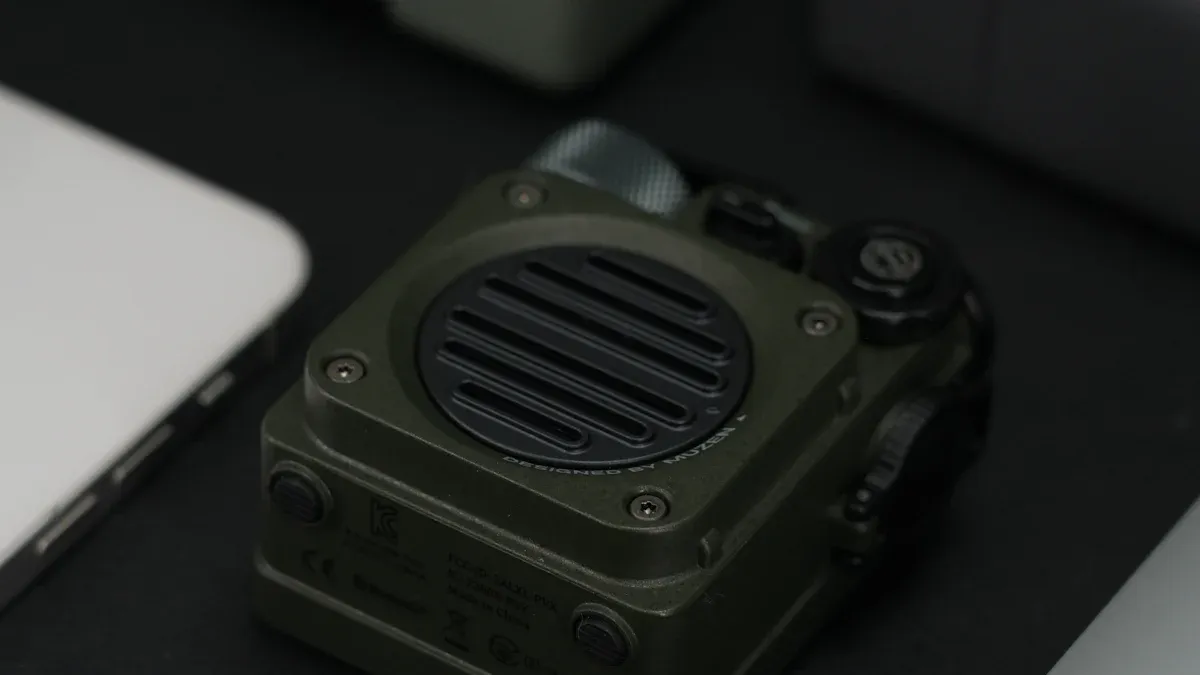
Pointing Devices
Pointing devices play a crucial role in enhancing user efficiency in marine and emergency applications. They are designed to withstand harsh environments, preventing liquid or debris ingress. Key features include:
| Feature | Description |
|---|---|
| Durability | Built to endure extreme conditions, ensuring reliable operation. |
| Ease of Use | Provides precision control with an instantaneous point-and-click button on the joystick. |
| Precision Control | Ensures speed and accuracy, vital for military operations in marine settings. |
| Secure Storage | Features an aluminum cradle for convenient and secure storage onboard vessels. |
| Customization Options | Modular design allows for tailored solutions to meet specific application requirements. |
Connectivity Options
Connectivity options significantly impact communication reliability during emergencies. Dedicated network connections and point-to-point communication ensure that systems remain functional when needed most. These dedicated networks isolate from public internet traffic, reducing congestion and enhancing security. This isolation is critical when other systems may fail. Point-to-point communication allows for direct connections between critical locations, minimizing potential failure points and ensuring immediate communication.
User Interface Design
User interface design elements enhance usability for industrial handsets and keypads, especially in low-visibility conditions. Effective design principles include:
| Design Principle | Description |
|---|---|
| Visualization matters | Prioritize clear visual communication over complex alphanumeric data to aid cognitive processing. |
| Create design elements that soothe | Simplify design to avoid overwhelming operators, using appropriate color and minimal functions to enhance mental endurance. |
| Ensure spatial integrity | Organize UI elements logically to facilitate information assimilation, grouping related data together for better user understanding. |
| Consider the work environment | Design should account for low-visibility conditions and distractions present in industrial settings to maintain operator focus. |
| Exclude unnecessary elements | Only display relevant information to keep the operator’s attention on the task, ensuring a logical flow from one task to another. |
These features collectively enhance the functionality and reliability of industrial handsets, making them indispensable in challenging environments.
Mounting and Installation Options
Fixed vs. Portable Solutions
Choosing between fixed and portable solutions significantly impacts the security and accessibility of industrial handsets. Fixed systems provide reliable protection in designated areas and integrate seamlessly with security networks. However, they offer limited coverage, only effective within the reach of installed buttons. In contrast, wearable devices enhance mobility, allowing users to call for help from various locations. This continuous coverage ensures accessibility regardless of activity or location.
- Traditional wired panic buttons are location-dependent, limiting their effectiveness in emergencies.
- Wearable panic buttons provide mobility, allowing users to call for help from anywhere.
- Portable devices eliminate gaps in coverage, ensuring that employees can access help regardless of their location.
Ergonomics and Accessibility
Ergonomics plays a crucial role in the design of industrial handsets and keypads. Devices must accommodate users in various environments, especially during emergencies. Key considerations include:
| Feature | Description |
|---|---|
| Tactile Feedback | Provides users with physical confirmation of input, essential in high-stress situations. |
| Custom Features | Custom labeling and backlighting enhance usability, reducing errors in low-light conditions. |
| Glove-Friendly Design | Ensures operability even when users wear gloves, maintaining functionality in harsh environments. |
Environmental Adaptability
Environmental adaptability is vital for the long-term reliability of industrial handsets and keypads. Devices must withstand extreme conditions to ensure consistent performance. Key adaptations include:
| Adaptation Aspect | Details |
|---|---|
| Operating Temperature Range | Models should have wide operating temperature ranges to function effectively in extreme conditions. |
| Ingress Protection (IP) Ratings | High IP ratings (e.g., IP65, IP67, IP68) are essential for protection against dust and moisture. |
| Material Durability | Use of high-quality materials like PET, polycarbonate, or silicone rubber for longevity. |
Testing for extreme temperatures, moisture, and physical shocks ensures devices remain operational in challenging environments. These features contribute to the overall reliability of industrial handsets and keypads, making them indispensable in marine, emergency, and outdoor applications.
Choosing the right industrial handsets and keypads demands careful evaluation of environmental factors and protection standards.
- Prioritize features that enhance usability and reliability.
- Consider installation options that suit specific applications.
Informed decisions lead to effective communication and operation in challenging conditions.
FAQ
What are the key features to look for in industrial handsets?
Look for durability, environmental resistance, user-friendly interfaces, and reliable connectivity options. These features ensure effective communication in harsh conditions.
How do IP ratings affect device selection?
IP ratings indicate protection levels against dust and moisture. Higher ratings, like IP67, ensure devices withstand harsh environments, making them suitable for marine and outdoor applications.
Can industrial handsets be customized for specific needs?
Yes, many manufacturers offer customization options. Users can tailor features like labeling, colors, and layouts to meet specific operational requirements and enhance usability.
Post time: Mar-10-2026