
Introduction
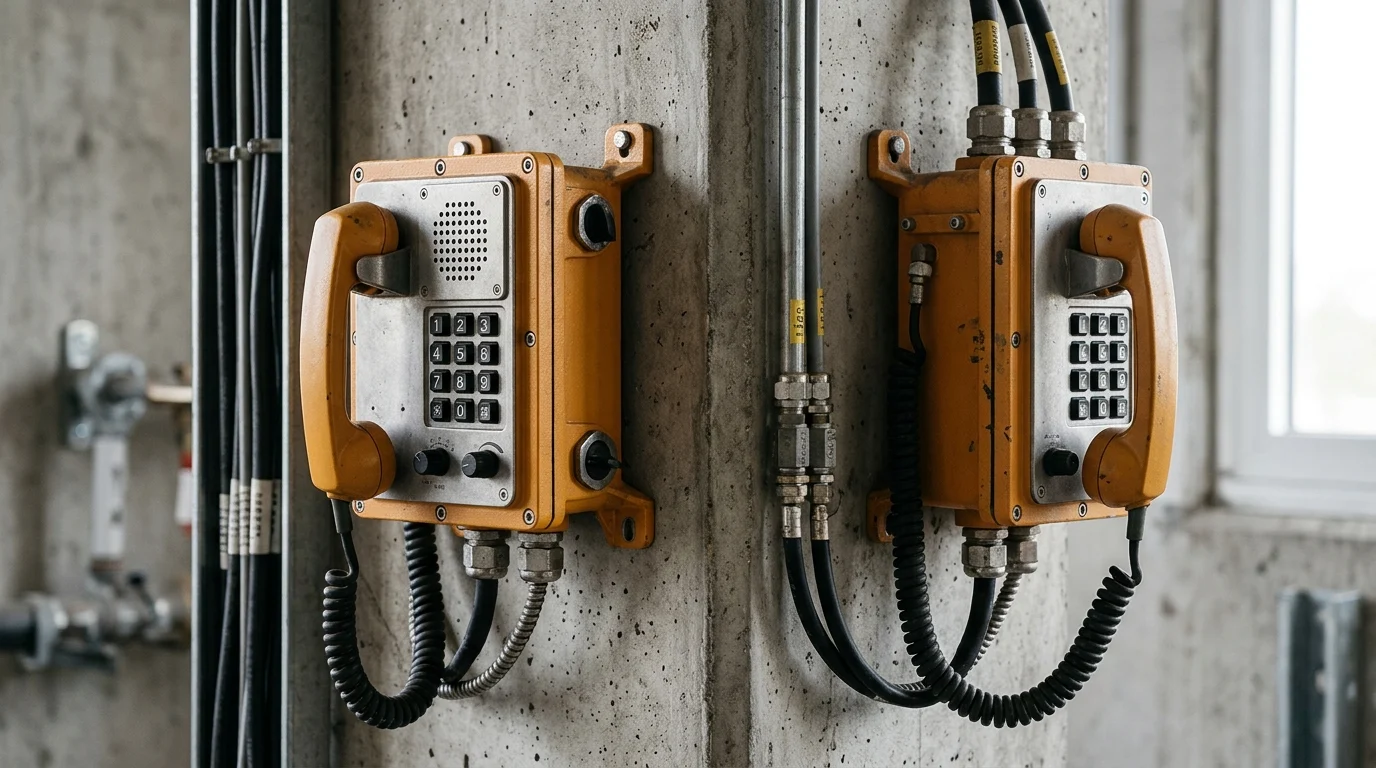
Selecting communication equipment for hazardous zones involves more than matching a handset to a site layout. In areas with flammable gas, vapor, or dust, the wrong telephone can introduce ignition risk, fail compliance checks, or stop working when teams need it most. This article explains how to evaluate explosion proof telephones by looking at area classification, certification standards, enclosure protection, durability, network compatibility, and emergency-use features. By the end, readers will have a practical framework for comparing models and choosing equipment that supports both plant safety and reliable day-to-day operations.
Why Explosion Proof Telephones Matter for Safety and Continuity
In industrial facilities where flammable gases, vapors, or combustible dusts are present, standard communication equipment poses a severe ignition risk. Even the minimal electrical energy required to ring a standard telephone can exceed the minimum ignition energy of volatile substances, which in some gas groups is as low as 0.02 millijoules. Explosion proof telephones are engineered specifically to contain internal explosions and prevent sparks or thermal effects from igniting the surrounding atmosphere. Deploying these specialized devices is not merely a regulatory formality; it is a critical safeguard for human life and a foundational element of operational continuity.
Beyond preventing catastrophic events, explosion proof telephones ensure that critical communication channels remain open during emergencies. When standard network infrastructure fails or when personnel must coordinate complex shutdown procedures in hazardous zones, these robust devices provide a reliable lifeline. Their deployment directly correlates with reduced emergency response times and minimized production downtime during critical incidents.
How do explosion proof telephones reduce operational risk and downtime
Explosion proof telephones mitigate operational risk through sophisticated enclosure engineering and intrinsically safe circuitry. Heavy-duty enclosures, typically constructed from copper-free cast aluminum, glass-reinforced polyester (GRP), or 316L stainless steel, are designed to withstand internal detonations without rupturing. The flame paths within these enclosures are machined to precise tolerances, cooling any escaping gases below the ignition temperature of the external environment.
By utilizing components with high Mean Time Between Failures (MTBF)—often exceeding 50,000 hours—these telephones drastically reduce the frequency of maintenance interventions in hazardous zones. Fewer maintenance cycles mean reduced operational disruption, lower permit-to-work overhead, and a highly reliable communication network that functions flawlessly during both routine operations and facility-wide emergencies.
Which industries and hazardous area scenarios need them most
The demand for explosion proof telephones spans a broad spectrum of heavy industries. Oil and gas extraction platforms, petrochemical refineries, and chemical processing plants require extensive deployments due to the constant presence of hydrocarbon vapors. In these sectors, equipment must typically be rated for Zone 1 or Zone 2 (gas) hazardous areas.
Additionally, the mining, grain processing, and pharmaceutical manufacturing industries face severe risks from combustible dust. In these environments, fine particulate matter suspended in the air can cause devastating explosions. Telephones deployed here must meet rigorous Zone 21 or Zone 22 (dust) classifications, ensuring that their exterior surface temperatures never exceed the smoldering threshold of the specific dust present, which is often tightly regulated to stay below 135°C (T4 rating).
What Specifications Matter Most When Choosing Explosion Proof Telephones
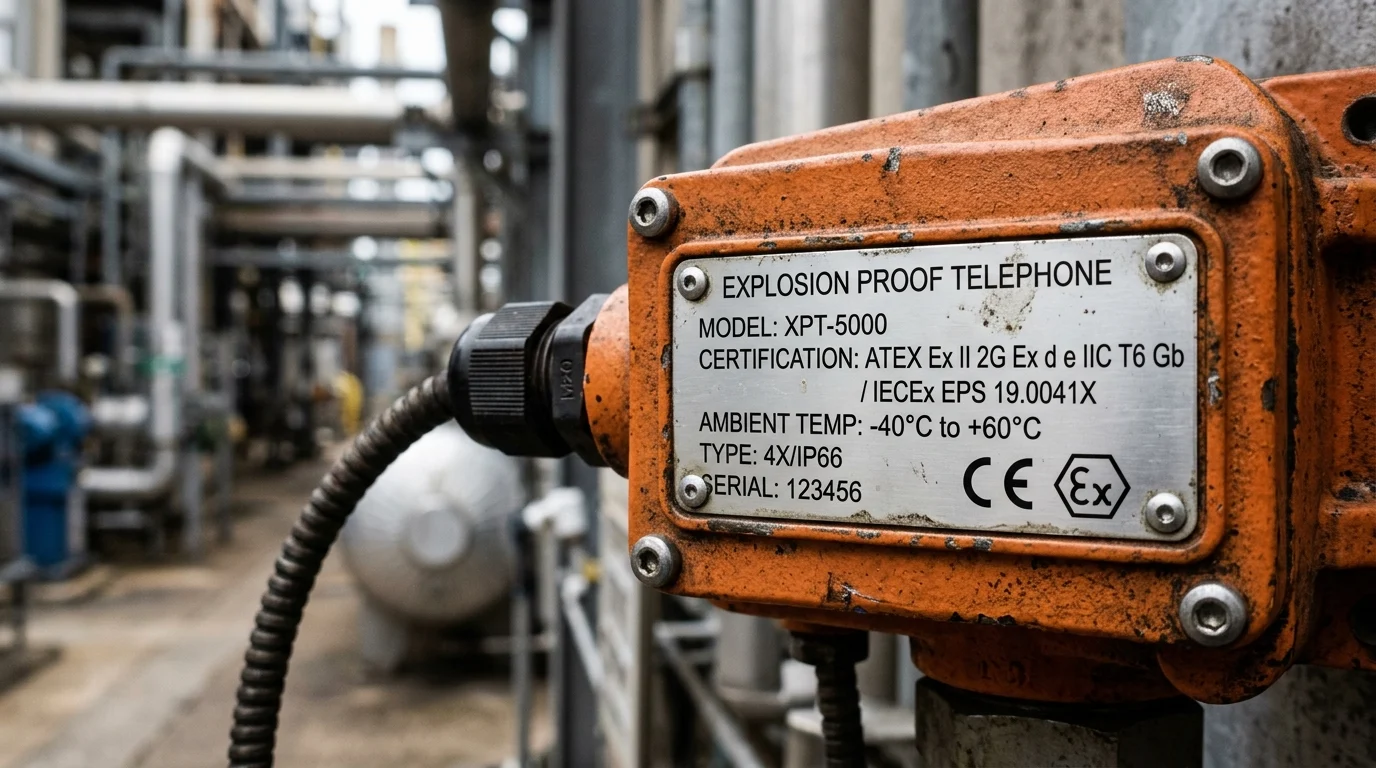
Specifying explosion proof telephones requires a precise alignment between the facility’s environmental hazards and the hardware’s protective capabilities. Procurement engineers must evaluate an array of technical parameters, from enclosure integrity to network interoperability, ensuring the selected devices deliver both uncompromised safety and high-fidelity communication under extreme conditions.
How should buyers compare hazardous area classification and ingress protection
Hazardous area classification dictates the fundamental protection methodology of the telephone. Buyers must identify whether the installation site is designated as a Zone 1/21 (high probability of explosive atmosphere) or Zone 2/22 (low probability). Telephones designed for Zone 1 often utilize Ex d (flameproof) or Ex e (increased safety) protection concepts.
Equally critical is the Ingress Protection (IP) rating, which determines the enclosure’s resistance to dust and moisture. Industrial environments demand a minimum of IP66 to withstand heavy seas or powerful water jets, while IP67 ratings are preferred for areas subject to temporary submersion. Buyers should also cross-reference these ratings with NEMA 4X standards in North American applications to ensure superior corrosion resistance.
| Specification | Standard Industrial Range | Extreme Hazardous Requirement |
|---|---|---|
| Ingress Protection | IP65 | IP66 / IP67 |
| Operating Temperature | -20°C to +50°C | -40°C to +70°C |
| Ringer Volume Output | 80 dB at 1 meter | 95-110 dB at 1 meter |
| MTBF (Mean Time Between Failures) | 25,000 hours | > 50,000 hours |
Which communication, power, and usability features matter most
Modern explosion proof telephones are available in both analog and Voice over Internet Protocol (VoIP) configurations. VoIP models utilizing SIP (Session Initiation Protocol) offer advanced network management, self-diagnostic capabilities, and seamless integration into central PBX systems. For power delivery, Power over Ethernet (PoE) via the IEEE 802.3af standard is highly advantageous, allowing both data and up to 15.4W of power to travel over a single cable, thereby simplifying installation.
Usability features are paramount for personnel operating in cumbersome Personal Protective Equipment (PPE). Keypads must feature oversized, widely spaced buttons to accommodate heavy industrial gloves. Furthermore, ambient noise in processing plants frequently exceeds 85 dB; thus, telephones must incorporate noise-canceling microphones and high-output ringers capable of reaching 110 dB, often paired with supplemental visual beacons to ensure calls are not missed.
What comparison criteria should buyers use to evaluate options
When evaluating various models, buyers should utilize a matrix of comparison criteria focused on lifecycle durability. The handset cord, a common point of failure, should feature a stainless steel armored sheath with a tensile pull strength exceeding 200 kg. Magnetic hook switches with no moving parts are vastly superior to traditional mechanical cradles, as they eliminate friction wear and prevent dust ingress.
Operating temperature range is another critical differentiator. High-quality explosion proof telephones utilize industrial-grade internal components capable of functioning reliably in ambient temperatures ranging from -40°C in Arctic installations to +70°C in desert refineries. Evaluating these specific thresholds ensures the chosen equipment will not suffer from thermal degradation over its operational lifespan.
How to Verify Compliance and Regional Standards
Procuring equipment for hazardous areas involves navigating a complex web of international and regional safety standards. Failure to verify compliance not only jeopardizes facility safety but can also result in severe legal liabilities and denied insurance coverage. Rigorous documentation review is a non-negotiable phase of the procurement process.
Which certifications, markings, and documents should be checked
Every explosion proof telephone must be accompanied by a valid Declaration of Conformity (DoC) and an official certificate from an accredited testing laboratory (such as PTB, UL, or Baseefa). Buyers must carefully scrutinize the specific Ex markings on the equipment’s nameplate. For example, a marking of ‘Ex db eb IIC T6 Gb’ indicates flameproof and increased safety protection, suitable for the most volatile gas group (Hydrogen/Acetylene) with a maximum surface temperature of 85°C.
Authenticity and traceability are paramount. Procurement teams should verify the certificate numbers directly through the issuing body’s online database. Furthermore, the manufacturer’s Quality Assessment Report (QAR) or Quality Assurance Notification (QAN) must be current, ensuring that their production facilities maintain the strict quality controls required to manufacture Ex-rated equipment consistently.
How do ATEX, IECEx, NEC, and other regional requirements differ
Regional regulatory frameworks dictate which certifications are legally acceptable. The ATEX directive (2014/34/EU) is mandatory for installations within the European Union, utilizing a Zone-based classification system. IECEx serves as an international baseline recognized by many countries globally, facilitating easier cross-border project approvals without the need for redundant localized testing.
In North America, the National Electrical Code (NEC) predominantly utilizes a Class and Division system, though it is gradually harmonizing with the Zone system (NEC 500 vs. NEC 505). A telephone rated for ATEX Zone 1 is not automatically legal for use in a US-based Class I, Division 1 environment. Buyers managing global supply chains must understand these distinctions to ensure compliant procurement across disparate geographic regions.
| Standard / Directive | Primary Region | Classification Methodology | Governing Authority / Framework |
|---|---|---|---|
| ATEX | European Union | Zones (0, 1, 2) | EU Directives (CE marking required) |
| IECEx | International | Zones (0, 1, 2) | International Electrotechnical Commission |
| NEC 500 | USA | Classes & Divisions | National Fire Protection Association (NFPA) |
| CEC | Canada | Classes, Divisions & Zones | Canadian Standards Association (CSA) |
How to Assess Suppliers, Total Cost, and Deployment
Selecting the right hardware is only part of the equation; partnering with a capable manufacturer dictates the long-term success of the deployment. An exhaustive assessment of supplier capabilities, Total Cost of Ownership (TCO), and post-installation support ensures that the chosen explosion proof telephones deliver sustained value and safety.
What sourcing criteria help identify qualified manufacturers
Qualified manufacturers of explosion proof equipment must demonstrate specialized engineering pedigree. Beyond standard ISO 9001 certification, buyers should look for vendors who possess specific Ex manufacturing audits. A critical sourcing metric is the vendor’s historical defect rate; elite manufacturers maintain defect rates well below 0.5% for Ex-rated telecommunications equipment.
Buyers should also evaluate the manufacturer’s vertical integration. Suppliers who design their own proprietary mainboards and machine their own enclosures generally offer superior quality control and longer product lifecycles compared to assemblers who merely repackage third-party components. Requesting case studies of deployments in similar harsh environments provides tangible proof of supplier capability.
How should buyers compare lead times, spare parts, and warranty
Lead times are a critical factor in project scheduling. Standard explosion proof telephones should ideally have a lead time of 4 to 8 weeks, whereas highly customized SIP configurations with specialized beacon integration may extend to 12 to 16 weeks. Buyers must factor these timelines into their project critical paths to avoid costly commissioning delays.
To accurately calculate TCO, stakeholders must evaluate warranty terms and spare parts availability. Top-tier vendors typically offer warranties ranging from 24 to 36 months. Furthermore, the modularity of the telephone design dictates maintenance costs. If a handset is damaged, the ability to replace just the handset assembly in the field—rather than returning the entire 15 kg cast-aluminum unit to the factory—drastically reduces both freight costs and communication downtime.
What Is the Best Decision Process for Selection
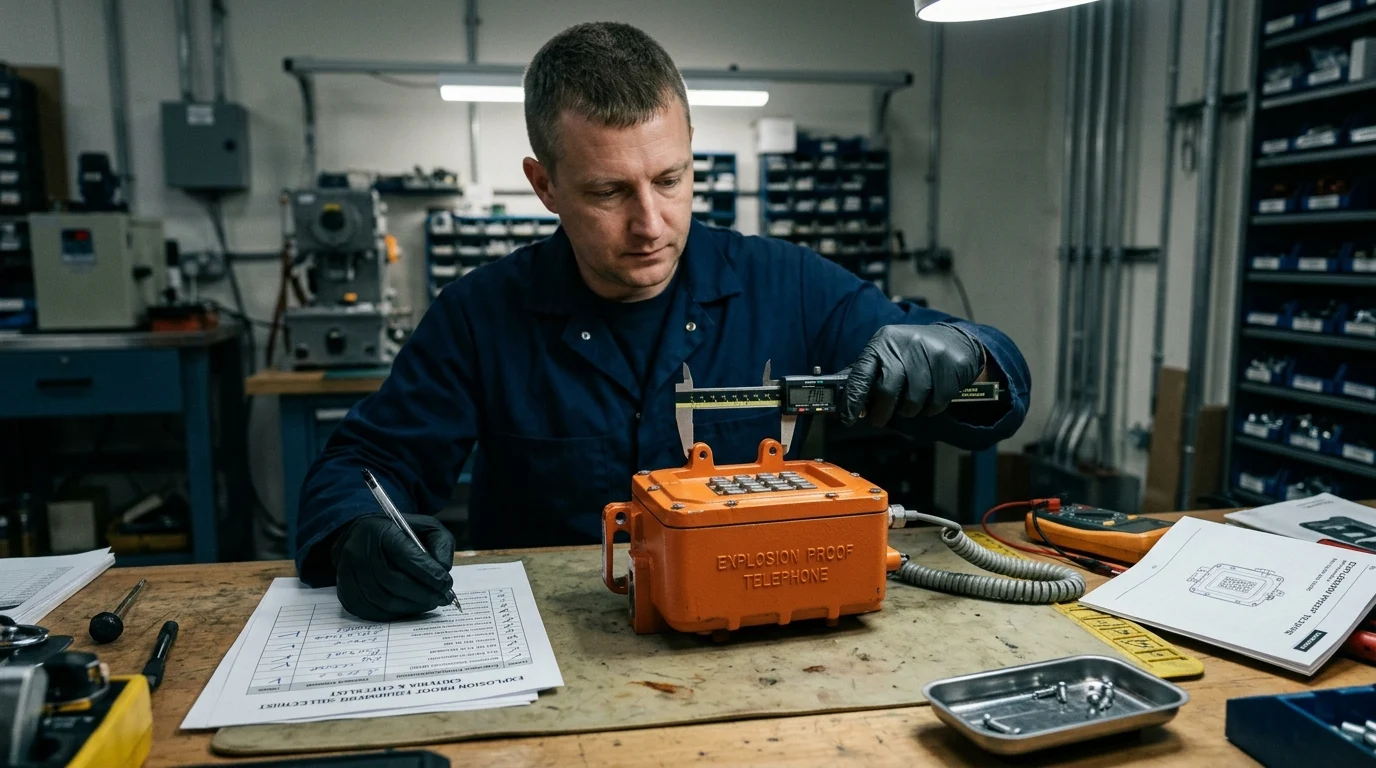
A structured, data-driven decision process prevents costly specification errors and guarantees that the selected communication infrastructure perfectly aligns with the facility’s safety protocols. This process requires cross-functional collaboration among health and safety officers, IT/telecom engineers, and procurement specialists.
Which site assessment and specification steps should come first
The selection process must begin with a comprehensive site assessment. Safety engineers must map the facility to determine the precise hazardous area classifications, mapping out the specific gas groups (IIA, IIB, or IIC) and temperature classes (T1 through T6) present in each installation zone. This mapping forms the absolute baseline for all subsequent hardware specifications.
Simultaneously, acoustic and environmental surveys must be conducted. If ambient noise levels consistently exceed 85 dB, the specification must be updated to include acoustic hoods and auxiliary flashing beacons. Network engineers must also assess existing infrastructure to decide between pulling new CAT6 cable for a PoE VoIP deployment or utilizing legacy two-wire copper for analog models.
What final criteria should stakeholders use to make the decision
With the site assessment complete, stakeholders should utilize a weighted scoring matrix to evaluate final proposals. A standard industrial weighting might allocate 40% to safety compliance and certification rigor, 30% to technical fit and interoperability, 20% to Total Cost of Ownership (including spares and MTBF data), and 10% to vendor support and lead times.
Ultimately, the decision rests on achieving a balance between uncompromised explosion protection and modern communication functionality. By rigorously applying these technical and commercial criteria, industrial operators can deploy a resilient telephone network that safeguards personnel, maintains regulatory compliance, and ensures flawless coordination in the world’s most hazardous environments.
Key Takeaways
- The most important conclusions and rationale for Explosion Proof Telephones
- Specs, compliance, and risk checks worth validating before you commit
- Practical next steps and caveats readers can apply immediately
Frequently Asked Questions
What certification should an explosion proof telephone have?
Match the site classification first: Zone 1/2 for gas or Zone 21/22 for dust. Choose units with relevant ATEX certification; Siniwo also offers products aligned with CE, FCC, ROHS, and ISO9001 requirements.
How do I choose between analog and VoIP explosion proof telephones?
Use analog for simple legacy lines and basic emergency calling. Choose VoIP if you need IP PBX integration, centralized management, and easier system expansion across large industrial sites.
What IP rating is recommended for hazardous outdoor areas?
Select at least IP66 for dust, rain, and washdown exposure. Choose IP67 when temporary submersion or very wet process areas are possible.
Which materials work best for harsh hazardous environments?
Use copper-free cast aluminum or GRP for general industrial hazardous zones. Pick 316L stainless steel where corrosion is severe, such as offshore, chemical, or marine locations.
Why consider Siniwo for explosion proof telephones?
Siniwo provides one-stop industrial communication services, from design to maintenance, and manufactures over 90% of core components in-house, supporting stable quality and dependable delivery for hazardous-area projects.
Post time: Apr-27-2026