
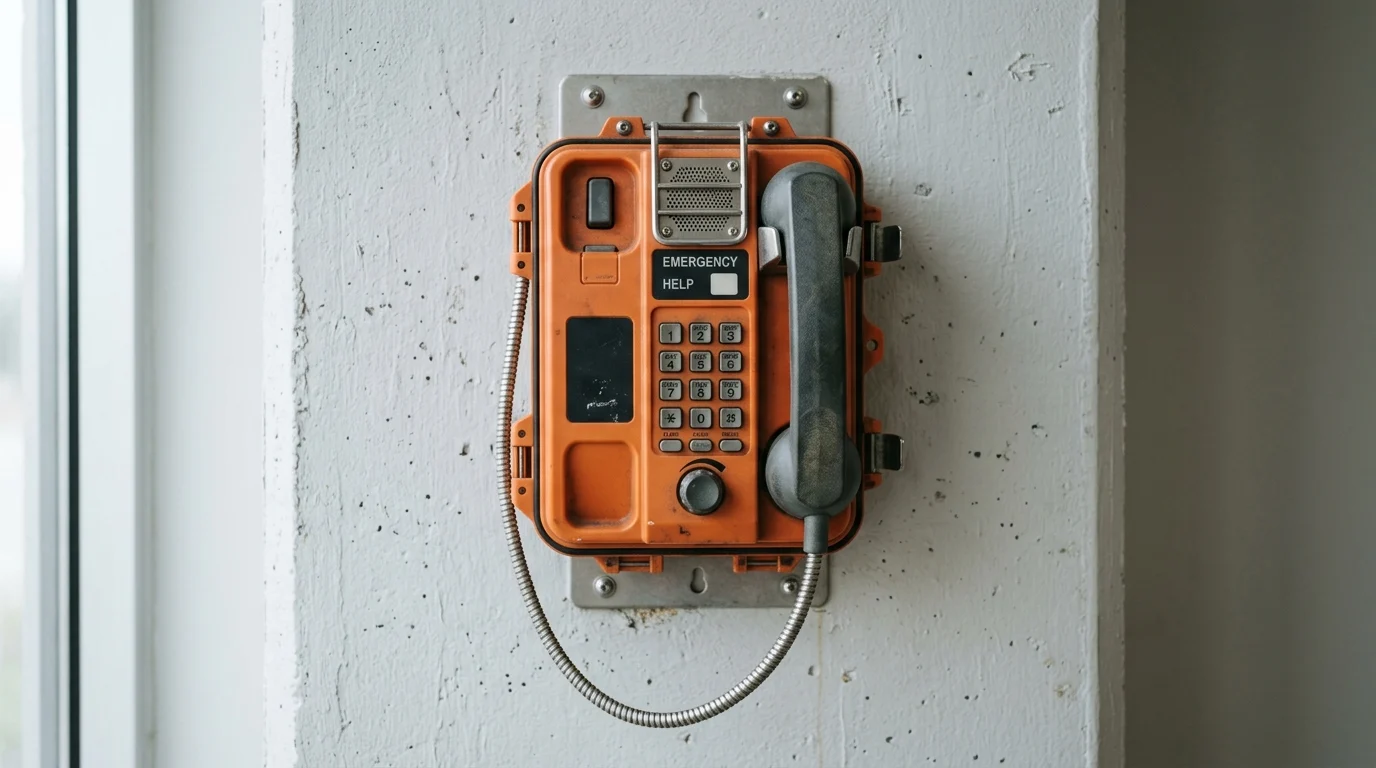
Introduction
Choosing a weatherproof telephone for an industrial site means balancing durability, safety, and communication reliability under real operating conditions. The right unit must keep working through rain, dust, noise, temperature swings, and emergencies, while also fitting the site’s network and response procedures. A poor choice can lead to missed calls, delayed incident reporting, and costly downtime. This article explains the key factors that matter most, including environmental protection ratings, audio clarity, emergency features, mounting options, and system compatibility, so you can compare models with a clear understanding of what will perform reliably in demanding industrial settings.
Why the Right Weatherproof Telephone Matters
In critical industrial environments, communication infrastructure is not merely an operational convenience; it is a fundamental safety mechanism. A weatherproof telephone serves as a vital lifeline when primary radio networks fail, cellular reception drops, or localized emergencies require immediate, hardwired communication. Selecting the correct apparatus ensures that personnel can coordinate operations and trigger emergency protocols without delay.
Industrial communication failures carry steep financial and safety penalties. Unplanned downtime in heavy industries can exceed $20,000 per hour, and delayed emergency responses exponentially increase the risk of catastrophic personnel injury or asset loss. Consequently, specifying a weatherproof telephone demands a rigorous evaluation of environmental durability, acoustic performance, and system interoperability.
Operating conditions and emergency response needs
The operational conditions of a site dictate the baseline specifications for any communication device. Facilities exposed to heavy rain, airborne particulate matter, and extreme temperature fluctuations require enclosures that actively repel environmental ingress. In emergency scenarios, a telephone must function instantaneously upon handset lift, bypassing complex dialing procedures through auto-dial features or hotlines routed directly to a central control room.
Emergency response needs also dictate physical visibility and accessibility. Devices are often integrated with high-visibility flashing beacons (typically operating at 12V or 24V DC) and external loud ringers capable of projecting sound over ambient industrial noise. The integration of fault-monitoring software allows central command to ping the device periodically, ensuring the line and handset are fully operational before an emergency occurs.
High-demand industrial environments
High-demand environments such as petrochemical refineries, offshore drilling platforms, open-pit mines, and railway tunnels present unique acoustic and physical challenges. In these settings, ambient noise frequently exceeds 90 dB(A), rendering standard telephonic equipment useless. A properly specified weatherproof telephone must utilize noise-canceling microphones and high-output receivers to isolate the user’s voice from heavy machinery and environmental clamor.
Furthermore, these environments subject equipment to corrosive elements like saltwater spray, acidic vapors, and constant ultraviolet (UV) radiation. Materials must be selected not only for their immediate impact resistance but for their long-term stability. A device installed in a marine environment, for instance, must withstand continuous salt-laden moisture without degrading the internal printed circuit boards (PCBs) or the external keypad.
Key Specifications to Compare
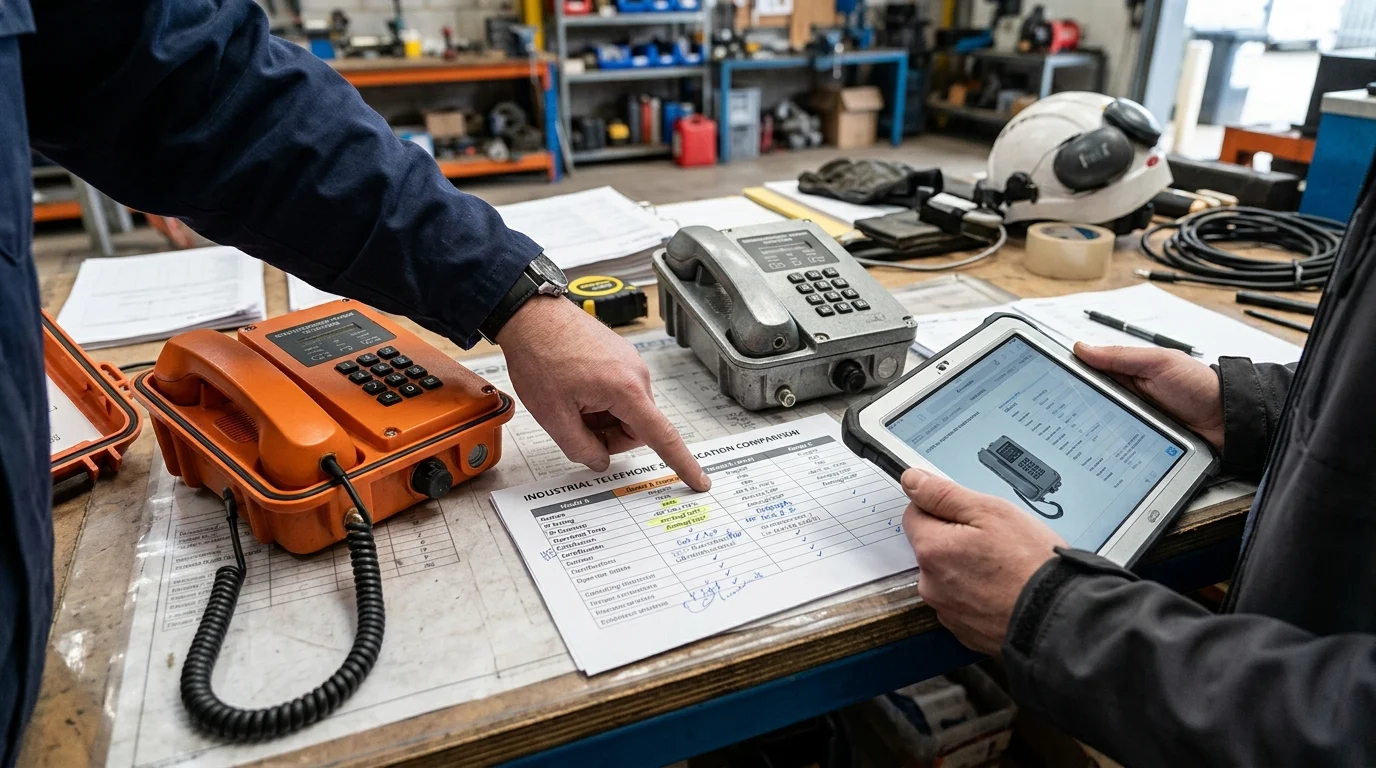
Comparing specifications is the most critical phase of the procurement process. Industrial telephones are engineering investments, and their datasheets must be scrutinized to ensure they meet the exact demands of the deployment site. Engineers and procurement officers must evaluate three primary technical pillars: environmental resilience ratings, network transmission protocols, and physical hardware construction.
Ingress protection, impact resistance, and temperature range
Environmental resilience is quantified by standardized ratings. Ingress Protection (IP) and Impact Protection (IK) are the primary metrics. While IP65 is sufficient for basic outdoor use, severe industrial sites require IP66 (protection against powerful water jets) or IP67 (protection against temporary immersion). Similarly, an IK10 rating guarantees the enclosure can withstand a 20-joule impact—equivalent to a 5 kg mass dropped from 400 mm.
Temperature tolerance is equally vital. Standard commercial electronics fail rapidly in industrial extremes. A true weatherproof telephone should offer a standard operating temperature range of -30°C to +65°C. For arctic or foundry applications, extended ranges of -40°C to +75°C are often required, necessitating internal conformal coating on all PCBs and specialized cold-weather LCD displays if screens are utilized.
| Rating Type | Entry Level (Standard Industrial) | High-End (Severe Environment) |
|---|---|---|
| Ingress Protection (IP) | IP65 / IP66 (Dust tight, water jets) | IP67 (Temporary immersion) |
| Impact Protection (IK) | IK08 (5 Joules impact) | IK10 (20 Joules impact) |
| Temperature Range | -20°C to +55°C | -40°C to +75°C |
Analog, SIP, GSM, and LTE options
The choice of transmission technology defines the device’s integration into the broader plant network. Analog telephones remain prevalent for legacy infrastructure, offering reliable 2-wire connections that can transmit signals up to 5 kilometers without amplification. They are highly resilient but lack advanced remote diagnostics.
Session Initiation Protocol (SIP) or Voice over IP (VoIP) telephones are the modern standard. Utilizing standard Ethernet cabling, SIP phones support Power over Ethernet (PoE 802.3af/at), high-definition audio codecs (G.722), and centralized web-based management. For remote sites lacking hardwired infrastructure, GSM or LTE weatherproof telephones provide wireless connectivity, requiring only a local power source and an activated SIM card on a reliable 4G band.
Enclosure, handset, and audio performance criteria
The physical construction of the enclosure and handset determines the unit’s lifespan. Enclosures are typically manufactured from either cast aluminum alloy (excellent for impact and general durability) or Glass-Reinforced Polyester (GRP). GRP is highly favored in chemical and marine environments due to its absolute immunity to rust and galvanic corrosion.
Handset cords are notorious failure points in industrial settings. Heavy-duty models utilize stainless steel spiral cords with an internal steel lanyard, providing a minimum tensile pull strength of 200 kg. From an audio perspective, the internal ringer must generate a minimum of 85 dB(A) at a 1-meter distance, while integrated amplifiers (often up to 15W) can drive external horn speakers for wide-area broadcasting.
Compliance, Installation, and Total Cost
Beyond technical specifications, the successful deployment of a weatherproof telephone network depends heavily on regulatory compliance, installation logistics, and the total cost of ownership (TCO). A device that is inexpensive to purchase but difficult to integrate or non-compliant with local safety directives will ultimately generate significant unforeseen expenses.
Required standards and approvals
Industrial communication equipment must adhere to strict international and regional standards. Baseline approvals include CE, FCC, and RoHS compliance. If the site contains combustible gases or dust, standard weatherproof phones are insufficient; the devices must be intrinsically safe or explosion-proof, carrying ATEX, IECEx, or UL Class I Division 1/2 certifications.
Accessibility standards also play a role in certain jurisdictions. Devices may need to comply with the Americans with Disabilities Act (ADA) or equivalent international standards, requiring specific mounting heights, hearing aid compatible (HAC) receivers, and tactile keypads with Braille indicators.
Power, cabling, mounting, and integration factors
Installation logistics vary wildly based on the chosen technology. SIP telephones powered via PoE (requiring up to 15.4W) simplify cabling by combining data and power into a single Cat5e/Cat6 cable. However, if the phone is equipped with an integrated heater for extreme cold or a high-wattage external horn, PoE+ (30W) or a dedicated 110V/220V AC local power supply may be required.
Mounting options must be decided early in the site planning phase. Wall-mounted units are standard for indoor industrial halls, but outdoor perimeter fences or open-pit mines often require robust, freestanding mounting pillars. Integration factors also include configuring SIP devices to register correctly with the facility’s existing IP-PBX (such as Cisco, Avaya, or Asterisk platforms).
Cost drivers beyond purchase price
The purchase price of a weatherproof telephone typically ranges from $300 for basic analog units to well over $1,200 for advanced SIP models with GRP enclosures and external beacons. However, the purchase price represents only a fraction of the TCO.
Cost drivers include installation labor (often $150–$300 per hour for specialized electrical contractors in hazardous areas), cable trenching, and software licensing for PBX integration. To minimize TCO, buyers should prioritize devices with a Mean Time Between Failures (MTBF) exceeding 50,000 hours and robust remote management capabilities, which drastically reduce the need for on-site maintenance dispatches.
How to Source and Qualify Suppliers
Procuring industrial communication hardware requires vetting suppliers as rigorously as the equipment itself. The market consists of various tiers of vendors, and selecting the right partner ensures access to reliable warranties, technical support, and long-term spare parts availability.
Manufacturing quality and testing questions
When qualifying a manufacturer, buyers must interrogate their quality assurance and testing protocols. A reputable supplier should readily provide documentation for environmental testing. For marine applications, ask for salt spray testing certificates showing a minimum of 96 hours of exposure without degradation.
Acoustic testing is equally important. Inquire how the manufacturer validates the noise-canceling capabilities of their microphones. Furthermore, evaluate the warranty terms; standard consumer electronics offer 12 months, whereas industrial-grade weatherproof telephones should carry warranties ranging from 24 to 36 months, reflecting the manufacturer’s confidence in their MTBF metrics.
Manufacturers, integrators, and distributors compared
Buyers can source equipment through direct manufacturers (OEMs), system integrators, or stocking distributors. Each channel offers distinct advantages depending on the project scale.
| Supplier Type | Ideal Use Case | Typical Lead Time | Customization Capability |
|---|---|---|---|
| Direct OEM / Mfr | High volume, custom firmware/hardware | 4–8 weeks | High (Custom colors, specific SIP profiles) |
| System Integrator | Complex multi-system deployments | 2–6 weeks | Medium (Software integration, API hooks) |
| Stocking Distributor | Small quantities, urgent replacements | 1–5 days | Low (Off-the-shelf configurations only) |
Direct OEMs are ideal for large capital projects requiring custom enclosure colors, specific autodial configurations, or lower unit costs at high Minimum Order Quantities (MOQs). Integrators add value by packaging the phones with PBX systems and PA networks, though at a markup. Distributors are best for rapid, low-volume replacements where 1- to 2-week lead times are unacceptable.
A practical selection process
A practical selection process begins with a comprehensive site audit to define exact IP/IK ratings and acoustic requirements. Next, issue a Request for Information (RFI) to a shortlist of suppliers, asking for compliance certificates and MTBF data.
Before committing to a fleet-wide purchase, always procure a sample unit. Install this sample in the harshest intended location on site. Test the microphone clarity during peak operational noise, verify the network integration with the existing PBX, and ensure the physical mounting hardware withstands local vibrations.
Decision Framework and Common Mistakes
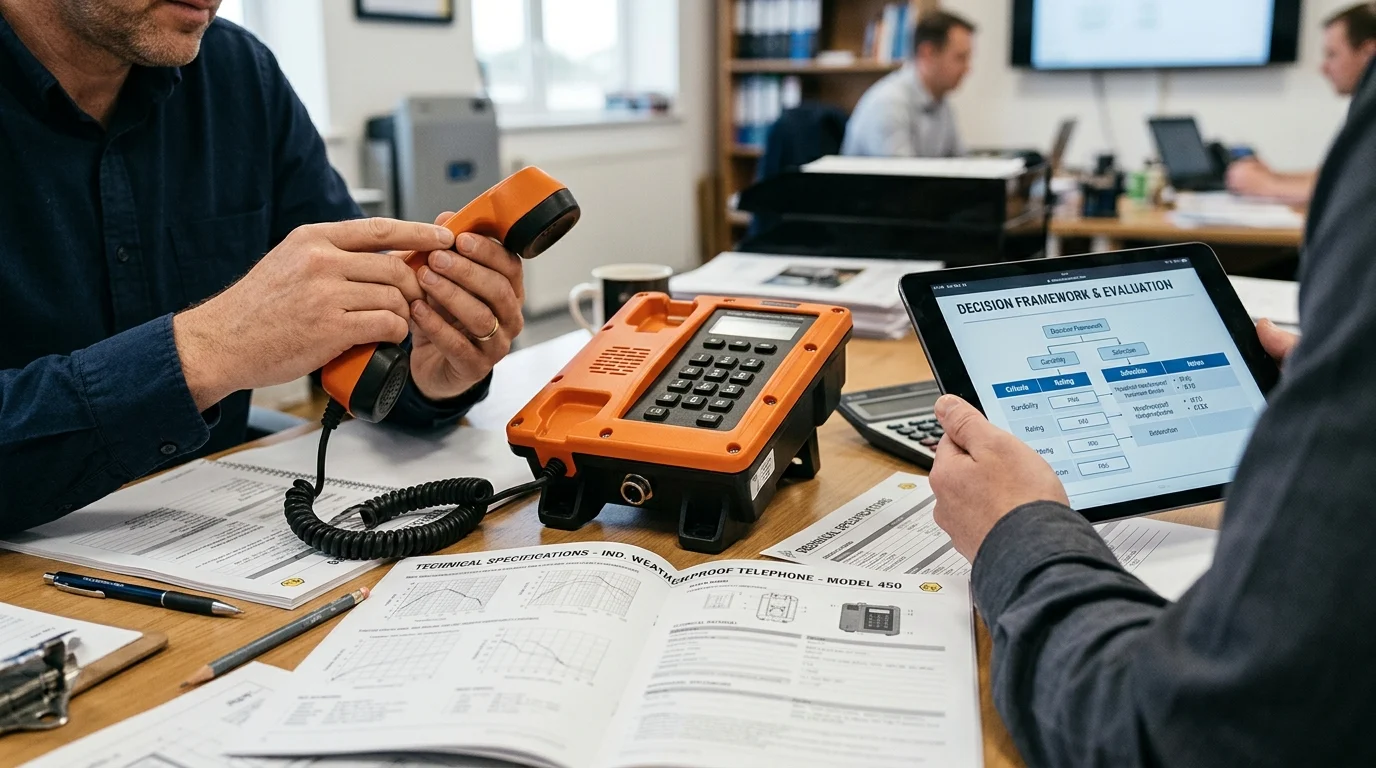
Finalizing the procurement of weatherproof telephones requires a structured decision matrix that maps specific device features to localized site risks. Avoiding common specification pitfalls ensures the resulting communication network operates flawlessly across its expected 10- to 15-year lifespan.
Matching phone types to site risks
Matching the phone type to the site risk involves categorizing zones within the facility. For a standard loading dock, a cast-aluminum, keypad-equipped SIP phone with an IP66 rating is generally sufficient. However, for a chemical processing zone with high ambient noise, the risk profile demands a GRP enclosure (for chemical resistance), an IP67 rating, no keypad (auto-dial hotline to prevent contamination from dirty gloves), and an acoustic hood to shield the user from the 90+ dB background noise.
Similarly, remote perimeter gates that lack physical network cabling carry the risk of isolation. In these zones, an LTE-enabled weatherproof telephone powered by a localized solar panel and battery bank mitigates the risk of severed communication lines, provided the local 4G signal strength is verified prior to installation.
Common selection mistakes to avoid
A frequent mistake in specification is ignoring the micro-environment inside the enclosure. While an IP67 rating keeps external water out, drastic temperature changes can cause internal condensation, leading to PCB corrosion. Specifying enclosures with Gore-Tex breather valves prevents this moisture accumulation.
Another common error is assuming universal SIP compatibility. While SIP is a standard (RFC3261), proprietary IP-PBX systems sometimes require specific firmware tweaks. Failing to validate SIP 2.0 interoperability during the sample testing phase can result in dropped calls or non-functioning DTMF tones.
Finally, buyers often underestimate cable degradation. Installing a high-end weatherproof telephone using standard indoor-rated Cat5e cable exposes the system to UV and moisture failure at the connection point. Always specify UV-resistant, armored, or gel-filled cabling to match the environmental resilience of the telephone unit itself.
Key Takeaways
- The most important conclusions and rationale for weatherproof telephone
- Specs, compliance, and risk checks worth validating before you commit
- Practical next steps and caveats readers can apply immediately
Frequently Asked Questions
What IP rating should a weatherproof telephone have for industrial outdoor use?
Choose at least IP66 for heavy rain and washdown areas. Use IP67 where temporary immersion or flooding is possible.
How do I choose between analog and SIP weatherproof telephones?
Use analog for simple legacy 2-wire systems and long cable runs. Choose SIP/VoIP for modern networks, remote monitoring, and easier integration with IP PBX systems.
When is an explosion-proof phone better than a standard weatherproof telephone?
Use explosion-proof models in hazardous zones such as oil, gas, chemical, or dust-risk areas. Check required certifications like ATEX before purchase.
Which features matter most in noisy industrial sites?
Prioritize noise-canceling microphones, high-output receivers, flashing beacons, and loud external ringers so calls remain clear above machinery noise.
Why buy a weatherproof telephone from Siniwo?
Siniwo provides industrial communication solutions from design to maintenance, with weatherproof and hazardous-area products, certified quality, and delivery experience in 70+ countries.
Post time: May-19-2026