
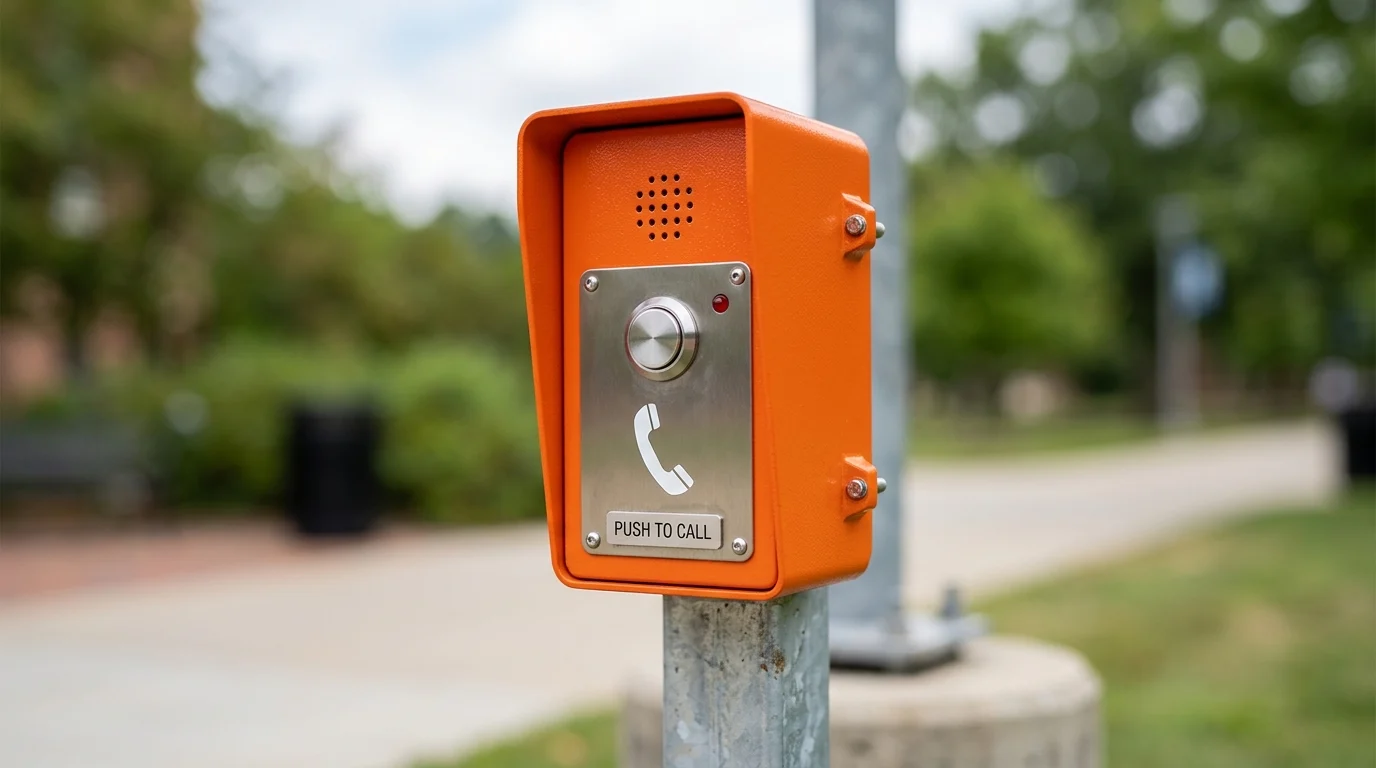
Why Emergency Call Boxes Are Critical Infrastructure
As urban environments transition toward interconnected smart ecosystems, the Emergency Call Box (ECB) remains a foundational pillar of public safety infrastructure.
Despite the ubiquity of mobile devices, smart city planners recognize that commercial cellular networks are susceptible to congestion and power outages during large-scale crises. Hardwired and dedicated cellular-backed ECBs provide a fail-safe communication channel with guaranteed uptime for critical municipal zones.
How Emergency Call Boxes Improve Public Safety
Modern emergency call boxes drastically reduce incident response times by providing direct, one-button access to dispatch centers. Unlike mobile phones, which require location triangulation, fixed public help points immediately transmit precise geolocation data to first responders.
This direct routing typically cuts emergency dispatch initiation from an average of 90 seconds to under 15 seconds. Furthermore, integration with public address (PA) systems and high-definition video feeds allows command centers to assess the situational environment before units arrive.
Which Buyer Segments Are Driving Demand
Demand is highly concentrated among public transit authorities, municipal governments, and large-scale private facility managers. Highway infrastructure projects often mandate the installation of roadside emergency telephones at intervals of 1 to 2 kilometers, driving high-volume procurement contracts.
Beyond transportation, industrial buyers in sectors like mining, oil and gas, and heavy manufacturing require explosion-proof and weatherproof units. A typical regional transit project may require an initial deployment of 150 to 500 units, creating lucrative opportunities for specialized B2B distributors who can supply compliant hardware at scale.
How Emergency Call Boxes Work in Smart Cities
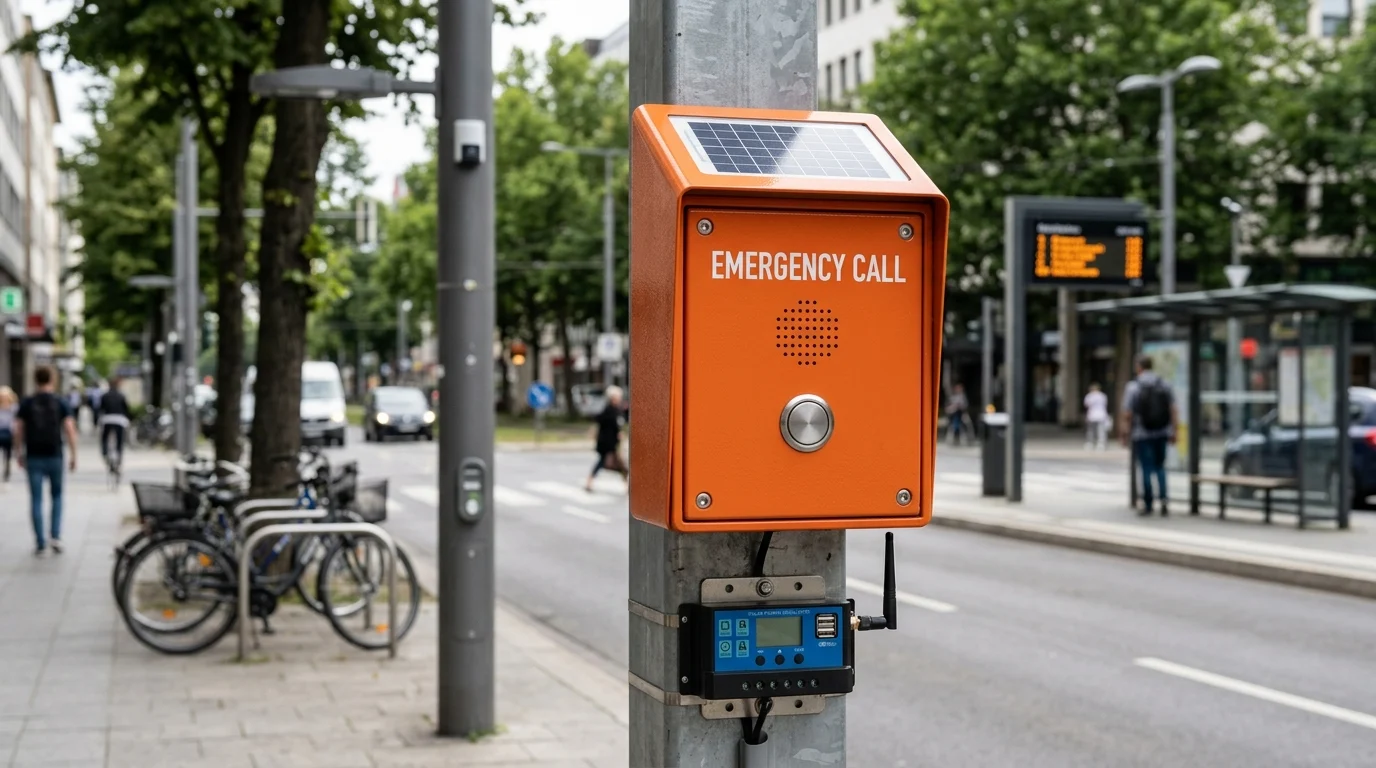
In a smart city framework, an emergency call box operates as an intelligent edge device rather than a simple telephone. These terminals integrate seamlessly into centralized command centers via IP-based networks, offering real-time diagnostics, remote firmware updates, and automated fault reporting.
Which Core Components Determine Performance
The reliability of an ECB hinges on its internal and external components. High-grade models utilize 304 or 316L stainless steel or cold-rolled steel enclosures to resist vandalism and extreme weather. Internally, industrial-grade motherboards are engineered to operate in temperature ranges from -40°C to +70°C.
Acoustic performance is equally critical. Advanced units feature full-duplex communication with active noise cancellation (ANC) capable of filtering out ambient background noise exceeding 85 decibels, ensuring clear voice transmission even on busy highways or active industrial sites with heavy machinery.
How SIP, VoIP, 4G, 5G, and Fiber Affect Connectivity
Connectivity protocols dictate network architecture and deployment costs. Session Initiation Protocol (SIP) and Voice over Internet Protocol (VoIP) are the dominant standards, offering low-latency communication over fiber-optic backbones. This allows for centralized management via standard IP PBX systems.
For remote or geographically challenging locations where laying fiber is cost-prohibitive, 4G LTE and emerging 5G modules provide robust wireless backhaul. These cellular units typically feature dual-SIM redundancy and solar-powered battery arrays to maintain continuous operation without grid reliance.
How to Compare Emergency Call Box Options
Procurement teams must balance infrastructure readiness against hardware capabilities when selecting an ECB architecture. The choice between analog, IP-based, and cellular systems directly impacts both initial capital expenditure and long-term maintenance overhead.
| Connectivity Type | Typical Latency | Power Requirement | Best Use Case | Cost Profile |
|---|---|---|---|---|
| Analog | < 10 ms | Line-powered | Legacy infrastructure upgrades | Low CAPEX, High OPEX |
| SIP / VoIP | 20-50 ms | PoE (802.3af/at) | Smart campuses, urban centers | Medium CAPEX, Low OPEX |
| 4G / 5G | 40-80 ms | Solar / DC 12V | Highways, remote parks | High CAPEX, Low OPEX |
Technical Specifications and Compliance Requirements
B2B buyers must navigate a stringent landscape of technical specifications and regulatory standards. Because emergency call boxes are life-safety devices, their failure during a crisis carries severe liability implications, making rigorous compliance non-negotiable.
Which Specifications Matter Most for Procurement
Environmental protection ratings are the primary baseline for outdoor deployments. Buyers should specify a minimum of IP66 for water and dust resistance, with IP67 or IP68 required for maritime or flood-prone environments. Vandal resistance is measured by the IK impact rating, where IK10 is the industry standard, indicating the enclosure can withstand a 20-joule impact.
Power specifications also require careful review. Standard IP units utilize Power over Ethernet (PoE) consuming under 15 watts, whereas models with integrated heating elements for sub-zero climates or high-intensity strobe lights may require dedicated 110V/220V AC power supplies.
Which Standards and Certifications Buyers Should Check
Regulatory compliance dictates market access. For global distribution, CE, FCC, and RoHS certifications are mandatory. However, specialized environments demand distinct approvals. Industrial communication systems deployed in chemical plants or oil refineries must carry ATEX or IECEx certifications to ensure they are intrinsically safe and will not ignite explosive atmospheres.
Furthermore, ISO9001 certification from the manufacturer is essential to guarantee consistent quality management. Procurement contracts should explicitly require documented proof of these certifications before finalizing vendor selection.
How Testing and Traceability Support Quality Assurance
Leading manufacturers ensure reliability through comprehensive testing protocols. This includes 48-hour to 72-hour burn-in testing at maximum operational temperatures to identify premature component failure before units leave the factory floor.
Traceability is maintained through strict serial number logging and barcode systems. This allows distributors and integrators to track the exact production batch, firmware version, and component origins, which is critical for executing targeted recalls or fulfilling warranty claims efficiently.
How to Source Emergency Call Boxes Effectively
Sourcing industrial communication equipment requires a strategic approach that goes beyond simple price comparison. Buyers must evaluate the vendor’s capacity to deliver customized, project-specific solutions while maintaining strict quality controls.
What OEM and ODM Selection Criteria to Use
When selecting between Original Equipment Manufacturer (OEM) and Original Design Manufacturer (ODM) partners, buyers should prioritize factories that retain control over their supply chain. Suppliers that manufacture over 90% of their core components in-house offer superior stability against global supply chain disruptions.
ODM capabilities are particularly valuable for integrators needing custom form factors, proprietary software integrations, or specific branding. A capable ODM should demonstrate a proven track record of bringing custom prototypes to mass production within a 45 to 60-day window.
How to Evaluate MOQ, Packaging, Spare Parts, and Warranty
Minimum Order Quantities (MOQs) for specialized ECBs typically range from 10 to 50 units, depending on the level of customization. Buyers should negotiate terms that include a 1% to 2% provision of free spare parts—such as replacement handsets, keypads, or motherboards—to service immediate field failures without waiting for international shipments.
Packaging must meet export standards, utilizing multi-layer corrugated cartons with custom-molded EPE foam to prevent transit damage. Standard warranties in the industrial communication sector span 12 to 36 months, but buyers should secure extended warranty options for large-scale municipal projects.
What Supplier Evaluation Process Buyers Should Follow
A rigorous supplier evaluation process involves comprehensive factory audits, either in-person or via accredited third-party inspectors. Key audit metrics should include production capacity, testing equipment calibration, and inventory management practices.
Lead time consistency is a critical performance indicator. Top-tier suppliers typically maintain a lead time of 15 to 25 days for standard orders and up to 40 days for highly customized batches. Evaluating a supplier’s historical on-time delivery rate helps mitigate project delays and financial penalties.
How to Choose the Best Long-Term Buying Strategy

Successful procurement of emergency call boxes extends beyond the initial purchase order. B2B buyers must adopt a lifecycle perspective, recognizing that ongoing maintenance, software licensing, and hardware longevity heavily influence total profitability.
How to Balance Unit Price and Lifecycle Cost
The Total Cost of Ownership (TCO) for a public help point encompasses hardware, installation labor, network provisioning, and preventative maintenance over a typical 10 to 15-year lifespan. Opting for a cheaper unit with inferior weatherproofing often results in premature failure, where the cost of a single truck roll for field replacement can exceed the initial hardware savings.
| Cost Component | Budget Allocation (%) | Key Considerations for Optimization |
|---|---|---|
| Hardware Acquisition | 30% – 40% | Negotiate volume discounts; consolidate OEM suppliers. |
| Installation & Integration | 20% – 30% | Specify PoE models to eliminate electrical trenching costs. |
| Network & Licensing | 10% – 15% | Avoid proprietary ecosystems with recurring per-device SIP licenses. |
| Maintenance & Spares | 20% – 25% | Mandate remote diagnostic capabilities to reduce physical service calls. |
What Decision Criteria Matter for Distributors and Integrators
For wholesale distributors and system integrators, selecting a vendor is fundamentally a partnership decision. Distributors must assess the margin potential, looking for manufacturers that offer tiered pricing structures and robust channel protection to prevent margin erosion from direct-to-consumer sales.
Technical support infrastructure is another decisive factor. Integrators require direct access to Level 2 and Level 3 engineering support for complex IP PBX deployments and SIP trunking configurations. Prioritizing suppliers that offer comprehensive technical documentation, API access for command center integration, and rapid RMA processing ensures long-term commercial success in the smart city sector.
Key Takeaways
- Wholesale sourcing and supply-chain implications for Emergency Call Box
- Specifications, compliance, and commercial terms buyers should validate
- Actionable recommendations for distributors and procurement teams
Frequently Asked Questions
How does an emergency call box work in a smart city?
It connects a user to a command center with one button, sending exact location data instantly. IP-based models can also support video, PA integration, remote diagnostics, and fault alerts.
Why use emergency call boxes if most people have mobile phones?
They provide a dedicated communication channel during network congestion, power outages, or emergencies. Fixed units also give dispatchers precise location data faster than relying on mobile triangulation.
Which connectivity option is best for an emergency call box?
SIP/VoIP suits campuses and urban sites with fiber or IP PBX. 4G/5G fits highways and remote areas. Analog works for legacy upgrades but usually has higher long-term maintenance costs.
What specifications should buyers check before choosing an emergency call box?
Look for at least IP66 weather protection, IK10 vandal resistance, clear full-duplex audio, and operating ranges like -40°C to +70°C. In hazardous areas, verify explosion-proof certification requirements.
Can Siniwo supply emergency call boxes for harsh or hazardous environments?
Yes. Siniwo provides weatherproof and explosion-proof emergency communication products, plus design, integration, installation, and maintenance support for industries like transport, mining, oil and gas, and maritime.
Post time: Apr-20-2026