
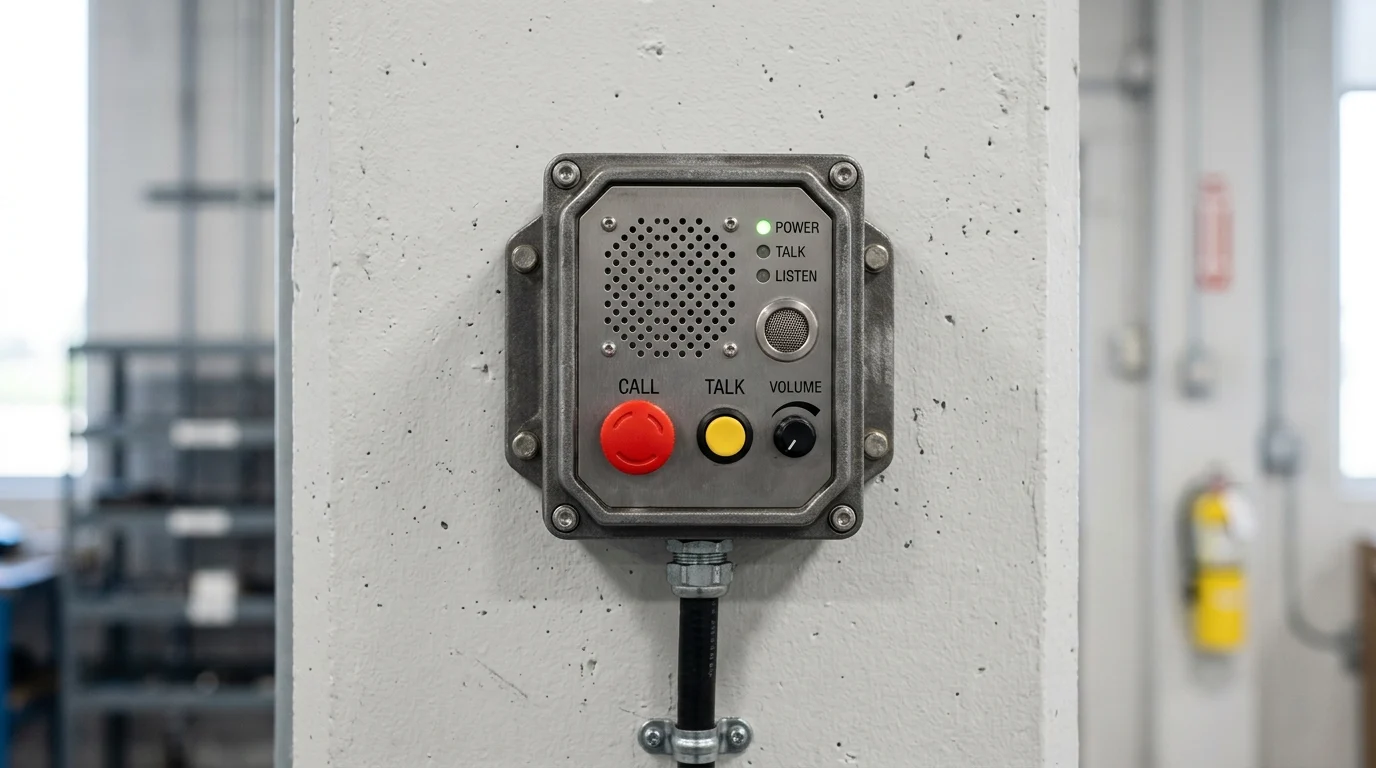
Why Industrial Intercom Systems Matter in Factory Communication
Factory communication infrastructure serves as the central nervous system of industrial operations. When production lines halt or safety incidents occur, the speed and clarity of communication directly dictate the financial and operational impact.
An industrial intercom system provides the dedicated, resilient hardware required to maintain seamless contact across sprawling manufacturing floors, processing plants, and hazardous zones, ensuring that critical information flows without interruption.
How industrial intercom systems reduce response delays
Legacy radio networks and standard telephony often suffer from signal dead zones and delayed call setups. Modern industrial intercom systems, particularly those utilizing SIP (Session Initiation Protocol), reduce emergency response latency to under 500 milliseconds.
Features such as single-button push-to-talk (PTT), automated paging overrides, and direct control room integration ensure that critical broadcasts bypass standard network congestion. By eliminating the 2-to-3-minute delays typical of manual radio relays, factories can execute emergency shutdowns or dispatch maintenance crews with optimal efficiency.
Which factory environments need rugged communication systems
Standard commercial communication devices fail rapidly in harsh manufacturing environments. Facilities processing chemicals, metals, or heavy machinery generate ambient noise levels frequently exceeding 85 dB(A), necessitating intercoms with active noise-canceling microphones and high-output integrated speakers capable of delivering up to 110 dB SPL (Sound Pressure Level).
Furthermore, environments characterized by heavy particulate matter, corrosive gases, or extreme temperature fluctuations (-40°C to +70°C) require specialized ruggedized housings to prevent catastrophic hardware failure and ensure continuous operational readiness.
Key Specifications for Evaluating Industrial Intercom Systems

Evaluating industrial intercom systems requires procurement teams to look beyond basic audio transmission. The specification process must align network architecture, physical durability, and integration capabilities with the facility’s long-term operational roadmap.
How to compare IP, analog, SIP, and paging options
Selecting the correct protocol framework is the first critical decision in the procurement process.
| Technology | Network Infrastructure | Deployment Cost | Scalability | Best Use Case |
|---|---|---|---|---|
| Analog | Dedicated copper wiring | Low initial CapEx | Limited | Legacy plant upgrades |
| IP / VoIP | Standard Ethernet (Cat5e/Cat6) | Moderate | High | Modern automated factories |
| SIP | Ethernet + SIP Server/PBX | High initial CapEx | Very High | Enterprise-wide integration |
| Paging | Mixed (Analog or IP) | Variable | Moderate | High-noise mass notification |
IP and SIP options offer superior diagnostic capabilities, allowing IT departments to monitor device health remotely, whereas analog systems remain viable for isolated zones where running new network cables is cost-prohibitive.
Which performance criteria matter most for procurement teams
Beyond network protocols, physical performance criteria dictate the lifespan of the hardware. Procurement teams must demand strict adherence to Ingress Protection (IP) and Impact Protection (IK) standards.
A baseline of IP66 or IP67 is mandatory for washdown areas or outdoor exposure, ensuring complete protection against dust and high-pressure water jets. Vandal-resistant models should feature an IK10 rating, capable of withstanding 20 joules of impact. Additionally, mission-critical environments require devices with a Mean Time Between Failures (MTBF) exceeding 50,000 hours to minimize replacement cycles.
How distributors can use comparison tables effectively
Wholesalers and distributors can leverage standardized comparison tables to streamline the consultative sales process.
By mapping client environmental metrics—such as average ambient noise, temperature extremes, and existing PBX infrastructure—against intercom specifications, distributors can rapidly filter out incompatible hardware. This data-driven approach not only accelerates the sales cycle but also protects margins by reducing the likelihood of returns due to improper specification.
How to Source Industrial Intercom Systems for Compliance and Supply
Sourcing industrial intercom systems requires stringent vetting of manufacturing partners. Importers and distributors must prioritize supply chain transparency, regulatory compliance, and post-sale support to mitigate operational risks and protect brand reputation.
Which certifications and quality controls matter most
Regulatory compliance is non-negotiable in industrial hardware sourcing. Facilities operating in volatile environments, such as oil refineries or chemical plants, mandate ATEX or IECEx certifications for explosive atmospheres (Zone 1 and Zone 2).
Baseline global certifications, including CE, FCC, and RoHS, are required for standard factory deployments. Furthermore, buyers should verify that the manufacturer operates under an ISO9001-certified quality management system to ensure batch-to-batch consistency.
How to assess MOQ, customization, packaging, and spare parts support
Supply chain flexibility directly impacts a distributor’s inventory carrying costs. Buyers should negotiate Minimum Order Quantities (MOQs) that align with their project pipelines; standard off-the-shelf units may require MOQs as low as 1 to 10 units, while customized colors or firmware modifications typically demand MOQs of 50 to 100 units.
Packaging must meet international transit standards (such as ISTA testing) to prevent transit damage. Additionally, suppliers must guarantee spare parts availability—including replacement handsets, armored cords, and mainboards—for a minimum of 3 to 5 years post-discontinuation.
What supplier evaluation points importers and distributors should review
Effective supplier evaluation extends beyond product catalogs. Importers should prioritize manufacturers that retain tight control over their production processes.
Suppliers producing 90% or more of their core components in-house generally offer more stable pricing and shorter lead times than those relying heavily on third-party assembly. Procurement teams should audit the supplier’s defect rate, targeting a threshold of under 1%, and require documented factory acceptance testing (FAT) protocols before authorizing large-volume shipments.
Deployment, Logistics, and Cost Planning for Industrial Intercom Systems
The successful implementation of an industrial intercom system relies heavily on rigorous pre-deployment planning, optimized logistics, and a clear understanding of the financial lifecycle. Proper execution in these areas prevents budget overruns and ensures rapid system adoption.
How to plan site surveys and zone mapping
Comprehensive site surveys and zone mapping are the foundation of a reliable deployment. Engineers must map acoustic dead zones, electromagnetic interference (EMI) sources, and network topologies.
For IP-based systems, planners must account for Power over Ethernet (PoE) distance limitations, which cap standard Cat6 cable runs at 100 meters. Facilities requiring longer runs must integrate fiber optic backbones or PoE extenders. Zone mapping also dictates the strategic placement of master stations versus sub-stations, ensuring that high-traffic areas have immediate access to multi-line control units.
Which shipping, warranty, and after-sales factors affect delivery
Global logistics and warranty terms significantly influence project timelines. Sea freight for bulk intercom orders typically requires 4 to 6 weeks of transit time, necessitating accurate demand forecasting by distributors. Air freight, while reducing lead times to 5-7 days, can increase landed costs by up to 15%.
Procurement teams must also negotiate robust warranty terms. The industry standard ranges from 12 to 24 months, but premium suppliers offering advanced replacement programs for defective units provide crucial leverage for minimizing end-user downtime.
How to evaluate total cost of ownership and ROI
Calculating the Total Cost of Ownership (TCO) requires analyzing both CapEx and OpEx over a 5-to-10-year horizon.
| Cost Category | Typical Percentage of TCO | Key Variables |
|---|---|---|
| Hardware (CapEx) | 30% – 40% | IP ratings, ATEX certification, SIP licensing |
| Installation (CapEx) | 20% – 30% | Cabling infrastructure, mounting complexity |
| Maintenance (OpEx) | 15% – 25% | Spare parts, firmware updates, IT support |
| Downtime Mitigation | Offset (ROI) | Faster emergency response, reduced labor waste |
By factoring in the reduction of production bottlenecks and faster emergency response times, industrial facilities typically achieve a full Return on Investment (ROI) within 18 to 24 months of deploying a modernized intercom network.
How Procurement Teams Can Choose the Right Industrial Intercom System
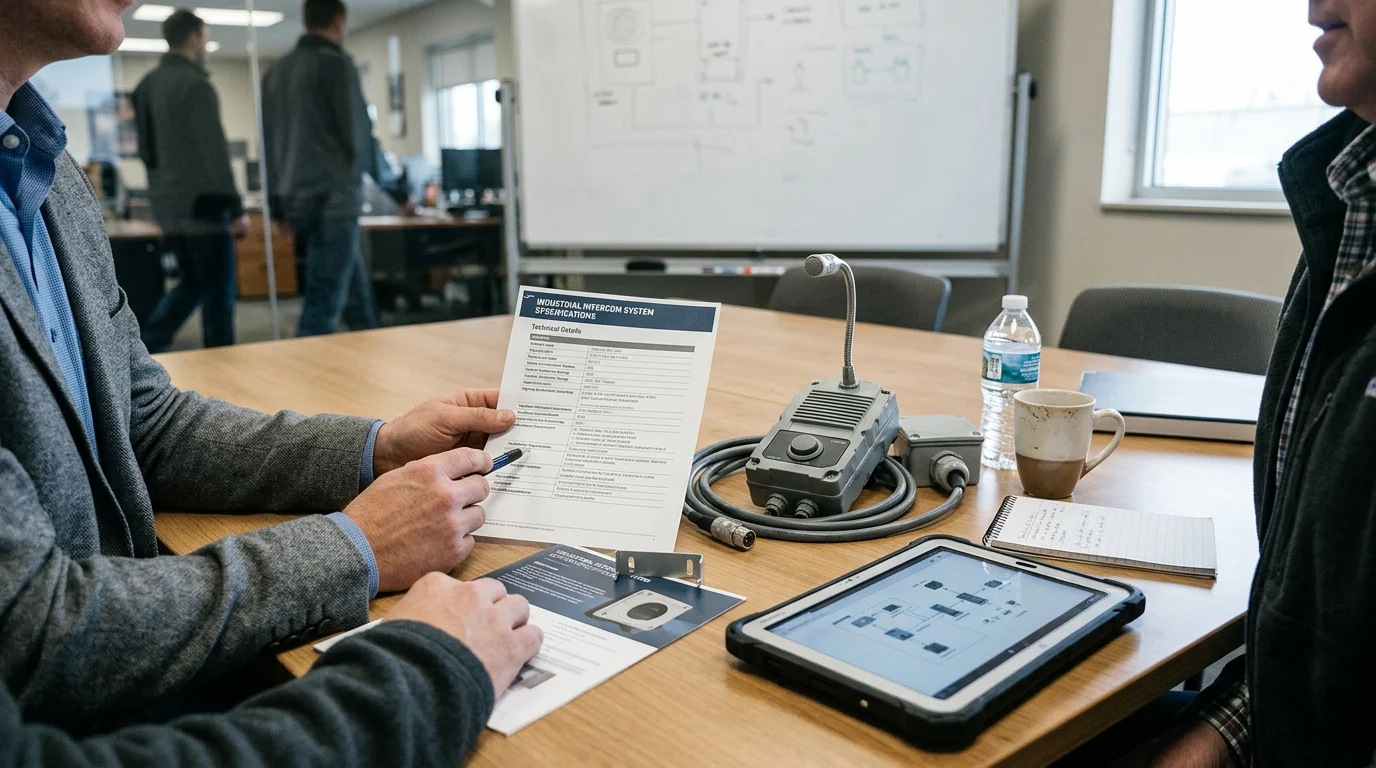
Strategic procurement of industrial communication hardware dictates not only the immediate operational success of a facility but also the long-term profitability of the distribution channels supplying them. Choosing the right acquisition model is critical for maintaining a competitive edge.
When to choose OEM, ODM, or standard products
Procurement teams must weigh the benefits of Standard, OEM (Original Equipment Manufacturer), and ODM (Original Design Manufacturer) product acquisition. Standard, off-the-shelf intercoms are ideal for urgent projects, offering rapid deployment times of 1 to 2 weeks.
OEM arrangements allow distributors to white-label existing hardware, building brand equity with minimal engineering risk. Conversely, ODM partnerships are suited for highly specialized applications requiring custom form factors or proprietary integrations. While ODM projects require Non-Recurring Engineering (NRE) investments ranging from $5,000 to $20,000 and extend lead times to 3-6 months, they create proprietary products that lock out direct competition.
Which channel strategies support wholesalers and distributors
For wholesalers and distributors, aligning with a manufacturer that offers structured channel support is vital for sustaining healthy margins. Effective channel strategies include volume-tiered discount structures, project registration programs to protect distributor margins during competitive bidding, and localized technical training.
Distributors focusing on value-added services—such as pre-configuring SIP accounts, assembling custom mounting brackets, and providing Tier 1 technical support—can command gross margins of 20% to 35%. By partnering with suppliers that respect territorial exclusivity and provide robust marketing collateral, procurement teams can transition from transactional buyers to strategic market leaders.
Key Takeaways
- Wholesale sourcing and supply-chain implications for Industrial Intercom System
- Specifications, compliance, and commercial terms buyers should validate
- Actionable recommendations for distributors and procurement teams
Frequently Asked Questions
What factory problems can an industrial intercom system solve?
It speeds up emergency alerts, maintenance calls, and line coordination. In large or noisy plants, push-to-talk and paging reduce relay delays and help teams respond faster to stoppages, faults, or safety incidents.
Which intercom type is best for a modern factory?
IP or SIP intercoms are usually best for modern sites because they scale easily, support remote diagnostics, and integrate with PBX, VoIP, control rooms, and paging systems.
What specifications should buyers check for harsh factory environments?
Focus on IP66/IP67 for dust and water protection, IK10 for impact resistance, high-output audio for noisy areas, and wide operating temperatures such as -40°C to +70°C.
When is explosion-proof communication equipment necessary?
Use explosion-proof intercoms in hazardous areas like oil, gas, chemical, or dust-prone plants. Check for ATEX or similar compliance based on the zone classification before purchase.
Why source industrial intercom systems from Siniwo?
Siniwo provides one-stop industrial communication services, rugged products for harsh environments, and compliance support including ATEX, CE, FCC, RoHS, and ISO9001-backed quality control.
Post time: Apr-20-2026