
Introduction
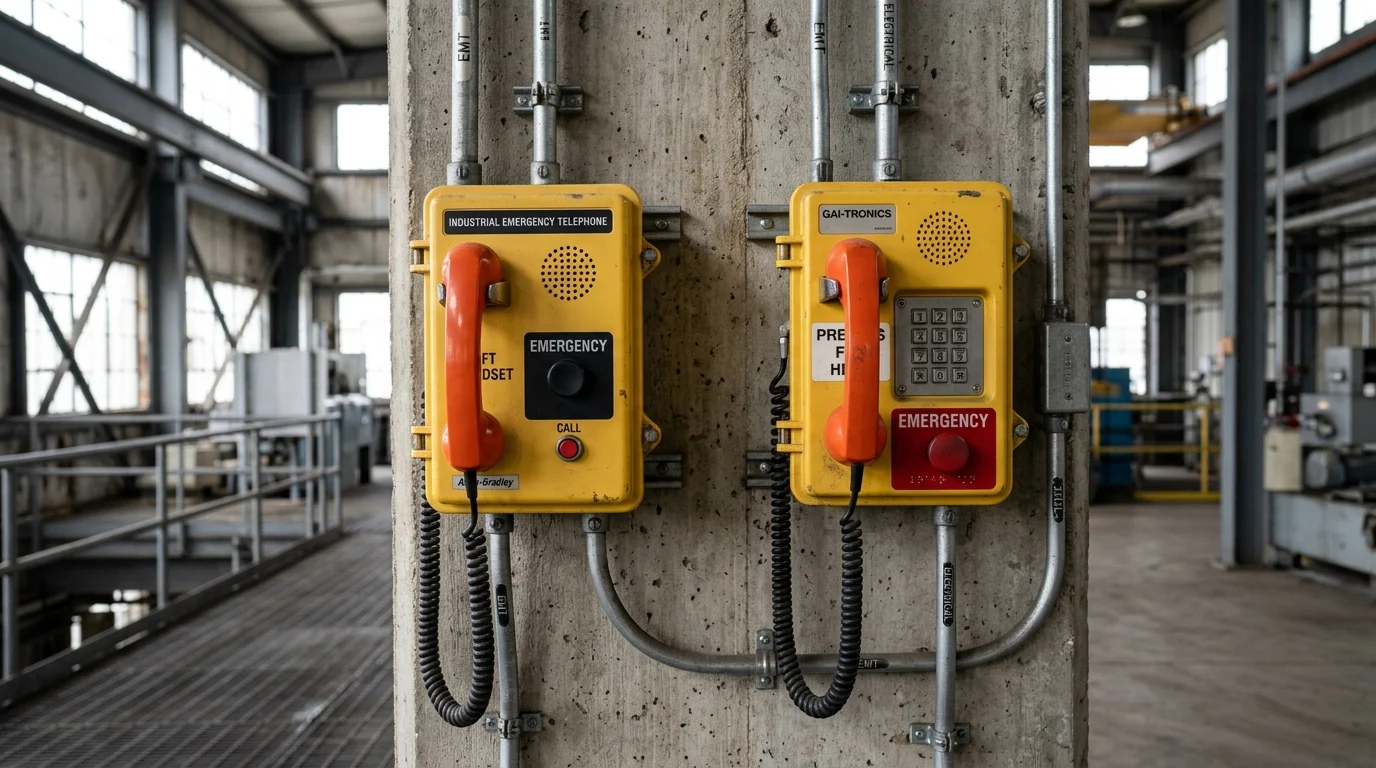
In hazardous industrial settings, a fast and reliable way to call for help can determine whether an incident stays contained or escalates. Industrial emergency telephones are built to function in environments where heat, moisture, vibration, and explosive atmospheres can disable standard devices. This article explains how these systems support rapid response, improve coordination with control rooms and emergency teams, and help facilities meet safety requirements in high-risk operations.
Why Industrial Emergency Telephones Matter in Hazardous Areas
In high-risk industrial environments, communication infrastructure serves as the primary lifeline during critical incidents. Industrial emergency telephones are engineered to provide fail-safe voice communication in sectors such as petrochemical processing, offshore drilling, and heavy manufacturing. Unlike commercial telecommunications, these robust systems are designed to operate continuously under extreme duress, ensuring that health, safety, and environmental (HSE) protocols can be executed without technical interruption.
How they reduce emergency response time
During an industrial crisis, every second of delay exponentially increases the probability of catastrophic asset damage or loss of life. Industrial emergency telephones utilize auto-dial functionalities and immediate off-hook routing to connect users directly to central control rooms or emergency services. By eliminating manual dialing and routing delays, these systems routinely reduce initial emergency communication times from an industry average of 3 to 5 minutes to under 30 seconds.
Which hazardous-area risks require dedicated emergency telephony
Facilities operating with volatile gases, combustible dust, or extreme environmental variables mandate specialized communication hardware. Environments classified as ATEX Zone 1 or Zone 21 present a constant ignition risk, requiring intrinsically safe or flameproof emergency telephony. Furthermore, operational zones with ambient noise levels exceeding 85 dB(A), or those subjected to temperature fluctuations ranging from -40°C to +70°C, render standard commercial devices entirely inoperable, necessitating purpose-built industrial units.
What operational benefits they deliver
Beyond crisis management, dedicated emergency telephones streamline daily operational oversight. Modern Voice over Internet Protocol (VoIP) industrial phones seamlessly integrate with Public Address and General Alarm (PA/GA) systems, enabling localized broadcasting directly from the handset. With Mean Time Between Failures (MTBF) frequently exceeding 50,000 hours, these units provide unparalleled operational reliability, reducing the administrative burden on IT and maintenance teams while ensuring continuous site-wide visibility.
What Technical Features Industrial Emergency Telephones Should Include
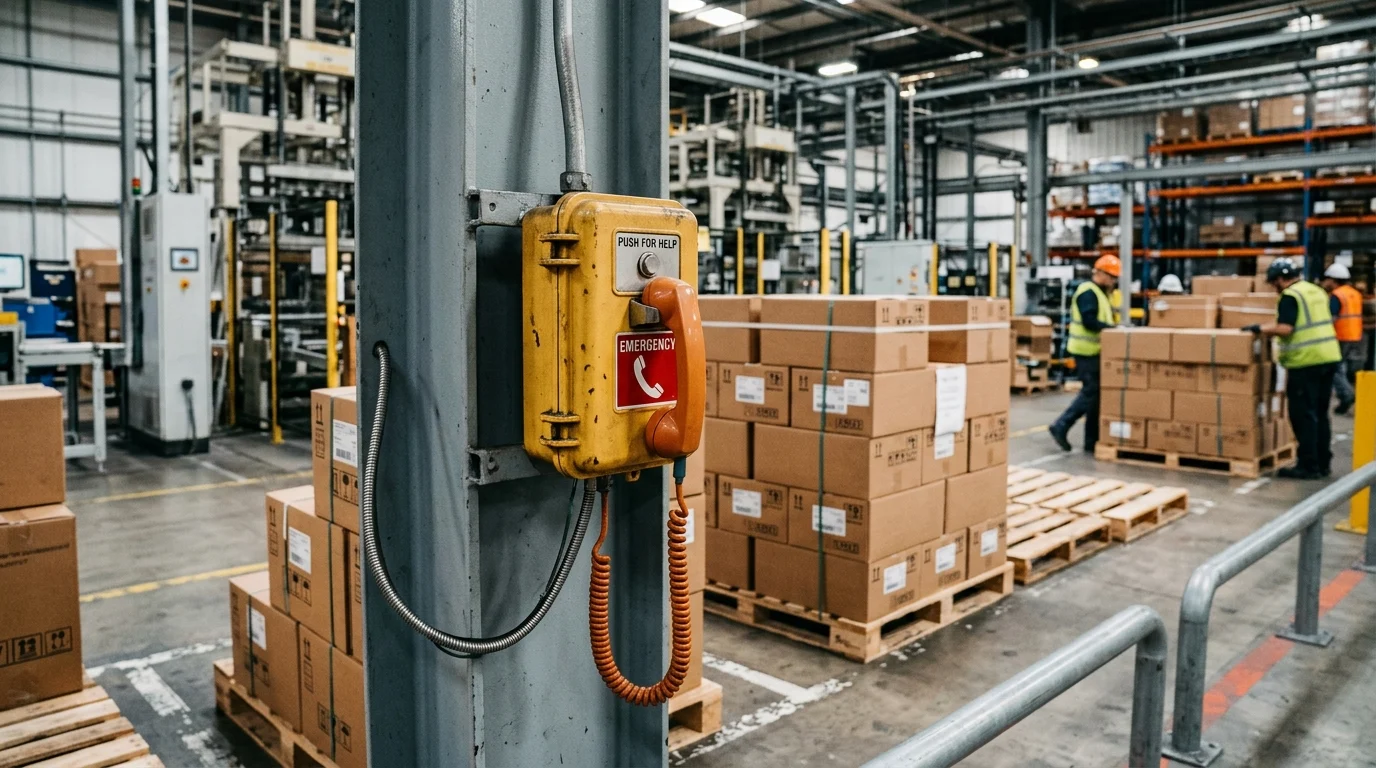
The fundamental architecture of an industrial emergency telephone dictates its survivability. Procurement engineers must evaluate specific technical thresholds, material properties, and ingress protections to ensure the selected hardware aligns with the facility’s localized risk profile.
Which protection ratings and certifications are required
Regulatory compliance forms the baseline for equipment selection in hazardous areas. Devices must carry appropriate certifications such as ATEX, IECEx, or UL classifications relevant to the specific explosive atmosphere. Additionally, environmental resilience requires strict ingress protection ratings; a minimum of IP66 or IP67 is standard to prevent the intrusion of corrosive dust and high-pressure water jets, while NEMA 4X ratings are critical for North American petrochemical installations.
How audio, controls, and power design affect reliability
Acoustic clarity in high-decibel environments relies on advanced noise-canceling microphones and high-output receivers. Ring volumes must pierce heavy machinery noise, typically requiring an output of 90 to 110 dB(A) at a 1-meter distance. From a power perspective, Power over Ethernet (PoE) has become the standard for VoIP models, allowing a single Cat5e/Cat6 cable to deliver both data and power. This simplifies redundancy through centralized Uninterruptible Power Supply (UPS) systems.
What material and mounting specifications suit harsh environment
s
Enclosure materials and mounting hardware must withstand mechanical impact, chemical exposure, and severe weather. Glass-Reinforced Polyester (GRP) and 316L Stainless Steel are the dominant enclosure materials, paired with vandal-resistant armored handset cords boasting a pull strength exceeding 200 kg.
| Material Specification | Impact Resistance | Corrosion Resistance | Typical Application Environment | Relative Cost |
|---|---|---|---|---|
| Glass-Reinforced Polyester (GRP) | High (IK09) | Excellent (Chemicals/UV) | Chemical Plants, General Industry | Baseline |
| 316L Stainless Steel | Very High (IK10) | Superior (Marine/Saltwater) | Offshore Rigs, Coastal Facilities | Premium |
| Cast Aluminum (Epoxy Coated) | High (IK09) | Moderate (Prone to scratching) | Mining, Indoor Heavy Industry | Moderate |
How to Compare Industrial Emergency Telephones With Alternatives
While modern industrial facilities deploy a diverse array of communication tools, understanding the comparative advantages of fixed emergency telephones against mobile alternatives is vital for designing a comprehensive HSE architecture.
When they are preferable to radios and intercoms
Two-way radios (TETRA/DMR) and wireless intercoms offer mobility, but they introduce variables that are unacceptable during localized emergencies. Fixed industrial telephones eliminate the risks of depleted batteries, misplaced handsets, and localized radio frequency (RF) dead zones. Because they are hardwired and permanently mounted at strategic egress points or high-risk nodes, they guarantee immediate availability for any personnel, including contractors who may not be equipped with personal radios.
Which criteria belong in a procurement comparison
When comparing procurement options, financial modeling must account for both Capital Expenditure (CapEx) and Operational Expenditure (OpEx). While mobile radios have lower individual unit costs, their total cost of ownership inflates due to battery replacements every 12 to 18 months, software licensing, and lost-device replacements. Conversely, fixed industrial telephones represent a higher initial CapEx but offer operational lifespans of 10 to 15 years with minimal recurrent costs.
| Communication Modality | Power Dependency | Vulnerability to RF Interference | Expected Lifecycle | 10-Year OpEx Profile |
|---|---|---|---|---|
| Fixed Emergency Telephone | Centralized (UPS/PoE) | None (Hardwired) | 10–15 Years | Very Low |
| Two-Way Radio (TETRA/DMR) | Individual Batteries | High (Steel structures) | 3–5 Years | High (Batteries/Licenses) |
| Wi-Fi Intercom System | Individual Batteries | Moderate (Bandwidth sharing) | 3–5 Years | Medium (IT Maintenance) |
How site conditions affect technology choice
The physical topology of a site heavily influences the choice of technology. Dense metallic structures, typical in refineries and offshore platforms, severely attenuate RF signals, necessitating expensive distributed antenna systems (DAS) for reliable radio coverage. Hardwired telephones bypass this constraint using fiber-optic networks or copper cabling. However, engineers must account for cable distance limitations; standard Cat6 Ethernet is restricted to 100 meters, requiring fiber-optic extensions or network switches for expansive plant layouts.
How Compliance, Installation, and Maintenance Improve Results
The inherent reliability of an industrial emergency telephone is only fully realized through rigorous installation practices, strict adherence to compliance standards, and proactive lifecycle maintenance.
Which standards, inspections, and documentation apply
Installations in explosive atmospheres must adhere strictly to the IEC 60079 series of standards, which govern the deployment of equipment in hazardous areas. Compliance requires comprehensive documentation, including Ex certificates and intrinsically safe (IS) loop calculations. Regulatory frameworks also mandate routine inspection schedules; facilities typically execute visual inspections every 6 months and detailed, hands-on mechanical inspections every 3 years to verify enclosure integrity and seal conditions.
What best practices guide placement, wiring, and testing
Ergonomic placement and secure wiring are foundational to system efficacy. Best practices dictate mounting telephones at an accessible height of 1.2 to 1.4 meters from the floor to the center of the unit, ensuring accessibility for all personnel. Wiring must utilize appropriate armored cables, and cable glands must be tightened to specific torque specifications—often between 20 and 30 Nm—to maintain the IP rating and flameproof integrity of the enclosure.
How to plan maintenance, spares, and lifecycle support
Transitioning from reactive to preventive maintenance significantly improves emergency readiness. Modern SIP-based emergency telephones support remote polling via Simple Network Management Protocol (SNMP). This feature allows control systems to automatically verify handset integrity, microphone function, and network connectivity, reducing manual testing labor costs by up to 60%. Facility managers must also maintain a localized inventory of critical spares, such as replacement handsets and main printed circuit boards (PCBs), to minimize downtime.
How to Choose the Right Industrial Emergency Telephone
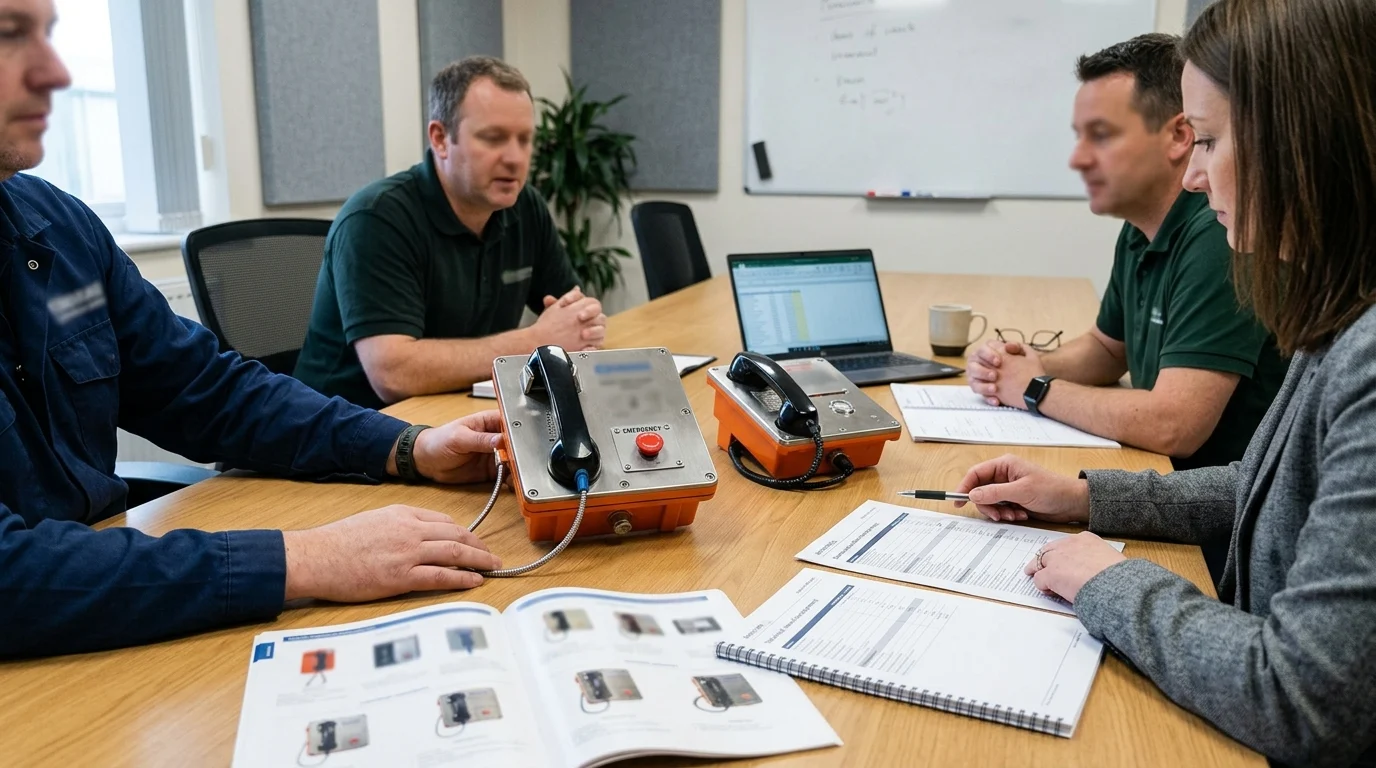
Selecting the optimal industrial emergency telephone requires synthesizing technical specifications with the facility’s existing network infrastructure and long-term operational goals.
Which decision criteria to prioritize
The primary architectural decision lies between analog and VoIP/SIP technologies. While analog phones offer simplicity and distance advantages over standard copper wire, VoIP systems provide superior diagnostic capabilities, easier integration with modern Private Branch Exchange (PBX) systems, and multi-cast paging features. Decision-makers must prioritize compatibility with the existing control room infrastructure and evaluate whether the network backbone can support PoE and SIP protocols with adequate redundancy.
How to balance cost, reliability, and lifecycle value
Procurement teams must balance initial capital outlay against required reliability and lifecycle value. The cost of industrial telephones varies significantly based on specifications; a basic weatherproof analog unit may cost around $800, while a fully certified Zone 1 SIP telephone constructed from 316L stainless steel can exceed $3,000. Investing in higher-tier materials and VoIP diagnostics yields a rapid return on investment by drastically reducing field maintenance hours and minimizing the risk of communication failure during critical events.
What implementation lessons improve rollout success
Successful deployment relies on phased rollouts and rigorous Factory Acceptance Testing (FAT) prior to site installation. A critical implementation lesson often overlooked is acoustic management; in operational zones where ambient noise exceeds 85 dB(A), telephones must be paired with specialized acoustic hoods to guarantee vocal intelligibility. By addressing acoustic challenges, verifying network redundancy, and conducting comprehensive operator training, facilities ensure their emergency communication networks perform flawlessly when required most.
Key Takeaways
- The most important conclusions and rationale for Industrial Emergency Telephones
- Specs, compliance, and risk checks worth validating before you commit
- Practical next steps and caveats readers can apply immediately
Frequently Asked Questions
Why are industrial emergency telephones better than standard phones in hazardous areas?
They are built for explosive, wet, dusty, and high-noise sites, with rugged housings, fast emergency calling, and reliable operation where consumer phones often fail.
Which certifications should I check before selecting a hazardous-area emergency telephone?
Match the site classification first. Common requirements include ATEX or IECEx for explosive zones, plus CE, FCC, RoHS, and IP66/IP67 for environmental protection.
Can Siniwo emergency telephones integrate with VoIP or PA systems?
Yes. Siniwo supplies industrial telephones that can work with IP PBX/VoIP and PA systems, helping sites connect emergency calls, paging, and control room communication.
What features help emergency telephones work in noisy industrial environments?
Look for 90–110 dB ringers, noise-canceling microphones, high-output receivers, and one-touch or auto-dial emergency calling to improve clarity and response speed.
Which enclosure material is best for harsh industrial locations?
Use GRP for chemical and general industry, 316L stainless steel for marine or offshore corrosion, and coated cast aluminum for mining or indoor heavy-duty areas.
Post time: May-07-2026