

Explosion Proof Telephones significantly enhance prison security. They provide reliable, tamper-resistant, and secure communication channels. These devices are impervious to sabotage and harsh environmental conditions. Such features are crucial for maintaining order and responding to emergencies within high-security correctional facilities. These specialized communication devices offer unparalleled reliability and safety in the demanding environments of high-security prisons.
Key Takeaways
- Explosion-proof telephones make prison communication safe and reliable. They resist damage and tampering.
- These phones protect against sabotage and harsh conditions. They have strong cases and special safety features.
- They help staff talk during emergencies. This keeps everyone safe and helps manage crises.
- These phones connect with other prison systems. This makes daily tasks easier and more secure.
- Their tough design stops inmates from trying to break them. This helps keep order in the prison.
Uninterrupted Communication with Explosion Proof Telephones
Resistance to Tampering and Vandalism
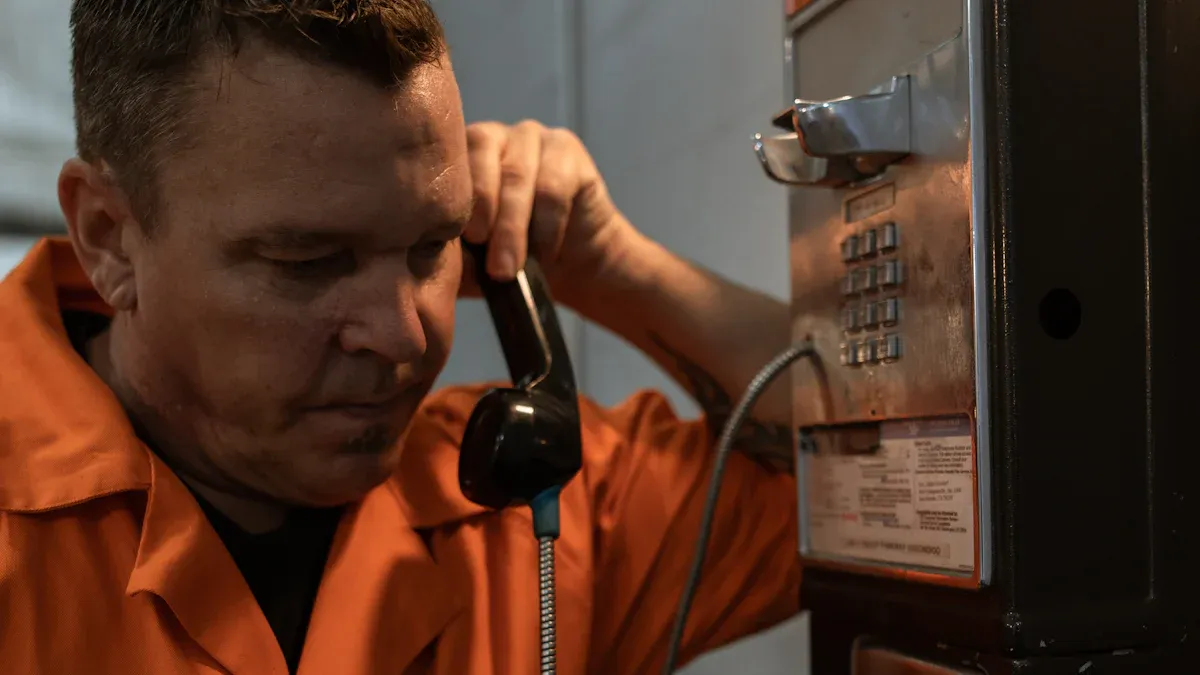
Communication systems in correctional facilities face constant threats of tampering and vandalism. Inmates may attempt to disable or misuse standard telephones, compromising security and operational integrity. Explosion-proof telephones feature robust construction and specialized designs. These designs make them highly resistant to physical damage, unauthorized access, and attempts to disable their functionality. Their sturdy casings and secure mounting prevent easy dismantling or destruction, ensuring communication lines remain open and reliable. This inherent resilience deters inmates from attempting to interfere with the devices.
Protection Against Explosive Devices and Sabotage
High-security environments, such as prisons, face the risk of sophisticated sabotage attempts, including the use of explosive devices. Adversaries can conceal explosives within communication infrastructure. They might embed Pentaerythritol Tetranitrate (PETN) within battery casings or other internal spaces of devices like walkie-talkies. This method offers high concealment and reliability. Other methods include inducing thermal runaway, though this is less precise. Devices can also serve a hybrid purpose, initially for surveillance, with explosive modifications as a secondary feature. Triggering mechanisms for these devices include remote activation via communication features or proximity-based triggers.
The table below categorizes potential threats and their plausibility:
| Category | Theory | Plausibility | Strengths | Weaknesses |
|---|---|---|---|---|
| Explosive Integration | Explosive Concealed in Battery | High | Concealment, reliability, evades detection | Reduced battery capacity could hint at tampering |
| Explosives Concealed Elsewhere | Moderate | Maintains full battery functionality, more space in larger devices | Higher risk of discovery, less plausible for pagers | |
| No Explosive, Only Thermal Runaway | Low | Simpler design, avoids explosive detection | Uncontrolled outcome, limited destructive power | |
| Triggering Mechanism | Remote Triggering Mechanism | High | Precision, control, aligns with communication capabilities | Requires advanced technical expertise |
| Proximity/Environmental Triggers | Low | Independent of communication networks, avoids detection | Unpredictable and lacks precision | |
| Intended Use | Explosives as Primary Function | Moderate | Straightforward IED design, premeditated attack | Overlooks potential dual-use functionality |
| Hybrid Purpose: Espionage/Sabotage | High | Explains long-term use, dual-purpose functionality | No concrete evidence from PCBs |
Explosion-proof wireless communication devices are specifically designed to contain any internal explosions. This prevents them from igniting external gases or vapors. They offer a dual layer of protection against explosive threats. These devices mitigate risks by containing potential ignition sources within robust enclosures. These enclosures, often made from strong materials like cast aluminum or stainless steel, withstand the pressure of an internal explosion without rupturing. An internal explosion does not spread to the surrounding hazardous environment. The enclosure cools and dissipates the heat of escaping gases through flame paths or labyrinth seals.
Key features contribute to this protection:
- Intrinsic Safety: Explosion-proof telephones prevent sparks or excessive heat. They limit electrical energy below the level required to ignite flammable gases or vapors. This acts as a built-in safety shield.
- Robust Enclosures: These phones feature strong bodies. Materials like heavy-duty aluminum or stainless steel with tight seals protect internal components. This design prevents ingress of dust, water, corrosive chemicals, and flammable gases. It also withstands physical impacts.
- Non-Sparking Components: Every internal part, including low-power circuits, encapsulated sensitive components, buttons, and wires, is specifically chosen or designed not to spark. This ensures the phone itself does not become an ignition source.
Durability in Extreme Conditions
Prison environments can be harsh. They often feature extreme temperatures, high humidity, and the presence of dust or corrosive substances. Standard communication equipment quickly degrades under such conditions, leading to frequent failures and maintenance issues. Explosion-proof phones are built with robust and durable materials. They withstand extreme temperatures, high humidity, impact, and corrosion. They meet stringent standards for impact resistance and ingress protection. This ensures they endure the rigors of industrial settings where regular phones would fail.
Their construction includes:
- Explosion-proof casing: This contains sparks or heat to prevent ignition of surrounding gases or dust.
- Sealed components: Microphones, speakers, and wiring are sealed. This prevents ingress of dust, moisture, and corrosive substances.
- Durable metals: Manufacturers often construct the enclosure from materials like stainless steel or aluminum.
- Corrosion-resistant materials: These are used for long-term operation in challenging environments.
- Rugged handsets: These are specifically designed to withstand harsh conditions.
Operational Resilience with Explosion Proof Telephones
Reliable Emergency Communication
Prisons require communication systems that function flawlessly during emergencies. Standard communication devices often fail under stress or in harsh conditions. Explosion Proof Telephones provide immediate and reliable communication. They ensure staff can quickly report incidents, coordinate responses, and request backup. This reliability is critical during riots, fires, or medical emergencies. These telephones maintain connectivity even when other systems fail. Their robust design guarantees operation in high-stress situations. This capability directly contributes to the safety of both staff and inmates.
Secure and Private Communication Channels
Maintaining secure and private communication channels is paramount in correctional facilities. Unauthorized interception of conversations can compromise security operations or endanger individuals. Explosion Proof Telephones offer enhanced security features. They prevent eavesdropping and ensure confidentiality. These devices often incorporate encryption capabilities. This protects sensitive information exchanged between staff members. Secure communication channels deter inmates from attempting to exploit vulnerabilities in the system. They also ensure that critical operational details remain confidential. This privacy is essential for effective prison management and crisis resolution.
Streamlined Daily Operations
Explosion Proof Telephones significantly streamline daily operations within prisons. Their durability and advanced features reduce the need for frequent repairs and replacements. This minimizes maintenance costs and operational downtime. These devices feature remote configuration, status monitoring, and self-diagnostic functions. Maintenance teams quickly identify and address issues. This reduces downtime. Their robust design ensures reliable 24/7 operation. This minimizes maintenance costs and maximizes safety.
Tip: Explosion-proof telephones leverage IoT for real-time monitoring, analytics, and remote diagnostics. This shifts maintenance from reactive to proactive. It reduces downtime and optimizes costs. Sensors provide real-time alerts. AI-powered diagnostics enhance predictive maintenance.
These devices are built to withstand extreme conditions. They use advanced materials like corrosion-resistant aluminum alloy, specialized sealing, and intrinsically safe components. Features like IP66/IP68/IP69K ratings ensure dust and water resistance. IK10 provides impact protection. They operate across a wide temperature range (-40°C to +70°C). This ensures reliability and minimizes maintenance needs in harsh environments. Adherence to strict international standards (e.g., IEC 60079, ATEX, UL) ensures devices meet legal and safety requirements. This drives the adoption of features like corrosion resistance and intrinsic safety. These features contribute to their durability and reduced maintenance.
Deterrence and Control: The Psychological Advantage of Explosion Proof Telephones
Deterring Sabotage Attempts
The presence of highly durable communication equipment acts as a significant deterrent in correctional facilities. Inmates often attempt to disrupt or damage standard communication systems. They recognize the inherent strength and tamper-proof design of specialized telephones. This recognition discourages sabotage attempts. These robust devices resist physical abuse and unauthorized access. Their construction makes them extremely difficult to disable. This inherent resilience sends a clear message: communication lines will remain operational. This psychological barrier reduces the likelihood of inmates trying to interfere with critical infrastructure. It reinforces the facility’s control and security measures.
Maintaining Order During Crisis
Effective communication is paramount during a crisis within a prison. Staff must quickly coordinate responses and manage volatile situations. Reliable communication tools empower correctional officers. They can report incidents immediately and request necessary support. This capability ensures a swift and organized reaction to emergencies. When staff possess dependable communication, they project confidence and control. This projection helps de-escalate tense situations among inmates. It demonstrates the facility’s preparedness and ability to manage any disturbance. The consistent functionality of these communication devices contributes to overall order and safety. It assures both staff and inmates that authorities maintain command.
Key Features of Explosion Proof Telephones for Correctional Facilities

Robust Material and Construction
Explosion Proof Telephones require robust materials and construction. These features ensure their survival in harsh prison environments. Manufacturers use strong materials for the telephone bodies. These include stainless steel for the box and body. Other options are SMC (Sheet Molding Compound) and heavy metal. Many designs feature a robust aluminum alloy die-cast body. These materials resist physical abuse, corrosion, and extreme temperatures. This construction prevents tampering and ensures long-term functionality. The durable build makes these phones reliable communication tools.
Essential Certifications for Explosion Proof Telephones
Certifications are crucial for Explosion Proof Telephones. They confirm the devices meet strict safety standards for hazardous areas. Several key certifications exist. UL Certification comes from Underwriters Laboratories in the U.S. It shows suitability for locations with flammable gases, vapors, and dust. ATEX Certification is a European Union standard. It applies to equipment in potentially explosive atmospheres. IECEx Certification is an international system. It certifies product conformity in hazardous areas globally. CSA Certification ensures compliance with Canadian safety standards. These certifications guarantee the phones operate safely without causing explosions.
Environmental Ratings and Protection
Environmental ratings protect Explosion Proof Telephones from various elements. These ratings define how well an enclosure shields equipment. NEMA ratings, from the National Electrical Manufacturers Association, specify protection levels. For example, NEMA 4 provides water ingress protection. It suits industrial settings with hose-directed water. NEMA 4X offers additional protection and corrosion resistance. It is dust-tight and water-tight. This rating is often a minimum for harsh industrial environments. NEMA 4X testing includes water spray, dust ingress, and corrosion resistance tests. These tests ensure the enclosure withstands high-pressure water jets, blocks airborne dust, and resists corrosive agents. NEMA 6 testing verifies watertight integrity under temporary submersion. These ratings ensure the telephones remain operational despite exposure to dust, water, and corrosive substances.
Integration Capabilities with Prison Systems
Communication devices in correctional facilities must integrate seamlessly with existing security infrastructure. These specialized telephones are not standalone units. They connect to various prison systems, enhancing overall operational efficiency and control. For instance, they can directly connect to an existing Private Automatic Branch Exchange (PABX). This provides immediate and reliable voice connectivity for internal communications and external calls via the Public Switched Telephone Network (PSTN). This ensures basic communication functions remain robust.
Modern IP-based ecosystems also benefit from these devices. Analog signals from the telephones convert to SIP (Session Initiation Protocol) through a standard voice gateway. This allows these intrinsically safe hardware endpoints to function as intelligent nodes within modern IP-based networks. They integrate seamlessly with SIP servers, digital control rooms, and advanced safety management platforms. This enables centralized oversight and response. Models like the KNZD-05LCD VOIP support VoIP SIP2.0 with DTMF dialing and various audio codes. They operate on 10/100 BaseTX Ethernet (RJ45) and use IP Protocols like IPv4, TCP, UDP, and SIP. This model also supports Power over Ethernet (PoE). The KNZD-05LCD Analogue, a PSTN analogue telephone, connects via an RJ11 screw terminal pair cable. It works with various SPC exchange PABX and dispatching exchange systems. An inmate phone calls dispatching scheme uses centralized management of a SIP server. This achieves partition and monitoring integration for inmate phone calls, ensuring confidentiality and monitoring capabilities. These integration methods, including analog, GSM/LTE, and VoIP/SIP, offer flexibility. They allow advanced features like automatic dialing, pre-recorded messages, and call forwarding.
Tamper-Proof Design and Security Features
The design of these telephones inherently resists tampering. This makes them difficult for inmates to disable or misuse. Beyond physical robustness, they incorporate advanced security features. These features ensure secure and controlled communication. The TLA227A model, for example, is microprocessor-controlled and fully programmable. Staff can access it remotely via telephone and DTMF tones. This remote programming allows centralized network management.
These devices offer direct dialing to assigned locations, which streamlines communication. A programmable auto hang-up timer adds convenience and control, preventing unauthorized extended use. Other critical security features include call restriction. This limits outgoing calls to pre-approved numbers. Ring group call records provide a log of all calls within specific groups. Authority management ensures only authorized personnel can access certain functions or make specific calls. These features collectively enhance security. They provide prison staff with greater control over communication within the facility.
Explosion Proof Telephones are more than just communication devices; they are vital parts of a complete security plan in modern prisons. They ensure reliability, boost safety, and improve daily operations. These specialized phones also provide a strong deterrent against sabotage. They play a crucial role in protecting both staff and inmates. They guarantee uninterrupted communication even in the most challenging and high-risk prison environments.
FAQ
Why do prisons need explosion-proof telephones?
Prisons require these phones for reliable communication. They withstand sabotage, harsh conditions, and tampering. This ensures order and quick emergency responses. They protect staff and inmates.
How do explosion-proof telephones resist tampering?
They feature robust construction and specialized designs. Strong casings and secure mounting prevent physical damage. This deters inmates from interfering with the devices. Their resilience keeps communication lines open.
What certifications are essential for these telephones?
Essential certifications include UL, ATEX, IECEx, and CSA. These confirm the devices meet strict safety standards. They ensure safe operation in hazardous areas without causing explosions.
Can these telephones integrate with existing prison communication systems?
Yes, they integrate seamlessly. They connect to PABX systems or convert to SIP for IP networks. This allows centralized management and advanced features like call restriction.
How do explosion-proof telephones help during emergencies?
They provide immediate and reliable communication. Staff can quickly report incidents and coordinate responses. This capability ensures a swift and organized reaction to emergencies. It maintains safety for everyone.
Post time: Jan-13-2026