
Introduction
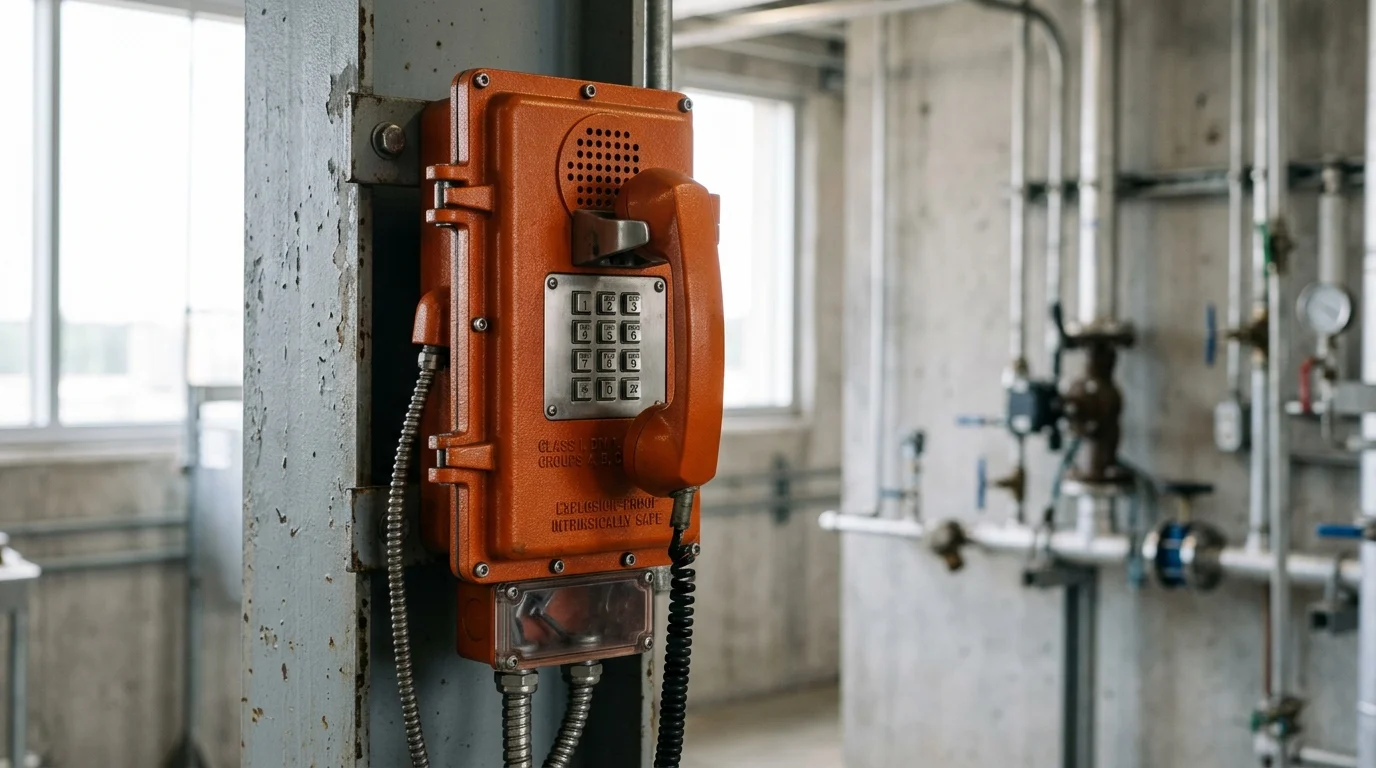
Industrial phones may look similar on the outside, but their safety role changes dramatically in hazardous environments. In areas with flammable gas, vapor, or combustible dust, a standard industrial phone can introduce ignition risk through normal electrical operation, while an explosion proof telephone is designed to contain that risk and comply with hazardous-area requirements. This article explains the engineering and certification differences between the two, where each type is appropriate, and how the right choice affects worker safety, regulatory compliance, maintenance planning, and costly downtime. With that context in place, it becomes easier to judge whether a site needs general rugged communication equipment or a purpose-built explosion proof system.
Why Explosion Proof Telephones Matter
In industrial environments where volatile gases, vapors, or combustible dusts are present, standard communication infrastructure introduces a critical vulnerability: the risk of electrical ignition. Explosion proof telephones are engineered specifically to mitigate this threat, ensuring that essential communication networks do not become the catalyst for catastrophic industrial accidents. Unlike ruggedized or weatherproof devices, these specialized units are built to contain internal explosions and prevent them from propagating into the surrounding hazardous atmosphere.
Communication risks and downtime exposure
The primary operational risk in hazardous environments stems from the electrical arcs and sparks generated during normal telephone operation, such as the ringing mechanism, handset lifting (hook switch), or keypad interactions. In atmospheres where the concentration of flammable substances exceeds the Lower Explosive Limit (LEL)—typically monitored at thresholds above 10% LEL—a standard telecommunication device can provide sufficient spark energy to trigger an ignition. Beyond the immediate safety threat to personnel, the financial exposure of equipment failure is severe. In the petrochemical and offshore drilling sectors, unplanned downtime resulting from communication failures or safety shutdowns can incur costs ranging from $20,000 to over $100,000 per hour.
Where they are commercially justified
The deployment of explosion proof telephones is commercially justified in facilities where the probability of explosive atmospheres necessitates strict compliance with hazardous area regulations. Refineries, chemical processing plants, grain elevators, and underground mining operations represent the primary adoption sectors. While the initial capital expenditure (CapEx) for an explosion proof device is significantly higher than that of standard industrial equipment, the investment is validated by the mitigation of catastrophic liability, compliance with mandatory insurance requirements, and the prevention of facility-wide operational halts mandated by safety inspectors.
Explosion Proof vs Standard Industrial Telephones
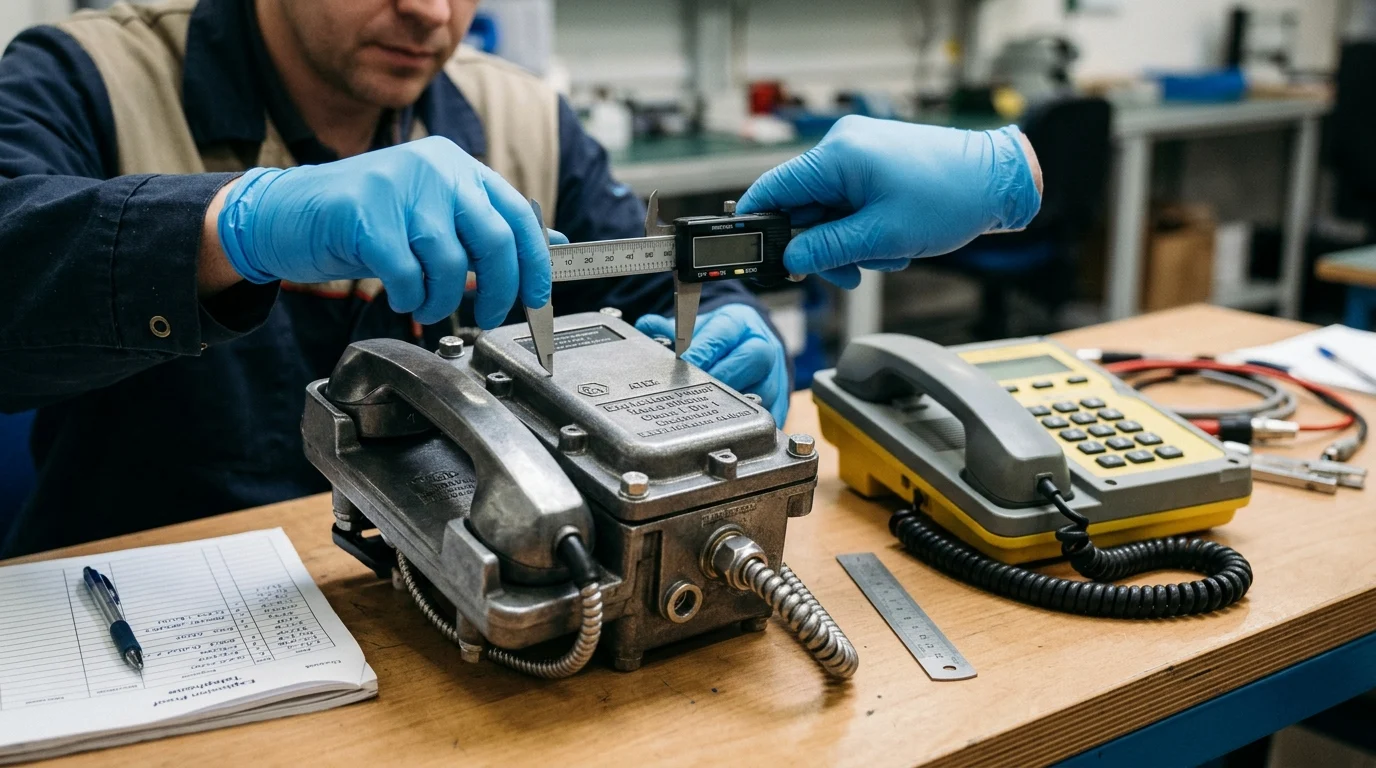
The distinction between explosion proof and standard industrial telephones lies fundamentally in their design philosophy. While standard industrial phones focus entirely on durability—resisting water ingress, impact, and corrosion—explosion proof variants add a mandatory layer of ignition prevention and internal blast containment.
Enclosure design and ignition prevention
Standard industrial telephones typically utilize polycarbonate or standard metallic enclosures designed to meet NEMA 4X or IP66 standards. In contrast, explosion proof telephones feature heavy-duty enclosures cast from copper-free aluminum alloy, stainless steel, or specialized Glass-Reinforced Polyester (GRP) with wall thicknesses often exceeding 15mm. The defining engineering feature is the “flame path.” If an explosive gas penetrates the enclosure and is ignited by an internal electrical component, the flame path acts as a highly precise mechanical gap. This gap forces the expanding, burning gases to cool below the ignition temperature of the external atmosphere before they can escape the enclosure.
Key performance specifications
Performance specifications for explosion proof units must balance safety with functional reliability in high-noise environments. These devices generally feature a Mean Time Between Failures (MTBF) exceeding 50,000 hours to minimize maintenance interventions in hazardous zones. Acoustic performance is also critical; explosion proof phones are often equipped with noise-canceling microphones and integrated amplifiers capable of delivering ringer volumes ranging from 85 dB to 110 dB, ensuring audibility over heavy machinery. Operating temperature tolerances are exceptionally broad, typically rated from -40°C to +70°C, whereas standard industrial phones rarely operate reliably beyond -20°C to +55°C.
Side-by-side comparison points
To clearly illustrate the engineering divide, the following matrix compares the core attributes of standard industrial communication devices against their explosion proof counterparts.
| Specification | Standard Industrial Phone | Explosion Proof Phone |
|---|---|---|
| Primary Objective | Weather/Vandal Resistance | Ignition Prevention & Containment |
| Typical Enclosure | Polycarbonate / Cold-rolled steel | Copper-free Aluminum / 316L Stainless |
| Hazardous Rating | Unclassified / Safe Area | ATEX Zone 1/2, Class I Div 1/2 |
| Ingress Protection | IP54 to IP66 | IP66 to IP67 |
| Cost Multiplier | 1x (Baseline) | 3x to 5x higher |
| Typical Weight | 2 kg to 4 kg | 8 kg to 15 kg |
Compliance and Certification Requirements
Procuring equipment for hazardous areas is governed by strict legal frameworks. An explosion proof telephone is only recognized as such if it carries the appropriate certifications validated by accredited third-party testing laboratories. Self-certification is legally invalid for equipment deployed in high-risk zones.
ATEX, IECEx, NEC, UL, and regional standards
Global regulatory frameworks dictate specific certification standards based on geographic location and facility type. In Europe and internationally, ATEX and IECEx standards apply, categorizing environments into Zones. A Zone 1 certification indicates the device is safe for areas where explosive atmospheres are likely to occur in normal operation (typically present between 10 and 1,000 hours per year). In North America, the National Electrical Code (NEC) and Underwriters Laboratories (UL) utilize the Class/Division system, where Class I, Division 1 represents an equivalent high-risk environment. The underlying technical standards, such as the IEC 60079 series, govern the precise testing parameters for flameproof enclosures (Ex d) and intrinsically safe circuitry (Ex i).
Documentation buyers should verify
Procurement professionals and site engineers must meticulously verify certification documentation prior to installation. Essential documents include the Declaration of Conformity (DoC) and the official certificate issued by a Notified Body (such as TÜV, PTB, or UL). Buyers must cross-reference the specific “Ex marking” on the device’s nameplate (e.g., Ex db eb IIC T6 Gb) with the facility’s hazardous area classification dossier. The “T-Class” (Temperature Class) is particularly vital; a T6 rating guarantees the external surface temperature of the phone will never exceed 85°C, ensuring it cannot ignite gases with low auto-ignition temperatures, such as carbon disulfide.
Installation, Lifecycle Cost, and Maintenance
The Total Cost of Ownership (TCO) for explosion proof telecommunications extends far beyond the initial purchase price. Specification, specialized installation procedures, and stringent regulatory maintenance schedules significantly influence the lifecycle economics of the system.
How to specify the right phone
Specifying the correct device requires aligning the technology with the facility’s broader network infrastructure. Buyers must choose between traditional analog systems, which often require dedicated copper wiring, and modern VoIP/SIP telephones. VoIP models leverage existing Ethernet networks and often utilize Power over Ethernet (PoE), reducing the need for separate power conduits. While standard industrial phones typically cost between $300 and $800, explosion proof models range from $1,500 to over $3,500 per unit depending on the enclosure material and protocol (Analog vs. VoIP). Furthermore, specifiers must determine if auxiliary peripherals, such as explosion proof acoustic hoods or external strobe beacons, are necessary to meet the 15-decibel signal-to-noise ratio required by occupational safety standards.
Installation and maintenance considerations
Installation in hazardous areas is governed by strict protocols that cannot be bypassed. All cable entries must utilize certified flameproof cable glands, which are sealed with specialized compounds to prevent gas migration through the wiring conduits. A single improperly sealed gland voids the certification of the entire device. Once installed, maintenance is dictated by standards such as IEC 60079-17, which mandates periodic inspections. Visual inspections are typically required every 6 to 12 months, while detailed physical inspections of the flame paths and enclosure integrity must be conducted at least every 36 months by certified personnel. Failure to maintain these records can result in severe regulatory penalties.
How Buyers Should Decide
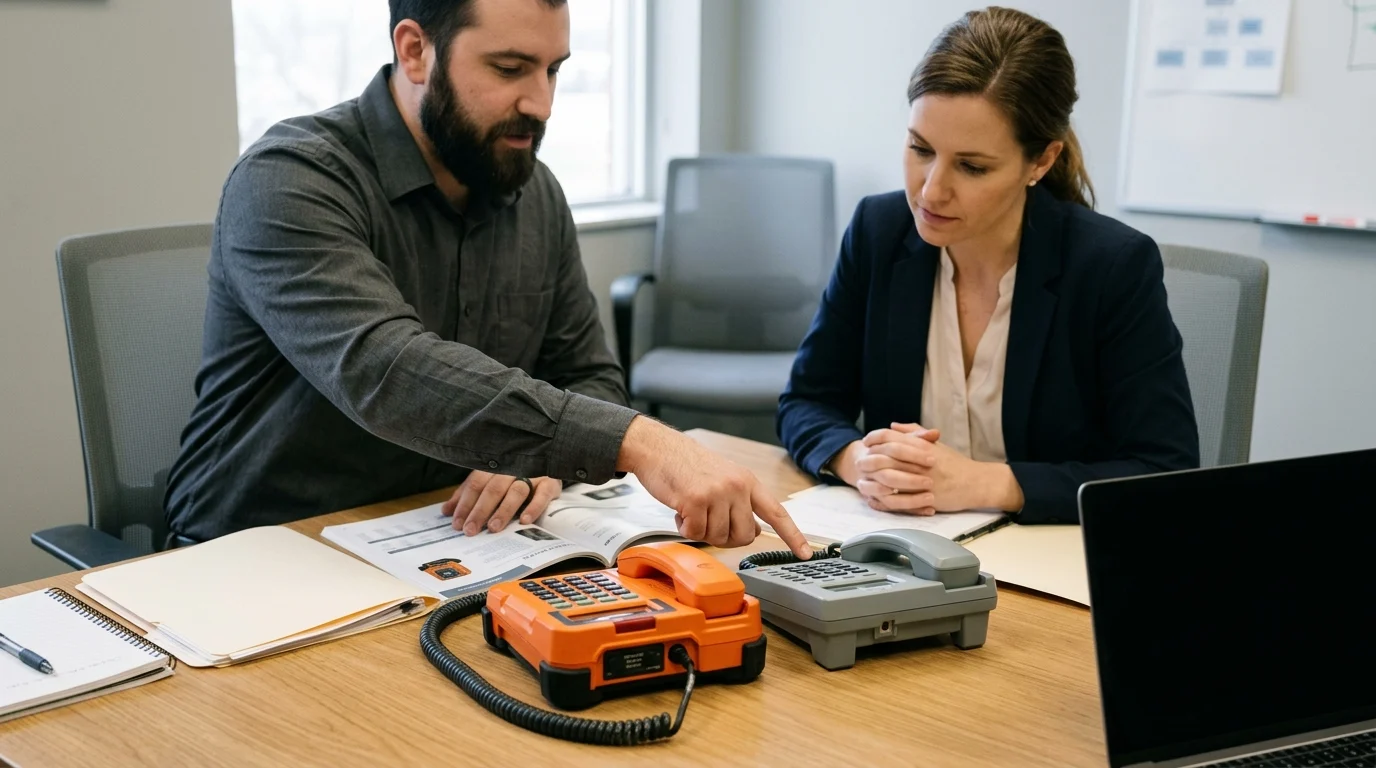
Selecting the appropriate telecommunication hardware requires a pragmatic assessment of actual site risks versus operational budgets. Over-specifying equipment leads to unnecessary capital drain, while under-specifying invites catastrophic legal and safety liabilities.
When a standard industrial phone is sufficient
A standard industrial telephone is entirely sufficient for designated “Safe Areas” within an industrial complex. These include centralized control rooms, administrative offices, employee break areas, and general manufacturing floors where the probability of explosive gas or dust accumulation is strictly 0% LEL. Standard ruggedized phones provide the necessary defense against high humidity, chemical washdowns, and physical impacts without the heavy cost premium associated with explosion containment. If a facility’s hazard analysis maps an area as unclassified, deploying an Ex-rated device offers no functional advantage.
Final selection criteria
When finalizing the procurement strategy, buyers should utilize a structured decision matrix to evaluate the specific demands of each installation point. The core criteria revolve around legal compliance, environmental severity, and network compatibility.
| Decision Criteria | Standard Industrial Recommendation | Explosion Proof Recommendation |
|---|---|---|
| Area Classification | Unclassified / Safe Zone | Zone 1/2 or Class I Div 1/2 |
| Primary Threat | Water, Dust, Vandalism | Combustible Gases, Vapors, Dust |
| Regulatory Mandate | OSHA general workplace safety | ATEX, IECEx, NEC strictly enforced |
| Budget Constraints | CapEx limited ($300 – $800/unit) | High-compliance budget available |
| Installation Infrastructure | Standard conduit and RJ45/RJ11 | Armored cable, Ex-d certified glands |
Key Takeaways
- The most important conclusions and rationale for Explosion Proof Telephones
- Specs, compliance, and risk checks worth validating before you commit
- Practical next steps and caveats readers can apply immediately
Frequently Asked Questions
When should I choose an explosion proof telephone instead of a standard industrial phone?
Use an explosion proof telephone in hazardous areas with flammable gas, vapor, or dust, such as refineries, chemical plants, grain sites, and mines. Standard industrial phones are for non-hazardous areas only.
What is the main safety difference between explosion proof and standard industrial telephones?
Explosion proof telephones are built to contain internal sparks or blasts and stop ignition outside the enclosure. Standard industrial phones mainly provide durability against water, dust, impact, and corrosion.
Which certifications should I check before buying an explosion proof telephone?
Confirm the phone matches your site classification and carries required approvals such as ATEX, plus relevant CE, FCC, ROHS, and ISO9001-backed quality controls. Always verify Zone or Division suitability before installation.
Are explosion proof telephones suitable for noisy outdoor industrial sites?
Yes. Many models are designed for harsh sites with IP66/IP67 protection, noise-canceling microphones, and loud ringers around 85–110 dB, helping maintain clear communication near heavy machinery.
Why source explosion proof telephones from Siniwo?
Siniwo provides one-stop industrial communication services, from design and integration to installation and maintenance. Its in-house manufacturing of most core components supports stable quality, dependable delivery, and global project support.
Post time: May-07-2026