

Seamless communication plays a vital role in smart infrastructure. It ensures efficient data exchange and enhances decision-making. VoIP handsfree AI telephones revolutionize connectivity by integrating advanced technologies, making them an essential component for modern communication systems. These devices also enhance security through robust encryption and regular updates, ensuring reliability.
For instance, smart city emergency communication relies on these technologies, including the innovative IP fingerprint visual intercom, to maintain safety and efficiency. As an IP video intercom supplier, we provide solutions that cater to the needs of urban environments. Additionally, our expertise as an industrial VoIP intercom manufacturer allows us to deliver high-quality products that support seamless communication across various sectors.
Key Takeaways
- VoIP handsfree AI telephones enhance communication efficiency by streamlining call routing and reducing wait times, leading to higher customer satisfaction.
- These telephones improve accessibility, allowing users to communicate hands-free while multitasking, which is especially beneficial in busy environments like hospitals and industrial sites.
- VoIP systems offer significant cost savings compared to traditional communication methods, with lower monthly fees and minimal setup costs, making them ideal for businesses of all sizes.
Key Features of VoIP Handsfree AI Telephones
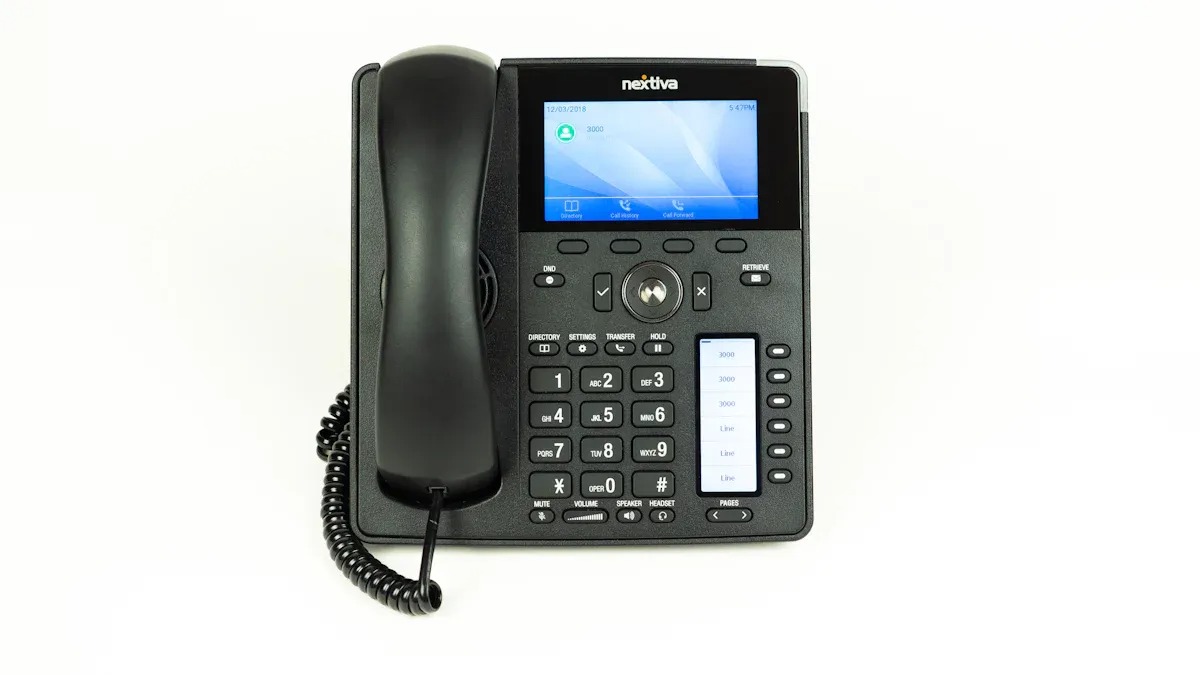
Voice Recognition Capabilities
VoIP handsfree AI telephones come equipped with advanced voice recognition capabilities. These features enhance communication efficiency and user experience. The following table outlines some of the most notable voice recognition features:
| Feature | Description |
|---|---|
| AI-enabled voice recognition | Supports multilingual communication and operates effectively in noisy environments. |
| Video call capability | Enhances visual verification and security protocols. |
| Integration with existing systems | Connects with CCTV, alarm systems, and GIS-based incident mapping for a unified operational view. |
| AI-powered noise reduction | Filters background noise for clear voice transmission in loud settings. |
| Voice command functionality | Allows hands-free operation of communication systems using simple voice prompts. |
| Accent and speech pattern support | Ensures reliable voice command execution across diverse workforces. |
These capabilities allow users to communicate seamlessly, even in challenging environments. The AI technology behind these telephones adapts to various accents and speech patterns, ensuring that commands are understood accurately.
Integration with Smart Devices
VoIP handsfree AI telephones integrate seamlessly with a variety of smart devices, enhancing their functionality within modern infrastructure. This integration supports effective communication across different applications. The following table highlights key application areas and their descriptions:
| Application Area | Description |
|---|---|
| Train-to-Infrastructure | Requires robust bidirectional links for effective communication. |
| Inter-car Communication | Demands high data rates and low latencies, often utilizing wireless solutions. |
| Intra-car Communication | Provides wireless access for passengers and sensors, addressing challenges like backscattering. |
| Control Room Operations | Used for dispatching and emergency coordination by personnel. |
| Maintenance Communication | Ensures safety and coordination for crews on tracks or in depots. |
| Passenger Announcements | Station staff utilize these systems for effective communication with passengers. |
| Tunnel Communication | Integrates into systems ensuring connectivity in challenging environments. |
VoIP handsfree AI telephones utilize Voice over Internet Protocol (VoIP) for clear digital voice transmission. They also integrate artificial intelligence (AI) capabilities for enhanced operational efficiency. The handsfree functionality allows personnel to communicate without holding a handset, making it easier to multitask and respond quickly in critical situations.
Benefits of VoIP Handsfree AI Telephones

Enhanced Communication Efficiency
VoIP handsfree AI telephones significantly enhance communication efficiency in various environments. These systems streamline call routing, which reduces wait times. As a result, users experience quicker connections, leading to higher customer satisfaction. The integration of VoIP with customer relationship management (CRM) and help desk tools further improves the management of customer interactions. This integration allows teams to access vital information during calls, making conversations more productive.
Additionally, AI-powered platforms provide automatic call summaries. These summaries help teams quickly identify and address issues. AI also tracks key topics and customer priorities, facilitating better interactions. By analyzing conversations, AI can suggest improvements and highlight areas needing attention. This capability ensures that communication remains effective and responsive.
Improved Accessibility for Users
VoIP handsfree AI telephones improve accessibility for users in various settings. The handsfree functionality allows individuals to communicate without needing to hold a device. This feature is particularly beneficial in environments where multitasking is essential, such as hospitals or industrial sites. Users can engage in conversations while performing other tasks, enhancing overall productivity.
Moreover, these telephones often support multiple languages and dialects. This inclusivity ensures that diverse workforces can communicate effectively. The AI technology adapts to different accents and speech patterns, making it easier for everyone to use the system. This adaptability fosters a more inclusive environment, allowing all users to participate in conversations without barriers.
Comparison with Traditional Communication Systems
Cost-Effectiveness
VoIP handsfree AI telephones offer significant cost advantages over traditional communication systems. The following table illustrates the differences in various aspects:
| Aspect | VoIP Systems | Traditional Systems |
|---|---|---|
| Monthly Fees | Lower monthly fees | Higher monthly fees |
| Setup Costs | Minimal setup costs | Substantial hardware investments |
| Maintenance | Included maintenance | Ongoing maintenance expenses |
| International Calling | Significant savings | Higher costs |
| Scalability | Easily scalable | Limited scalability |
VoIP systems eliminate the need for expensive hardware investments. Small businesses can reduce startup communication costs by up to 90%. This affordability makes VoIP a financially viable option for many organizations.
Flexibility and Scalability
VoIP handsfree AI telephones provide remarkable flexibility and scalability compared to legacy systems. Businesses can easily adapt their communication setups as needs change. For instance, companies can add or remove lines without significant costs or physical infrastructure changes. This adaptability is crucial for growing businesses.
Cloud-based VoIP platforms allow quick adjustments to phone lines without needing to contact a service provider. This feature supports remote workers, enabling them to connect from anywhere with an internet connection.
Key benefits of VoIP flexibility include:
- Make and receive calls from any location.
- Access advanced functionalities like call forwarding and conference calling.
- Easily scale operations as business demands evolve.
These advantages position VoIP as a leading choice for modern communication needs.
Case Studies of Successful Implementations
Smart Buildings
Smart buildings utilize VoIP handsfree AI telephones to enhance communication and operational efficiency. For example, a high-rise office building in New York City implemented these systems to streamline internal communication. The building management reported a 30% reduction in response times for maintenance requests. Employees can now use voice commands to contact maintenance staff while multitasking. This handsfree capability allows them to focus on their primary tasks without interruption.
Educational Institutions
Educational institutions also benefit from VoIP handsfree AI telephones. A university in California integrated these systems into its campus infrastructure. The administration noted improved communication between faculty and students. The system allows for instant announcements during emergencies, ensuring student safety. Additionally, the AI features help students with disabilities access communication tools more easily.
Key Benefits Observed:
- Enhanced safety protocols during emergencies.
- Improved accessibility for all students.
- Increased efficiency in administrative communication.
These case studies illustrate how VoIP handsfree AI telephones transform communication in various environments. They provide practical solutions that enhance operational efficiency and user experience.
Installation Considerations for VoIP Handsfree AI Telephones
Infrastructure Requirements
Installing VoIP handsfree AI telephones requires careful planning and evaluation of existing infrastructure. Organizations must assess their network capabilities to ensure they can support VoIP traffic effectively. The following table outlines essential infrastructure requirements:
| Requirement Type | Description |
|---|---|
| Network Evaluation | Assessing the network to ensure it can handle VoIP traffic, including adjustments to bandwidth, routing, and security. |
| Hardware Installation | Full installation process including configuring phone lines, user accounts, and system features. |
| System Integration | Integrating VoIP systems with essential business applications for unified communication. |
Additionally, organizations should consider the following key elements for successful installation:
- A reliable internet connection is essential.
- VoIP-compatible devices are necessary.
- Quality headsets with noise-cancellation features enhance audio clarity.
User Training and Support
Effective user training and support play a crucial role in the successful implementation of VoIP handsfree AI telephones. Organizations should adopt best practices to ensure users feel confident in utilizing the new systems. The table below highlights effective training methods:
| Training Method | Context |
|---|---|
| In-person onboarding | Suitable for office setups |
| Short instructional videos | Ideal for hybrid teams |
To maximize the benefits of AI voice implementation, organizations should:
- Clearly define outcomes for AI voice implementation.
- Identify goals such as cost reduction or improved customer satisfaction.
- Establish measurable objectives to ensure project success.
By focusing on infrastructure requirements and providing comprehensive training, organizations can ensure a smooth transition to VoIP handsfree AI telephones, enhancing communication efficiency across their operations.
Cost Analysis of VoIP Handsfree AI Telephones
Initial Investment vs. Long-Term Savings
Organizations must evaluate the initial investment required for VoIP handsfree AI telephones compared to traditional systems. The following table illustrates the differences in initial investment details:
| System Type | Initial Investment Details |
|---|---|
| VoIP | Involves purchasing VoIP phones and possibly upgrading the Internet connection. |
| Traditional Systems | Installing an on-premise PBX system can cost thousands upfront, requiring significant investment. |
VoIP systems often present lower upfront costs. Hosted systems typically have little to no initial expenses since they do not require on-site wiring. In contrast, traditional landline services usually involve high installation costs.
Return on Investment (ROI) Metrics
Maximizing ROI in VoIP handsfree AI telephone projects requires strategic planning. The following table outlines effective strategies for achieving this goal:
| Strategy | Description |
|---|---|
| Voice API Implementation | Focus on addressing specific business pain points and integrating with existing workflows. |
| Phased Implementation | Allows for immediate value realization while reducing initial investment and justifying further development. |
| Training and Change Management | Ensures effective user adoption of new functionalities, critical for success. |
| Regular Performance Reviews | Identifies usage patterns and optimization opportunities to maximize ongoing value. |
Organizations can enhance ROI by implementing automation and transitioning from existing systems. AI-powered phone systems not only improve customer experiences but also deliver significant returns. By focusing on these strategies, businesses can ensure that their investment in VoIP technology pays off in the long run.
Future Trends in VoIP and AI Telephony
Advancements in AI Technology
The future of VoIP handsfree AI telephones will see significant advancements in AI technology. These innovations will enhance user experience and communication quality. Key developments include:
- Predictive Analytics: This feature will enable real-time adjustments to optimize call quality.
- Customized Call Routing: Users will enjoy personalized call direction based on their preferences.
- Smart Transcription: AI will provide intelligent transcription and summarization of conversations.
- Noise Reduction: Enhanced call clarity will result from minimizing background noise.
- Dynamic Bandwidth Management: This capability will adapt to network conditions for optimal call quality.
- Emotion Recognition: Future systems may detect emotional cues during calls, improving interactions.
- Integration with Virtual Assistants: Users will benefit from hands-free control through virtual assistants.
These advancements will make communication more efficient and user-friendly.
Integration with IoT Devices
The integration of VoIP handsfree AI telephones with IoT devices will shape the future of communication. This synergy will lead to smarter interactions and improved operational efficiency. Notable impacts include:
- Enhanced communication between devices, allowing voice-activated commands for home appliances.
- Automated customer service, enabling IoT devices to initiate support calls when issues arise.
- Seamless communication for remote workers through IoT-enabled office environments.
- Voice-activated systems that streamline business operations, such as inventory management.
- Improved security and surveillance with real-time alerts and communication with security teams.
These integrations will create a more connected and efficient environment, enhancing the overall user experience.
VoIP handsfree AI telephones offer numerous advantages for modern communication. They provide cost savings, increased mobility, and modern features that enhance usability and productivity. Organizations can easily scale their systems and integrate them with existing tools.
Recommendations for adoption include:
- Ensure data privacy and security.
- Provide staff training for effective implementation.
- Evaluate current infrastructure for necessary upgrades.
As smart environments evolve, these technologies will play a crucial role in shaping the future of communication.
FAQ
What are VoIP handsfree AI telephones?
VoIP handsfree AI telephones use Voice over Internet Protocol technology for communication. They feature AI capabilities for voice recognition and seamless integration with smart devices.
How do these telephones enhance security?
These telephones enhance security through robust encryption and regular software updates. They also integrate with surveillance systems for real-time monitoring and alerts.
Can VoIP handsfree AI telephones be used in emergencies?
Yes, these telephones are designed for emergency situations. They provide quick access to emergency services and facilitate instant communication during critical events.
Post time: Mar-02-2026