
Marine safety relies heavily on reliable communication. Communication failures can have immediate and severe consequences at sea. Miscommunication, including speech acts and lexical factors, contributes to a 37.77% probability of maritime accidents. Human error in marine incidents often stems from communication breakdowns during navigation. An IP67 waterproof handset directly addresses these critical marine communication challenges. This robust device, whether a Marine console handset or a hip communication handset, ensures uninterrupted connectivity.
Key Takeaways
- IP67 waterproof handsets are very important for safety at sea. They help prevent accidents caused by bad communication.
- An IP67 rating means a device can keep out dust. It can also be in water up to 1 meter deep for 30 minutes without breaking.
- These special handsets make communication better during emergencies. They also help crews work together more smoothly every day.
- Good IP67 handsets are strong and last a long time. They have clear sound in noisy places and batteries that last for many hours.
- Choosing the right IP67 handset means thinking about how far you need to talk. You also need to think about how it works with your ship’s other systems.
Understanding IP67 Rating for Marine Environments
What Defines an IP67 Waterproof Handset
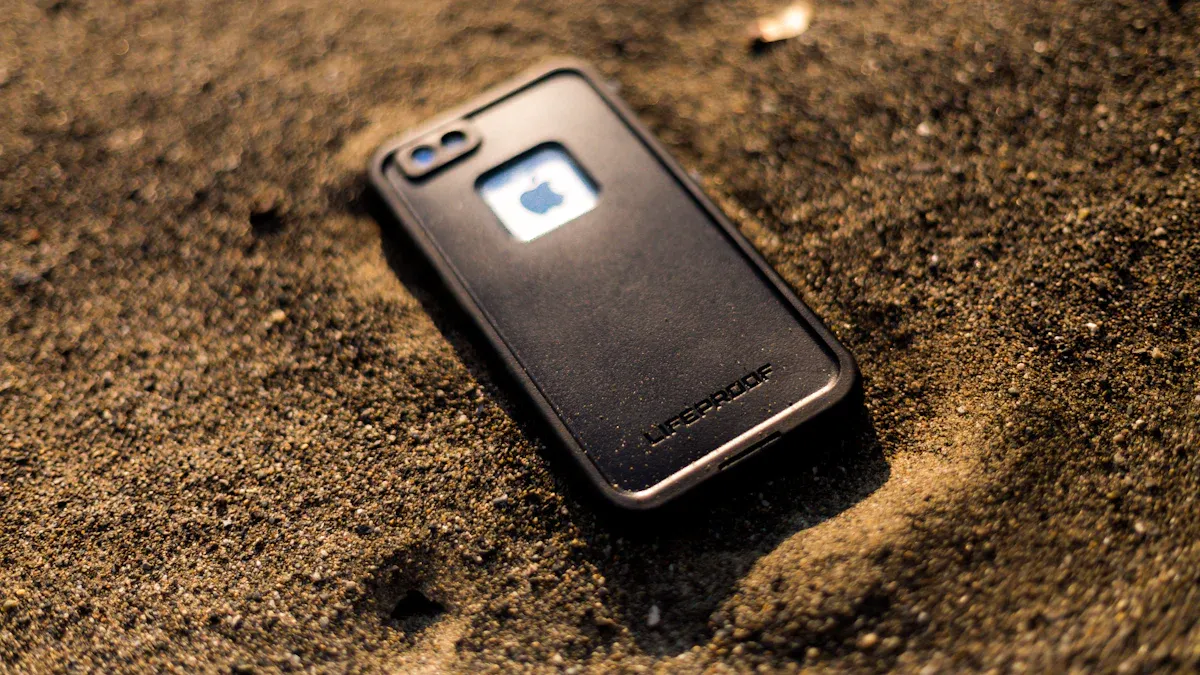
An IP67 rating signifies a device’s robust protection against environmental elements. Devices with this rating resist dust exposure and withstand submersion in water up to 1 meter (40 inches) deep for up to 30 minutes. The first digit, ’6′, denotes complete protection against dust, offering a high level of defense against solid particle entry. The second digit, ’7′, indicates protection against water immersion up to 1 meter for 30 minutes. This ensures the device can endure temporary submersion without damage. It also protects against low-pressure water jets from any direction.
Limitations of Standard Handsets in Marine Settings
Standard handsets lack the necessary protection against marine elements. Non-IP67 rated handsets are highly susceptible to water exposure, which often leads to short circuits and permanent damage. Saltwater is significantly more corrosive than fresh water. It degrades seals and damages electronic components over time, even in devices with some level of water resistance. Critical parts like junction boxes, connectors, and unprotected ports are common points of failure for water ingress, compromising the entire device.
Marine Challenges Addressed by IP67 Protection
IP67 protection directly addresses submersion and saltwater corrosion in marine communication. The ’7′ in IP67 signifies robust liquid protection, allowing a device to withstand immersion in water up to 1 meter deep for 30 minutes. This ensures functionality even after temporary submersion. Beyond simple water immersion, marine environments pose challenges like salt, humidity, and constant vibration. Salt spray causes corrosion, degrading materials and compromising electrical connections. High humidity can lead to condensation and internal component damage. Manufacturers employ rigorous tests, such as Cyclic Corrosion Testing (CCT), to simulate real-world marine exposure. This ensures an IP67 waterproof handset offers superior durability and resistance to damage from water, dust, salt, and vibrations. This reduces the frequency of replacements and communication system failures on vessels.
The Indispensable Role of IP67 Waterproof Handsets
Enhancing Onboard Safety and Emergency Response
Marine environments present constant hazards. Effective communication becomes critical during emergencies. An IP67 waterproof handset ensures crew members can communicate instantly. This applies to situations like:
- A man overboard incident
- A fire breaking out
- A sudden mechanical failure
Clear voice transmission, even amidst engine noise or strong winds, allows for rapid assessment and coordinated action. This reliability directly contributes to faster response times. It minimizes potential harm to personnel and property. Such devices also integrate with vessel safety systems, providing an essential link in the emergency chain.
Streamlining Operational Efficiency and Coordination
Daily marine operations demand seamless coordination. Crew members work across various departments: the bridge, engine room, and deck. These robust communication devices facilitate constant contact among these teams. This improves efficiency during critical tasks. For example, during cargo loading and unloading, precise communication prevents accidents and speeds up the process. Maintenance crews can quickly relay information about equipment status or repair needs. This constant, reliable communication reduces misunderstandings and operational delays. It ultimately leads to smoother, more productive voyages.
Ensuring Regulatory Compliance and Best Practices
Maritime regulations, such as the International Convention for the Safety of Life at Sea (SOLAS), mandate robust communication systems. Vessels must adhere to these standards to ensure safety at sea. Deploying an IP67 waterproof handset helps operators meet these stringent requirements. It demonstrates a commitment to best practices in marine safety. Companies establish internal protocols for communication during routine operations and emergencies. Reliable handsets support these protocols. They provide the necessary tools for crew members to follow established procedures. This compliance not only avoids penalties but also fosters a culture of safety and professionalism onboard.
Key Features of Top-Tier IP67 Waterproof Handsets
Durability and Impact Resistance for Marine Use
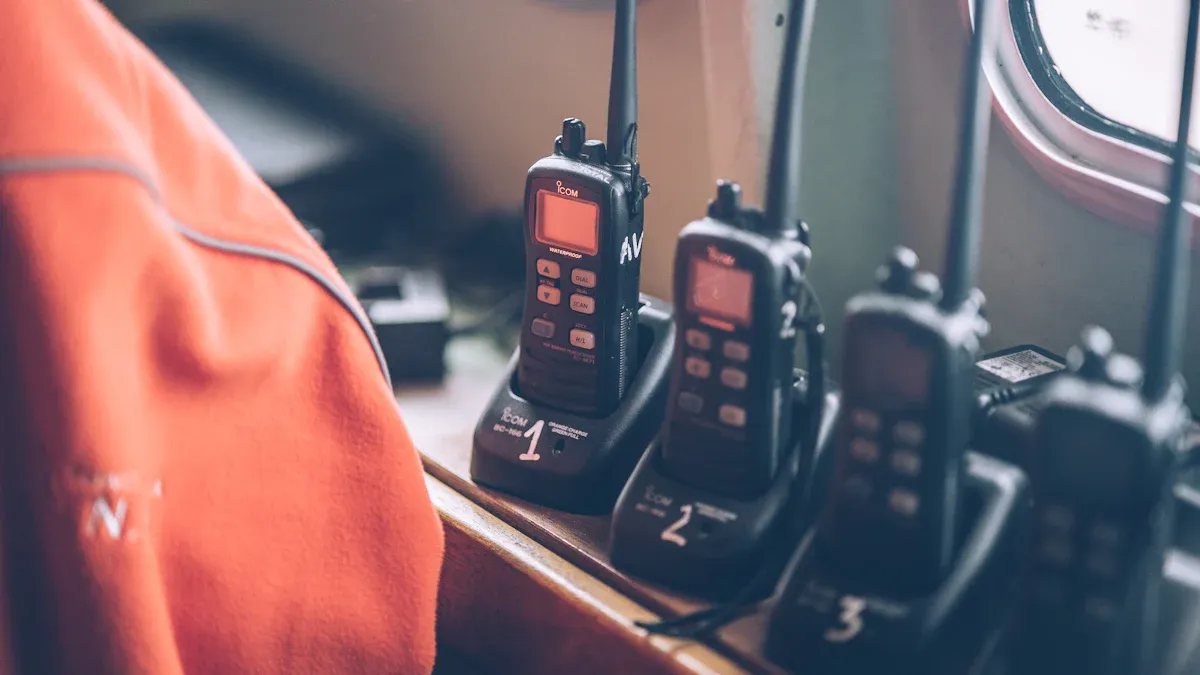
Top-tier IP67 waterproof handsets offer exceptional durability. They withstand the harsh marine environment. These devices often meet military-grade standards. For example, some rugged tablets, like the IRT01 Pro 8″ Android Tablet, meet the MIL-STD-810G standard for impact resistance. This standard ensures the device can survive drops and shocks. Marine-grade keyboards also use MIL-STD-810G. This standard is crucial for vibration and shock resistance. High-speed craft or rough waters demand such resilience. This robust construction prevents damage from accidental drops or impacts. It ensures the handset remains operational when it matters most.
Advanced Audio Clarity in Noisy Conditions
Clear communication is vital in noisy marine settings. Top-tier handsets feature advanced audio technologies. These technologies ensure voices are heard clearly.
- IMPRES Windporting Technology eliminates wind noise. This provides superior audio clarity in harsh conditions.
- AI-Trained Noise Suppression minimizes background noise. This leads to clearer communication.
- Advanced noise-reduction technology offers uninterrupted voice communication. This works even in windy or high-noise environments.
- Some models use dual microphones. This provides exceptional echo cancellation and noise suppression. Spectralink engineers optimize this feature.
- Users can select audio profiles. This customizes volume for quiet, normal, and noisy environments.
- Models like the S35 and S37 meet rigorous IEC 60945 maritime standards. This confirms their suitability for marine use.
Extended Battery Life for Long Shifts
Long shifts at sea require devices with extended battery life. Crew members cannot always recharge their handsets frequently. An IP67 waterproof handset must last through long operational periods. The Midland GXT67 Pro, for instance, offers up to 4-day battery life. Other models provide impressive continuous use times.
| Model | Continuous Use (hours) | Standby (hours) |
|---|---|---|
| Icom IC-M85 | Up to 21 | Not specified |
| Icom M94D | 10 | Not specified |
| Icom M25 | Up to 11 | Included in 11 hours (Tx:Rx:Standby=5:5:90) |
The BF-W31 is also known for its long standby time. These extended battery capabilities ensure constant readiness. They reduce the need for frequent charging. This is critical for uninterrupted operations.
Seamless Integration with Vessel Systems
Modern marine operations demand communication systems that work together. Top-tier handsets do not operate in isolation. They seamlessly integrate with a vessel’s existing communication infrastructure. This includes Private Automatic Branch Exchange (PABX) systems, intercom networks, and public address (PA) systems. Such integration creates a unified communication environment. Crew members can use their handsets to access different communication channels from a single device. This enhances overall control and simplifies management of the entire communication network. For example, a crew member on deck can use their handset to page someone in the engine room via the intercom system. They can also connect to an external line through the PABX. This level of connectivity ensures that critical information flows freely across all departments. It supports efficient decision-making and coordinated actions. Joiwo specializes in integrated industrial communication systems. Their products are designed for compatibility with various vessel systems. This ensures a smooth transition and enhanced functionality for marine operators.
Ergonomics and User-Friendliness
The design of marine handsets significantly impacts user comfort and operational efficiency. Ergonomics focuses on designing equipment to fit the user. This reduces fatigue and improves performance during long shifts at sea. Designers first define the tasks a human needs to perform. This includes standing, sitting, processing visual information, and communicating. They then identify the users. Designers account for differences in physical dimensions like height, sex, and origin. They typically design for the 5th to 95th percentile of people. Environmental factors such as temperature and noise also influence design choices. Designers consider the worst-case operating scenario, like extreme temperatures and noise levels. The goal is to create the right shape, size, arrangement, layout, labeling, and color for safe and effective task performance.
Several standards guide ergonomic design in marine settings. ASTM F1166 outlines human engineering design principles for marine systems. These principles cover human behavior, control design, integrating displays and alarms, and using anthropometric data. ISO 6385 establishes fundamental ergonomic principles for work system design. It emphasizes interactions between people and work system components. It treats humans as the main factor and integral part of the system. This standard also promotes applying ergonomics preventively from the start of the design process. It involves workers at all stages. ISO 26800 defines fundamental principles for an ergonomics approach. It states that design must be human-centered. It requires identifying the target population and fully accounting for task nature. It also defines the physical, organizational, social, and legal environments of use. ISO 9355 provides ergonomic requirements for display and control actuator design. This minimizes errors and ensures efficient interaction.
The ergonomic design of a product greatly affects user acceptance. This includes both hardware ergonomics, like the device’s weight, and software ergonomics, such as user interface design. Long-term use of devices, especially those with displays, can cause visual fatigue and discomfort. Designing for user comfort and minimizing strain on the eyes and neck are crucial for prolonged use. User interface design should present information as the user expects. It should be easy to use. The design should directly accept user input in a natural form. It should feel like an extension of the user. Key measures of user-friendliness include learning time, knowledge retention, error rates, operation speed, and perceived satisfaction. Accommodation principles involve designing for diverse users. This includes those with missing senses, physical limitations, or cognitive abilities. The design should tolerate mistakes, be adaptable, and be forgiving. Users expect the interface to match the task and their prior knowledge. They expect no learning time and rapid feedback. The system should keep the user aware of its status. It should not require the user to adapt to the system. It should provide ‘joy’, be easy to stop/start, comfortable to use, and easy to reach. Techniques like Poka-yoke (error-proofing), scripting user expectations, providing error detection, standardization, and simplification contribute to user-friendly designs. Visually obvious placement, appearance, and labeling, along with consistent themes, also enhance usability.
Selecting the Right IP67 Waterproof Handset
Choosing the correct communication device for marine operations requires careful consideration. Operators must assess several factors to ensure reliable and effective communication at sea.
Assessing Communication Range Requirements
Understanding the necessary communication range is paramount. Different marine operations and vessel types demand varying ranges. For instance, a vessel operating close to shore needs different capabilities than one on the open ocean.
| Radio Type | Typical Range | Range to USCG Station |
|---|---|---|
| VHF | 5-10 miles | At least 20 miles |
| MF/HF Marine Radiotelephone | Longer ranges (2-26 MHz operation) | N/A |
| Satellite Telephone | Longer ranges | N/A |
VHF radios offer reliable short-range communication. MF/HF and satellite telephones provide extended reach for long-distance voyages. Operators must match the handset’s range capabilities to their specific operational needs.
Evaluating Specific Environmental Conditions
Beyond the IP67 rating, marine environments present unique challenges. Operators must consider factors like extreme temperatures, constant vibration, and corrosive salt spray. A handset must perform reliably in freezing cold or intense heat. It also needs to withstand continuous engine vibrations without damage. Salt spray can degrade materials over time, even on rugged devices. Therefore, selecting a handset built with marine-grade materials and tested for these specific conditions ensures long-term durability.
Compatibility with Existing Infrastructure
A new communication device must integrate seamlessly with a vessel’s current systems. This includes existing PABX, intercom, and public address systems. Compatibility ensures crew members can use the new handset to access all necessary communication channels. It avoids the need for costly overhauls of the entire communication network. Operators should verify that the chosen handset supports standard marine communication protocols. This guarantees smooth integration and efficient information flow across the vessel.
Budgeting for Quality and Longevity
Marine operators often face decisions regarding equipment procurement. They must balance initial costs with long-term value. Investing in high-quality IP67 waterproof handsets represents a strategic financial decision. These devices offer superior durability and performance. They significantly reduce the total cost of ownership (TCO) over time. Cheaper, less robust alternatives may seem appealing initially. However, they frequently lead to higher expenses. These expenses include frequent replacements, increased maintenance, and potential operational downtime.
Consider the lifespan of a quality handset. A well-built IP67 device withstands constant exposure to harsh marine elements. It resists impacts and vibrations. This longevity means operators replace units less often. This directly saves money on purchasing new equipment. Furthermore, reliable handsets minimize communication failures. Such failures can disrupt operations, cause delays, and even compromise safety. The cost of these disruptions often far exceeds the savings from a cheaper initial purchase.
Quality handsets also contribute to operational efficiency. They perform consistently in critical situations. This reliability ensures seamless communication among crew members. It supports efficient task execution. Joiwo, for example, emphasizes quality stability and reliable delivery. They manufacture over 90% of core components in-house. This commitment ensures their products meet stringent international standards like ISO 9001. Such adherence to quality translates into dependable equipment for marine environments. Operators should view handset procurement as an investment in operational resilience and safety. Prioritizing quality ensures uninterrupted communication and long-term cost-effectiveness.
Tip: Always evaluate the total cost of ownership (TCO) when budgeting for marine communication equipment. Factor in potential replacement costs, maintenance, and the financial impact of communication failures.
Installation and Maintenance of IP67 Waterproof Handsets
Proper Handset Placement and Charging Protocols
Correct placement and charging practices extend the life of marine communication devices. Operators should secure handsets in designated, easily accessible locations. This prevents accidental drops or damage. Charging protocols must follow manufacturer guidelines. Overcharging or using incompatible chargers can degrade battery performance. Ensure charging ports remain clean and dry before connecting. This prevents corrosion and maintains the device’s integrity.
Routine Cleaning and Inspection for Longevity
Regular cleaning and inspection are vital for maintaining an IP67 waterproof handset. Operators should regularly inspect seals for signs of wear or damage. They must promptly replace any compromised seals. A recommended frequency for checking gaskets is every 6-12 months. For proper cleaning, use manufacturer-approved cleaning agents. Clean the enclosure regularly using mild detergent and water. Avoid abrasive cleaners or solvents. These can damage seals or enclosure materials. This routine care ensures the device continues to perform reliably in harsh marine conditions.
Software Updates and Firmware Management
Software updates and firmware patches are crucial for optimal device functionality. These updates are part of a comprehensive maintenance strategy. They ensure continuous data collection and prevent downtime for marine IoT systems, including IP67 marine handsets. Manufacturers often provide these updates to enhance security, improve performance, or add new features. Operators should implement a system for regular software updates. This keeps systems current and secure. Timely management of firmware ensures the handset operates with the latest capabilities and highest reliability.
Troubleshooting Common Issues
Even the most robust IP67 waterproof handsets can encounter occasional problems. Marine operators must know how to address common issues quickly. This minimizes downtime and maintains communication reliability.
One frequent problem involves a handset that does not power on. Operators should first check the battery charge. They must ensure the handset connects properly to its charging base or cable. They also need to inspect the charging port for any signs of corrosion or debris. A clean, secure connection often resolves this issue.
Another common concern is poor or absent audio. Users should verify the volume settings on the device. They must also check for any obstructions blocking the speaker or microphone. If using an external headset, operators confirm its proper connection. Advanced noise-reduction features can sometimes be misconfigured. Resetting audio settings to default often helps.
Connectivity problems with vessel systems can also arise. Operators should restart the handset. They then verify its integration settings with the vessel’s communication network. Checking the network status on the vessel itself can identify broader system issues.
Despite their durability, physical damage can occur. Operators should regularly inspect the handset for visible cracks or compromised seals. Even minor damage can affect the IP67 rating. They must report any significant damage to maintenance personnel immediately.
For general malfunctions, operators can perform a soft reset. This often resolves minor software glitches. They should always consult the user manual for specific troubleshooting steps unique to their handset model.
Tip: Always keep the user manual accessible. It contains model-specific troubleshooting guides and contact information for technical support.
If basic troubleshooting steps do not resolve the problem, operators must contact the manufacturer or service provider. Joiwo offers comprehensive technical support for its industrial communication systems. This ensures marine operators receive expert assistance when needed.
Future Trends in IP67 Waterproof Handset Technology
Integration with Satellite and IoT Systems
Future communication devices will increasingly integrate with satellite and IoT systems. This provides unparalleled global coverage and enhanced tracking capabilities. The Icom IC-SAT100, an IP67-rated durable handset, offers Push-To-Talk (PTT) communication globally through Iridium. It ensures loud audio and features a field-replaceable antenna. Iridium Edge, a compact satellite add-on, provides global IoT tracking and monitoring. Its rugged IP67 construction simplifies deployment and ensures reliability. Thales VesseLINK systems operate on the Iridium Certus® network. This offers 100% global coverage, including deep oceans and poles. It includes a ruggedized Android tethered handset and an IP67-rated single cable antenna. The Icom IC-SAT100M, a mobile counterpart, features an IP67-rated external antenna RF unit. This allows 1-meter deep water submersion for up to 30 minutes. It meets the 810G military standard and operates in extreme temperatures.
Enhanced Security Features for Data Transmission
Secure communication remains paramount. Future IP67 waterproof handset designs will incorporate advanced security features. These include end-to-end encrypted voice, video calls, and messages. Devices will feature die shield sensors and environmental attack protection in secure elements. This protects against physical intrusion, electromagnetic signal sniffing, cryo/cold attacks, and power glitches. Application permission control allows users to restrict access to device data. Other features include user-originated fast wipe of device data, audit logs for security events, and remote device wiping. Bittium SafeMove® MDM support and Mobile VPN encrypt data in transit. Hardened password policies and multicontainer features create isolated workspaces. Tamper-proof designs prevent data theft and hardware manipulation. Non-rootable device firmware, secure boot with hardware validation, and dedicated secure elements will become standard. Hardware-based privacy modes protect against sensor-based spying. AES-256 encryption stands as a gold standard for secure communications. It offers military-grade voice and data protection. Flagship models will combine IP67 protection with AES-256 encryption. ZKONG’s ESL technology already uses unique encryption keys and AES-128 Cloud Encryption for end-to-end data protection.
Sustainable and Eco-Friendly Handset Designs
The marine industry increasingly focuses on environmental responsibility. Handset manufacturers will respond with sustainable and eco-friendly designs. This trend involves using recycled and recyclable materials in device construction. Manufacturers will also prioritize energy-efficient components. This reduces the carbon footprint during production and operation. Designs will aim for extended product lifecycles. This minimizes electronic waste. Companies will also explore modular designs. These allow easier repairs and component upgrades. This commitment to sustainability aligns with broader environmental goals for marine operations.
Advancements in Voice and Data Capabilities
Future IP67 waterproof handsets will offer significant improvements in voice and data communication. These advancements enhance clarity, speed, and versatility for marine operations. High-definition (HD) voice technology provides crystal-clear audio. This ensures every command and report is understood, even in noisy environments. Crew members will experience reduced miscommunication.
Push-to-Talk over Cellular (PoC) capabilities are also expanding. PoC allows instant group communication, similar to traditional two-way radios, but over cellular or Wi-Fi networks. This feature facilitates rapid coordination among teams across different parts of a vessel or fleet. It supports efficient task management and emergency response.
Integration with broadband data networks will transform how marine operators share information. Handsets will support faster data speeds. This enables quick transmission of critical data, such as navigation charts, weather updates, and equipment diagnostics. Crew members can share high-resolution images or even live video streams from remote locations on the vessel. This capability improves situational awareness and decision-making.
Artificial intelligence (AI) will also play a role. AI-driven features might include real-time language translation. This helps diverse crews communicate more effectively. Predictive communication tools could anticipate needs based on operational patterns. These innovations streamline workflows and enhance safety.
Tip: Look for handsets that support 4G/5G connectivity. This ensures access to the fastest available data speeds for critical applications.
These advancements ensure marine communication systems remain at the forefront of technology. They provide reliable, high-performance tools for modern maritime challenges. Joiwo’s commitment to integrated communication systems positions them well to incorporate these future capabilities.
Investing in IP67 waterproof handsets offers undeniable value for marine operations. These robust devices ensure uninterrupted communication. They significantly enhance operational resilience and safety at sea. Joiwo provides integrated communication solutions designed for demanding marine environments. Marine operators must upgrade their communication infrastructure. This ensures reliable connectivity and protects personnel and assets.
FAQ
What does an IP67 rating mean for a marine handset?
An IP67 rating signifies robust protection. The handset is completely dust-tight. It also withstands submersion in water up to 1 meter deep for 30 minutes. This ensures the device functions reliably in harsh marine environments.
Why are standard mobile phones unsuitable for marine operations?
Standard phones lack the necessary protection. Saltwater causes severe corrosion and damage to electronic components. Water ingress leads to short circuits and device failure. Marine environments demand specialized, rugged communication tools.
How does an IP67 handset enhance safety on a vessel?
An IP67 handset ensures reliable communication during emergencies. Crew members can instantly report incidents like man overboard or fires. This clear, uninterrupted communication allows for rapid response and coordinated action. It minimizes risks to personnel and property.
Can IP67 waterproof handsets integrate with existing vessel communication systems?
Yes, top-tier IP67 handsets integrate seamlessly. They connect with a vessel’s PABX, intercom, and public address systems. This creates a unified communication network. Crew members access various channels from one device, streamlining operations.
Tip: Always verify compatibility with your vessel’s specific infrastructure before purchasing new handsets.
Do these handsets offer advanced audio clarity in noisy marine conditions?
Absolutely. Top-tier IP67 handsets feature advanced audio technologies. These include noise reduction and windporting. They ensure clear voice transmission even amidst engine noise or strong winds. This improves communication effectiveness significantly.
Post time: Jan-27-2026