
Introduction
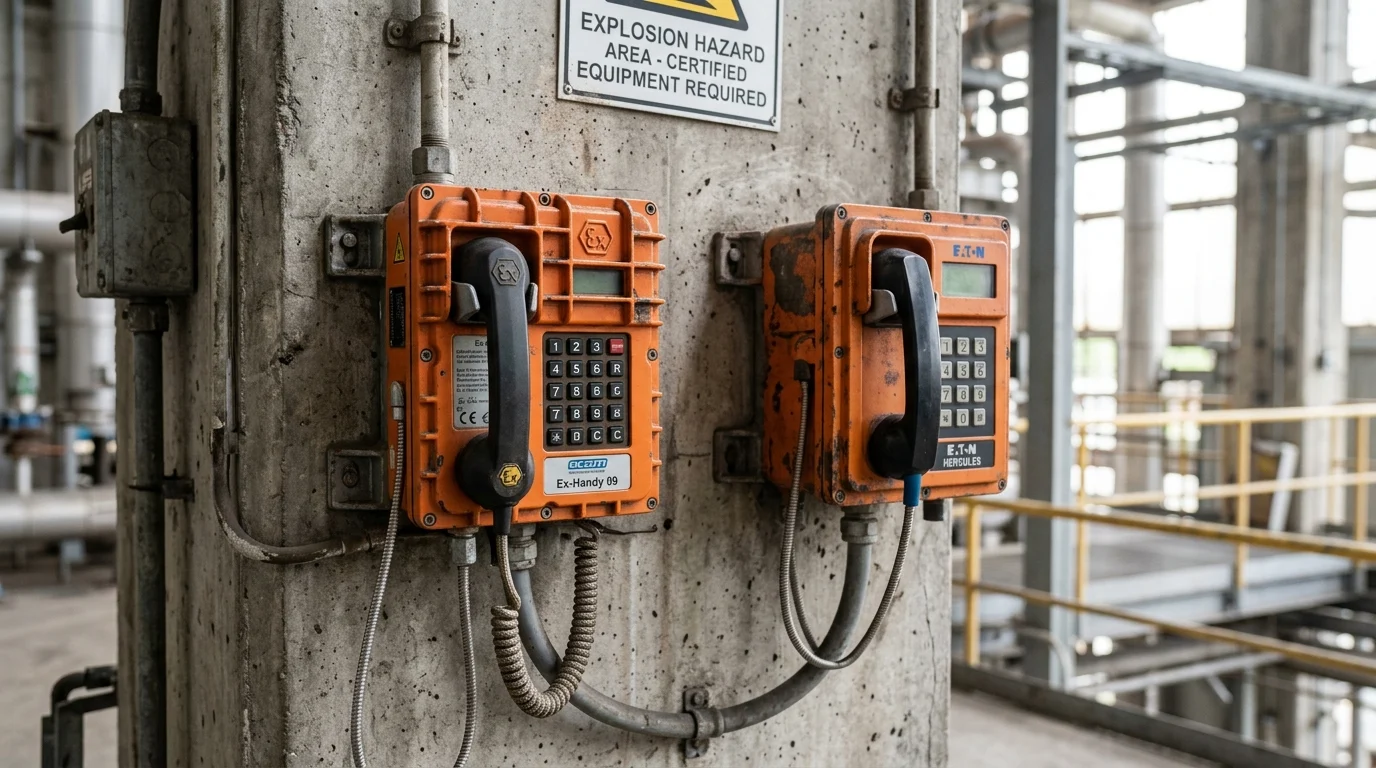
In oil and gas facilities, communication devices must perform reliably in areas where a single spark can trigger severe consequences. This guide examines the best explosion proof telephones for 2026, focusing on what matters most in hazardous environments: certification standards, durability, audio clarity, installation suitability, and long-term maintenance value. You will learn how leading models support safer coordination during routine operations and emergencies, while also meeting compliance demands in classified zones. The sections that follow compare key features and selection criteria so you can identify the right telephone for offshore platforms, refineries, drilling sites, and other high-risk locations.
Why Explosion Proof Telephones Matter
The oil and gas industry operates within some of the most volatile and unforgiving environments globally, where the presence of flammable gases, vapors, and combustible dust is a constant reality. In these settings, standard communication equipment poses a catastrophic ignition risk. The deployment of the best explosion proof telephones is not merely an operational upgrade; it is a fundamental requirement for facility integrity.
As the industry transitions toward fully integrated digital oilfields by 2026, the role of intrinsically safe and explosion-proof communication networks has expanded. These devices serve as the critical lifeline during emergency response protocols, routine maintenance coordination, and daily operational reporting, ensuring that personnel remain connected without compromising the volatile atmosphere.
Safety, uptime, and compliance drivers
Regulatory frameworks such as ATEX (Europe), IECEx (International), and NEC/CEC (North America) mandate strict adherence to hazardous area equipment standards. Non-compliance carries severe penalties, facility shutdowns, and unacceptable risk to human life. Explosion-proof telephones are engineered to contain any internal spark or explosion, preventing it from igniting the external atmosphere.
Beyond compliance, these devices are primary drivers of operational uptime. In modern refining and extraction operations, communication failures directly correlate to production delays. Utilizing certified industrial telephones reduces communication-related downtime by up to 40%, ensuring that critical instructions are transmitted without interruption even during localized power fluctuations or network stress.
High-risk operational scenarios
Environments such as offshore drilling platforms, chemical processing plants, and liquefied natural gas (LNG) terminals require specialized engineering. These facilities are frequently classified as Zone 1 (where explosive atmospheres are likely to occur in normal operation) or Zone 2 (where they are unlikely but possible for short periods).
Furthermore, these scenarios present extreme auditory challenges. Ambient noise levels on a drilling rig or near a compressor station frequently exceed 110 dB(A). The best explosion proof telephones mitigate this through integrated noise-canceling microphones, high-output ringers exceeding 90 dB at one meter, and optional flashing beacons to provide visual alerts when audible ringing is masked by machinery.
What Defines the Best Explosion Proof Telephones
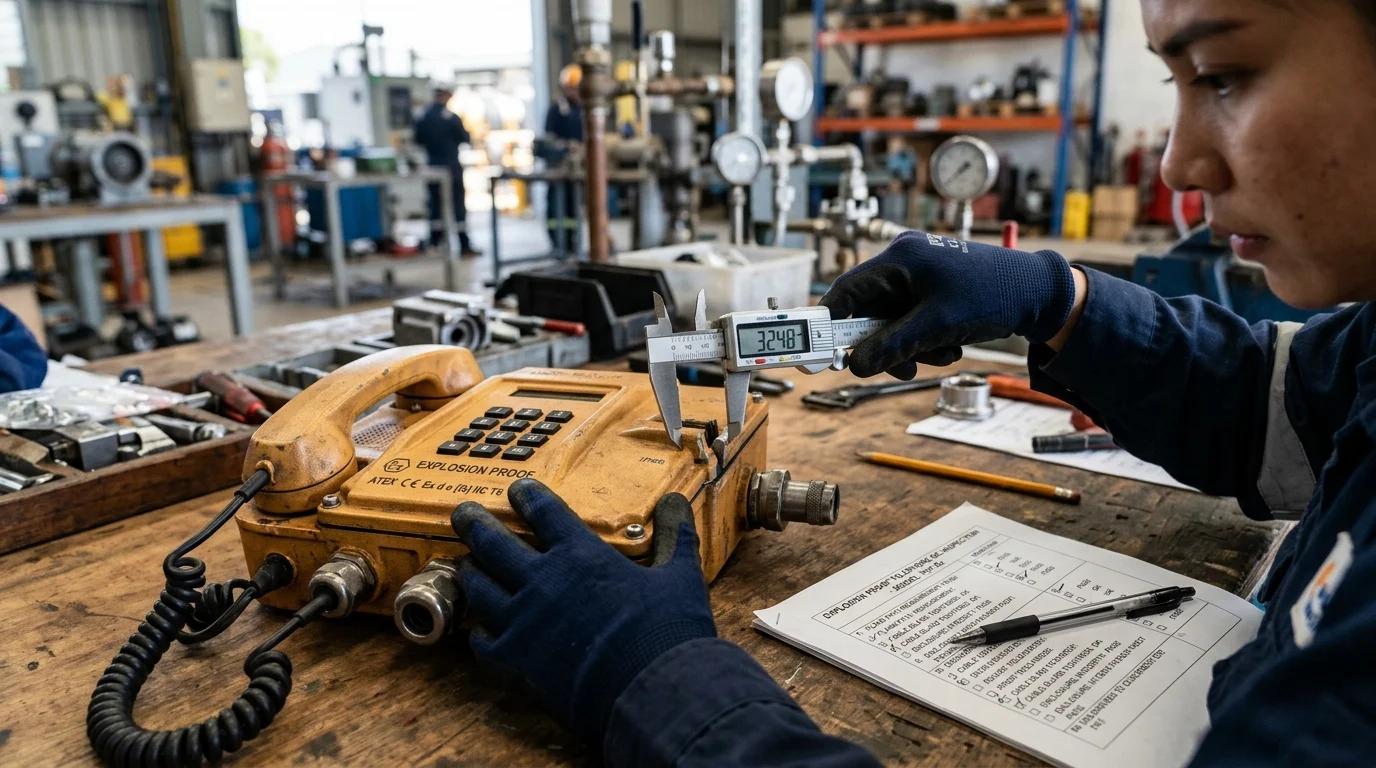
Identifying the best explosion proof telephones requires a precise understanding of technical specifications, material science, and network architecture. As telecommunications infrastructure pivots away from legacy copper-wire analog systems, modern devices must bridge the gap between heavy-duty physical protection and advanced digital capabilities.
Hazardous-area ratings and certifications
The foundational metric for any hazardous-area device is its certification rating. A top-tier telephone must possess clear documentation for its intended deployment zone. For instance, equipment rated for ATEX Zone 1 (Ex d e ib IIC T6 Gb) signifies that the device utilizes flameproof enclosures (Ex d), increased safety components (Ex e), and intrinsically safe circuits (Ex ib) suitable for the most easily ignitable gas groups (IIC) with a maximum surface temperature of 85°C (T6).
North American deployments require equivalent Class I, Division 1 or 2 certifications. The presence of dual or triple certifications (e.g., ATEX, IECEx, and UL) on a single device is a hallmark of premium manufacturing, allowing multinational oil and gas operators to standardize their communication hardware across global assets.
Core performance and connectivity features
Modern explosion-proof telephones increasingly rely on Voice over Internet Protocol (VoIP) and Session Initiation Protocol (SIP) standards. This digital shift enables seamless integration into corporate IP-PBX systems and Unified Communications (UC) platforms. Core performance features include high-definition audio utilizing G.722 codecs and robust echo cancellation algorithms.
Power delivery is another critical feature. The best units support IEEE 802.3af/at Power over Ethernet (PoE), drawing typically under 15 watts. This eliminates the need for separate, heavily armored power cabling, reducing installation complexity and cost while allowing the devices to be backed up by centralized Uninterruptible Power Supplies (UPS) in the server room.
Key criteria for product comparison
When comparing products, procurement engineers must evaluate structural integrity against digital capabilities to ensure the selected hardware meets both physical and IT requirements.
| Feature Category | Analog Systems | VoIP/SIP Systems |
|---|---|---|
| Power Source | Line-powered (24-48V DC) | PoE (IEEE 802.3af/at) |
| Audio Quality | Standard duplex (300-3400 Hz) | HD audio (G.722 wideband codec) |
| Integration | Standalone PBX / Copper pair | Unified Communications / IP Network |
| Diagnostics | Manual testing required | Remote SNMP monitoring / Auto-fault detection |
How to Compare Explosion Proof Telephone Options
Comparative analysis of explosion-proof communication hardware demands a rigorous assessment of both physical resilience and long-term financial viability. Engineers must look beyond baseline certifications to evaluate how a device will withstand continuous exposure to harsh industrial elements over a prolonged lifecycle.
Standards, mounting types, and environmental protection
Physical durability is quantified by strict environmental protection standards. Top-tier telephones must achieve a minimum Ingress Protection rating of IP66 or IP67, ensuring total protection against dust ingress and high-pressure water jets or temporary submersion—critical for facilities utilizing heavy wash-down procedures. Impact resistance is equally vital, with leading models boasting an IK10 rating to withstand severe mechanical shocks.
Material selection dictates these ratings. Manufacturers typically utilize either marine-grade copper-free aluminum alloy with epoxy powder coating or Glass Reinforced Polyester (GRP). GRP is highly favored in offshore environments due to its absolute immunity to saltwater corrosion. Additionally, the operating temperature bandwidth must be exceptionally wide, typically ranging from -40°C to +70°C, to accommodate deployments from Arctic drilling sites to Middle Eastern refineries.
Lifecycle cost and maintenance considerations
Total Cost of Ownership (TCO) calculations must extend beyond the initial capital expenditure. While a standard industrial telephone might have a lower upfront cost, a fully certified explosion-proof unit is designed for a 10 to 15-year operational lifecycle. Buyers must evaluate the cost of maintenance, replacement parts, and the labor required to service equipment in hazardous zones.
VoIP/SIP models significantly lower TCO through automated remote diagnostics. Instead of deploying a technician into a Zone 1 area for routine operational checks—which requires specialized permits and safety gear—IT administrators can monitor handset integrity, keypad functionality, and network connectivity centrally via SNMP. This capability can reduce routine maintenance labor costs by up to 60% annually.
Procurement and Deployment Best Practices
Acquiring specialized hazardous-area equipment involves complex supply chain logistics and rigorous validation protocols. Effective procurement requires a strategic approach to ensure that the deployed technology meets the stringent safety requirements of the oil and gas sector while aligning with corporate IT architectures.
Cross-functional evaluation process
A successful procurement cycle requires alignment between Health, Safety, and Environment (HSE) officers, IT/Telecom architects, and purchasing managers. HSE teams must verify that the ATEX/IECEx parameters match the facility’s specific hazardous area classification mapping. Simultaneously, IT personnel must validate SIP interoperability with existing communication servers like Cisco Unified Communications Manager or Avaya Aura.
This cross-functional team should conduct pilot testing in a controlled environment before authorizing a facility-wide rollout. Testing should focus on acoustic performance in high-noise simulations, network failover behaviors, and the durability of moving parts such as the handset cord—often reinforced with stainless steel lanyards capable of withstanding 200 kg of tensile pull.
Supplier qualification, testing, and lead times
Navigating the supply chain for intrinsically safe devices requires precise lead time management and strict supplier auditing. Due to the specialized components and rigorous factory testing required, these devices are rarely off-the-shelf commodities. Procurement teams must account for standard manufacturing lead times of 8 to 12 weeks, though custom configurations involving specific beacon colors or specialized relay outputs can extend delivery to 16 weeks.
| Evaluation Metric | Minimum Acceptable Standard | Industry Best Practice (Optimal) |
|---|---|---|
| Lead Time | 12-16 weeks | 6-8 weeks (supplier stocks core components) |
| Defect Rate | < 2% | < 0.5% (with comprehensive FAT documentation) |
| Minimum Order Quantity (MOQ) | 10 units | 1 unit (allowing for phased site rollouts) |
| Support SLA | Next business day response | 24/7 remote diagnostics and firmware support |
Final Selection Framework
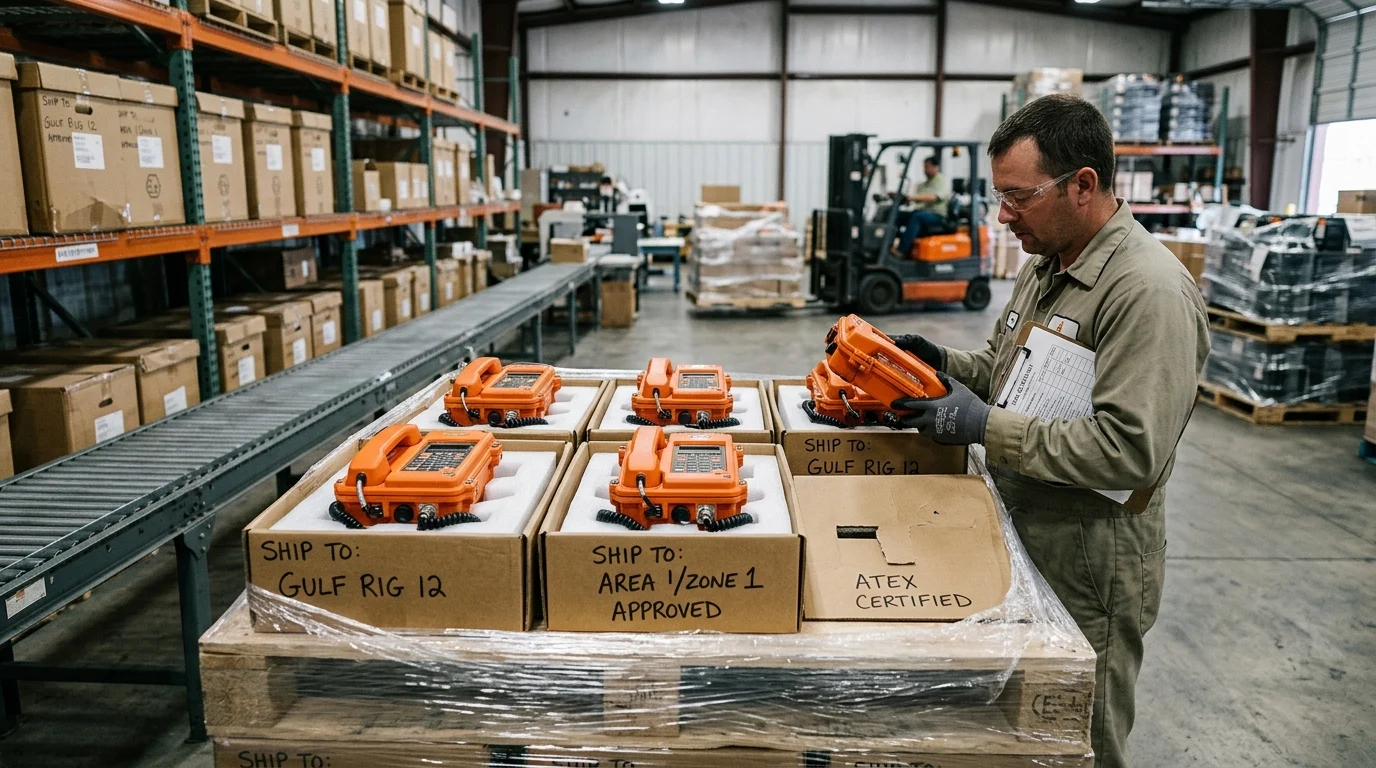
Establishing a standardized selection framework ensures that capital investments yield reliable safety outcomes and operational efficiency. The final decision requires synthesizing technical specifications, environmental resilience, and financial constraints into a coherent purchasing strategy.
Balancing certification, usability, and cost
Decision-makers must weigh the upfront premium of Zone 1 certified VoIP units against the long-term operational benefits. The cost band for premium explosion-proof telephones typically ranges from $1,500 to $4,500 per unit, heavily dependent on the certification level, enclosure material, and integrated peripherals like horns or beacons.
While analog systems represent the lower end of this cost spectrum, their lack of remote monitoring capabilities and reliance on legacy copper infrastructure often result in higher long-term maintenance costs. The usability factor—such as full keypad models for administrative areas versus zero-button hotline (auto-dial) models for emergency muster points—must also dictate the specific model variants chosen within the overarching brand ecosystem.
Decision checklist for buyers
A robust procurement checklist serves as the final gateway before issuing purchase orders. Buyers must verify that the manufacturer provides a comprehensive Factory Acceptance Test (FAT) certificate for each serial number. Additionally, buyers should confirm the availability of firmware updates for SIP phones to protect against emerging cybersecurity vulnerabilities in the industrial network.
Finally, warranty terms offer insight into product reliability. The industry standard for heavy-duty hazardous area equipment is 24 to 36 months. Securing a supplier that guarantees the availability of spare parts (such as replacement handsets, magnetic hook switches, and armored cords) for at least 10 years post-purchase is essential to protecting the long-term viability of the communication network.
Key Takeaways
- The most important conclusions and rationale for Best Explosion Proof Telephones
- Specs, compliance, and risk checks worth validating before you commit
- Practical next steps and caveats readers can apply immediately
Frequently Asked Questions
What certifications should an explosion proof telephone have for oil and gas sites?
Look for ratings matching your hazardous area, such as ATEX, IECEx, or NEC/CEC. For global projects, dual certification is ideal. Siniwo also highlights CE, FCC, ROHS, and ISO9001-backed manufacturing quality.
Is a VoIP explosion proof telephone better than an analog model?
Usually yes for 2026 projects. VoIP/SIP models integrate with IP PBX systems, support PoE, and simplify centralized management. Analog may still fit older facilities with existing copper infrastructure.
Which features matter most in noisy offshore or refinery environments?
Prioritize noise-canceling microphones, high-output ringers, flashing beacons, rugged housings, and clear handset audio. In areas above 100 dB, these features help operators hear calls and respond faster.
Can Siniwo supply complete hazardous-area communication solutions?
Yes. Siniwo provides one-stop services covering design, integration, installation, and maintenance, along with explosion-proof phones, weatherproof phones, intercoms, paging, and related industrial communication accessories.
How do I choose between Zone 1 and Zone 2 explosion proof telephones?
Match the phone certification to your site classification. Zone 1 models are for areas where explosive atmospheres may occur during normal operation; Zone 2 models suit areas where it is less likely and brief.
Post time: Apr-27-2026