
Introduction
Choosing communication equipment for a chemical plant means balancing fast coordination with strict hazardous-area safety requirements. This article explains what makes explosion proof telephones suitable for volatile environments, from enclosure design and certification standards to durability, audio performance, and emergency reliability. Readers will learn which features matter most when comparing models for 2026, how these devices help reduce ignition risk in gas- or dust-prone zones, and what procurement teams should verify before purchase. With that foundation in place, the following sections examine the key technical considerations and the leading options for chemical plant use.
Why Explosion Proof Telephones Matter in Chemical Plants
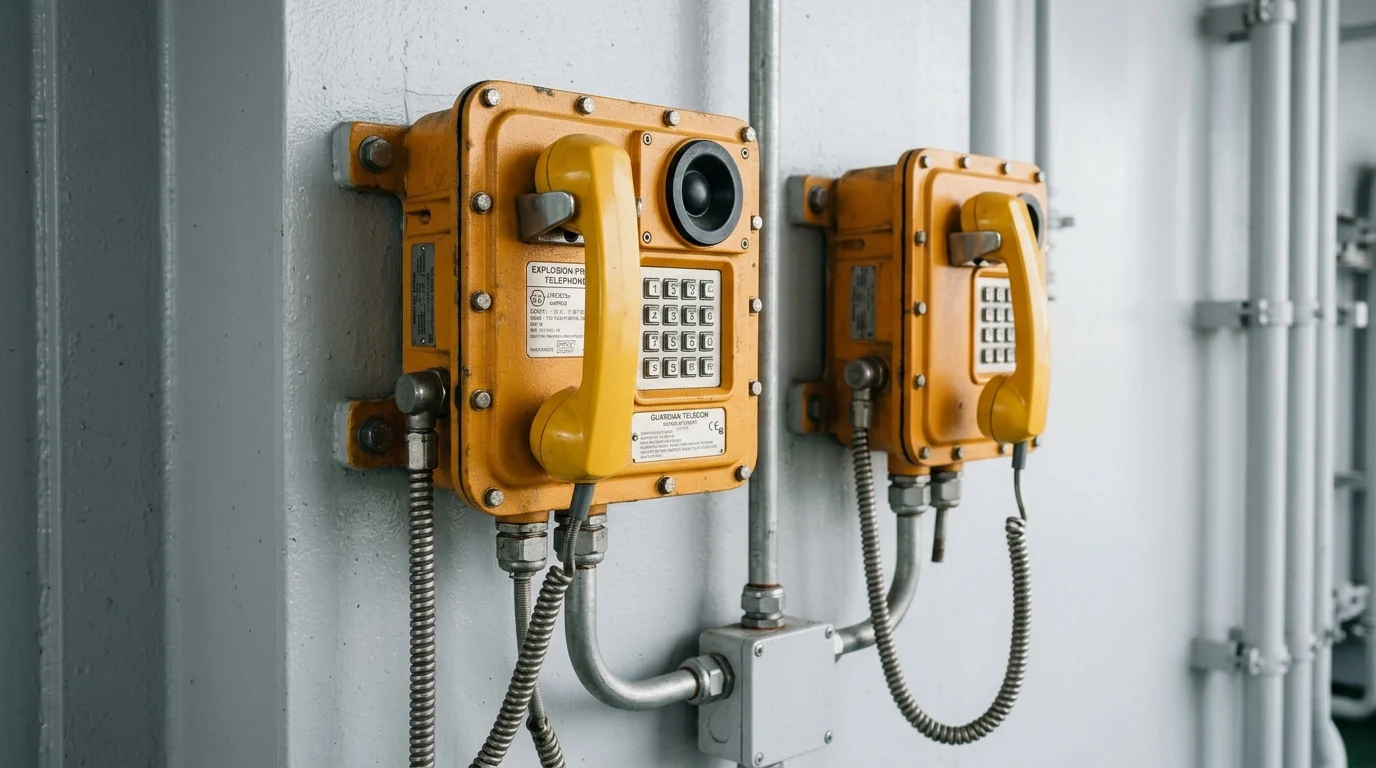
Chemical plants operate under continuous threat of volatile atmospheric conditions, where the presence of flammable gases, vapors, and combustible dust demands stringent safety protocols. In these high-risk environments, standard communication equipment introduces a severe ignition hazard. Explosion proof telephones are engineered specifically to eliminate this risk, ensuring that critical communications can occur safely within designated hazardous areas without acting as an ignition source.
As facility operators look toward 2026, the role of these specialized devices extends beyond mere compliance. They serve as the primary lifeline during emergency protocols, process interruptions, and daily operational coordination. Understanding the mechanical and electrical safeguards embedded in these units is essential for facility managers, safety engineers, and procurement teams tasked with maintaining operational continuity and personnel safety.
How do explosion proof telephones reduce operational risk
Explosion proof telephones mitigate operational risk primarily through enclosure integrity and energy limitation. Constructed from heavy-duty cast aluminum, glass-reinforced polyester (GRP), or stainless steel, these devices are designed to contain internal explosions. The flameproof enclosures (Ex d) ensure that if volatile gases enter the casing and ignite, the resulting flame is cooled and extinguished by precision-machined joints before it can ignite the external atmosphere.
Furthermore, many modern components utilize intrinsically safe (Ex i) circuitry. This design restricts the electrical and thermal energy available in the system to levels below the ignition threshold of specific hazardous gas mixtures. By keeping potential spark energy strictly below 0.2 millijoules (mJ) for highly volatile environments, explosion proof telephones guarantee that routine operations—such as lifting the handset or dialing a number—will not trigger a catastrophic event.
Why are chemical plants reassessing communication systems
The chemical manufacturing sector is currently undergoing a massive digital transformation, prompting a widespread reassessment of legacy communication systems. Aging analog infrastructure often suffers from signal degradation, limited diagnostic capabilities, and a lack of integration with modern Distributed Control Systems (DCS). When legacy communication fails during a critical process deviation, the resulting downtime can cost chemical plants upwards of $10,000 to $50,000 per hour in lost production and recovery efforts.
Consequently, plants are migrating toward unified communication platforms that offer real-time health monitoring and automated fault reporting. Reassessing these systems allows operators to identify coverage blind spots and upgrade to network-based explosion proof telephones. This proactive approach not only satisfies updated occupational safety mandates but also significantly reduces the mean time to repair (MTTR) by pinpointing device failures centrally before they compromise a safety protocol.
What Defines the Best Explosion Proof Telephones
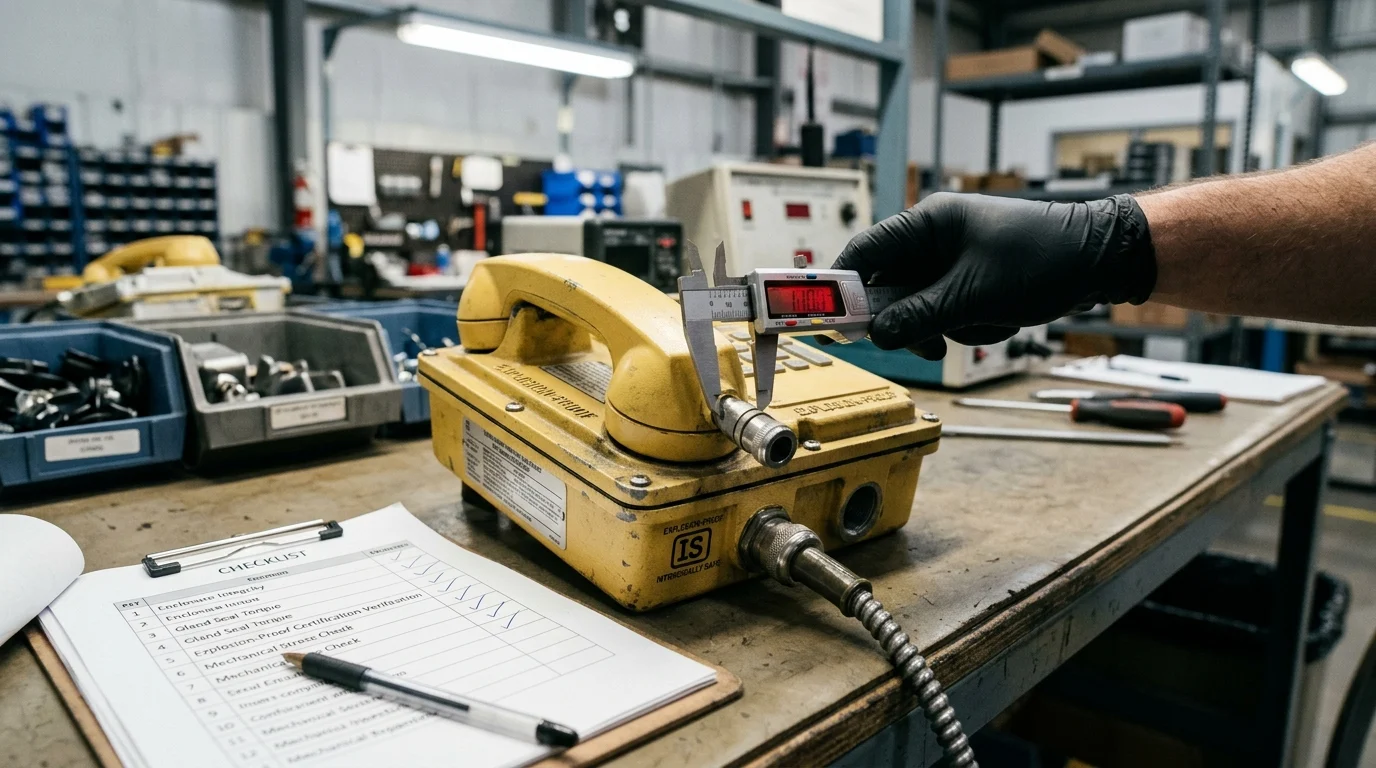
Identifying the optimal explosion proof telephone requires navigating a complex matrix of international safety standards, structural durability metrics, and acoustic performance capabilities. The best devices are not merely robust; they are precisely certified for the specific volatile compounds and environmental extremes present in a given facility.
Which hazardous area ratings and certifications matter most
The foundation of any explosion proof device lies in its hazardous area certifications, primarily ATEX (Europe), IECEx (International), and UL/CSA (North America). These frameworks classify environments into Zones or Divisions based on the probability of explosive atmospheres. A telephone deployed in an area where explosive gas is likely to occur in normal operation must carry a Zone 1 (or Class I, Division 1) certification.
Equally critical are Gas Group and Temperature Class ratings. Chemical plants frequently process highly volatile substances like hydrogen or acetylene, necessitating equipment rated for Gas Group IIC. Furthermore, the equipment’s maximum surface temperature must not exceed the ignition temperature of the surrounding gases. A T4 temperature classification, which guarantees the device surface will not exceed 135°C under fault conditions, is widely considered the baseline standard for broad chemical plant deployment.
How do durability and audio performance affect reliability
Chemical plants present a punishing physical environment characterized by corrosive airborne chemicals, high-pressure washdowns, and extreme temperature fluctuations. Top-tier explosion proof telephones achieve ingress protection ratings of IP66 or IP67, ensuring total defense against dust and high-pressure water jets. The structural durability directly dictates the device’s lifecycle, with premium models offering an operating temperature range from -40°C to +70°C.
Audio performance is equally vital for reliability, as ambient noise in processing areas frequently ranges between 85 dB and 110 dB. Standard handsets are useless in these conditions. The best explosion proof units feature noise-canceling microphones that filter out low-frequency compressor and pump noise, paired with amplified receivers. High-output auxiliary ringing beacons and horns, capable of broadcasting at 110 dB or higher, are essential to ensure incoming calls are acknowledged during active processing phases.
Which criteria best compare explosion proof telephone options
When comparing options, engineers must evaluate the intersection of certification level, environmental resilience, and communication protocol. Selecting a device rated higher than necessary can inflate capital expenditures, while under-specifying compromises safety. The table below outlines the primary Zone classifications and the corresponding Equipment Protection Levels (EPL) required for safe deployment.
| Zone Classification | Equipment Protection Level (EPL) | Atmosphere Presence |
|---|---|---|
| Zone 0 | Ga (Very High Protection) | Continuous (>1000 hrs/yr) |
| Zone 1 | Gb (High Protection) | Occasional (10-1000 hrs/yr) |
| Zone 2 | Gc (Enhanced Protection) | Rare (<10 hrs/yr) |
By cross-referencing these criteria against specific plant layouts, decision-makers can establish a baseline specification that ensures regulatory compliance while optimizing acoustic performance for the exact areas where personnel operate.
How to Compare Explosion Proof Telephone Technologies
The technological backbone of industrial communications is shifting, presenting facility managers with a choice between maintaining traditional analog networks or investing in Voice over Internet Protocol (VoIP) and Session Initiation Protocol (SIP) architectures. Understanding the technical and financial implications of these technologies is critical for long-term strategic planning.
What are the trade-offs between analog, SIP, and VoIP systems
Analog systems rely on traditional two-wire copper infrastructure, drawing 48V DC power directly from the Private Branch Exchange (PBX). They are highly reliable, independent of local network outages, and can transmit over distances up to 5 kilometers without repeaters. However, analog phones lack advanced diagnostics and integration capabilities, making system-wide monitoring labor-intensive.
Conversely, SIP and VoIP systems utilize Ethernet networks, offering seamless integration with plant-wide IP PBX and DCS platforms. These digital protocols support advanced features like automated self-testing, multicast paging, and centralized firmware updates. The trade-off involves stringent network infrastructure requirements, including the need for Power over Ethernet (PoE) switches and fiber-optic cabling for distances exceeding 100 meters.
| Specification | Analog Systems | SIP/VoIP Systems |
|---|---|---|
| Cable Infrastructure | 2-wire copper | Cat5e/Cat6 or Fiber |
| Power Requirement | Line-powered via PBX | PoE (IEEE 802.3af, 15.4W) |
| Typical Unit Cost | $800 – $1,500 | $1,200 – $2,800 |
| Max Distance | ~5 km (unrepeated) | 100m (copper), >2km (fiber) |
How do total cost of ownership and spare parts affect value
While the initial capital expenditure (CAPEX) for VoIP explosion proof telephones is higher—typically ranging from $1,200 to $2,800 per unit compared to $800 to $1,500 for analog variants—the Total Cost of Ownership (TCO) often favors digital systems over a 10-year lifecycle. Automated health checks eliminate the need for technicians to physically walk the plant floor to verify handset functionality, drastically reducing labor costs.
Spare parts availability and Mean Time Between Failures (MTBF) also heavily influence value. Industrial-grade digital units are engineered with solid-state components, frequently achieving an MTBF greater than 50,000 hours. Ensuring the chosen manufacturer guarantees spare part availability for a minimum of 10 years post-installation is vital to prevent premature system obsolescence and costly forklift upgrades.
Which supplier evaluation points matter most
Evaluating suppliers extends beyond reviewing product specification sheets. In the highly specialized explosion proof market, supply chain reliability is a primary differentiator. Standard manufacturing lead times for ATEX-certified telephones typically span 4 to 6 weeks, but custom configurations or specialized gas group ratings can push deliveries beyond 12 weeks, impacting project schedules.
Procurement teams must also scrutinize Minimum Order Quantity (MOQ) requirements and warranty terms. A reputable supplier should offer a standard warranty of 24 to 36 months, alongside comprehensive technical support for network integration. Furthermore, verifying the supplier’s ISO 9001 certification and their track record with third-party auditing bodies ensures that the manufacturing process consistently meets the rigorous standards required for hazardous area equipment.
How to Select the Right Explosion Proof Telephones
Procuring explosion proof communications equipment is not a unilateral purchasing decision. It requires a synchronized effort across multiple departments to ensure that the chosen technology satisfies safety mandates, network architecture constraints, and budgetary limitations without compromising operational efficiency.
How should engineering, EHS, operations, and procurement align
Alignment between Environmental Health and Safety (EHS), Engineering, Operations, and Procurement is the cornerstone of a successful deployment. EHS personnel dictate the hazardous area classifications and ensure compliance with OSHA and ATEX directives, protecting the facility from safety violations that can incur fines exceeding $100,000 per incident. Their assessment dictates the fundamental safety ratings the equipment must possess.
Simultaneously, the Engineering team must evaluate the existing IT infrastructure, determining whether the current network topology can support PoE power budgets (e.g., allocating 15.4W per port for standard IEEE 802.3af devices). Operations provides crucial input regarding user ergonomics, such as the need for full keypads versus auto-dial hotlines, while Procurement synthesizes these requirements to negotiate optimal pricing, lifecycle support, and favorable warranty terms.
Which practical steps help match telephones to site needs
Translating these multidisciplinary requirements into a successful purchase begins with a comprehensive site survey. Engineers must map the exact boundaries of Zone 1 and Zone 2 areas, cross-referencing them against ambient noise profiles. Identifying zones where background noise consistently exceeds 90 dB will dictate exactly where integrated acoustic hoods and 110 dB auxiliary beacons are mandatory.
Following the survey, pilot testing a small batch of devices is highly recommended. Deploying a VoIP unit in a high-corrosion area allows the team to verify integration with the central SIP server and test the effectiveness of the noise-canceling microphone under actual process conditions. This practical validation step prevents large-scale procurement errors and ensures the selected telephones seamlessly match the site’s unique environmental and operational demands.
How to Choose the Best Fit for Your Chemical Plant
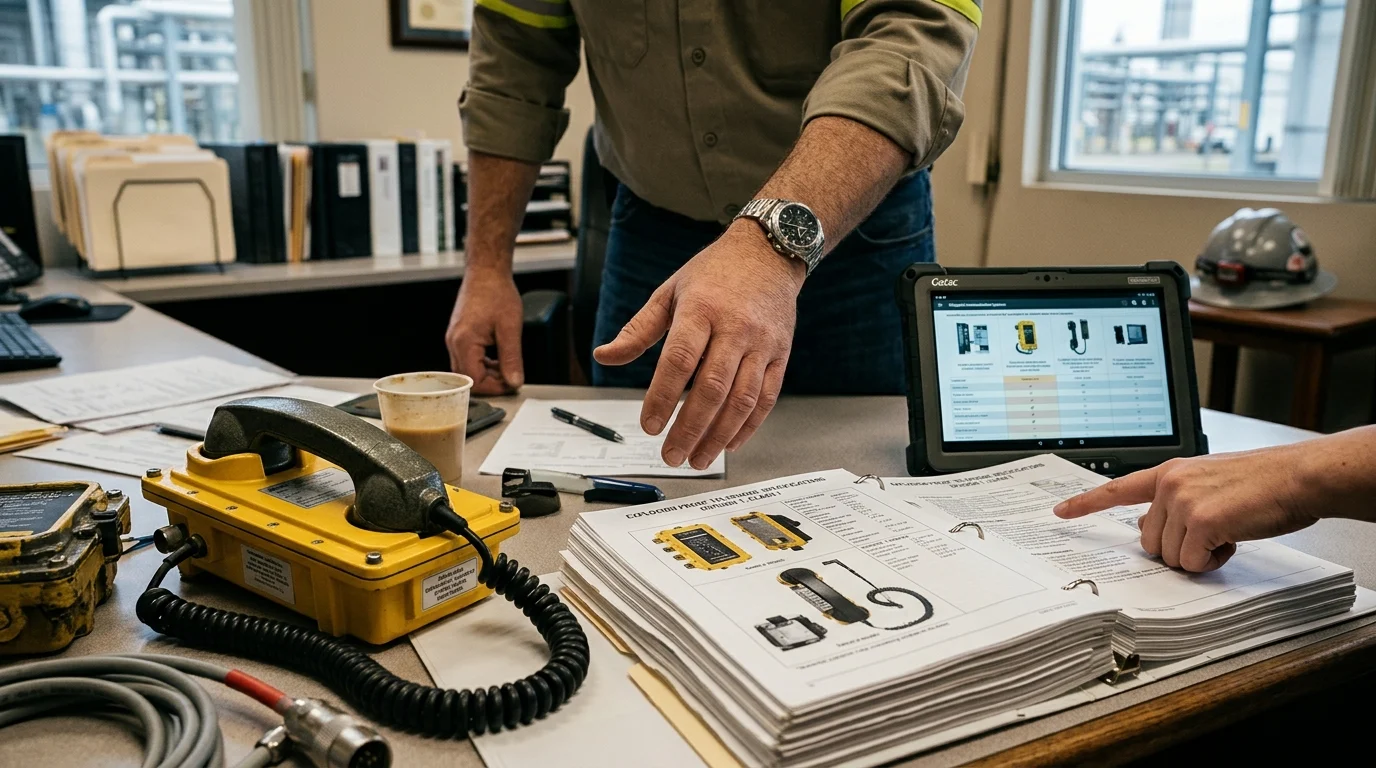
Concluding the selection process requires filtering the finalized specifications through the lens of specific plant applications. By matching device features to the exact tasks performed in different sectors of the facility, decision-makers can finalize a procurement strategy that maximizes both safety and investment value.
How can decision-makers narrow options by application
Different areas within a chemical plant demand distinct communication interfaces. For instance, loading docks and logistics bays often require full alphanumeric keypads to allow operators to dial various internal departments and external transport coordinators. These units must feature robust, weather-sealed buttons capable of being operated by personnel wearing heavy, chemical-resistant gloves.
Conversely, in highly critical areas such as reactor decks or near high-pressure distillation columns, point-to-point communication is prioritized. In these zones, auto-dial hotline telephones—which automatically connect to the control room the moment the handset is lifted—are the safest choice. Removing the keypad eliminates dialing errors during emergency situations and reduces the number of potential ingress points for corrosive gases on the device housing.
What final guidance supports a confident purchase decision
For facility managers planning for 2026 and beyond, future-proofing the communication network should be the final guiding principle. While analog systems remain viable for simple replacements, prioritizing SIP/VoIP technologies ensures compatibility with the next generation of industrial IoT and centralized plant management software.
Ultimately, the decision must prioritize certified reliability over initial capital savings. Selecting explosion proof telephones built with marine-grade stainless steel or high-impact GRP, backed by rigorous ATEX/IECEx certifications, guarantees that when critical communications are required during a hazardous event, the equipment will perform flawlessly without introducing an ignition risk.
Key Takeaways
- The most important conclusions and rationale for Explosion Proof Telephones
- Specs, compliance, and risk checks worth validating before you commit
- Practical next steps and caveats readers can apply immediately
Frequently Asked Questions
Which certification should an explosion proof telephone have for chemical plants?
Choose the exact area rating for your site: typically ATEX or IECEx Zone 1, Gas Group IIC, and at least T4 for many chemical applications. Match certification to the plant’s gas, dust, and temperature risks.
Why are many chemical plants replacing legacy analog hazardous-area phones?
Older analog systems can degrade, lack diagnostics, and slow repairs. Modern IP or VoIP explosion proof telephones improve monitoring, integration, and fault reporting, helping reduce downtime and communication blind spots.
What enclosure and protection level is best for harsh chemical environments?
Look for flameproof or intrinsically safe designs with IP66 or IP67 protection. Materials like cast aluminum, stainless steel, or GRP resist corrosion, dust, washdowns, and outdoor exposure common in chemical plants.
How do Siniwo explosion proof telephones support industrial projects?
Siniwo provides one-stop support from design and integration to installation and maintenance. Its industrial communication range includes explosion-proof telephones, intercoms, paging, and VoIP solutions for hazardous environments.
What should buyers check beyond certification when comparing models?
Verify loud audio for 85–110 dB areas, operating range such as -40°C to +70°C, network compatibility, and spare-parts support. Also confirm manufacturer quality systems like ISO9001 and dependable delivery capability.
Post time: May-21-2026